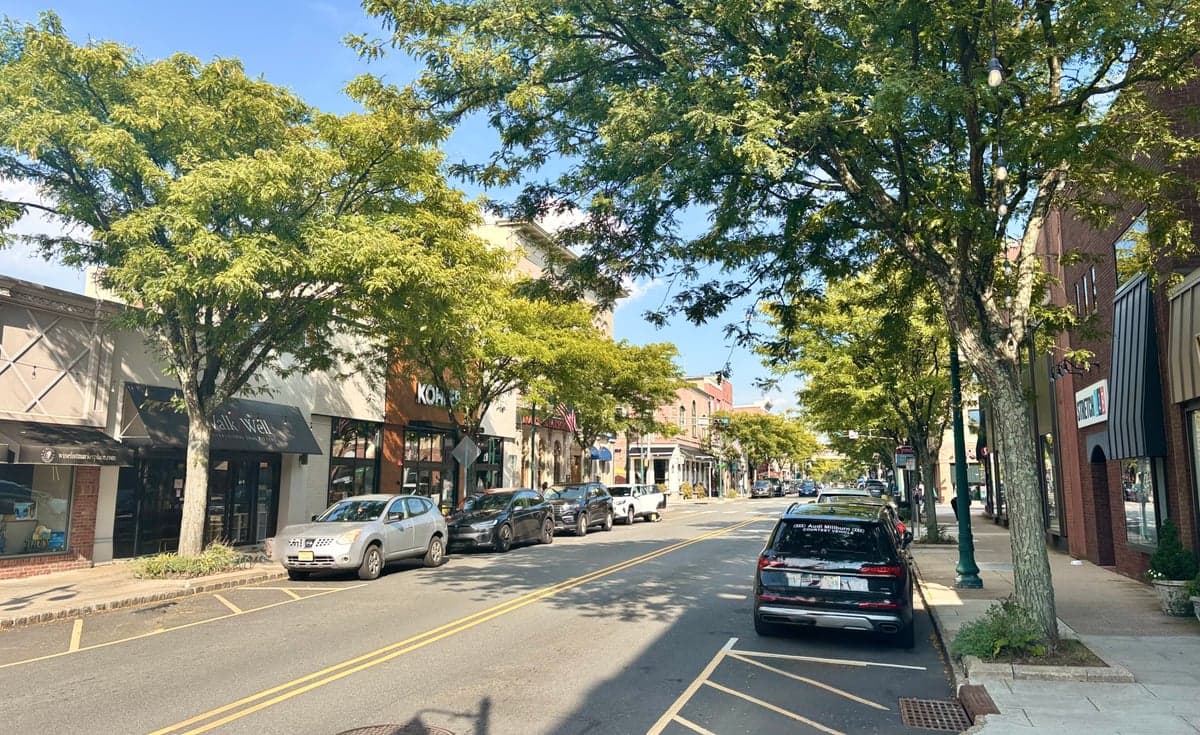
Photo: Wikipedia
Strategic Assessment of Summit, NJ
Multiple tactical vulnerabilities. Population density, target proximity, or disaster risk are likely compounding. A retreat property and exit planning is required.
What does the Strategic Assessment tell us?
Our Strategic Assessment grades tactical survivability of an area. Major population centers, military targets, fallout zones, natural disasters, and border exposure all drive risk — lower exposure means a more defensible position in a crisis.
This is heavily inspired by Joel Skousen's Strategic Relocation book. Highly recommended you checkout the book ($)What does this tell us?
Our Strategic Assessment grades tactical survivability of an area. Major population centers, military targets, fallout zones, natural disasters, and border exposure all drive risk — lower exposure means a more defensible position in a crisis.
This is heavily inspired by Joel Skousen's Strategic Relocation book. Highly recommended you checkout the book ($)Strategic Pillars
Key Distances
Regional Safe Places
Below is our recommended "safe zones" in New Jersey and the surrounding area based on our strategic heuristics. For most people, it's unrealistic to live in a “safe zone” full-time due to work, family or other personal reasons. They tend to be more rural. However, many of these areas are perfect for second homes and retreat properties that double as a vacation home or even a short-term rental.
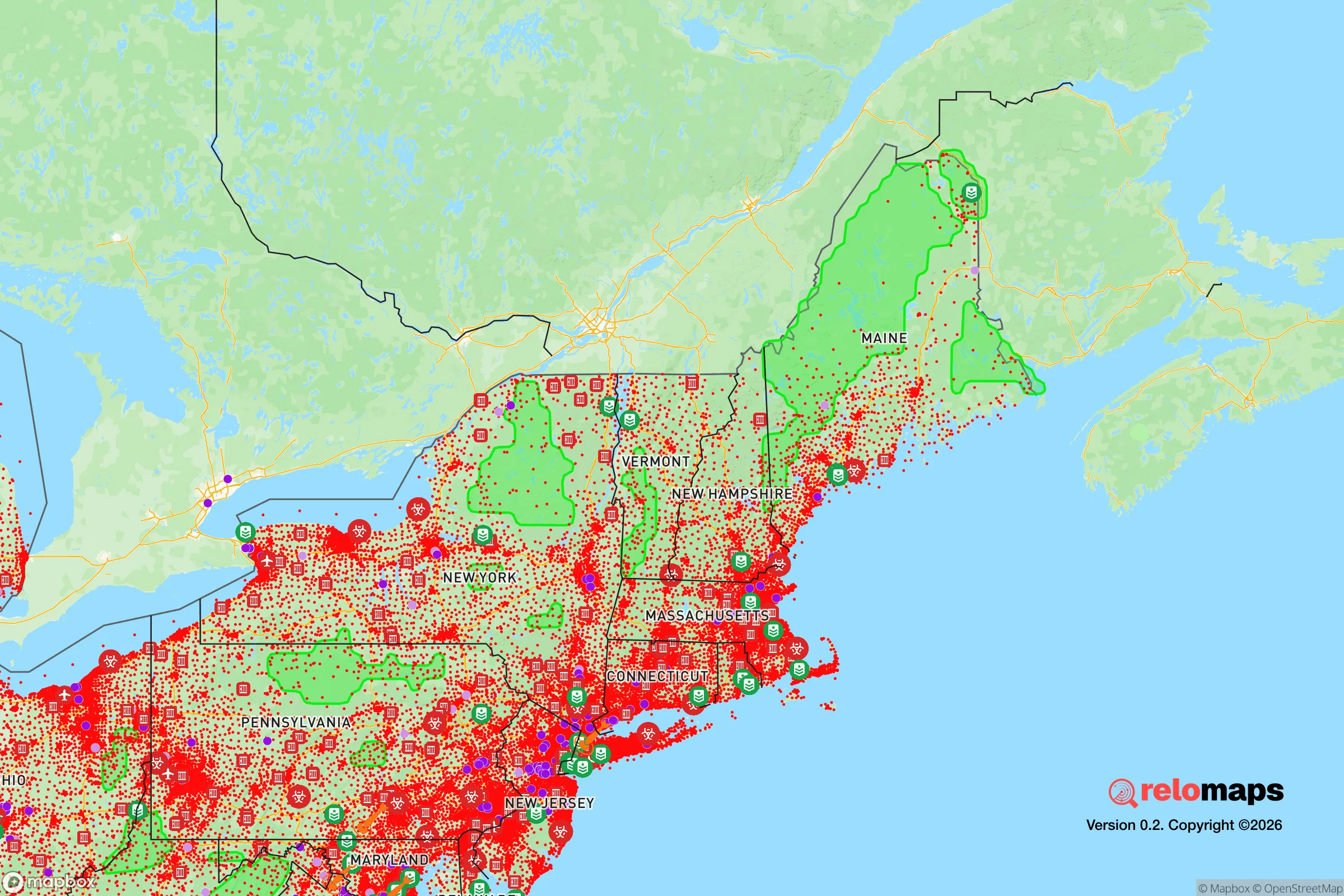
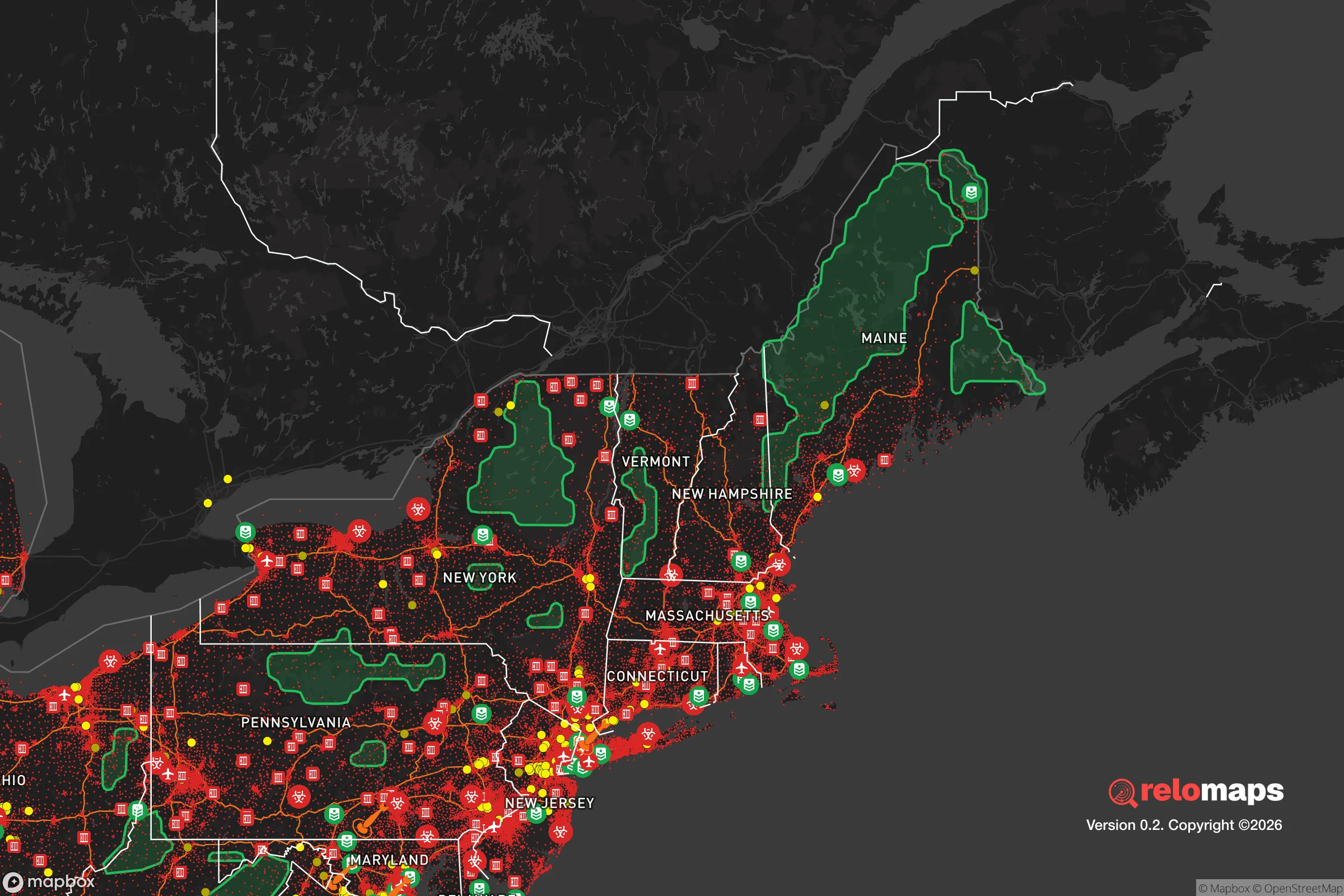


Important Note: For informational purposes only. This does not mean nothing bad ever happens in the green zones. Please use common sense. This is based on public data and modeled with AI. We tried to take a conservative approach but mistakes happen. We update this regularly as new information becomes available.
Solar Generator Recommendations
Backup power matters more here than in safer locations. We've picked three solar generators across budgets and capacity tiers — start with the budget unit if you only need a few essentials, or step up if you want to run a fridge and HVAC for days at a time.
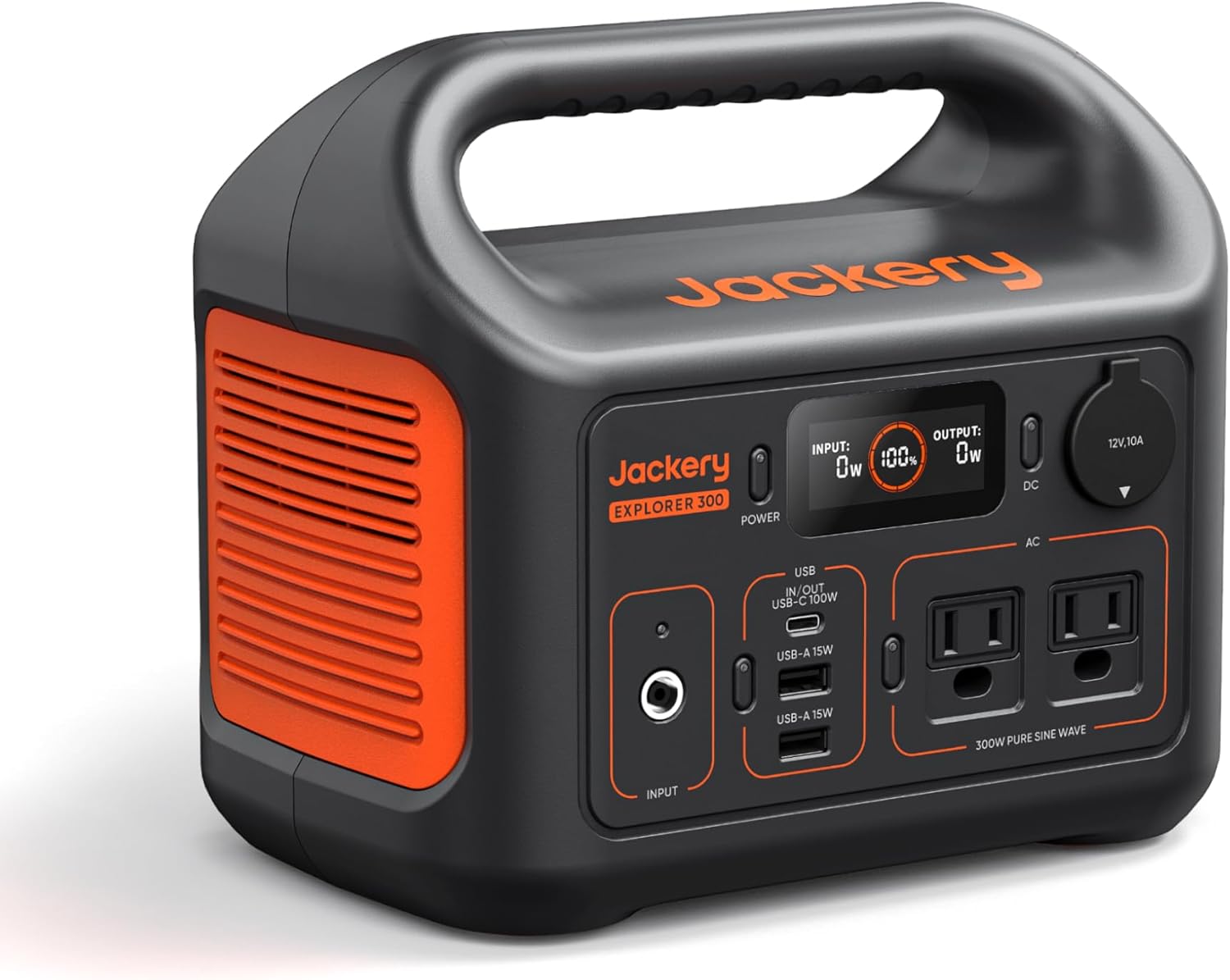
Jackery Portable Power Station Explorer 300
Budget OptionPower on the Go: Weighing only 11 lbs, it's convenient to set up and store with book-sized foldable solar panels

BLUETTI Portable Power Station AC180
Designed for both indoor and outdoor scenarios, AC180 is highly capable as it has a robost capacity and continuous output power.

EF ECOFLOW DELTA Pro Ultra Power Station
Upgraded PickEcoFlow DELTA Pro Ultra is a whole-home energy system designed to grow with your family. Integrated with the Smart Home Panel 2, it scales to meet your evolving energy needs — keeping your home powered, intelligent, and secure through every stage of life.
We earn a commission, at no additional cost to you.
Strategic Assessment Analysis
Summit, New Jersey, is a strategic paradox for the disaster-minded relocator: it offers the dense social infrastructure and rapid-response resources of a top-tier suburb, yet it sits squarely within the blast-radius and fallout-shadow of the New York metropolitan area. For a single individual or family weighing resilience, Summit provides excellent day-to-day stability—strong governance, high property values, and a robust local economy—but its geographic position demands a serious, sober look at what "prepared" actually means here. The city’s true advantage is not isolation, but institutional redundancy: if one system fails, another is likely to catch you. The trade-off is that you are betting on that network holding together during a regional crisis, not on your own remote self-sufficiency.
Geographic position and natural advantages: the Watchung Ridge factor
Summit occupies a topographically favorable perch on the crest of the Watchung Ridge, with elevations ranging from roughly 200 to 500 feet above sea level. That elevation is not just scenic—it provides natural drainage that mitigates the flash-flooding risks that plague lower-lying Union County towns like Cranford or Rahway. The city’s glacial till and rocky subsoil also mean less liquefaction risk during seismic events compared to the soft coastal plains nearer Newark or Elizabeth. You are on high ground, literally and figuratively, relative to the flood-prone Passaic River basin to the west and the tidally influenced waters to the east.
The surrounding open space—the Watchung Reservation, Briant Park, and the Great Swamp National Wildlife Refuge just a few miles west—offers a meaningful buffer against urban sprawl and a potential source of natural forage and firewood in a prolonged emergency. However, that green space is fragmented by Interstate 78 and the NJ Transit rail line, which are both critical infrastructure and potential chokepoints. The reservation is a recreational asset, not a wilderness survival zone; it is heavily trafficked and managed, so do not mistake it for a backcountry retreat. For a relocator, the practical takeaway is that Summit’s natural advantages are about flood mitigation and drainage, not isolation or off-grid capability.
Risks, exposures, and proximity to fallout-relevant landmarks
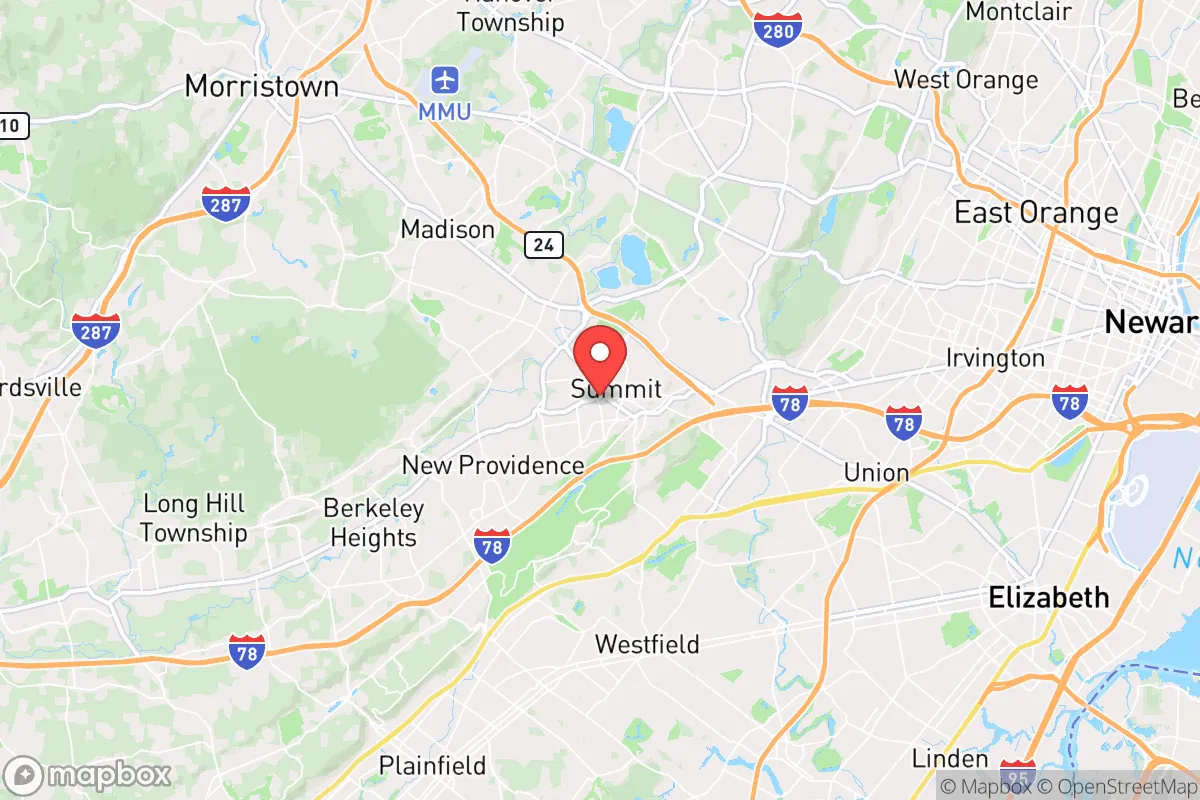
Here is where the analysis gets uncomfortable. Summit is approximately 20 miles west of Midtown Manhattan and roughly 10 miles from Newark Liberty International Airport and the Port Newark–Elizabeth marine terminal—two of the most strategically significant transportation nodes on the Eastern Seaboard. In a conventional military conflict or a major terrorist event targeting the New York metro, Summit would be downwind of the prevailing westerlies, which actually blows fallout away from the city toward Long Island and the Atlantic. That is a small mercy, but it is not a guarantee; wind patterns shift, and a surface burst at any of the region’s nuclear power plants—Indian Point is decommissioned, but the Salem and Hope Creek plants in southern New Jersey remain active—could change the calculus entirely.
The city’s own landmarks are not high-value targets, but its infrastructure is. The NJ Transit Morris & Essex Line runs directly through downtown Summit, and the I-78 corridor is a primary evacuation route for the entire western suburbs. In a mass-exodus scenario, those roads will gridlock within hours, and the rail line will be a target or a casualty of the same event. Summit’s proximity to the AT&T long-lines facility in nearby Bernards Township—a legacy Cold War communications hub—adds a subtle but real risk: that site is a potential secondary target for any adversary seeking to degrade U.S. command and control. The city’s dense residential layout, with narrow tree-lined streets and attached housing in the downtown core, also means that a conventional explosive or a chemical release on the rail line would have immediate, concentrated effects on a civilian population.
Practical resilience for a relocator: food, water, energy, and defensibility
On the practical front, Summit’s resilience is a mixed bag. The city is served by New Jersey American Water, which draws from the Raritan Basin and the Spruce Run Reservoir—a surface supply that is vulnerable to contamination and prolonged outages. There is no municipal well system to fall back on, so a household should plan on a minimum of two weeks of stored water per person, not the FEMA-standard three days. The power grid is typical of the Northeast: overhead lines, tree-heavy corridors, and a history of multi-day outages after nor’easters. Summit has a municipal electric utility, which is a genuine advantage—city-owned utilities tend to restore service faster than investor-owned ones because they answer to local ratepayers, not shareholders. Still, a solar array with battery storage is a wise investment here, not a luxury.
Food security is better than most. Summit has three full-service supermarkets within city limits—Kings, ShopRite, and Whole Foods—plus a thriving farmers’ market on Saturdays from June through November. That is excellent for normal life, but in a crisis, those shelves will empty within 48 hours. The city’s Community Emergency Response Team (CERT) is active and well-trained, and the Summit Police Department is a full-time, professional force with a strong community-policing reputation. Defensibility is the weak point: Summit is a porous, open suburb with multiple road and rail entry points, and its housing stock—mostly pre-war Colonials and Tudors on quarter-acre lots—offers no natural chokepoints. This is not a bug; it is a feature of a livable town. But for a relocator whose primary concern is security, Summit’s openness is a liability that must be offset by strong neighborhood networks and a personal security plan, not by physical barriers.
The overall strategic picture: a resilient community, not a redoubt
Summit is best understood as a high-functioning community with strong institutional resilience, not as a survivalist redoubt. Its advantages—elevation, municipal utilities, a professional police force, and a dense network of local services—make it an excellent place to ride out a regional disruption that does not involve direct strategic targeting. Its disadvantages—proximity to Manhattan, reliance on surface water, and porous borders—make it a poor choice for someone seeking true self-sufficiency or a defensible retreat. The rational relocator who chooses Summit should do so with eyes open: invest in a robust home water storage system, a backup power source, and a well-rehearsed evacuation plan that assumes the roads will be jammed. Build relationships with neighbors before you need them, because in a crisis, Summit’s greatest asset is not its geography—it is its people and the civic institutions they sustain. If you want a town that will hold together when things go wrong, Summit is a solid bet. If you want a place that can hold out alone, keep looking west.

* Values derived from national, state, county, city and local statistics and may differ in a specific area. Last updated: 2026-11-09T06:05:59.000Z
Narrative content on this page is AI-generated and may contain mistakes. Verify any details that matter before acting on them.
ReloMaps may earn a commission from affiliate links at no extra cost to you.

