Photo: Wikipedia
Political ClimatePolitical Climate in Summit, NJ
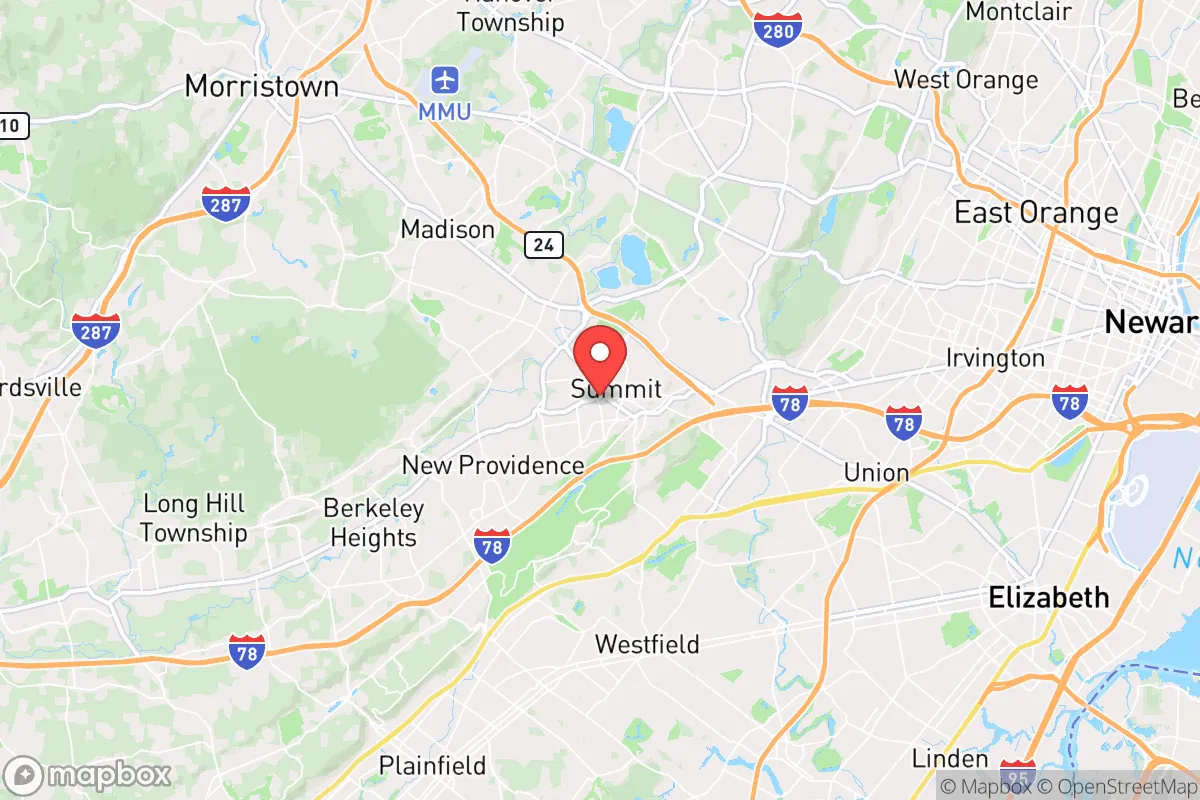
District shown is the primary district for this city’s centroid. Cities may span multiple districts.
Political rankings in New Jersey
- Most Conservative Cities in New Jersey
- Most Liberal Cities in New Jersey
- Best Conservative-Leaning Towns in the Northeast
- Best Conservative-Leaning Towns in the Mid-Atlantic
- Safest Liberal-Leaning Towns on the East Coast
- Safest Conservative-Leaning Towns on the East Coast
- Most Affordable Liberal-Leaning Small Towns in the U.S.
- Safest Liberal-Leaning Cities in the U.S.
- Most Conservative Counties in New Jersey
- Most Liberal Counties in New Jersey
Local Political AnalysisPolitical Analysis of Summit, NJ
Summit, New Jersey, is one of those rare places in the Garden State where the political needle sits dead center. With a Cook Partisan Voting Index (PVI) of EVEN, it’s a genuine swing town in a state that’s otherwise solidly blue (New Jersey overall carries a D+5 PVI). If you’ve lived here a while, you’ve seen the shift: it used to be a reliably Republican suburb, but over the last decade or so, the influx of New York City commuters and younger families has nudged it toward the middle. The result is a town where you’ll see just as many Harris-Walz yard signs as Trump-Pence ones in a given election cycle, and where local races are often decided by a few hundred votes.
How it compares
Compared to the rest of New Jersey, Summit is an outlier. The state as a whole hasn’t voted Republican in a presidential race since 1988, but Summit itself is a genuine battleground. In 2024, the town split almost evenly between the two major candidates, while surrounding Union County went comfortably Democratic. Drive 15 minutes east to Maplewood or South Orange, and you’re in deep-blue territory where Democrats routinely win by 30 points. Head west to Chatham or Bernardsville, and you’ll find towns that lean more Republican, though not as heavily as they did a generation ago. What makes Summit unique is that it’s a microcosm of the national divide: you’ve got Wall Street bankers, tech entrepreneurs, and academics all living on the same block, and they don’t agree on much politically. The local Democratic and Republican committees are both active and well-funded, and town council races are genuinely competitive.
What this means for residents
For conservative residents, Summit is a place where you can be openly Republican without feeling like a pariah. The local GOP still holds sway in school board and zoning debates, and there’s a strong tradition of fiscal conservatism in municipal budgeting. You’ll find plenty of neighbors who share your views on taxes and property rights, even if the state government in Trenton is a different story. For liberal residents, the town’s swing status means you have to work for your wins. Progressive policies on affordable housing, sustainability, and diversity initiatives often pass, but only after robust debate. The practical upshot is that Summit tends to govern from the center: property taxes are high (like everywhere in New Jersey), but services are excellent, and the schools are top-tier. Neither side gets everything it wants, which keeps things civil compared to more polarized towns.
What daily life is like for families
In day-to-day life, the political balance means you’ll hear a mix of perspectives at the coffee shop or the train station. The local paper, Summit Patch, covers school board meetings and council votes with equal attention to both sides. The biggest flashpoints tend to be local: a proposed affordable housing development, a school curriculum change, or a new traffic pattern. National politics rarely dominate conversation the way they do in more ideologically uniform towns. For families, this creates a healthy environment where kids are exposed to different viewpoints. The schools emphasize critical thinking over advocacy, and parent-teacher groups are generally nonpartisan. If you’re moving here, expect to be engaged—Summit rewards residents who show up to town hall meetings and vote in every election, because your vote genuinely counts.
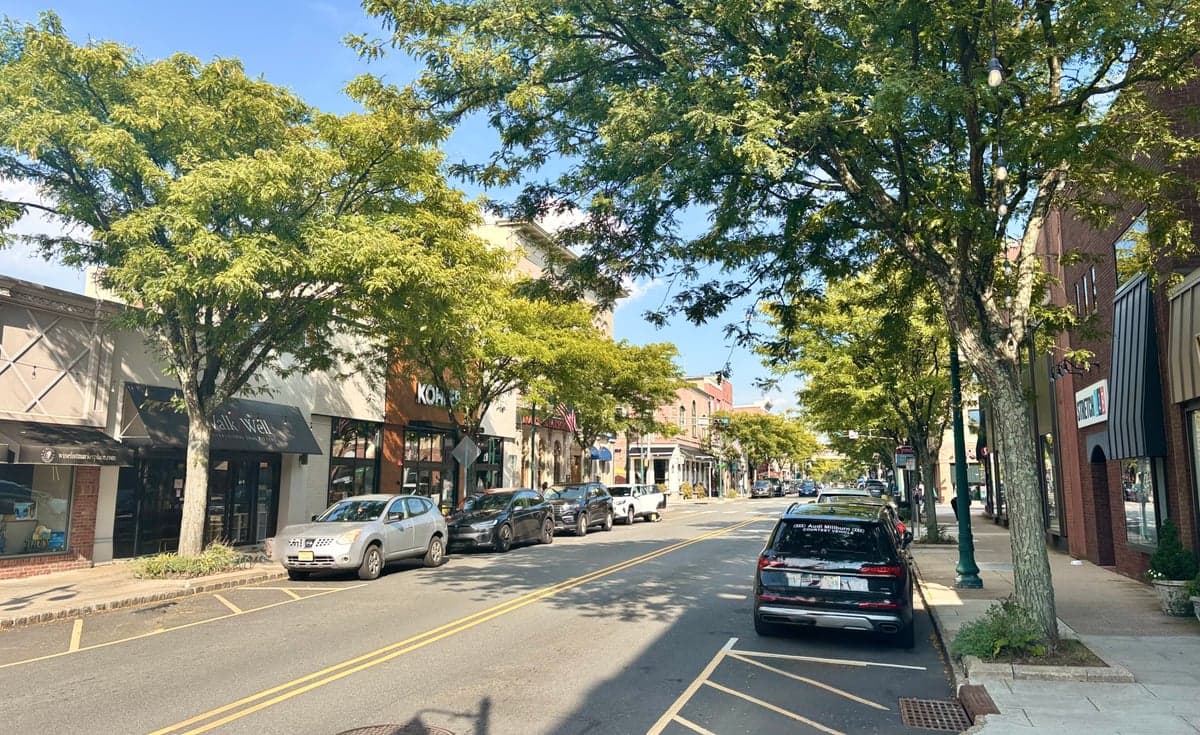
Culturally, Summit stands apart from much of New Jersey by maintaining a small-town feel despite its proximity to Manhattan. There’s no dominant political tribe, so social life isn’t filtered through a partisan lens. The downtown’s independent bookstores and restaurants host events that draw a cross-section of the community. Over the next decade, I expect Summit to stay competitive, though the long-term trend of suburban moderation may nudge it slightly left as younger, more diverse families move in. For now, it’s one of the few places in New Jersey where both conservatives and liberals can feel like they have a real seat at the table.

State Political ClimatePolitical Climate in New Jersey
State Political AnalysisPolitical Environment in the State
New Jersey has a solid Democratic lean, with a Cook PVI of D+5, but that number doesn't tell the full story of a state where machine politics, suburban swing voters, and a surprisingly resilient Republican base in the exurbs and shore counties create a more nuanced picture than the blue label suggests. Over the past 10-20 years, the state has moved left on social issues and immigration, but the tax burden and regulatory environment have kept many fiscal conservatives and libertarian-leaning independents in a perpetual state of grumbling loyalty or quiet exit. The dominant coalition is a mix of urban progressives from Newark and Jersey City, suburban professionals in Essex and Bergen counties, and a powerful public-sector union bloc, but the GOP still holds downstate strongholds and has made inroads in growing exurban areas like Ocean and Monmouth counties.
Urban vs. rural divide
The political map of New Jersey is a classic tale of three regions. The urban core—Newark, Jersey City, Paterson, and Trenton—is overwhelmingly Democratic, driven by dense minority populations, union households, and a strong progressive activist base. These cities reliably deliver 70-80% of their votes to Democrats, and they anchor the party's statewide margins. The suburbs of Bergen, Essex, and Middlesex counties are the real battlegrounds; these are affluent, educated, and increasingly left-leaning on social issues, but they are also tax-sensitive and have produced occasional Republican wins in gubernatorial races when the Democratic candidate is seen as too liberal or corrupt. The rural and exurban south and west—Ocean, Monmouth, Hunterdon, and Sussex counties—are the GOP's base, with strong showings in Toms River, Middletown, and Flemington. These areas are whiter, older, more religious, and deeply skeptical of the state's tax-and-spend culture, but they lack the population density to flip statewide elections on their own. The divide is sharp: drive 20 minutes west of Princeton and you're in Trump country; drive 20 minutes east and you're in deep-blue college town territory.
Policy environment
New Jersey's policy environment is defined by its aggressive tax structure and regulatory density. The state has the highest property taxes in the nation, averaging over $9,500 annually, and a progressive income tax that tops out at 10.75% for earners over $1 million. This funds a robust public education system—per-pupil spending is among the highest in the country—and a generous public pension system, but it also drives a steady outflow of high-earners to Florida and Texas. On healthcare, the state has its own individual mandate and expanded Medicaid under the Affordable Care Act, and it was an early adopter of paid family leave and a $15 minimum wage. Election laws are among the most accessible in the nation: no-excuse mail-in voting, automatic voter registration, and same-day registration are all in place. Gun laws are strict—universal background checks, a permit-to-purchase system, and a ban on many semi-automatic rifles—making it one of the hardest states in which to legally own a firearm. The regulatory posture is business-unfriendly by national standards, with extensive environmental rules, rent control in many municipalities, and a strong union presence in construction and public services.
Recent policy direction
Over the last five years, New Jersey has moved decisively left on several fronts. In 2022, the legislature passed a sweeping gun safety package that included a ban on carrying firearms in "sensitive places" like parks and libraries, and a requirement for liability insurance for gun owners—a law that is currently being challenged in federal court. On education, the state has expanded transgender student rights, requiring schools to affirm a student's gender identity and allowing participation in sports consistent with that identity, which has sparked heated local school board battles in places like Marlboro and Randolph. Parental rights have become a flashpoint: the state's sex education standards, updated in 2020, include lessons on gender identity and sexual orientation from kindergarten, leading to organized opposition and a wave of conservative school board candidates in 2023. On property rights, the state has tightened rent control laws and expanded tenant protections, including a "just cause" eviction requirement in many cities. Voting access has been broadened with permanent mail-in ballot lists and early in-person voting, which Republicans have criticized as eroding election integrity. The overall direction is toward greater state control over local policy, higher taxes on the wealthy, and a more expansive definition of civil rights—but with significant pushback from suburban and rural communities.
Civil unrest & political movements
New Jersey has a long history of organized political activism, from the labor movement to the modern progressive grassroots. The 2020 Black Lives Matter protests were large and sustained in Newark, Trenton, and Asbury Park, leading to police reform legislation that included a ban on chokeholds and a requirement for body cameras. On the right, the "NJ 2nd Amendment" movement is active and well-organized, with regular rallies at the Statehouse and a strong online presence; the state's gun laws have made it a national test case for Second Amendment litigation. Immigration politics are a constant flashpoint: New Jersey is a sanctuary state, with laws limiting local police cooperation with federal immigration enforcement, and this has fueled tensions in towns like Passaic and Elizabeth, where immigrant populations are large and visible. Election integrity controversies have been less explosive than in some states, but the 2020 and 2022 cycles saw Republican activists challenging mail-in ballot procedures in Ocean County, where a GOP stronghold saw close races. The most visible political movement in recent years has been the "Moms for Liberty" and parental rights groups, which have turned school board meetings in Hunterdon and Morris counties into battlegrounds over curriculum and library books. A new resident would notice that political engagement is high, often heated, and frequently focused on local issues like school policy and property taxes rather than national culture wars.
Projection
Over the next 5-10 years, New Jersey is likely to become more Democratic at the statewide level, driven by continued in-migration of younger, more diverse populations to the urban core and inner suburbs, and out-migration of older, whiter, more conservative residents to lower-tax states. The GOP's path to statewide victory is narrowing: the party would need to run a moderate, pro-business candidate who can win back the suburban swing voters in Bergen and Middlesex, while holding the rural base. That's possible in a gubernatorial year—Phil Murphy won by only 3 points in 2021—but the demographic trends favor Democrats in presidential and Senate races. The tax burden is unlikely to decrease significantly, as the state's pension obligations and school funding commitments are locked in, but there may be incremental reforms to attract businesses, such as the recent corporate tax rate reduction. On social issues, the state will continue to be a leader on LGBTQ+ rights, abortion access, and gun control, which will solidify its appeal to progressive relocators but alienate conservatives. The wild card is the housing crisis: if the state fails to build enough housing, the cost of living will drive out the middle class, potentially reshaping the electorate. A person moving in now should expect a state that is reliably blue, increasingly progressive on social policy, and perpetually wrestling with its own fiscal sustainability—a place where your vote matters most in local races and school board elections.
For a conservative-leaning relocator, New Jersey offers a mixed bag: you'll find like-minded communities in the exurbs and shore towns, but you'll be living under a state government that is actively hostile to your views on taxes, guns, and education. For a liberal relocator, it's a comfortable fit with strong public services and progressive policies, but you'll pay dearly for it in taxes and cost of living. The bottom line is that New Jersey is not a purple state—it's a blue state with significant red pockets, and your experience will depend almost entirely on which of those pockets you choose to live in. If you're considering a move, look closely at the county and municipal level: the difference between living in Montclair and Middletown is not just a matter of commute times, but of entirely different political and cultural worlds.
* Values derived from national, state, county, city and local statistics and may differ in a specific area. Last updated: 2026-11-09T06:05:59.000Z
Narrative content on this page is AI-generated and may contain mistakes. Verify any details that matter before acting on them.
ReloMaps may earn a commission from affiliate links at no extra cost to you.

