Photo: Wikipedia
Demographics of Summit, NJ
Affluence Level in Summit, NJ
A wealthy area with high-earning, well-educated households. Incomes, home values, and educational attainment meaningfully outpace national averages.
People of Summit, NJ
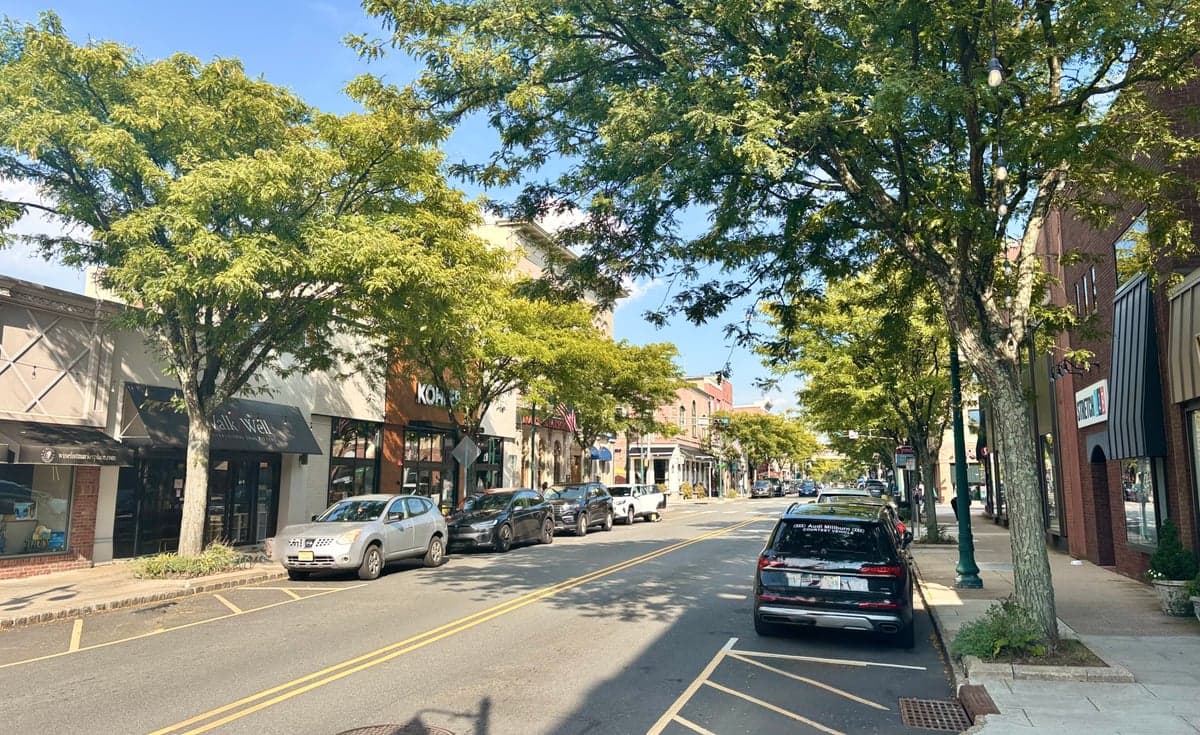
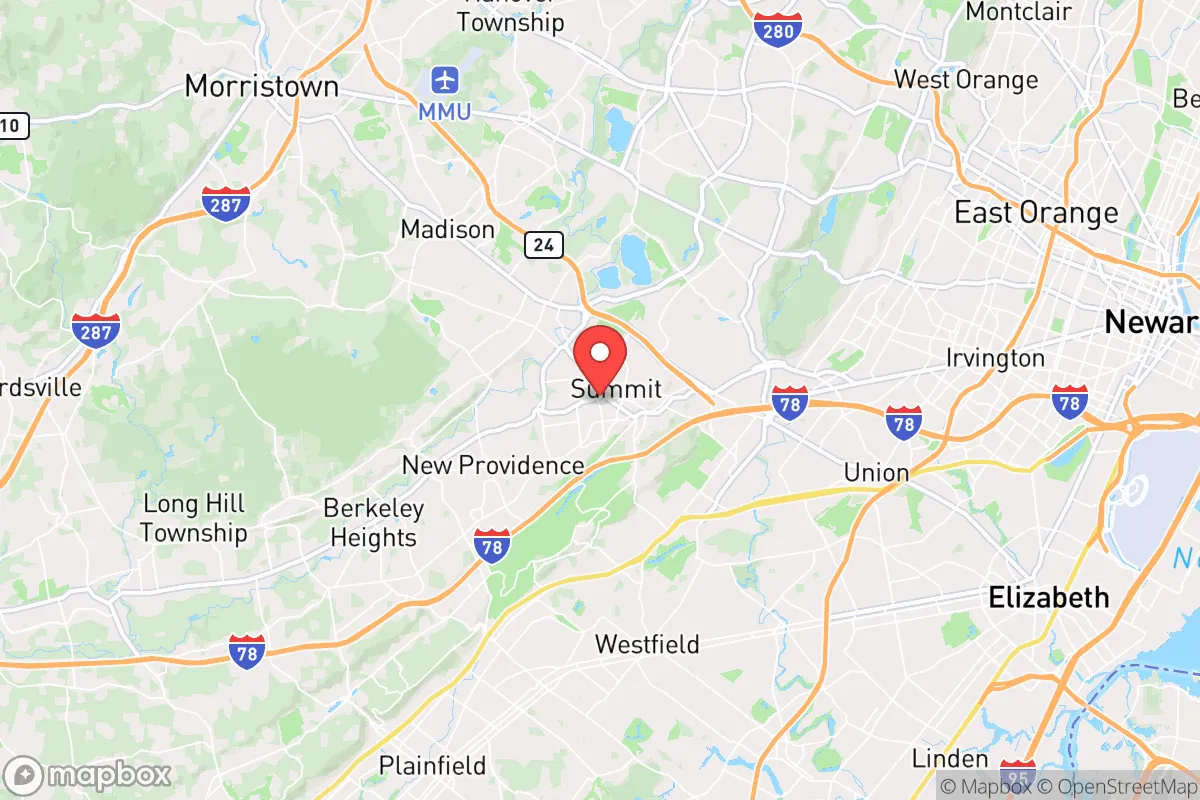
Summit, New Jersey, is a densely settled city of 22,512 residents where 72.7% of adults hold a college degree, making it one of the most highly educated municipalities in Union County. The population is predominantly White (66.7%), with a Hispanic community of 12.0%, a Black population of 7.3%, East and Southeast Asian residents at 5.4%, and a distinct Indian-subcontinent community at 2.6%. Despite its small footprint of roughly six square miles, Summit maintains a distinctly suburban character with a walkable downtown, a commuter rail station on the Morris & Essex line, and a reputation for top-tier public schools that continues to attract professional families.
How the city was settled and grew
Summit’s population history begins not with farming but with transportation. The city was originally part of Springfield Township until the arrival of the Morris & Essex Railroad in 1837 turned the hilltop into a commuter outpost for wealthy New Yorkers seeking country air. The first significant wave of residents were Anglo-Saxon Protestant professionals—bankers, lawyers, and merchants—who built large Victorian homes in the Briant Park and Summit Hill neighborhoods during the 1870s and 1880s. The city incorporated in 1899, and by the early 20th century, a second wave of Irish, German, and Italian immigrants arrived to work on the railroad and in the new light-manufacturing plants along the railroad tracks. These working-class families concentrated in the South End and Glenside sections, where smaller rowhomes and worker cottages still stand today. The post-World War II era brought a third wave: returning veterans and their families, many of Italian and Eastern European Jewish descent, who filled the new single-family homes in the Hickory Hills and Plainfield Avenue corridors as Summit’s population peaked near 24,000 in the 1960s.
Modern era (post-1965)
The 1965 Hart-Cellar Act reshaped Summit’s demographics, though more gradually than in nearby Elizabeth or Newark. The first Asian families—primarily Chinese and Japanese professionals—arrived in the 1970s and 1980s, drawn by the school system and the short commute to Manhattan. They settled largely in the Summit Hill and Briant Park areas, which offered larger homes and established neighborhoods. The Indian-subcontinent community, which now stands at 2.6% of the population, began arriving in the 1990s and 2000s, predominantly as physicians, engineers, and technology executives; they have concentrated in the Hickory Hills and Beacon Hill sections. The Hispanic population, now 12.0%, grew steadily from the 1980s onward, with many families of Colombian, Ecuadorian, and Mexican heritage settling in the South End and the Glenside area, where housing costs remain comparatively lower. The Black population, at 7.3%, includes both families with deep New Jersey roots and newer arrivals from the South and the Caribbean, dispersed across the city rather than concentrated in a single district. Notably, Summit’s foreign-born share of 8.5% is lower than the national average, reflecting that much of the city’s diversity comes from domestic migration of already-established ethnic communities rather than direct immigration.
The future
Summit’s population is becoming modestly more diverse, but the pace is slow. Between 2010 and 2020, the White share declined by roughly five points while the Hispanic and East/Southeast Asian shares each grew by two to three points. The Indian-subcontinent community, while small, is growing at the fastest rate of any group, driven by the expansion of pharmaceutical and tech employers in nearby Summit and Short Hills. New residential development is concentrated in the downtown Downtown Summit district, where several mixed-use buildings have added rental units that appeal to young professionals and empty-nesters, and in the South End, where infill townhomes are attracting first-time buyers. The school-age population is notably more diverse than the overall population, suggesting that the next generation of Summit residents will be even less White than today’s adults. The city’s cultural identity is evolving from a traditional WASP commuter suburb into a multi-ethnic professional hub, though it remains overwhelmingly upper-middle-class and college-educated.
For someone moving to Summit today, the bottom line is this: you are joining a stable, highly educated, and increasingly diverse community where the public schools, commuter access, and downtown amenities are the primary draws. The population is not booming—it has hovered around 22,000 for decades—but it is quietly becoming more representative of the broader New York metropolitan area. New residents will find a city that values its historic neighborhoods, supports its growing ethnic communities, and shows no signs of losing its core identity as a family-oriented commuter town.

* Values derived from national, state, county, city and local statistics and may differ in a specific area. Last updated: 2026-11-09T06:05:59.000Z
Narrative content on this page is AI-generated and may contain mistakes. Verify any details that matter before acting on them.
ReloMaps may earn a commission from affiliate links at no extra cost to you.

