
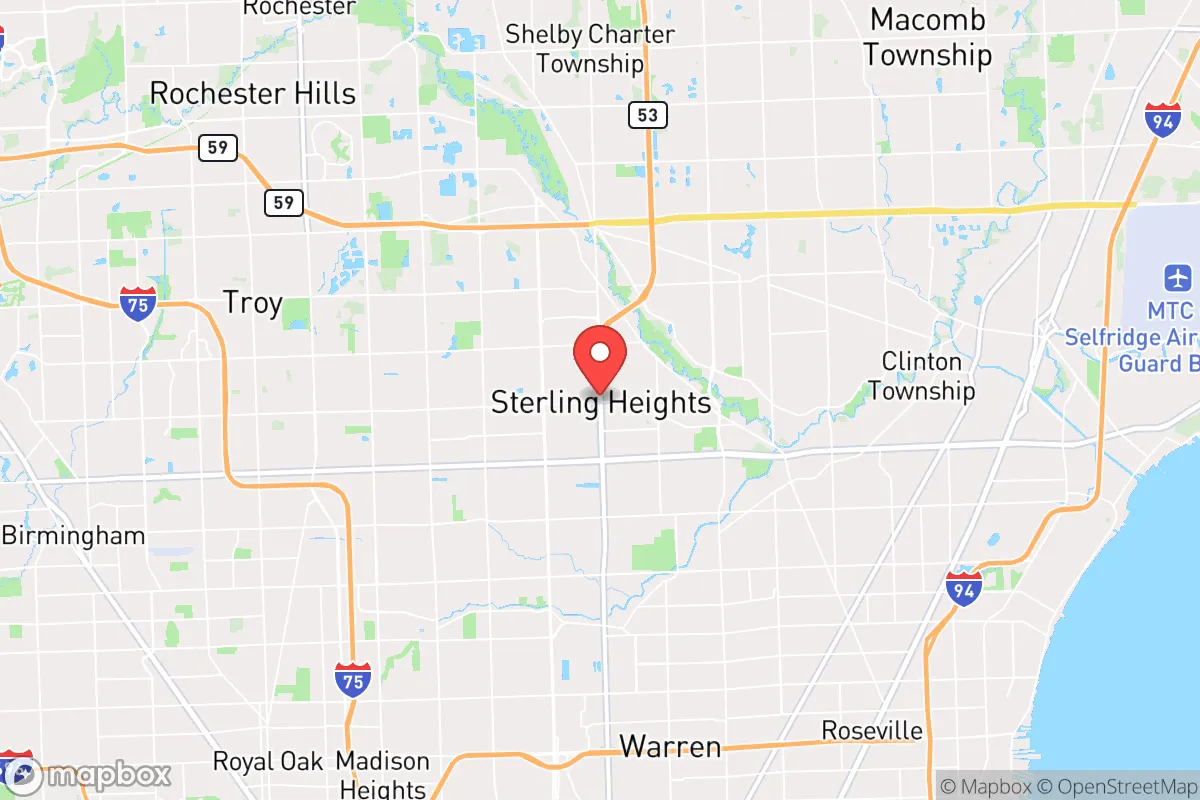
Photo: Wikipedia
Quality of Life in Sterling Heights, MI
A high quality of life with strong walkability, manageable living costs, healthy neighborhood signals, and solid amenity access.
What does Quality of Life tell us?
Quality of Life blends cost of living, nearby amenities, socioeconomic signals, and neighborhood character. City-level scores represent the whole municipality; individual neighborhoods can differ.
What does this tell us?
Quality of Life blends cost of living, nearby amenities, socioeconomic signals, and neighborhood character. City-level scores represent the whole municipality; individual neighborhoods can differ.
Cost of Living
2% above national average
The Real Cost of Living in Sterling Heights, MI for 2026
| Tier | Individual | Family (4) |
|---|---|---|
| Survival | $20k | $38k |
| Comfortable | $51k | $74k |
| Luxury | $120k+ | $185k+ |
| Elite (Top 5%) | $141k+ | $218k+ |
105%
The Area Signal
A metric tracking the socioeconomic signals of the area.
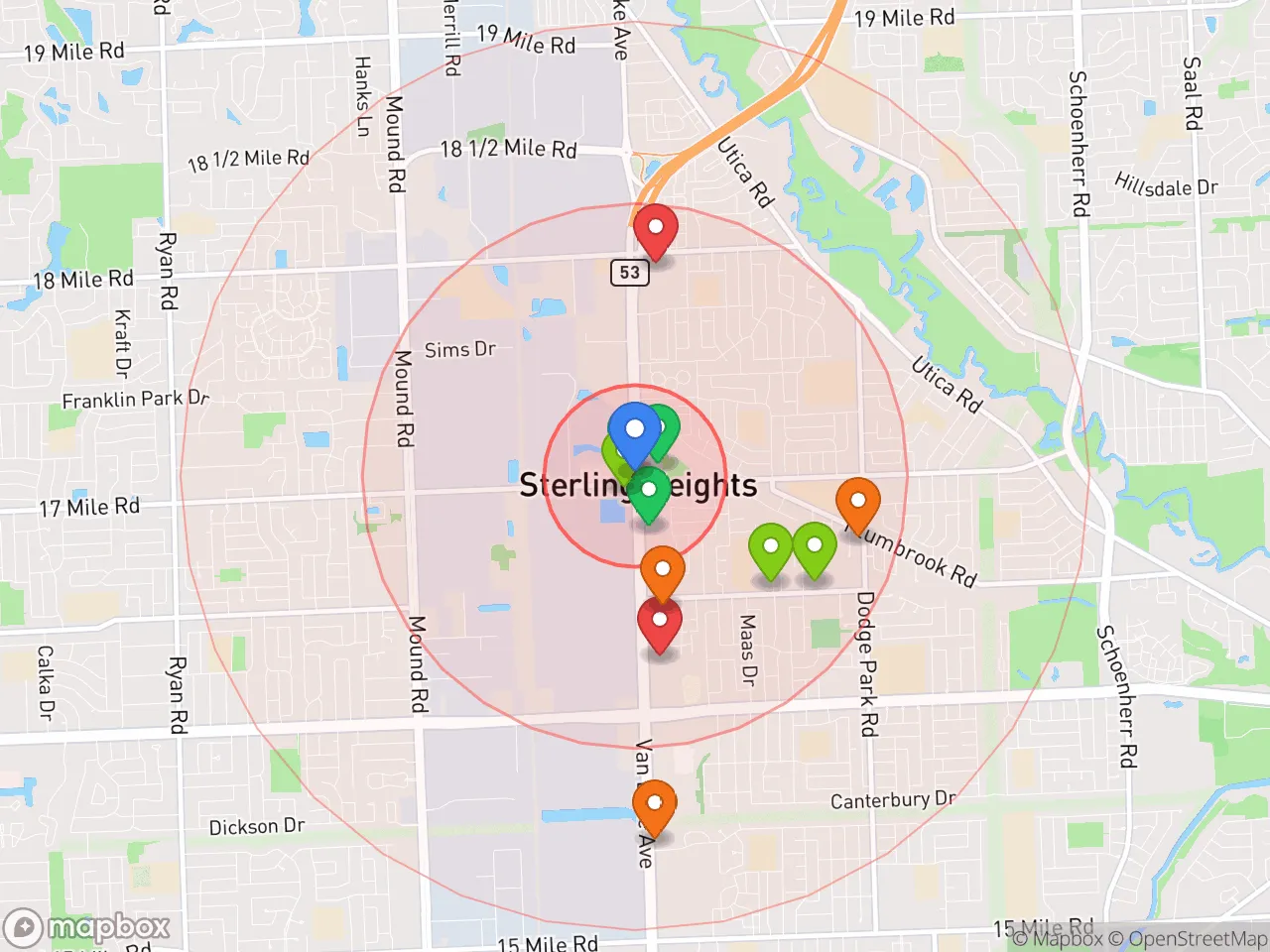
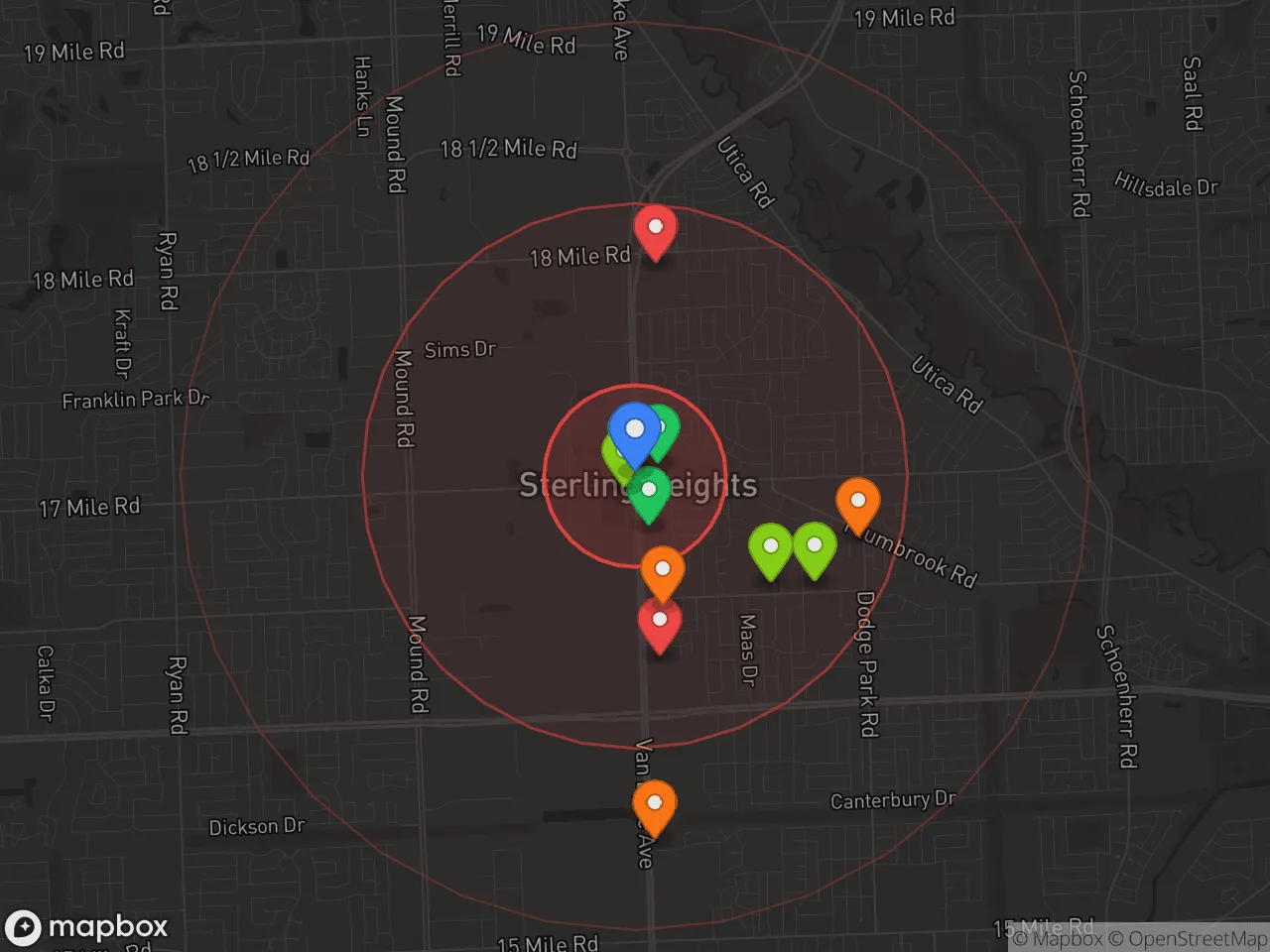
Hobbies
Explore the areaGroceries
7 within 10 miles
Gas
20 within 10 miles
Hospital
20 within 20 miles
Airport
DTW — Detroit Metropolitan Wayne County
Post Office
USPS — Sterling Heights, MI
Critical Amenities
Quality-of-Life Analysis
Sterling Heights presents a middle-to-upper-middle-class quality of life anchored by strong schools, a stable job market, and a notably low crime rate for a city of its size (pop. ~134,000). The city attracts a mix of long-established families, second-generation immigrants (particularly from Iraq, Poland, and Macedonia), and professionals working in Detroit’s northern suburbs. It is not a wealthy enclave like neighboring Bloomfield Hills, but it offers a solid, family-oriented standard of living that consistently ranks among the safest large cities in Michigan.
Cost of living, housing, and affordability compared to nearby areas
Sterling Heights’ cost of living index sits at 102, essentially on par with the national average and notably lower than the pricier suburbs to the west and south. The median home value of $260,700 is roughly $40,000 less than the Macomb County median and significantly below Oakland County’s median of $330,000. For renters, the median rent of $1,267 is manageable for a two-bedroom unit, though it has risen about 18% since 2020. The average commute of 25 minutes is shorter than the Detroit metro average of 28 minutes, thanks to the city’s position near M-59, M-53, and I-696. Property taxes in Macomb County are moderate — roughly 1.8% of assessed value — and utilities (DTE Energy, Consumers Energy) run slightly above the national average. For buyers, the market is competitive but not overheated; homes in the $250,000–$300,000 range typically sell within 30–45 days.
What daily life is like for families: schools, parks, and amenities
Daily life in Sterling Heights revolves around its well-regarded public schools, extensive park system, and accessible retail. The Utica Community Schools district, which serves most of the city, is the third-largest in Michigan and consistently earns B+ ratings from Niche, with several elementary schools (e.g., Messmore, Morgan) rated in the top 10% of Michigan public schools. The city operates over 30 parks, including the 60-acre Dodge Park with its splash pad, sports fields, and the annual Sterlingfest Art & Music Fair. For shopping and dining, Lakeside Mall anchors the east side, though foot traffic has declined since 2020; more vibrant commercial corridors exist along Van Dyke Avenue and M-59, with Middle Eastern bakeries, Polish delis, and chain restaurants. The city’s violent crime rate is 1.4 per 1,000 residents — roughly one-third the national average — which is a primary draw for families. Drawbacks include a lack of walkable downtown districts (the city is built around suburban arterials) and limited nightlife beyond sports bars and chain restaurants.
Who thrives in Sterling Heights — and who might look elsewhere
Sterling Heights is best suited for families seeking affordable suburban stability, good public schools, and a safe environment within a reasonable commute to Detroit or Auburn Hills. It works well for dual-income households, retirees on fixed incomes, and first-time homebuyers priced out of Oakland County. The city is less ideal for young singles or professionals who want a walkable urban lifestyle, a vibrant arts scene, or direct access to Detroit’s nightlife — those groups tend to prefer Royal Oak, Ferndale, or Midtown Detroit. For anyone prioritizing safety, school quality, and a lower cost of entry into metro Detroit’s housing market, Sterling Heights remains one of the most practical choices in Macomb County.

Crime in Sterling Heights, MI
Generally safer than 74% of comparable U.S. locations.
Violent CrimeViolent Crime Analysis
Property CrimeProperty Crime Analysis
Crime Analysis
Sterling Heights presents a mixed safety profile for potential residents. While the city’s violent crime rate of 220.2 incidents per 100,000 residents is notably lower than the national average, its property crime rate of 1,156.2 per 100,000 is elevated, placing it above both state and national benchmarks. This combination requires careful consideration, particularly given the broader context of Macomb County’s justice system, which operates under a progressive prosecutorial philosophy that prioritizes rehabilitation over incarceration, a factor that directly impacts public safety outcomes.
Crime in context
Sterling Heights’ violent crime rate of 220.2 per 100,000 is roughly 37% lower than the national average of approximately 370 per 100,000, making it a relatively safe choice for violent offenses compared to the rest of the country. However, the property crime rate of 1,156.2 per 100,000 is about 15% higher than the national average of roughly 1,000 per 100,000 and significantly exceeds the Michigan state average. This disparity is a direct consequence of the area’s progressive judicial policies, which emphasize leniency and alternative sentencing for property offenders. Such an approach, while sympathetic to the circumstances of criminals, results in more offenders remaining on the streets, thereby increasing the risk of theft, burglary, and vehicle break-ins for law-abiding residents.
What residents experience
For those living in Sterling Heights, the day-to-day reality is one of low personal violence risk but persistent property crime concerns. The city’s low violent crime rate means that incidents like assault, robbery, and homicide are uncommon, providing a sense of personal security. However, the elevated property crime rate translates into a tangible threat to homes and vehicles. Residents frequently report package thefts, car break-ins, and garage burglaries. This pattern is exacerbated by the local justice system’s progressive stance, which often results in repeat property offenders cycling through the system without meaningful consequences. This creates a frustrating environment where victims feel that the system prioritizes the rights of criminals over the safety of the public, leading to a sense of injustice and diminished community trust.
Neighborhood-level variation in Sterling Heights is moderate, with older, more densely populated areas near M-59 and Van Dyke Avenue experiencing higher property crime rates than the newer subdivisions in the northern and western parts of the city. The area around Lakeside Mall has historically seen more theft-related incidents. While no neighborhood is immune to the effects of the county’s progressive criminal justice policies, homes with visible security systems, well-lit driveways, and active neighborhood watch programs tend to fare better. Ultimately, Sterling Heights offers a trade-off: a low risk of violent crime in exchange for a higher risk of property crime, a dynamic heavily influenced by the surrounding legal and political environment.
* Values derived from national, state, county, city and local statistics and may differ in a specific area. Last updated: 2026-07-10T15:29:39.000Z
Narrative content on this page is AI-generated and may contain mistakes. Verify any details that matter before acting on them.
ReloMaps may earn a commission from affiliate links at no extra cost to you.

