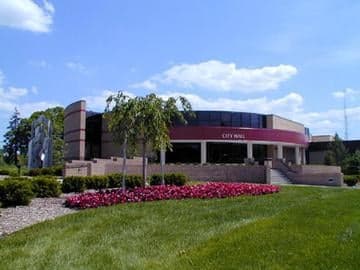
Photo: Wikipedia
Political ClimatePolitical Climate in Sterling Heights, MI
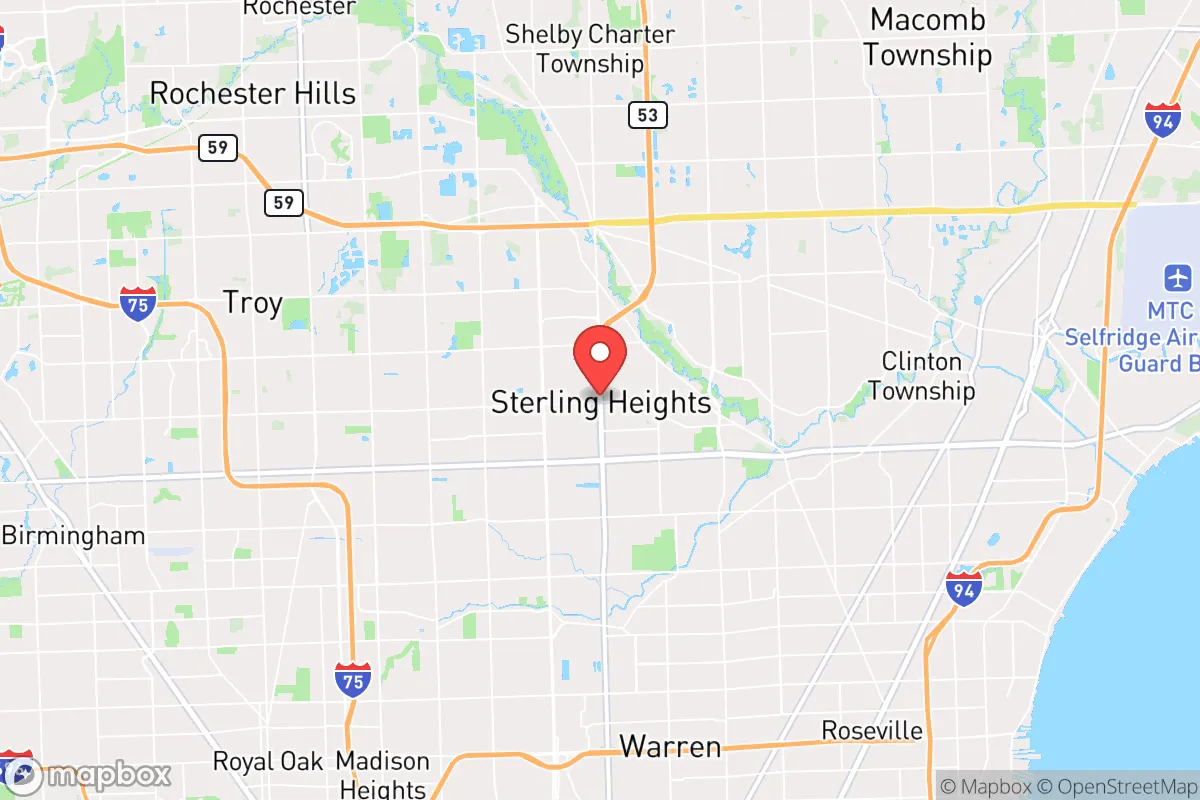
District shown is the primary district for this city’s centroid. Cities may span multiple districts.
Local Political AnalysisPolitical Analysis of Sterling Heights, MI
Sterling Heights has long been a bellwether for Macomb County’s famously pragmatic, blue-collar electorate, and today it leans reliably Republican with a Cook PVI of R+3. That’s a noticeable shift from the auto-town Democratic stronghold it was in the 1990s and early 2000s, when the UAW hall and local union endorsements carried serious weight. The trajectory has been steady: the city voted for Trump in both 2016 and 2020, and the surrounding precincts in northern Macomb County have trended redder with each cycle. You still see plenty of “Union Yes” bumper stickers, but they’re just as likely to sit next to a “Don’t Tread on Me” plate as a Democratic one. The political identity here is less about party loyalty and more about kitchen-table economics—taxes, roads, and how far a paycheck goes.
How it compares
Sterling Heights’ R+3 rating stands in clear contrast to Michigan’s statewide Cook PVI of EVEN, meaning the city is about three points more conservative than the state as a whole. That gap becomes obvious when you drive 20 minutes south into Detroit (D+47) or 15 minutes east into St. Clair Shores, which leans slightly left of Sterling Heights. Head west a half-hour to Troy or Bloomfield Hills, and you’re in reliably Republican Oakland County suburbs, but those are wealthier, whiter, and more fiscally conservative—Sterling Heights is more working-class and culturally moderate. The real contrast, though, is with Ann Arbor (D+28) or Grand Rapids (R+9), which represent the state’s ideological poles. Sterling Heights sits in the messy middle: not as blue as Wayne County, not as red as the Thumb, and far more volatile than either.
What this means for residents
For conservative residents, the R+3 lean means their votes usually carry the day in local races—city council, county commission, and school board seats tend to go to Republicans or conservative-leaning independents. You won’t feel like a political outlier at the grocery store or the high school football game. For liberal residents, the reality is more nuanced: you’re in a minority, but not a tiny one. Roughly 42–45% of the city votes Democratic in presidential years, so you’ve got company. The practical effect is that local policy tends to be moderate—taxes stay relatively low, zoning stays business-friendly, and the city government avoids the culture-war fights that dominate places like Warren or Canton. Both sides can live here without feeling constantly at odds with their neighbors.
Culturally, Sterling Heights stands apart from both Detroit’s progressive activism and the rural conservatism of Lapeer County. The city’s large Chaldean and Arab-American communities—many of whom own small businesses—tend to prioritize economic stability and public safety over national partisan battles. You won’t see a lot of yard signs for polarizing ballot initiatives, and the local paper’s letters page is more likely to argue about pothole funding than gun control. That’s the Sterling Heights way: pragmatic, a little skeptical of both parties, and more interested in whether the snow gets plowed than in which flag flies over the county building. It’s a place where the political climate is real, but it rarely feels like a battlefield.

State Political ClimatePolitical Climate in Michigan
State Political AnalysisPolitical Environment in the State
Michigan is the ultimate swing state in the 2020s, carrying a Cook PVI of EVEN and proving it by flipping from Obama (2012) to Trump (2016) to Biden (2020) and then delivering a split government in 2022. The state’s political identity is a tug-of-war between the heavily unionized, diverse urban core of Detroit and the rapidly reddening exurbs and rural west and north, with a critical suburban battleground in Oakland and Macomb counties that decides every statewide election. Over the last 20 years, the old "blue wall" has cracked — Democrats lost the white working-class base in the Saginaw Valley and the Upper Peninsula, while Republicans have struggled to hold onto the moderate, college-educated voters in Grand Rapids’ Kent County and the Detroit suburbs.
Urban vs. rural divide
The political map of Michigan is a study in extremes. Wayne County (Detroit) and Washtenaw County (Ann Arbor) are Democratic strongholds, delivering margins of 60-70% for the party, powered by Black voters in Detroit and the university population in Ann Arbor. Meanwhile, the rural Lower Peninsula — places like Missaukee, Osceola, and Gladwin counties — routinely vote 70-75% Republican. The real battleground is the suburban ring: Oakland County, once a GOP bastion, has shifted blue over the past decade, while Macomb County (north of Detroit) remains the most watched swing county in America, flipping from Obama to Trump to Biden. Out west, Kent County (Grand Rapids) has moved from reliably red to competitive, driven by a growing Hispanic population and younger professionals. The Upper Peninsula and northern Lower Peninsula are ancestrally Democratic but have trended sharply right on cultural and gun issues, making them now reliably Republican in statewide races.
Policy environment
Michigan’s policy landscape is a mixed bag that reflects its swing-state status. The state has a flat income tax rate of 4.25%, which was temporarily reduced to 4.05% in 2023 due to a 2015 law triggering automatic cuts when revenues surge — a rare win for tax relief. Property taxes are moderate, with a unique "Headlee Amendment" cap limiting annual increases to the rate of inflation or 5%, whichever is lower. Sales tax is 6%. On regulation, Michigan is a right-to-work state — but only until the current Democratic majority’s repeal takes full effect in 2024, a major flashpoint. Education policy is decentralized; school choice is robust with charter schools and inter-district open enrollment, but the Detroit Public Schools Community District remains under state oversight. Healthcare is dominated by Blue Cross Blue Shield of Michigan, and the state expanded Medicaid under the Healthy Michigan Plan in 2014. Election laws are relatively accessible: no-excuse absentee voting was approved by voters in 2018, and same-day voter registration is available. However, voter ID is required at the polls (with an affidavit option), and the 2020 election saw intense scrutiny of Detroit’s absentee ballot processing.
Recent policy direction
The 2023-2024 Democratic trifecta (Governor Gretchen Whitmer, House, and Senate) has pushed a distinctly progressive agenda that has reshaped the state’s legal landscape. Gun laws were tightened significantly: universal background checks, safe storage requirements, and a "red flag" extreme risk protection order law were all signed in 2023. Parental and education rights saw a major shift with the repeal of the 2012 right-to-work law and the expansion of the Elliott-Larsen Civil Rights Act to include sexual orientation and gender identity — a move that has energized both supporters and opponents. On abortion and bodily autonomy, Michigan voters enshrined reproductive freedom in the state constitution via Proposal 3 in 2022, overturning a 1931 ban. Property rights remain generally strong, though the state has increased environmental regulations on large farms and industrial sites. Voting and ballot access expanded with the 2018 and 2022 ballot initiatives, including nine days of early voting and automatic voter registration. For conservatives, the direction is concerning: the repeal of right-to-work, new gun restrictions, and the expansion of LGBTQ+ nondiscrimination protections represent a clear shift left. For liberals, the same laws are seen as overdue corrections. The state has not passed any major privacy or surveillance legislation, leaving Michigan without a comprehensive data privacy law — a gap that affects both left and right.
Civil unrest & political movements
Michigan has been a flashpoint for political activism on both sides. The 2020 Whitmer kidnapping plot and the armed protests at the state capitol over COVID-19 restrictions put Michigan at the center of the national debate on government overreach and self-defense. The "Wolverine Watchmen" militia group was implicated in the plot, and the trials have kept the issue of domestic extremism in the headlines. On the left, the Detroit Action and Michigan United organizations have been active in pushing for criminal justice reform and immigrant rights. Immigration politics are less heated than in border states, but Washtenaw County and Ingham County (Lansing) have declared themselves "sanctuary counties," limiting cooperation with ICE. The 2020 election integrity controversy centered on Detroit’s absentee ballot counting process, leading to Republican-led audits and ongoing distrust among some voters. A new resident will notice the "Keep Michigan Great" and "Unlock Michigan" bumper stickers as visible markers of the cultural divide, especially in the exurbs and rural areas.
Projection
Over the next 5-10 years, Michigan is likely to remain a competitive swing state, but the demographic trends favor Democrats in the long run. The suburbanization of Oakland and Kent counties continues to pull them left, while the aging and shrinking population of the Upper Peninsula and rural areas reduces the GOP’s rural advantage. In-migration from other states is modest and concentrated in the Grand Rapids and Traverse City areas, which are growing but not fast enough to offset Detroit’s population loss. The Hispanic population in western Michigan is growing and leaning Democratic, while the Arab American community in Dearborn is becoming more politically independent, sometimes splitting tickets. The wild card is the 2024 election and the potential for further polarization around election administration. If the current Democratic trifecta holds or expands, expect more progressive policies on climate, labor, and social issues. If Republicans retake the legislature in 2026, expect a push to repeal the new gun laws and right-to-work repeal. Either way, Michigan will remain a state where every election is decided by a few thousand votes in Macomb and Kent counties.
For a new resident, the bottom line is that Michigan offers a genuine swing-state experience — your vote matters, your local government reflects the community’s values, and the policy environment can shift dramatically with each election cycle. Conservatives will find welcoming communities in the exurbs and rural areas, with strong property rights and a lower cost of living, but should expect a state government that is currently leaning left on social and labor issues. Liberals will find safe havens in Ann Arbor, Detroit, and Grand Rapids, with expanding protections and services, but will need to navigate a state where rural and suburban voters are deeply skeptical of government overreach. The key is to choose your county wisely — the difference between living in Oakland County and Livingston County is the difference between two different Americas, both within a 30-minute drive.
* Values derived from national, state, county, city and local statistics and may differ in a specific area. Last updated: 2026-07-10T15:29:39.000Z
Narrative content on this page is AI-generated and may contain mistakes. Verify any details that matter before acting on them.
ReloMaps may earn a commission from affiliate links at no extra cost to you.

