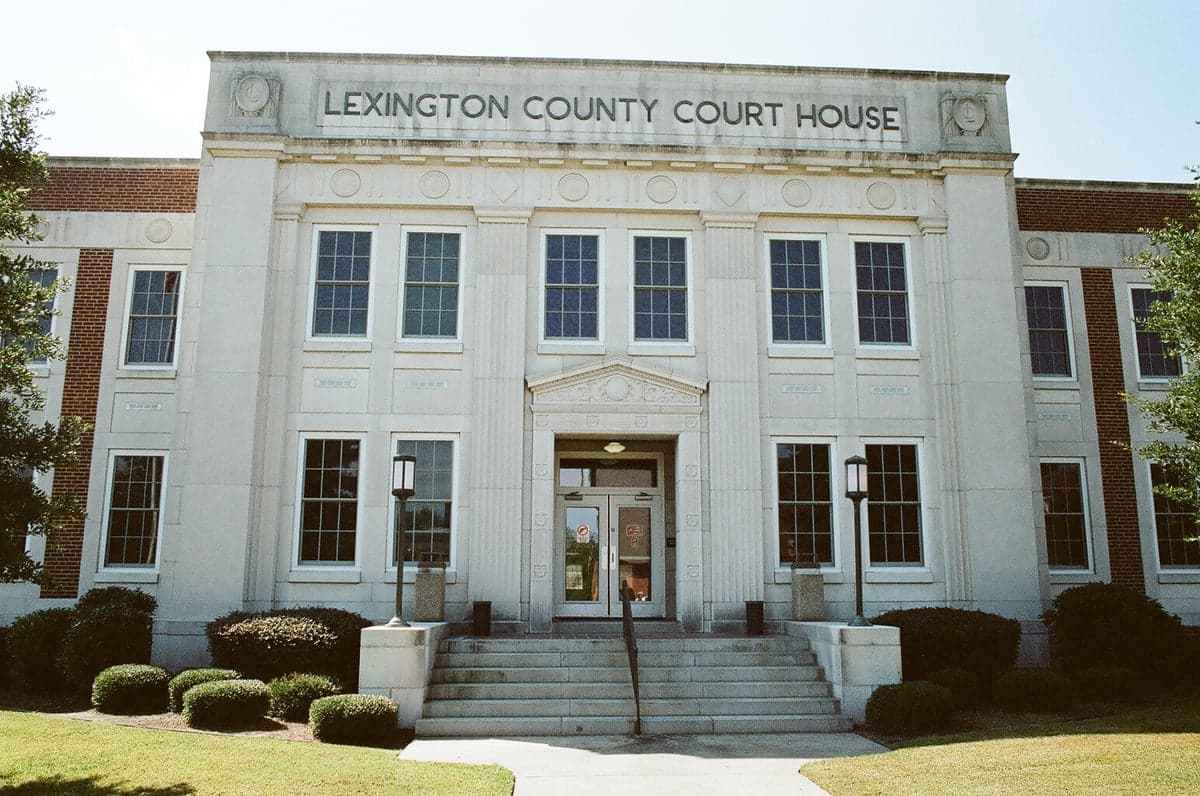
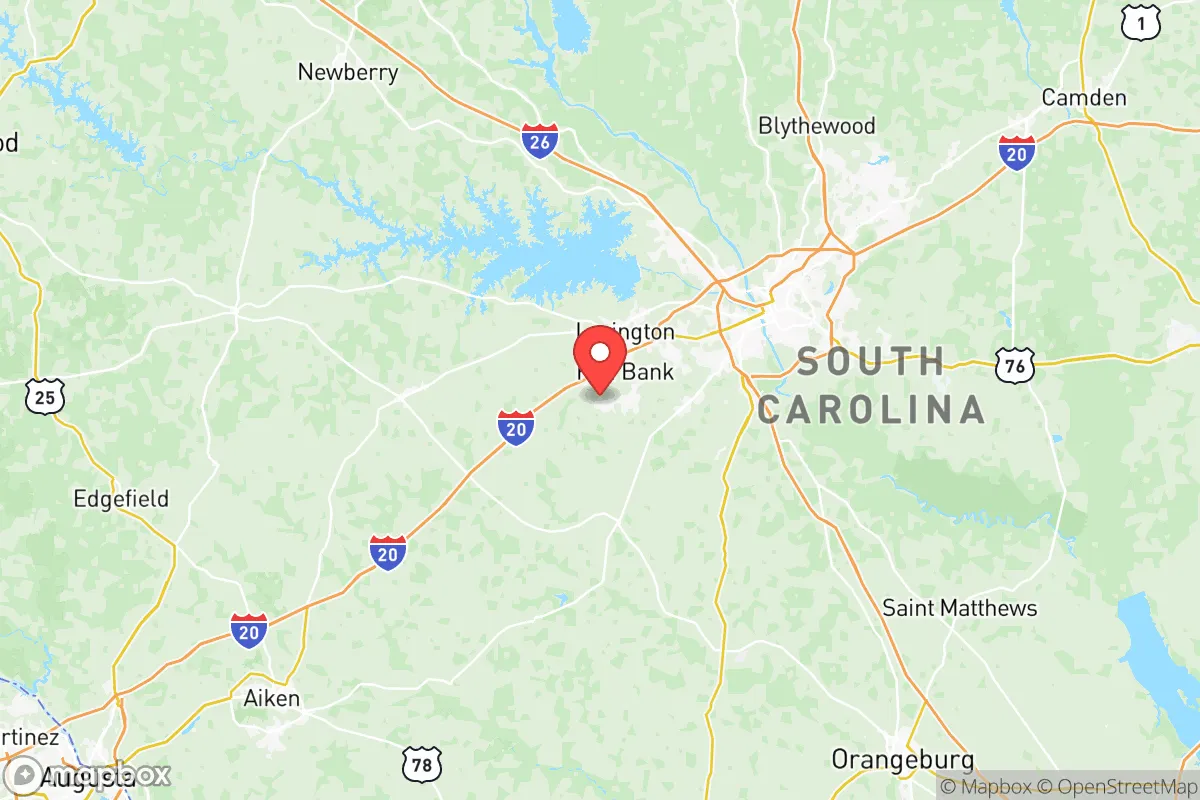
Photo: Wikipedia
Quality of Life in Lexington County
A livable area that tracks near national norms for affordability, walkability, and neighborhood health.
What does Quality of Life tell us?
Quality of Life measures an area by evaluating factors like cost of living, nearby amenities, country club access, airport proximity, socioeconomic signals and neighborhood character. For large states, this is a general average — quality of life can vary dramatically between metro areas, suburbs, and rural communities within the same state.
What does this tell us?
Quality of Life measures an area by evaluating factors like cost of living, nearby amenities, country club access, airport proximity, socioeconomic signals and neighborhood character. For large states, this is a general average — quality of life can vary dramatically between metro areas, suburbs, and rural communities within the same state.
Cost of Living
12% below national average
121%
The Real Cost of Living in Lexington County for 2026
| Tier | Individual | Family (4) |
|---|---|---|
| Survival | $18k | $33k |
| Comfortable | $42k | $62k |
| Luxury | $123k+ | $191k+ |
| Elite (Top 5%) | $145k+ | $225k+ |
Quality-of-Life Analysis
Lexington County, South Carolina, offers a broad quality-of-life spectrum that ranges from the suburban density of its largest town, Lexington, to the quiet, unincorporated crossroads of places like Pelion and Gilbert. With a cost of living index of 88 (well below the national average of 100), the county attracts a mix of Columbia commuters, families seeking good schools, and retirees looking for land without leaving civilization entirely behind. The county’s character shifts noticeably as you move from its bustling I-20 corridor southward into the rural Sandhills and Saluda River bottomlands.
Largest town(s) & population centers
The town of Lexington (population roughly 24,000) serves as the county seat and its primary commercial and civic hub. Daily life here centers around the historic downtown district along Main Street, which features local restaurants, boutique shops, and the Lexington County Museum. The area is heavily oriented toward families, with the Lexington County School District One consistently ranking among the top in the state. Just east, the town of West Columbia (population about 18,000) and the city of Cayce (population roughly 14,000) form a more urbanized, older suburban corridor along the Congaree River. These communities offer direct access to Columbia via the Gervais Street Bridge and are home to the Riverbanks Zoo and Garden, a major regional attraction. Commute times in this corridor average 26 minutes, reflecting the daily flow of workers into the state capital. Housing here is denser and older than in the county’s newer subdivisions, with median home values around $217,700 and median rents near $1,115.
Smaller towns & rural pockets
South of the I-20 belt, the county opens into a landscape of pine forests, farmland, and small crossroads communities. The town of Pelion (population roughly 700) sits at the junction of US 178 and SC 6, offering a true small-town feel with a single traffic light, a local feed store, and the Pelion High School Panthers as a community anchor. Further west, Gilbert (population about 700) is known for its annual Gilbert Blueberry Festival and its position as a bedroom community for both Lexington and Columbia, though with noticeably larger lots and lower housing costs. The unincorporated area of Summit, near the Saluda County line, is sparsely populated and dominated by hunting clubs and timberland. These rural pockets see significantly longer commutes—often exceeding 35 minutes—but offer land prices that can be half those of Lexington’s newer subdivisions. The town of Chapin (population roughly 1,500), on the shores of Lake Murray, occupies a middle ground: it is small but affluent, with lakefront properties commanding premiums that push local home values well above the county median.
Cost & lifestyle range
The cost of living in Lexington County varies dramatically by location. At the high end, lakefront homes in the Chapin and Lake Murray areas can exceed $600,000, while newer subdivisions in the Lexington town limits—such as those off Corley Mill Road—typically list between $300,000 and $450,000. At the low end, older homes in West Columbia’s Saluda River corridor and rural properties near Pelion and Gilbert can be found for under $150,000, making homeownership attainable for first-time buyers. Rentals follow a similar spread: a two-bedroom apartment in Lexington town center averages $1,200–$1,400, while comparable units in rural areas or older West Columbia complexes can fall below $900. The county’s overall cost of living index of 88 is driven largely by housing costs that are roughly 20% below the national average, though property taxes in Lexington County are higher than in neighboring counties like Saluda or Newberry due to the school district’s funding needs. Amenities also thin out as you move south: Lexington and West Columbia have full-service hospitals (Lexington Medical Center), big-box retail, and multiple grocery chains, while Pelion and Gilbert rely on a single local grocery store and a 20-minute drive to the nearest Walmart.
Lexington County works best for people who want proximity to Columbia’s jobs and culture but prefer a lower cost of living and a choice between suburban convenience and rural space. Families with school-age children gravitate toward the Lexington and Chapin attendance zones for their top-rated schools. Commuters willing to trade time for land find value in Pelion and Gilbert. Retirees and second-home buyers are drawn to the Lake Murray shoreline. The county’s defining strength is that it offers all these options within a 30-minute drive of the state capital, making it one of the most versatile living environments in the Midlands.

Crime in Lexington County
Crime rates similar to the national median for U.S. locations.
Violent CrimeViolent Crime Analysis
Property CrimeProperty Crime Analysis
Crime Analysis
Lexington County, South Carolina, presents a mixed safety profile that is heavily influenced by its proximity to the state capital, Columbia. While the county’s overall violent crime rate of 372.5 per 100,000 residents sits below the national average, it is significantly higher than the statewide average for South Carolina, a state that consistently ranks among the most dangerous in the nation for violent crime. Property crime, at 1,640.5 per 100,000 residents, also exceeds the national benchmark, making property theft and vehicle break-ins the most common public safety complaints. The picture is not uniform across the county, with distinct differences between the more urbanized, Columbia-adjacent towns and the quieter, more rural communities to the south and west.
Crime in context
To understand Lexington County’s safety, it must be compared to both state and national figures. The national violent crime rate in 2024 was approximately 380 per 100,000, meaning Lexington County’s 372.5 rate is just under that mark. However, South Carolina’s statewide violent crime rate is roughly 490 per 100,000, making Lexington County a relative safe haven within a high-crime state. The property crime rate of 1,640.5 per 100,000 is higher than the national average of about 1,950, but again lower than the South Carolina average of roughly 2,200. The county benefits from a robust law enforcement presence, including the Lexington County Sheriff’s Department and municipal police in towns like Lexington, West Columbia, and Cayce. However, the county’s justice system operates within the broader context of Richland County’s judicial circuit, which includes Columbia. Progressive prosecutors in the adjacent Richland County judicial district have been criticized for lenient plea deals and reduced sentencing for property and drug offenders, a trend that spills over into Lexington County as criminals cross jurisdictional lines. This ideological approach, while sympathetic to offenders, contributes to higher recidivism and more property crime in the border communities of West Columbia and Cayce.
What residents experience
Daily life in Lexington County is shaped by the type of community a resident chooses. In the town of Lexington itself, violent crime is rare, with most incidents being domestic disputes or isolated assaults. The town’s police department is proactive, and the community’s high median income correlates with lower crime. In contrast, West Columbia and Cayce, which sit directly across the Congaree River from Columbia, experience higher rates of property crime, including vehicle break-ins and package thefts, driven by their proximity to the capital’s higher-crime areas. Irmo, in the northern part of the county, is generally safe but sees occasional thefts from cars in shopping center parking lots. Chapin, a lakeside community on Lake Murray, has one of the lowest crime rates in the county, with violent crime nearly non-existent. Residents in these safer areas report feeling secure walking at night and leaving doors unlocked, while those in the more urbanized corridor along I-26 and I-20 are more vigilant about home security systems and neighborhood watch programs. The county’s school resource officer program is well-regarded, and school-related incidents are low.
Neighborhood-level variation
The starkest safety divide in Lexington County is between the affluent, suburban neighborhoods and the older, more transient areas near the Columbia border. The Lake Murray communities of Chapin and Ballentine are among the safest in the entire Columbia metropolitan area, with violent crime rates below 100 per 100,000. Conversely, the area around the Airport Boulevard corridor in West Columbia, near the Columbia Metropolitan Airport, has a higher concentration of motels, rental properties, and transient populations, leading to elevated rates of theft and drug-related offenses. The town of Batesburg-Leesville, in the western part of the county, has a small-town feel but struggles with a higher property crime rate than the county average, partly due to its location along the I-20 corridor. For prospective residents, the safest bet is to choose a home in the Lake Murray school district zone or the town of Lexington proper, while exercising caution in the West Columbia and Cayce border areas. The county’s overall safety is good, but the influence of progressive criminal justice policies in the neighboring judicial district remains a genuine concern for long-term property crime trends.
* Values derived from national, state, county, city and local statistics and may differ in a specific area. Last updated: 2026-06-14T19:30:25.000Z
Narrative content on this page is AI-generated and may contain mistakes. Verify any details that matter before acting on them.
ReloMaps may earn a commission from affiliate links at no extra cost to you.

