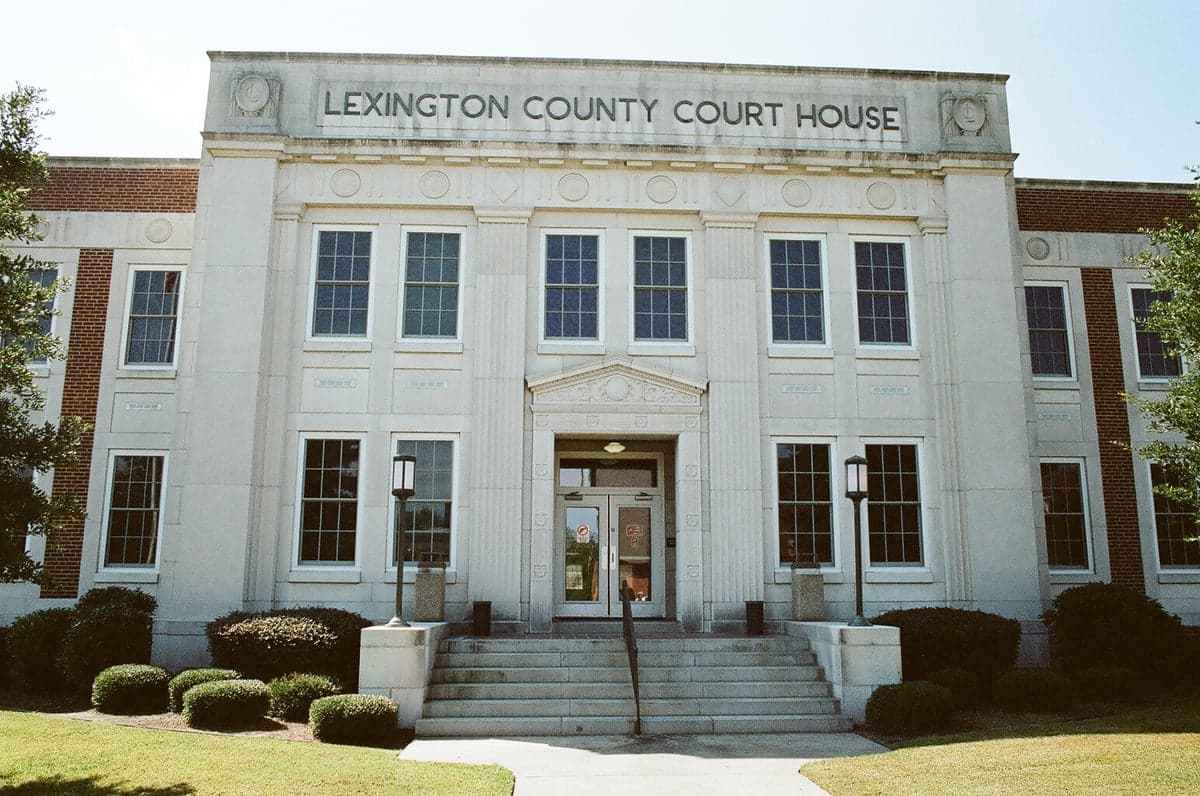
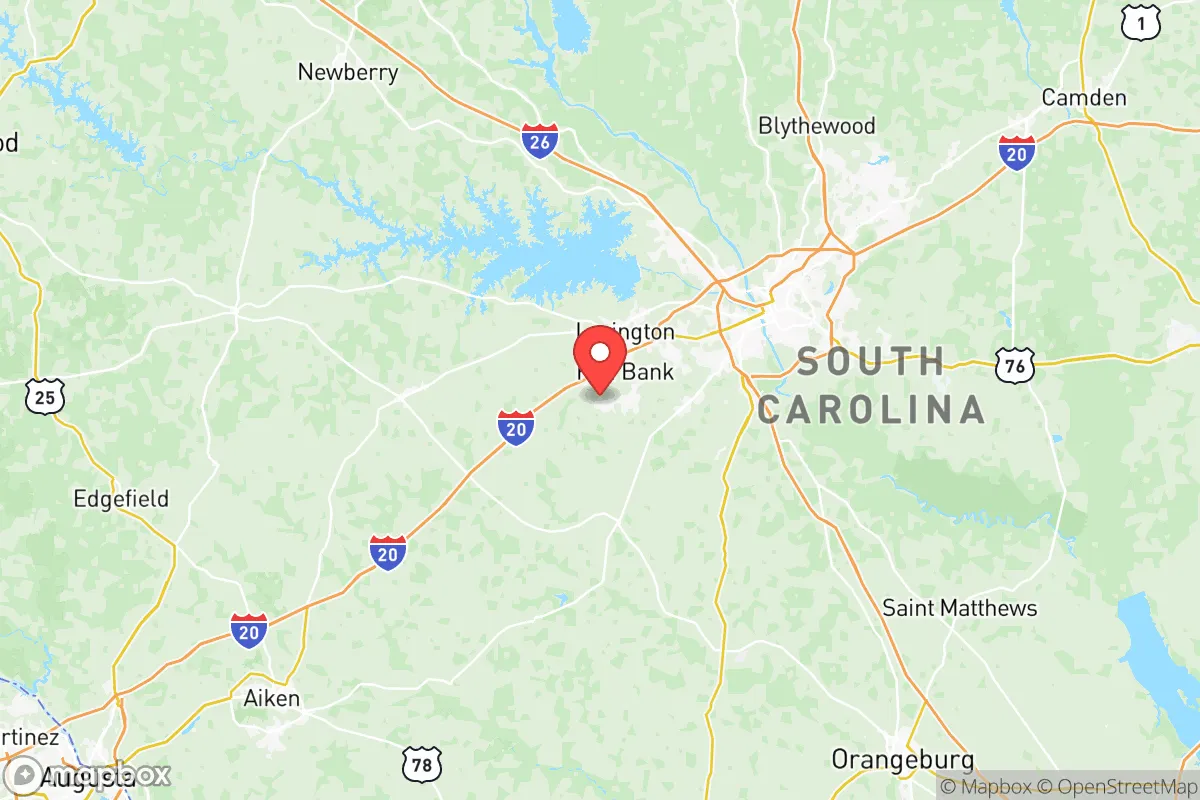
Photo: Wikipedia
Personal Sovereignty in Lexington County
Viable for self-reliance. Generally workable, though some barriers may limit total independence.
What does Personal Sovereignty tell us?
Personal Sovereignty measures your capacity for self-reliance and independence with minimal government friction. Higher scores mean fewer barriers between you and the way you want to live... but it assumes you have the space you need and good neighbors.
What does this tell us?
Personal Sovereignty measures your capacity for self-reliance and independence with minimal government friction. Higher scores mean fewer barriers between you and the way you want to live... but it assumes you have the space you need and good neighbors.
State Policy
Energy independence: Importer (25% of energy produced in-state)
Personal Liberty
Homesteading

Personal Liberty Analysis
Lexington County, South Carolina, offers a notably high degree of personal sovereignty, particularly for those coming from more heavily regulated states. The county’s environment is shaped by South Carolina’s strong right-to-work laws, a state-level preemption of local firearm ordinances, and a county government that generally favors low taxes and minimal zoning intervention outside of the more suburbanized areas. For a single individual or family prioritizing independence, the balance between local control and state-mandated freedoms in Lexington County creates a landscape where self-reliance is both practical and culturally supported, though the specific experience varies significantly between the bustling suburbs of Lexington and Irmo and the more rural stretches near Pelion and Gilbert.
Tax burden and regulatory posture for residents and small businesses
South Carolina’s tax structure is a major draw for those seeking to keep more of their earnings. The state has a flat income tax rate of 6.2% on taxable income over a certain threshold, and Lexington County adds a local sales tax of 8% (state plus county), which is moderate for the region. Property taxes are a standout advantage: the state’s owner-occupied property tax rate is assessed at only 4% of the home’s value, with a $50,000 exemption, making the effective rate among the lowest in the nation. A home valued at $300,000 in Lexington or Chapin would have a tax bill roughly one-third of what it would be in comparable suburbs of Charlotte or Atlanta. The regulatory posture is light-touch for most small businesses. There is no county-level business license tax for home-based businesses in unincorporated areas, and the state does not impose a corporate income tax on S-corporations or LLCs, only a modest $15 annual fee. However, the county does enforce building codes and septic system regulations, which can be a hurdle for those attempting to build entirely off-grid without permits. The overall message is clear: the state and county want to keep taxes low and bureaucracy minimal, but they do not tolerate unpermitted construction or environmental hazards.
Self-defense and gun law specifics in Lexington County
Lexington County is one of the most gun-friendly areas in the Southeast, a direct result of South Carolina’s strong preemption law that prohibits local governments from enacting their own firearm ordinances. This means the county cannot ban open carry, restrict magazine capacities, or impose waiting periods beyond what state law allows. South Carolina is a “shall-issue” state for concealed weapons permits (CWP), and as of 2024, permitless (constitutional) carry is legal for residents 18 and older who can legally possess a firearm. In practice, this means you can walk into a grocery store in Irmo or a hardware store in Gilbert with a holstered pistol without a permit, though private businesses can still post “no firearms” signs. The county sheriff’s office is known for issuing CWPs quickly, often within 30 days. Stand-your-ground laws apply statewide, meaning there is no duty to retreat before using deadly force in any place you are lawfully present. The culture in Lexington County is overwhelmingly pro-self-defense; gun ranges and firearms training facilities are common, particularly around Lexington and West Columbia. For a reader who views firearm ownership as a core personal liberty, this county offers near-maximum freedom within the bounds of state law.
Self-reliance and homesteading viability: lot sizes, zoning, and off-grid feasibility
The viability of a self-reliant, homesteading lifestyle in Lexington County depends heavily on location. In the more rural areas, particularly around Pelion, Gilbert, and Batesburg-Leesville, the county’s zoning is minimal. Unincorporated parcels can be as small as one acre for a single-family home, but many homesteaders seek 5- to 10-acre lots to allow for livestock, gardens, and privacy. The county does not restrict the keeping of chickens, goats, or even larger livestock on parcels over two acres in rural zoning districts. Off-grid feasibility is mixed: the county requires a septic system permit from DHEC for any dwelling, and well permits are required, but solar panels and rainwater collection are not prohibited by county code. However, the county does not have a formal “off-grid” exemption for building codes; any new structure must meet International Residential Code standards, which can be expensive for a DIY cabin. The real barrier is the lack of a county-wide land-use plan that explicitly allows “tiny houses” on wheels or primitive dwellings without a foundation. For a serious homesteader, the best bet is to buy land in the Pelion or Gilbert areas, where neighbors are more likely to be doing the same, and where the sheriff’s office is less likely to receive complaints about a partially finished structure. The county’s agricultural tax assessment (use-value appraisal) is a significant benefit, allowing landowners to pay taxes based on the land’s agricultural use rather than its market value, which can cut property tax bills by 50% or more on larger tracts.
Personal liberties: parental rights, medical autonomy, speech, and property
South Carolina has a strong legal framework for parental rights, and Lexington County reflects that. The state’s “Parental Bill of Rights” (enacted in 2023) gives parents the explicit right to direct the education, medical care, and moral upbringing of their children, and it requires school districts to obtain parental consent before administering any mental health or medical survey. In Lexington County, the school districts—Lexington 1, 2, and 4—have largely complied, though some parents in Irmo and Lexington have reported friction over library materials and curriculum content. Homeschooling is straightforward: parents simply file a notice of intent with the school district and maintain a portfolio of work; no standardized testing is required. Medical autonomy is less robust: South Carolina has not expanded Medicaid, and the state has a restrictive telemedicine abortion law, but for most routine medical decisions, there is no state-level interference. Vaccine mandates are not enforced at the county level, and private businesses set their own policies. Free speech is protected under the First Amendment, and the county has no local ordinances restricting political signs or public assembly. Property rights are strong: the county does not have a rental registration or inspection program, and there is no rent control. Eminent domain is rarely used for private development. The overall legal climate in Lexington County leans heavily toward individual liberty, with the notable exception of state-level drug laws, which still criminalize marijuana possession, though enforcement is uneven and often deprioritized by the sheriff’s office.
In the broader context of the Southeast, Lexington County offers a level of personal sovereignty that is above average for a suburban-rural mix. It is not as libertarian as parts of rural Texas or Idaho, but it is significantly more freedom-oriented than the urban centers of the Northeast or West Coast. The county’s greatest strength is its consistency: low taxes, strong gun rights, minimal zoning in rural areas, and a legal culture that respects parental and property rights. The main trade-off is that the suburban core—Lexington and Irmo—has more HOAs and subdivision restrictions, which can limit personal expression and homesteading. For a family or individual who wants to live largely unbothered by government, with the ability to own firearms, homeschool children, and keep chickens on a few acres, Lexington County is a strong contender, especially in the rural corridors around Pelion and Gilbert.

* Values derived from national, state, county, city and local statistics and may differ in a specific area. Last updated: 2026-06-14T19:30:25.000Z
Narrative content on this page is AI-generated and may contain mistakes. Verify any details that matter before acting on them.
ReloMaps may earn a commission from affiliate links at no extra cost to you.

