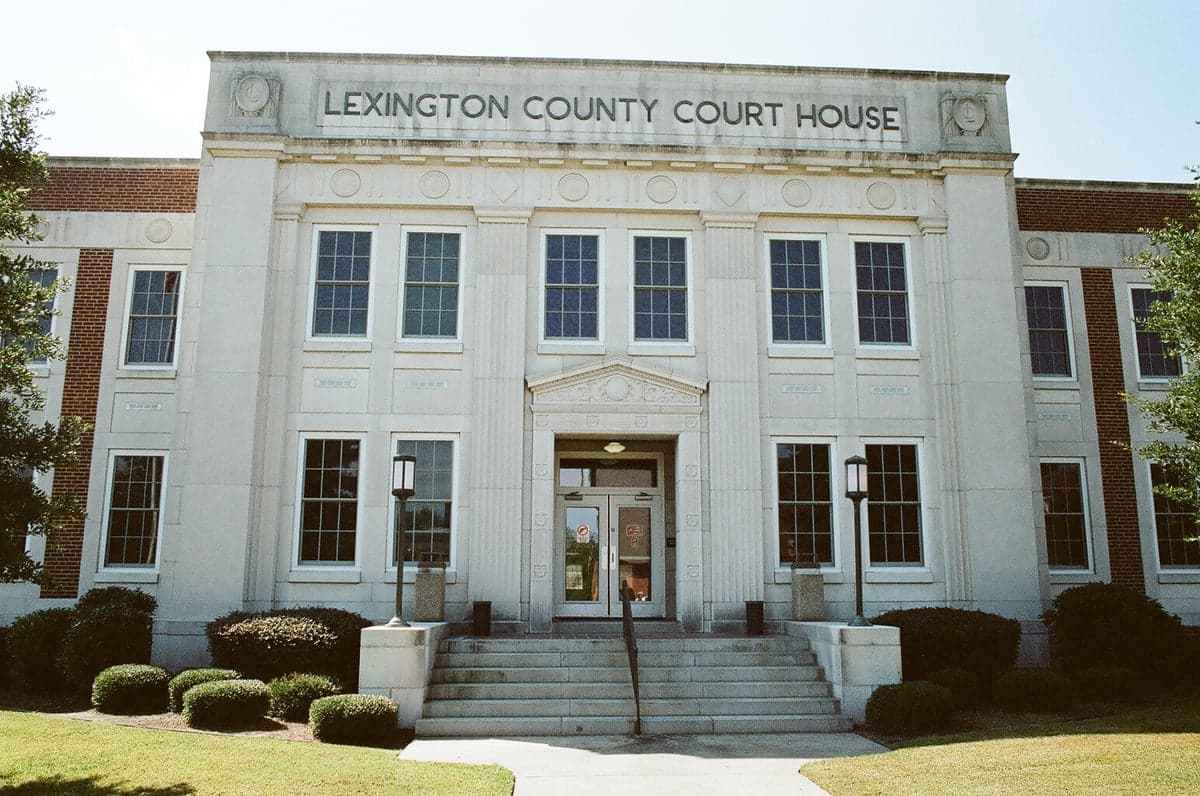
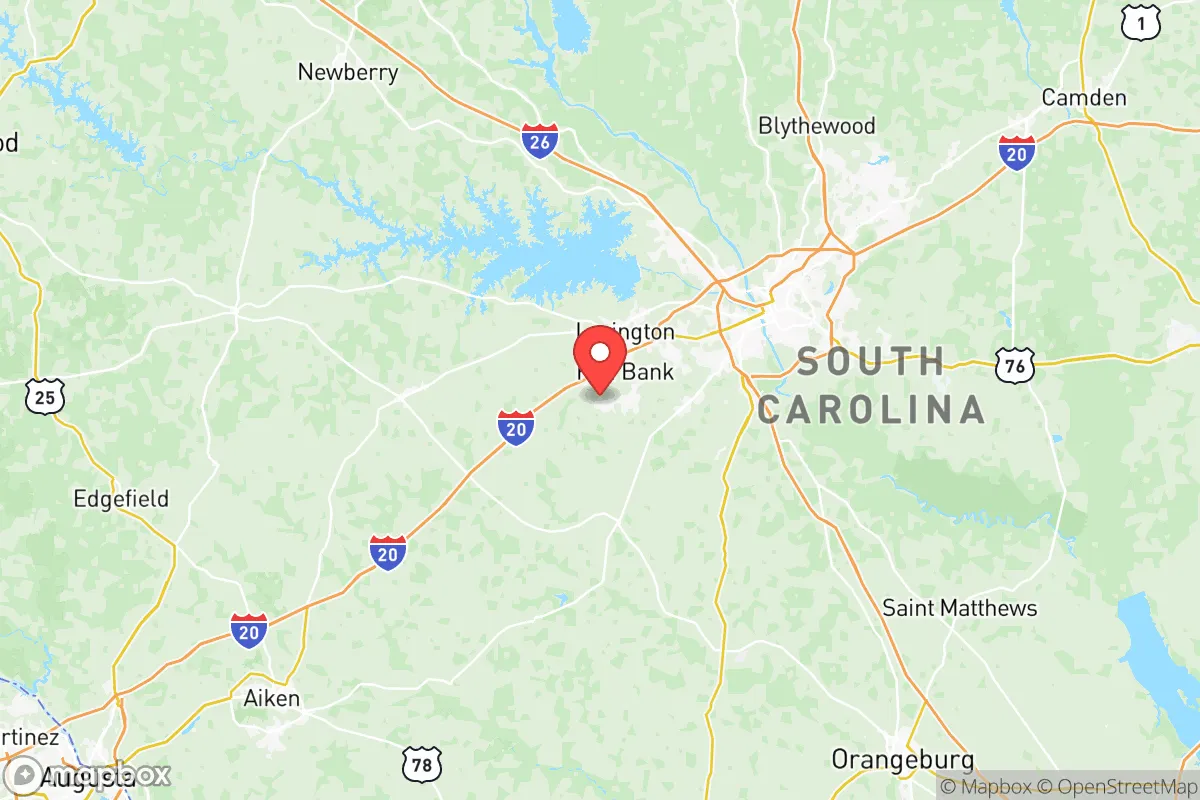
Photo: Wikipedia
Demographics of Lexington County
Affluence Level in Lexington County
A middle-class area roughly in line with national averages across income, home values, education, and employment.
People of Lexington County
Lexington County, South Carolina, is home to 300,370 residents, a population that is 71.2% white, 14.9% Black, 7.6% Hispanic, and 1.1% Indian (subcontinent), with a foreign-born share of just 3.5%. The county’s character is defined by its blend of historic small towns and rapid suburban expansion, anchored by a strong sense of local identity, a growing economy tied to the Columbia metro area, and a population that is notably more conservative and family-oriented than the national average. With 33.1% of adults holding a college degree, the county attracts professionals and families seeking good schools, lower taxes, and a slower pace of life within commuting distance of the state capital.
Settlement & growth (pre-1960)
Before European settlement, the area now known as Lexington County was part of the homeland of the Congaree people, a Siouan-speaking tribe who lived along the Congaree River. The Spanish and French made brief incursions in the 16th century, but permanent European colonization began in earnest with the British, who established the region as part of the Carolina colony in the early 1700s. The first major wave of settlers were Scots-Irish and German immigrants, who arrived in the mid-18th century, drawn by the promise of fertile, inexpensive land in the backcountry. These groups established small farming communities, with the German population particularly concentrated in the area that would become the town of Lexington, originally known as Saxe-Gotha after a German duchy.
After the American Revolution, the county’s population grew slowly but steadily, dominated by subsistence farming and later cotton cultivation. The arrival of the railroad in the 1850s transformed the economy, connecting Lexington County’s agricultural output to markets in Charleston and beyond. The town of Batesburg (later Batesburg-Leesville) became a key rail hub, while Chapin grew as a summer retreat for Columbia residents escaping the city’s heat. The Civil War and Reconstruction devastated the local economy, but the county rebounded in the late 19th century with the expansion of cotton mills and textile manufacturing. This industrial growth attracted a wave of rural white families from the surrounding Piedmont, as well as a small number of Black families who worked the mills and farms. The town of Cayce, located on the Congaree River, became a center for river trade and later for railroad maintenance, drawing workers from across the region.
The 20th century brought further diversification. The construction of the Columbia Canal and the expansion of the state’s highway system in the 1920s and 1930s made Lexington County more accessible, spurring growth in communities like West Columbia and Irmo. The post-World War II era saw a significant influx of veterans and their families, many of whom were drawn by the availability of affordable housing and the proximity to Fort Jackson, a major U.S. Army training base just across the Congaree River in Columbia. This period marked the beginning of the county’s transformation from a rural, agricultural society into a suburban bedroom community for the capital city. By 1960, the population had reached roughly 60,000, still predominantly white and native-born, with a small but established Black community concentrated in the towns of Leesville and Gilbert.
Modern era (post-1965)
The 1965 Hart-Cellar Act had a limited direct impact on Lexington County, as the region did not experience the large-scale immigration seen in coastal or border states. However, the act’s broader effects reshaped the county indirectly through domestic migration. As the Sun Belt boomed in the 1970s and 1980s, Lexington County attracted a steady stream of families and retirees from the Rust Belt—particularly Ohio, Michigan, and New York—who were drawn by lower taxes, a lower cost of living, and a more conservative political climate. This domestic migration accelerated in the 1990s and 2000s, with the county’s population nearly doubling between 1990 and 2020.
The most significant demographic shift in the modern era has been the growth of the Hispanic population, which now stands at 7.6%. This community began to grow in the 1990s, driven by employment opportunities in construction, landscaping, and agriculture, particularly in the poultry processing plants around Batesburg-Leesville and the expanding suburban housing developments in Lexington and Irmo. The Hispanic population is largely of Mexican and Central American origin, and while no single ethnic enclave has formed, families have concentrated in the more affordable southern and western parts of the county. The Black population, at 14.9%, has remained relatively stable in share but has become more suburbanized, with many families moving from Columbia into communities like Cayce and West Columbia for better schools and housing. The Indian (subcontinent) population, at 1.1%, is a newer and smaller group, largely composed of professionals working in the healthcare and technology sectors in the Columbia metro area, with a visible presence in Irmo and Lexington. East and Southeast Asian communities, at 1.0%, are similarly small and dispersed, with families often connected to the University of South Carolina or the region’s growing medical sector.
Suburbanization has been the dominant force shaping the county since 1965. The construction of Interstate 20 and Interstate 26 in the 1960s and 1970s opened up vast tracts of land for development, leading to the explosive growth of Irmo and Lexington as classic Sun Belt suburbs. These towns now feature master-planned communities, large shopping centers, and highly rated public schools, attracting families from across the Southeast. Meanwhile, smaller towns like Chapin and Pelion have retained a more rural character, appealing to those seeking a quieter lifestyle. The county’s foreign-born share remains low at 3.5%, reflecting its reliance on domestic rather than international migration for growth.
The future
Lexington County is projected to continue growing at a steady pace, with the population expected to exceed 400,000 by 2040. This growth will be driven primarily by domestic migration from other parts of the United States, particularly from the Northeast and Midwest, as well as from within South Carolina itself as families move outward from Columbia. The county is becoming slightly more diverse, with the Hispanic and Indian populations likely to grow as the region’s economy diversifies into logistics, healthcare, and advanced manufacturing. However, the county’s cultural identity is expected to remain predominantly white and conservative, with new residents often choosing Lexington County precisely because of its political and social character. New communities are likely to concentrate in the northern and eastern parts of the county, along the I-20 and I-26 corridors, while the southern and western areas will see more dispersed, lower-density development. The towns of Lexington and Irmo will continue to serve as the primary hubs for shopping, dining, and employment, while Chapin and Batesburg-Leesville will attract those seeking a small-town feel.
For someone moving in now, Lexington County is a place where the past and future coexist: a historically rural, Scots-Irish and German farming community that has transformed into a prosperous, family-oriented suburb of Columbia. It is becoming more diverse but remains overwhelmingly native-born and politically conservative, with a strong emphasis on local schools, church communities, and low taxes. The county offers a clear alternative to the faster-paced, more diverse urban centers of the Southeast, appealing to those who value stability, space, and a slower pace of life.

* Values derived from national, state, county, city and local statistics and may differ in a specific area. Last updated: 2026-06-14T19:30:25.000Z
Narrative content on this page is AI-generated and may contain mistakes. Verify any details that matter before acting on them.
ReloMaps may earn a commission from affiliate links at no extra cost to you.

