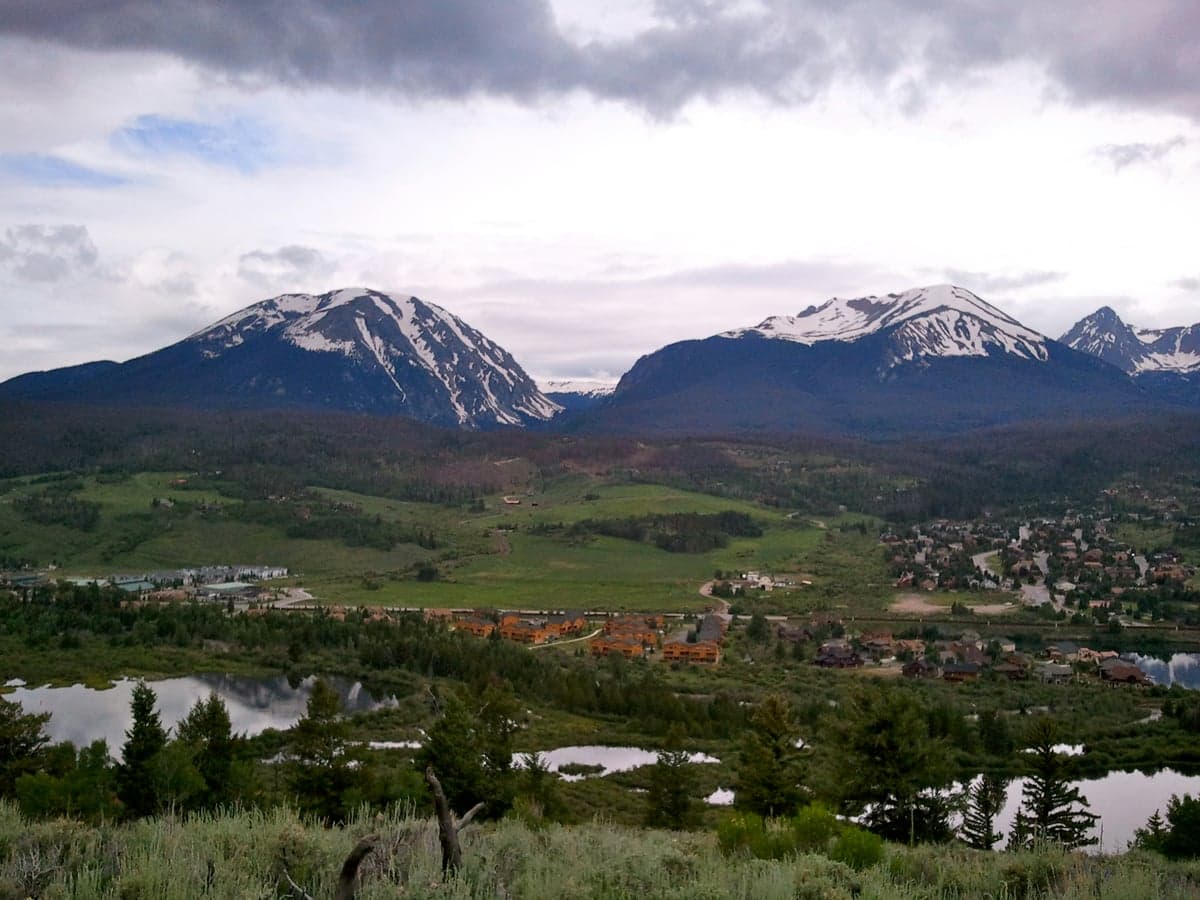
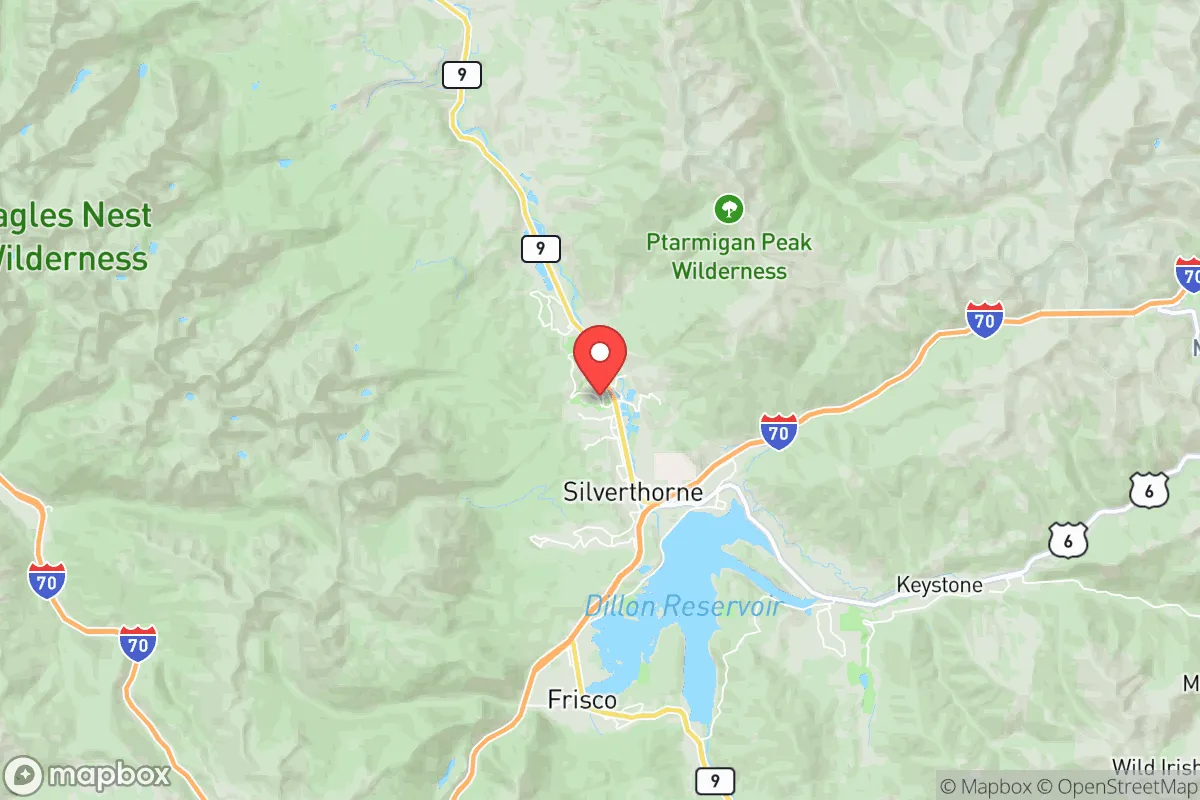
Photo: Wikipedia
Political ClimatePolitical Climate in Silverthorne, CO
District shown is the primary district for this city’s centroid. Cities may span multiple districts.
Local Political AnalysisPolitical Analysis of Silverthorne, CO
Silverthorne is a solidly Democratic stronghold, with a Cook PVI of D+20 that places it among the most liberal communities in the High Country. This isn’t a recent shift—the town has leaned blue for decades, driven by a mix of second-home owners from the Front Range, a service-industry workforce, and a strong environmentalist streak. But the trajectory is accelerating: younger remote workers and climate-conscious transplants have poured in since 2020, pushing the local Democratic vote share even higher. In the 2024 presidential election, Summit County as a whole voted roughly 65% Democratic, and Silverthorne’s precincts were among the county’s most lopsided, often hitting 70% or more for the Democratic candidate.
How it compares
Silverthorne’s D+20 rating makes it an outlier even within Summit County, which as a whole leans D+15. Drive 20 minutes east to Frisco or Breckenridge, and you’ll find similar politics—both are reliably blue, though Breckenridge’s tourist-heavy economy gives it a slightly more moderate tilt. The real contrast comes when you head south or east. Just 30 miles down I-70, the town of Dillon is also Democratic but less intensely so (around D+12). Go farther—say, 45 minutes to Leadville in Lake County—and you hit a D+8 area that still votes blue but with a stronger libertarian, mining-town undercurrent. The most dramatic political shift is west: drive an hour to Glenwood Springs or Rifle, and you’re in Garfield County, which voted +2 Republican in 2024. That’s a 22-point swing from Silverthorne. So if you’re a conservative living in Silverthorne, you’re in a deep-blue bubble, but you’re also within an easy day trip of redder territory like Eagle or Garfield counties.
What this means for residents
For liberal residents, Silverthorne’s politics feel natural and affirming. Local government prioritizes affordable housing initiatives, renewable energy projects (the town’s electric utility is 100% renewable), and strict short-term rental regulations. You’ll find town council meetings where climate action and housing density are the dominant topics. For conservative residents, the reality is more nuanced. You won’t face hostility—Silverthorne is a polite, outdoorsy town—but you will be in the minority. Local policy debates often assume progressive consensus, so conservative voices on issues like property taxes or land use can feel sidelined. That said, the town’s small size (around 4,500 year-round residents) means personal relationships still matter more than party labels. A conservative who volunteers at the food bank or coaches youth soccer will be welcomed, even if their yard sign is a lonely sight.
Culturally, Silverthorne’s political lean shapes daily life in subtle ways. The town’s farmers market is heavy on organic produce and local artisans, not political merch. The library hosts climate book clubs, not partisan rallies. And the biggest local controversy in recent years wasn’t about a culture war issue—it was about whether to allow a new gas station near the Blue River. That’s the kind of policy fight that defines Silverthorne: slow-growth, environmentally conscious, and deeply local. For anyone moving here, the key takeaway is that the politics are real but not aggressive. You’ll see more Subarus with “Protect Our Winters” stickers than Trump flags, but you won’t feel pressured to pick a side in the grocery store. The town’s trajectory suggests it will only get bluer as more remote workers and climate refugees arrive, but the pace is gradual enough that the community’s character—friendly, outdoorsy, and a little insular—remains intact.

State Political ClimatePolitical Climate in Colorado
State Political AnalysisPolitical Environment in the State
Colorado has shifted from a classic purple swing state to a solidly blue-leaning one over the past two decades, though it remains far more moderate than coastal strongholds like California or New York. The state’s overall partisan lean is roughly D+5 to D+7 in statewide elections, driven by explosive growth in the Denver metro and Front Range corridor, while the Eastern Plains and Western Slope remain deeply red. For a conservative relocator, the key takeaway is that Colorado’s state government is controlled by Democrats, but the political culture is still defined by a live-and-let-live Western independence that doesn’t always map neatly onto national party lines.
Urban vs. rural divide
The political map of Colorado is a story of two Colorados. The Denver-Aurora-Lakewood metro area, home to nearly 60% of the state’s population, is the engine of Democratic dominance — Denver County routinely votes 80%+ Democratic, while Boulder County is even further left. The suburbs tell a more nuanced story: Jefferson County (Jeffco) and Arapahoe County have flipped from purple to reliably blue over the last decade, while Douglas County (south of Denver) remains a conservative stronghold, voting about 55% Republican in recent cycles. El Paso County, anchored by Colorado Springs, is the state’s largest red county, home to Focus on the Family and a massive military presence that keeps it solidly conservative. The rural Eastern Plains — places like Yuma, Kit Carson, and Prowers counties — vote 75-80% Republican, as do many Western Slope counties like Mesa (Grand Junction) and Montrose. The mountain resort counties (Eagle, Pitkin, San Miguel) are deep blue, driven by wealthy second-home owners and service workers. The result is a state where Democrats win statewide by piling up massive margins in Denver and Boulder, while Republicans dominate the landmass but lack the population to compete.
Policy environment
Colorado’s policy environment reflects its purple-turning-blue trajectory. The state has a flat income tax rate of 4.4% (set by the Taxpayer’s Bill of Rights, or TABOR, which requires voter approval for tax increases), making it relatively tax-friendly compared to high-tax states. Property taxes are low by national standards, though recent legislation has allowed local districts to retain more revenue. The regulatory posture is mixed: Colorado is one of the most aggressive states on environmental regulation, with strict oil and gas setbacks and a push toward 100% renewable electricity by 2040, but it remains business-friendly in many other sectors. Education policy is controlled by the state, with school choice options including charter schools and open enrollment, though funding per pupil is below the national average. Healthcare is heavily regulated, with a state-run insurance exchange and Medicaid expansion under the Affordable Care Act. Election laws are among the most accessible in the country: universal mail-in voting, same-day registration, and automatic voter registration have been in place for years, which conservatives often criticize as reducing election integrity but which Democrats defend as increasing turnout.
Recent policy direction
The last five years have seen a clear leftward shift on several fronts. On gun policy, Colorado passed universal background checks and magazine capacity limits in 2013 after the Aurora theater shooting, and in 2023 passed a red flag law and raised the purchasing age to 21 for all firearms — a major point of contention for conservative relocators. On education, the state has expanded social-emotional learning standards and passed a law requiring schools to notify parents of curriculum changes, though parental rights debates remain heated. On speech and privacy, Colorado has some of the strongest data privacy laws in the nation (the Colorado Privacy Act) but has also faced lawsuits over religious freedom and anti-discrimination laws, particularly around wedding vendors and transgender issues. On medical and bodily autonomy, Colorado has fully legalized recreational marijuana (since 2012), decriminalized psychedelics, and codified abortion rights into state law with the Reproductive Health Equity Act of 2022. Property rights are generally strong, though local land-use regulations in the Front Range have driven up housing costs significantly. Voting and ballot access remain expansive, with no voter ID requirement for mail ballots (though ID is needed for in-person voting), which remains a flashpoint for election integrity concerns among conservatives.
Civil unrest & political movements
Colorado has seen its share of political activism on both sides. The Denver metro area experienced significant protests in 2020 following George Floyd’s death, with some property damage and ongoing debates about police reform. On the right, the Colorado Republican Party has fractured between establishment and populist factions, with the state party chair recently calling for “election integrity” reforms and some county-level officials refusing to certify election results in 2022. Immigration politics are less heated than in border states, but Denver has seen an influx of migrants bused from Texas, straining city resources and creating tension. Sanctuary policies exist at the city and county level — Denver and Boulder are sanctuary cities, while many rural counties have declared themselves “Second Amendment sanctuaries” in response to state gun laws. Secession talk surfaces periodically in the Eastern Plains and Western Slope, with some counties voting to explore secession from Colorado (though it’s largely symbolic). The most visible flashpoint for a new resident would likely be the constant political yard signs and bumper stickers, which are more polarized than in many states — you’ll see “Let’s Go Brandon” flags next to “In This House We Believe” signs in the same neighborhood.
Projection
Over the next 5-10 years, Colorado is likely to continue its leftward drift, but at a slower pace. Demographic trends favor Democrats: the state is growing fastest in the Denver metro and mountain resort areas, while rural counties are losing population. In-migration from California, Texas, and the Midwest tends to bring more moderate-to-liberal voters, though a significant number of conservative Texans and Californians also move to Colorado Springs and Douglas County. The wild card is housing affordability — if the Front Range becomes too expensive, growth could slow or shift to more affordable red areas like Pueblo or the Western Slope, which could moderate the state’s politics. The state’s independent streak means that even as Democrats hold power, they govern from the center-left rather than the progressive left — expect continued environmental regulation and gun control, but also fiscal restraint due to TABOR. A conservative moving to Colorado in 2026 should expect to live in a state where their vote matters more at the local and county level than in statewide races, and where they’ll have to navigate a policy environment that is increasingly at odds with their values on guns, taxes, and social issues.
For a conservative relocator, the bottom line is that Colorado offers a high quality of life with outdoor recreation, a strong economy, and relatively low taxes, but you’ll be living in a state where your political views are in the minority at the state level. The practical takeaway: choose your county carefully. Douglas County, El Paso County, and much of the Western Slope offer conservative communities where you can live comfortably within your values, while Denver and Boulder will feel like a different country. If you’re willing to accept that your state government will be controlled by Democrats and focus on local politics, Colorado can still be a great fit — but if you want a state where your vote reliably elects conservatives, you’ll want to look at Wyoming or Texas instead.
* Values derived from national, state, county, city and local statistics and may differ in a specific area. Last updated: 2026-08-03T16:05:47.000Z
Narrative content on this page is AI-generated and may contain mistakes. Verify any details that matter before acting on them.
ReloMaps may earn a commission from affiliate links at no extra cost to you.

