Political ClimatePolitical Climate in Shenandoah Farms, VA
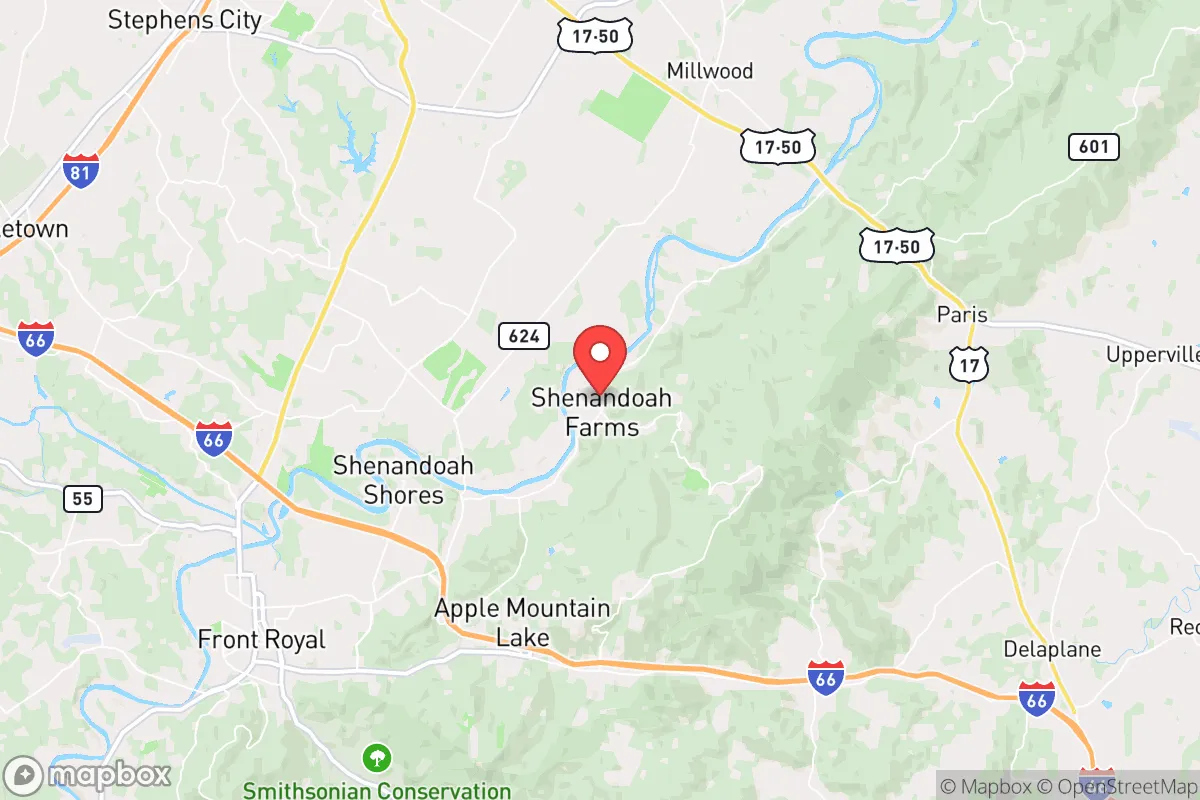
District shown is the primary district for this city’s centroid. Cities may span multiple districts.
Inherited from parent state — no local data available.
Local Political AnalysisPolitical Analysis of Shenandoah Farms, VA
Shenandoah Farms leans solidly Republican, with a Cook PVI of R+12, making it one of the more conservative pockets in the northern Shenandoah Valley. That’s a stark contrast to Virginia as a whole, which sits at D+4, and it means the area has been drifting further right even as the state’s suburbs have pulled the other direction. If you’ve lived here a while, you’ve watched the old-timers’ Democratic roots fade and the GOP registration numbers climb, especially after the 2020 election cycle.
How it compares
The gap between Shenandoah Farms and the rest of Virginia isn’t just a number on a map—it’s a lived reality. Drive 20 minutes east to Front Royal or south to Luray, and you’ll find similar conservative leanings, though Warren County is a bit more competitive than Clarke County. But head toward the D.C. exurbs—places like Leesburg or Ashburn, about 45 minutes to the east—and you’re in a completely different political universe. Those Loudoun County communities vote blue by double digits, and their growth has driven Virginia’s statewide shift leftward. Shenandoah Farms, by contrast, has stayed rural and sparsely populated, with a mix of retirees, remote workers, and longtime farming families who consistently vote Republican. The R+12 PVI here isn’t an outlier; it’s the norm for the western side of the Blue Ridge.
What this means for residents
For conservative residents, the practical effect is that local elections are rarely competitive. The Board of Supervisors races in Warren and Clarke Counties tend to be decided in the Republican primary, and the GOP’s platform on property rights, low taxes, and gun access resonates with most voters here. You’ll see Trump signs in yards and “Don’t Tread on Me” flags on porches, and it’s not unusual for the local GOP committee to have more volunteers than it needs. For liberal residents, it means being in the minority is a daily reality. There’s no active Democratic committee in Shenandoah Farms itself, so progressives often drive to Front Royal or even Winchester for meetings. That said, the area isn’t hostile—most folks keep politics out of the grocery store line, and the influx of remote workers since 2020 has brought a handful of new, more moderate voices into the mix. It’s not a purple area yet, but the edges are softening.
Statewide, this creates a clear split: Shenandoah Farms sends Republican delegates to Richmond, but those representatives are often in the minority caucus. That means local priorities—like broadband expansion, septic system regulations, and agricultural zoning—sometimes get overshadowed by Northern Virginia’s urban agenda. Residents here have learned to work through the Virginia Farm Bureau and local supervisors to get things done, rather than relying on state-level help.
Cultural and policy distinctions
Culturally, Shenandoah Farms feels more like West Virginia than Northern Virginia. The gun culture is strong, church attendance is high, and the pace of life is slower. There’s a practical, self-reliant streak—people hunt, garden, and fix their own trucks—that shapes the political conversation. The biggest local policy fights in recent years have been over data center development along the I-66 corridor and short-term rental rules, not social issues. Looking ahead, the area’s R+12 lean is likely to hold, though continued migration from the D.C. suburbs could nudge it toward R+8 or R+9 over the next decade. For now, it remains a reliable red anchor in a state that’s increasingly purple-to-blue.

State Political ClimatePolitical Climate in Virginia
State Political AnalysisPolitical Environment in the State
Virginia has drifted from a reliably purple swing state into a solidly Democratic-lean territory, carrying a Cook PVI of D+4 after a decade of blue dominance. The shift is driven almost entirely by the explosive growth of the Washington, D.C. suburbs in Northern Virginia, which now dwarf the rest of the state in population and electoral weight. While Republicans still hold significant power in the rural west and the Hampton Roads area, the statewide trajectory since 2009 has been a steady march leftward, punctuated by a few notable GOP rebounds that show the state isn't a lost cause for conservatives—just a tough climb.
Urban vs. rural divide
The political map of Virginia is a tale of three distinct regions that might as well be different states. The dominant force is Northern Virginia—Arlington, Alexandria, Fairfax, and Loudoun counties—which together cast roughly a third of all statewide votes and lean Democratic by 30 to 40 points. This is the engine of the blue wave, fueled by federal workers, tech professionals, and a massive influx of out-of-state transplants. The second pillar is the Richmond metro, which has swung hard blue in the last decade as the city's suburbs have gentrified and diversified. The third region is the vast rural expanse west of the Blue Ridge—places like Roanoke, Lynchburg, and the coal country of far southwest Virginia—which vote Republican by margins of 40 to 50 points but simply don't have the population to offset the urban centers.
The most interesting battlegrounds are the exurbs and the Tidewater region. Virginia Beach and Chesapeake remain competitive, with the military-heavy population splitting nearly evenly, while Fredericksburg and Stafford County have flipped from red to blue as D.C. commuters push further south. The 2021 gubernatorial race showed the GOP's path: Glenn Youngkin won by running up margins in the rural west and the Richmond suburbs while keeping losses in NoVA to under 20 points. That formula worked once, but it's getting harder as the population continues to concentrate in the blue strongholds.
Policy environment
Virginia's policy environment is a mixed bag that reflects its purple-to-blue status. The tax structure is moderately competitive: a flat 5.75% income tax rate and a 6% sales tax (with local add-ons) keep it mid-pack nationally, though property taxes vary wildly by locality. The state has a right-to-work law, which keeps union influence weak, but the minimum wage is set to rise to $15 by 2026. Education policy has become a flashpoint—Youngkin's administration pushed through a $2 billion increase in K-12 funding and expanded lab schools, but the state still ranks in the bottom half nationally for school choice options. Healthcare is a bright spot for progressives: Virginia expanded Medicaid under the Affordable Care Act in 2019, covering roughly 400,000 additional residents, and the state has some of the strongest insurance market regulations in the South.
Election laws are a study in contrasts. Virginia has no voter ID requirement (a photo ID is requested but not mandatory), offers same-day voter registration, and has 45 days of early voting—all features that lean left. However, the state also has a felony disenfranchisement law that was only partially rolled back by executive order, and it's one of the few states that doesn't allow ballot curing for signature mismatches. For a relocator, the practical takeaway is that voting is easy and accessible, but the system is designed to maximize turnout, which historically benefits Democrats.
Recent policy direction
The last five years have seen Virginia lurch between two very different visions. The 2020-2021 Democratic trifecta under Governor Ralph Northam and the legislature passed a sweeping progressive agenda: marijuana legalization, abolition of the death penalty, expanded voting access, and a ban on "conversion therapy." That period also saw the controversial removal of the Robert E. Lee statue in Richmond and a push to weaken the state's right-to-work law, which ultimately failed. The 2022-2024 Youngkin years pulled the state back toward the center-right on several fronts: the governor signed a 15-week abortion ban (with exceptions), rolled back COVID-era mandates, and signed a landmark parental rights bill requiring schools to notify parents of curriculum changes involving sexually explicit content.
On guns, Virginia remains a "shall-issue" state for concealed carry, but the 2020 Democratic legislature passed universal background checks and a red flag law—measures that remain on the books despite GOP attempts to repeal them. Property rights are generally strong, with no statewide zoning mandates, but localities in NoVA have imposed aggressive affordable housing requirements. Privacy and surveillance law is a mixed bag: Virginia passed the first state-level comprehensive data privacy law in 2021, but it also has a robust network of license plate readers and police body cameras that civil libertarians on both sides find concerning. The bottom line is that Virginia's policy direction depends entirely on which party controls the governor's mansion and the legislature in any given cycle—and the margins are close enough that a single election can flip the script.
Civil unrest & political movements
Virginia has been a flashpoint for national political movements on both sides. The 2017 "Unite the Right" rally in Charlottesville put the state on the map for white nationalist activity and triggered a massive counter-protest movement that reshaped local politics for years. The 2020 George Floyd protests in Richmond led to the toppling of Confederate statues and a sustained push to remove Confederate iconography from public spaces—a movement that has largely succeeded in urban areas but remains contentious in rural counties. On the right, the 2021 parental rights movement, sparked by school mask mandates and critical race theory debates, organized effectively in Loudoun County and helped fuel Youngkin's victory. The state has also seen significant immigration politics: while Virginia has no sanctuary city policies, several NoVA localities limit cooperation with ICE, and the issue remains a live wire in the exurbs.
Election integrity has been a persistent controversy. The 2020 election saw Virginia's mail-in voting surge, and while no widespread fraud was found, the state's handling of the 2021 gubernatorial race—which Youngkin won by 2 points—was scrutinized by both sides. The state's voter roll maintenance has been a recurring legal battle, with the Youngkin administration purging roughly 6,000 non-citizens from the rolls, a move that drew a federal lawsuit from the DOJ. For a new resident, the visible flashpoints are mostly in the suburbs: school board meetings, county planning commissions, and local elections are where the political battles actually play out.
Projection
Looking ahead five to ten years, Virginia's trajectory is clear: it will continue to drift left, but at a slower pace than the last decade. The population growth in Northern Virginia shows no signs of slowing, and the in-migration from blue states like New York and California reinforces the Democratic lean. However, there are countervailing forces. The exurbs are filling with families priced out of NoVA who tend to vote more conservatively, and the military-heavy Hampton Roads region remains a swing area. The 2025 gubernatorial race will be a key test—if a Democrat wins, the state will likely pass a constitutional amendment protecting abortion rights and move toward a California-style regulatory regime. If a Republican wins, expect a push for school choice vouchers and a rollback of the red flag law.
Demographically, Virginia is aging and diversifying simultaneously. The white share of the population is declining, but the fastest-growing demographic is actually the rural Hispanic population in the Shenandoah Valley, which is politically mixed. The most realistic projection is that Virginia settles into a D+6 to D+8 lean by 2030, similar to New Jersey or Connecticut, with Republicans holding occasional wins in off-year elections when turnout drops. A conservative moving to Virginia today should expect to live in a state where they can win local races and occasionally statewide, but where the default political culture is increasingly progressive. A liberal moving in will find a state that's comfortable but not complacent—the margins are still close enough that every election matters.
For a new resident, the practical implications are straightforward. If you're conservative, you'll find welcoming communities in the rural west, the Shenandoah Valley, and parts of the Richmond suburbs, but you'll need to accept that statewide politics will often go against you. If you're liberal, you'll feel at home in NoVA and Richmond, but you'll pay a premium for housing and deal with some of the highest cost-of-living pressures in the South. The best advice is to pick your locality carefully—Virginia is a state where your county government has more impact on your daily life than the statehouse, and the differences between Fairfax County and Augusta County are as stark as any two places in America. Come for the jobs, the schools, and the geography, but understand that you're moving into a state that's still fighting its own identity war—and that fight is far from over.
* Values derived from national, state, county, city and local statistics and may differ in a specific area. Last updated: 2026-09-22T01:53:00.000Z
Narrative content on this page is AI-generated and may contain mistakes. Verify any details that matter before acting on them.
ReloMaps may earn a commission from affiliate links at no extra cost to you.

