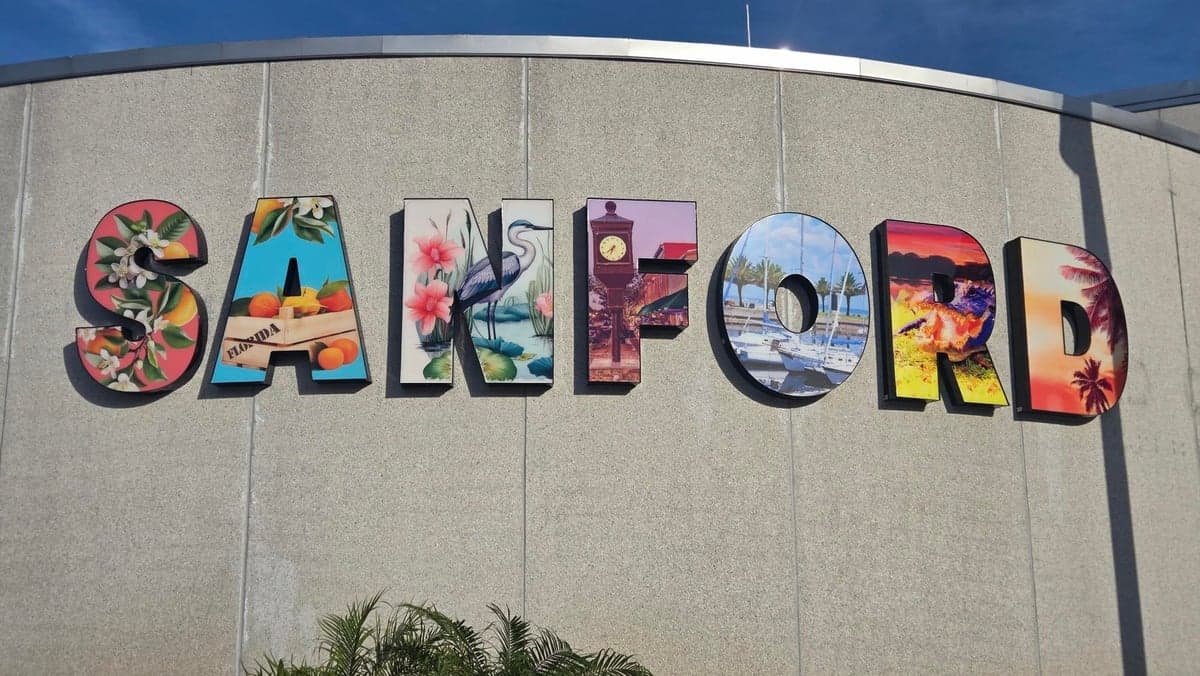
Photo: Wikipedia
Strategic Assessment of Sanford, FL
Meaningful friction. Expect exposure to either population pressure, blast zones, or natural disaster risk. Consider buying a retreat property.
What does the Strategic Assessment tell us?
Our Strategic Assessment grades tactical survivability of an area. Major population centers, military targets, fallout zones, natural disasters, and border exposure all drive risk — lower exposure means a more defensible position in a crisis.
This is heavily inspired by Joel Skousen's Strategic Relocation book. Highly recommended you checkout the book ($)What does this tell us?
Our Strategic Assessment grades tactical survivability of an area. Major population centers, military targets, fallout zones, natural disasters, and border exposure all drive risk — lower exposure means a more defensible position in a crisis.
This is heavily inspired by Joel Skousen's Strategic Relocation book. Highly recommended you checkout the book ($)Strategic Pillars
Key Distances
Regional Safe Places
Below is our recommended "safe zones" in Florida and the surrounding area based on our strategic heuristics. For most people, it's unrealistic to live in a “safe zone” full-time due to work, family or other personal reasons. They tend to be more rural. However, many of these areas are perfect for second homes and retreat properties that double as a vacation home or even a short-term rental.

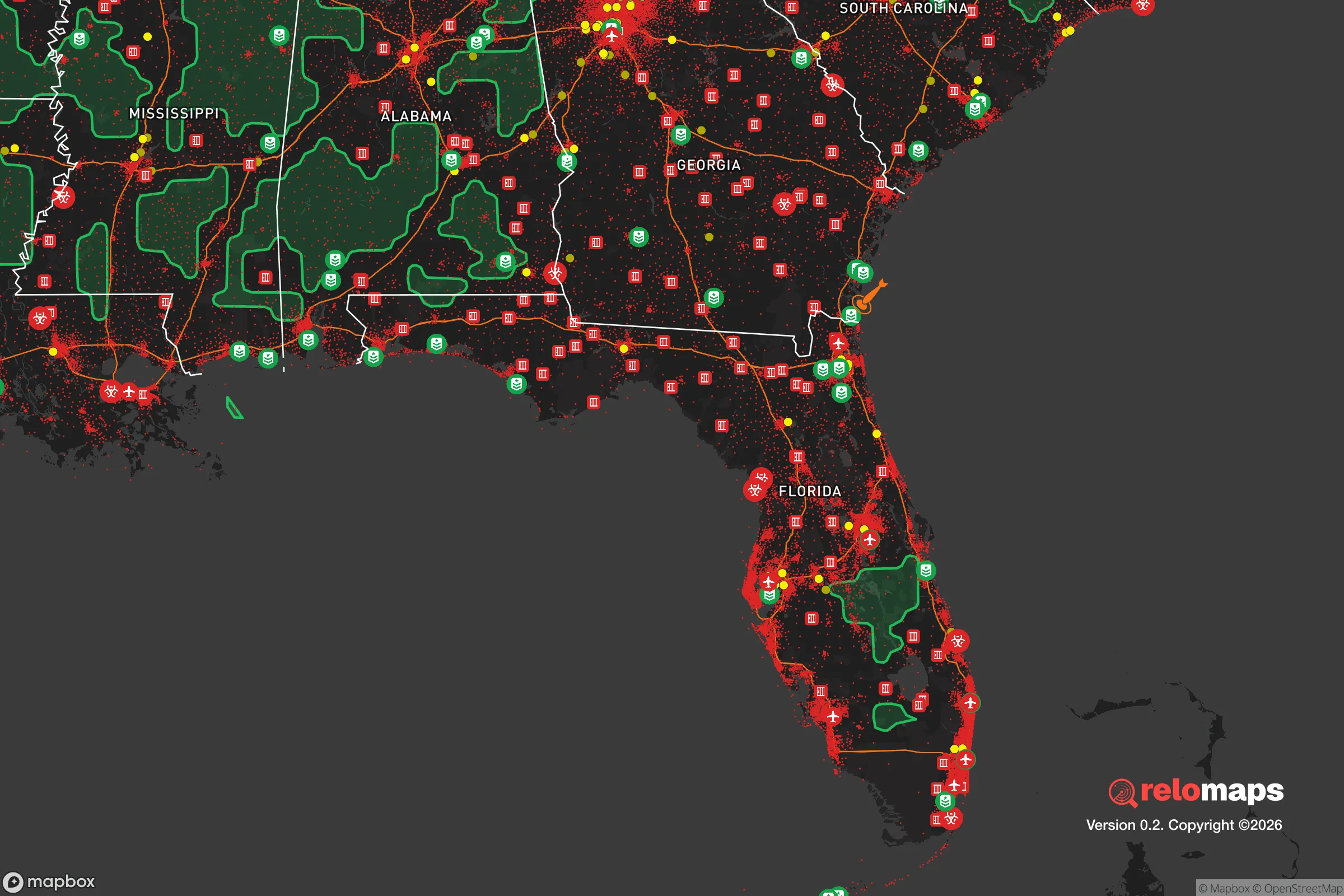


Important Note: For informational purposes only. This does not mean nothing bad ever happens in the green zones. Please use common sense. This is based on public data and modeled with AI. We tried to take a conservative approach but mistakes happen. We update this regularly as new information becomes available.
Solar Generator Recommendations
Backup power matters more here than in safer locations. We've picked three solar generators across budgets and capacity tiers — start with the budget unit if you only need a few essentials, or step up if you want to run a fridge and HVAC for days at a time.
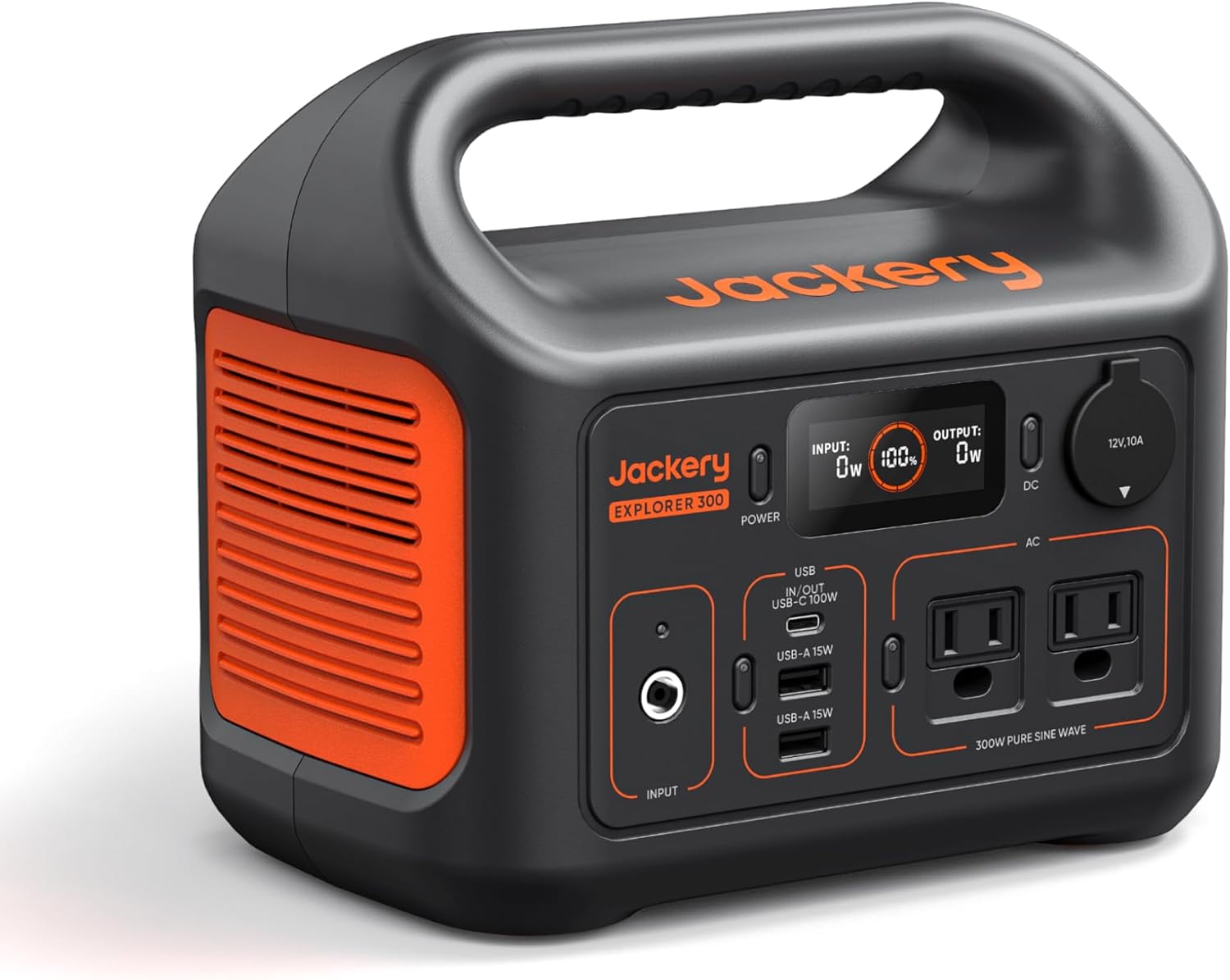
Jackery Portable Power Station Explorer 300
Budget OptionPower on the Go: Weighing only 11 lbs, it's convenient to set up and store with book-sized foldable solar panels

BLUETTI Portable Power Station AC180
Designed for both indoor and outdoor scenarios, AC180 is highly capable as it has a robost capacity and continuous output power.

EF ECOFLOW DELTA Pro Ultra Power Station
Upgraded PickEcoFlow DELTA Pro Ultra is a whole-home energy system designed to grow with your family. Integrated with the Smart Home Panel 2, it scales to meet your evolving energy needs — keeping your home powered, intelligent, and secure through every stage of life.
We earn a commission, at no additional cost to you.
Strategic Assessment Analysis
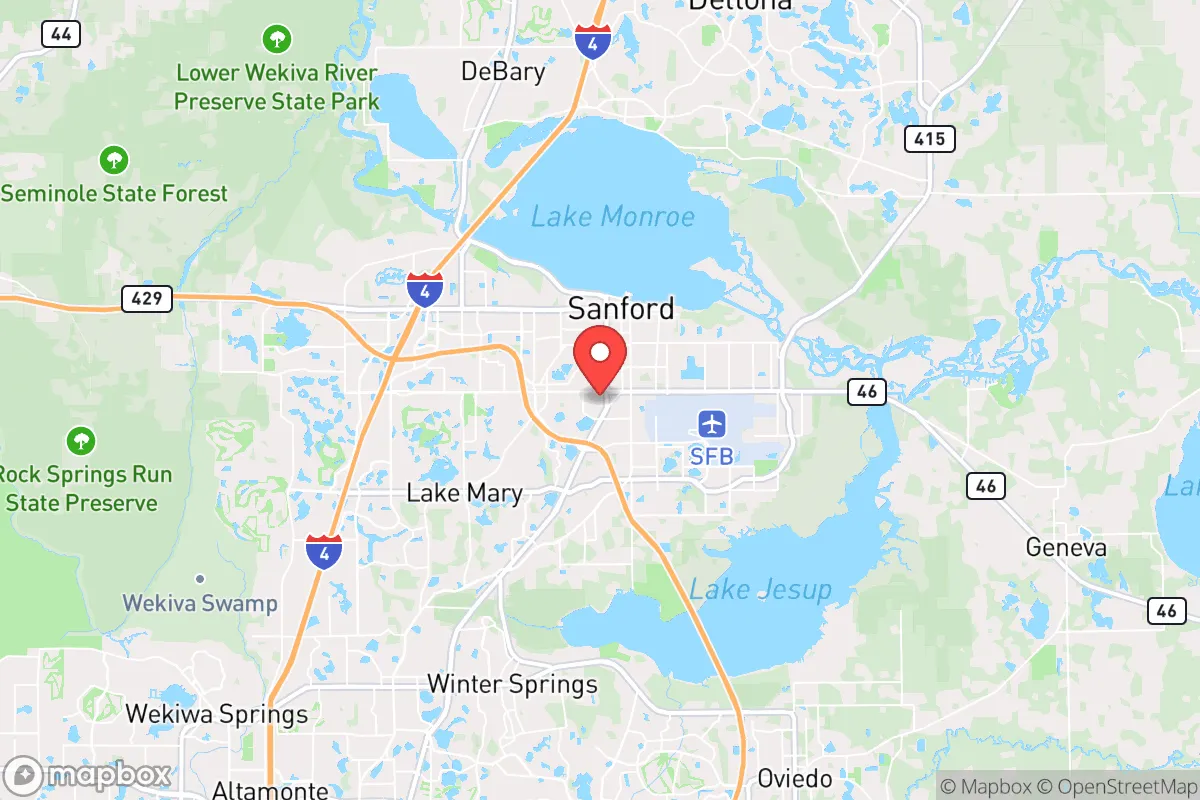
Sanford, Florida, occupies a strategic position that offers a mixed bag for the resilience-minded relocator: it sits on the high ground of the central Florida ridge, roughly 30 miles inland from the Atlantic coast, yet it lies within the sprawling Orlando metropolitan area, which introduces both logistical advantages and significant risk exposure. The city’s location on the shores of Lake Monroe, part of the St. Johns River system, provides a natural water source, but its proximity to major transportation hubs, military installations, and population centers means that any regional disruption—whether from a hurricane, grid failure, or geopolitical event—will likely ripple through Sanford with little delay. For a single individual or family prioritizing self-sufficiency and disaster readiness, Sanford is not a remote redoubt; it is a suburban node with some natural buffers but heavy reliance on fragile infrastructure chains.
Geographic position and natural advantages for disaster readiness
Sanford’s most significant natural advantage is its elevation. The city sits at roughly 30 to 50 feet above sea level, placing it well above the flood-prone coastal zones and the low-lying areas around the St. Johns River floodplain. During Hurricane Ian in 2022, while coastal communities like Fort Myers Beach saw catastrophic storm surge, Sanford experienced mostly wind damage and localized street flooding—not the kind of inundation that destroys homes and contaminates groundwater. The city’s position on the Lake Monroe basin also provides a reliable surface water source, though it requires treatment for potable use. The surrounding terrain is relatively flat but punctuated by stands of live oak and pine, offering some natural windbreak and cover. For a relocator thinking about defensibility, the lack of significant topographic chokepoints (hills, ridges, narrow valleys) means that Sanford is not naturally defensible in a tactical sense, but its inland location does reduce exposure to the most immediate coastal threats like tsunamis and direct hurricane landfall surge. The area’s subtropical climate supports year-round growing seasons, which is a genuine asset for anyone planning to establish a food garden or small-scale permaculture operation.
Risks, exposures, and proximity to fallout-relevant landmarks
The most pressing risk for Sanford is its embeddedness in the Orlando metro area, which has a population exceeding 2.5 million. In a major grid-down scenario or a national emergency, Sanford would be subject to the same resource competition, traffic congestion, and civil unrest that affect any large urban periphery. The city is directly adjacent to Orlando Sanford International Airport (SFB), a secondary commercial and cargo hub that also hosts military and general aviation traffic. In a conflict scenario, this airport could be a target for disruption or a chokepoint for evacuation. Additionally, Sanford lies roughly 30 miles northeast of Orlando’s downtown core and about 40 miles from the Naval Air Station Jacksonville complex, which includes a major naval aviation base and a nuclear-capable air wing. While Sanford itself is not a primary target, its proximity to these assets means that fallout patterns from a strike on Jacksonville or Orlando could affect the area depending on wind direction. The city is also within 20 miles of the Sanford–Lake Mary–Heathrow corridor, which hosts several data centers and critical infrastructure nodes. For the resilience-minded relocator, the key takeaway is that Sanford is not a bug-out location; it is a suburban buffer zone that would experience secondary effects from any major disruption to the region’s military, transportation, or energy infrastructure.
Practical resilience for a relocator: food, water, energy, and defensibility
For a relocator serious about self-sufficiency, Sanford offers a mixed picture. The city’s water supply comes from the St. Johns River Water Management District, which draws from the Floridan Aquifer—a deep, relatively protected groundwater source. However, the municipal water system is vulnerable to power outages and chemical contamination events, as seen in the 2023 incident where a nearby industrial fire temporarily threatened water quality in parts of Seminole County. A well-equipped household with a backup generator, a Berkey or similar filtration system, and a rainwater catchment setup could achieve a reasonable degree of water independence, but the shallow water table in some areas means that septic systems and wells can be compromised during prolonged flooding. Food resilience is more promising: the region’s long growing season allows for year-round vegetable production, and there are active farmers’ markets and local food co-ops in nearby Lake Mary and Oviedo. However, the soil in much of Sanford is sandy and nutrient-poor, requiring significant amendment for serious gardening. Energy resilience is a weak point. The local grid is operated by Duke Energy Florida and Orlando Utilities Commission, both of which have experienced outages during hurricanes and heatwaves. Solar adoption is growing but still below the state average, and the city’s building codes do not mandate solar-ready construction. Defensibility is the hardest category to assess positively: Sanford’s suburban layout with cul-de-sacs, strip malls, and open lots makes it difficult to secure a perimeter. A single-family home on a half-acre lot with a fenced backyard offers some privacy but not meaningful tactical advantage. For a relocator, the best strategy is to choose a property on the northern or eastern edges of the city, closer to the rural areas of Geneva or Osteen, where lot sizes increase and population density drops.
The overall strategic picture for Sanford is one of moderate resilience with significant caveats. It is not a place to ride out a major national crisis alone, but it offers a workable base for a prepared household that maintains a low profile, stores supplies, and builds community ties with like-minded neighbors. The city’s inland location and access to surface water are genuine assets, but its proximity to Orlando, the airport, and military infrastructure means that any large-scale disruption will bring secondary effects. For a conservative-leaning relocator who values self-reliance and wants to avoid the extremes of coastal vulnerability and deep rural isolation, Sanford sits in a middle ground—close enough to urban resources to be practical, far enough to avoid the worst of the storm surge, but not remote enough to offer true strategic depth. The best advice is to treat Sanford as a base of operations, not a final redoubt, and to invest in the fundamentals: a well, solar panels, a root cellar, and a network of trusted contacts within a 50-mile radius.

* Values derived from national, state, county, city and local statistics and may differ in a specific area. Last updated: 2026-10-15T16:18:29.000Z
Narrative content on this page is AI-generated and may contain mistakes. Verify any details that matter before acting on them.
ReloMaps may earn a commission from affiliate links at no extra cost to you.

