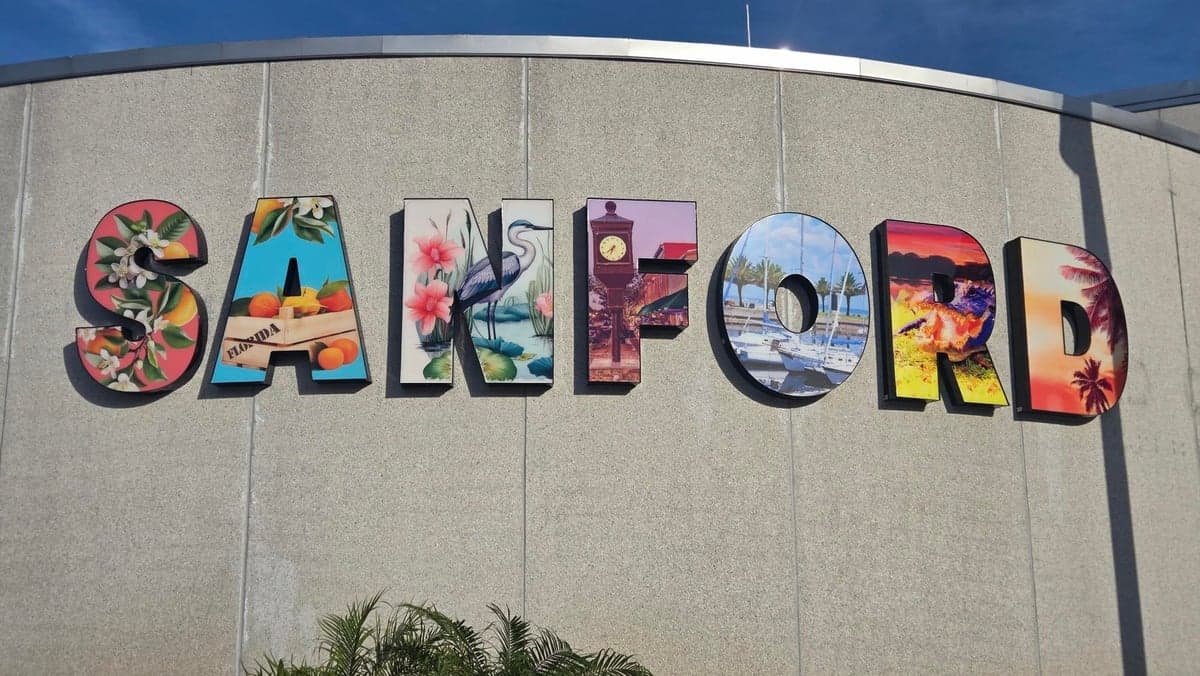
Photo: Wikipedia
Personal Sovereignty in Sanford, FL
Viable for self-reliance. Generally workable, though some barriers may limit total independence.
What does Personal Sovereignty tell us?
Personal Sovereignty measures your capacity for self-reliance and independence with minimal government friction. Higher scores mean fewer barriers between you and the way you want to live... but it assumes you have the space you need and good neighbors.
What does this tell us?
Personal Sovereignty measures your capacity for self-reliance and independence with minimal government friction. Higher scores mean fewer barriers between you and the way you want to live... but it assumes you have the space you need and good neighbors.
State Policy
Energy independence: Importer (10% of energy produced in-state)
Personal Liberty
Homesteading

Personal Liberty Analysis
Sanford, Florida, offers a personal sovereignty environment that is heavily shaped by the state's broad preemption laws and a generally light-touch regulatory posture, making it a strong contender for individuals and families who prioritize autonomy and self-reliance. While the city itself operates within a standard municipal framework, the overarching legal context of Florida—including its lack of a state income tax, robust preemption of local firearm and property regulations, and strong parental rights statutes—creates a baseline of personal freedom that is notably higher than in many Northeastern or West Coast jurisdictions. For a relocation-minded reader, the key question is not whether Sanford is a libertarian enclave (it is not), but whether the state and local environment provides the legal and practical space to live with minimal government interference in daily life, self-defense, and personal economic decisions.
Tax burden and regulatory posture in Sanford and Seminole County
Florida’s absence of a state personal income tax is the single most impactful factor for personal sovereignty in Sanford, as it directly increases the disposable income and financial autonomy of residents. The state’s reliance on sales and property taxes means that local tax burdens are more visible and controllable. In Seminole County, the combined millage rate for 2025-2026 is approximately 17.5 mills, which translates to roughly $1,750 annually per $100,000 of assessed property value before any exemptions. This is moderate by Florida standards and significantly lower than high-tax states like New York or Illinois. The regulatory posture in Sanford is generally business-friendly, with a streamlined permitting process for residential construction and renovations, though the city does enforce standard building codes and zoning ordinances. Notably, Florida’s strong preemption laws prevent local governments from enacting their own wage, benefit, or paid-leave mandates, meaning Sanford cannot impose regulations that exceed state law. This creates a predictable, low-friction environment for entrepreneurs and self-employed individuals, who can operate without worrying about a patchwork of local compliance burdens. The state’s lack of a corporate income tax for most businesses further reinforces this autonomy-friendly climate.
Self-defense and gun law specifics in Sanford and Florida
Florida is a “shall-issue” state for concealed carry permits, and as of July 2023, it became a permitless (constitutional) carry state, allowing any law-abiding adult 21 or older to carry a concealed firearm without a permit. This is a foundational element of personal sovereignty for many conservative-leaning relocators. Sanford itself does not have any local ordinances that further restrict firearm possession, storage, or carry beyond state law, thanks to Florida’s strong preemption statute (F.S. 790.33), which prohibits cities and counties from enacting any firearm or ammunition regulations. This means that the city council cannot ban open carry, restrict magazine capacities, or impose waiting periods. The state’s “Stand Your Ground” law (F.S. 776.012) provides a legal presumption that a person using deadly force in self-defense had a reasonable fear of imminent death or great bodily harm, and it removes any duty to retreat in any place where the person is lawfully present. For those concerned with home defense, this law applies directly to one’s residence. The practical effect is that a Sanford resident can legally defend their home, vehicle, or person with lethal force if they reasonably believe it is necessary, without the legal ambiguity present in states with a duty to retreat. The only notable local consideration is that Sanford is in Seminole County, which has a relatively conservative sheriff’s office that generally supports Second Amendment rights, though individual interactions with law enforcement can vary.
Self-reliance and homesteading viability: lot sizes, zoning, and off-grid feasibility
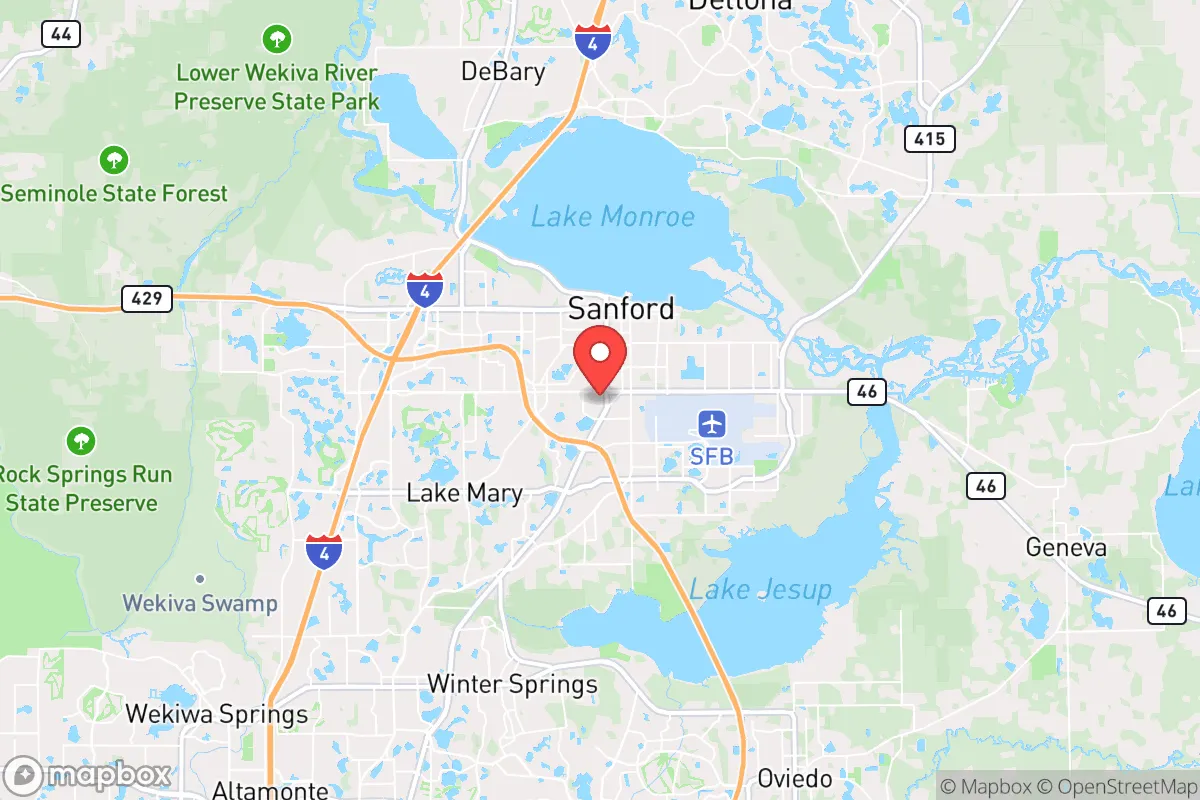
Sanford’s residential landscape is a mix of historic neighborhoods with smaller lots (typically 0.1 to 0.25 acres) and newer suburban subdivisions with larger parcels (0.25 to 0.5 acres). For those seeking true self-reliance, the city’s zoning code generally prohibits keeping livestock (chickens, goats, etc.) on lots under one acre in most residential districts, though some areas allow up to four hens on lots of 0.5 acres or more with a permit. This makes serious homesteading within city limits challenging but not impossible if you target the unincorporated areas of Seminole County or the rural fringes near Lake Monroe or the St. Johns River. Off-grid living is legally difficult within Sanford proper, as the city requires connection to municipal water and sewer for all habitable structures, and solar panel installations must comply with the Florida Building Code and local utility interconnection agreements. However, Florida’s net metering policy (through the Florida Public Service Commission) allows homeowners with solar panels to sell excess electricity back to the grid, which supports energy independence. For those willing to live outside city limits, Seminole County’s rural areas (such as the Geneva area) offer parcels of 1 to 5 acres where well water, septic systems, and livestock are more feasible. The state’s “Right to Farm” act (F.S. 823.14) provides some protection for agricultural activities from nuisance lawsuits, which is a meaningful legal shield for homesteaders. Overall, Sanford itself is not a homesteading hub, but the surrounding county offers viable options for those prioritizing self-reliance.
Personal liberties: parental rights, medical autonomy, speech, and property
Florida has become a national leader in codifying parental rights, with the Parental Bill of Rights (F.S. 1014.04) affirming that parents have the fundamental right to direct the upbringing, education, health care, and mental health of their minor children. This law directly impacts Sanford families by giving them legal standing to challenge school policies or medical decisions they disagree with. In practice, this means parents can opt their children out of certain curricula or health screenings without bureaucratic hurdles. On medical autonomy, Florida law does not require adults to have health insurance, and the state has not expanded Medicaid under the ACA, which limits government involvement in healthcare choices but also reduces access for low-income individuals. The state’s ban on vaccine passports and mask mandates for private businesses (2021 legislation) reflects a broader posture of medical choice, though this is subject to ongoing legal challenges. Free speech is robustly protected under both the First Amendment and Florida’s state constitution, with no local Sanford ordinances that restrict public expression beyond standard time, place, and manner regulations. Property rights are strongly protected by Florida’s Private Property Rights Protection Act (the “Bert Harris Act”), which allows property owners to seek compensation if a government regulation reduces the value of their property by more than 50%. This is a powerful tool against overzealous zoning or environmental regulations. The only notable limitation is that Sanford, like all Florida cities, enforces a standard code of ordinances regarding noise, signage, and land use, but these are generally applied uniformly and without ideological targeting.
In the broader context of U.S. relocation options, Sanford offers a personal sovereignty profile that is well above the national average, driven primarily by Florida’s state-level policies on taxation, self-defense, and parental rights. The city itself is not an outlier in terms of local regulation—it is a typical mid-sized Florida municipality with standard codes and fees—but the state’s preemption framework ensures that local governments cannot erode fundamental freedoms. For a conservative-leaning individual or family, the trade-off is clear: you gain significant financial and legal autonomy at the state level, but you must accept the realities of suburban zoning and municipal services within city limits. The most sovereignty-minded relocators will likely prefer the unincorporated areas of Seminole County, where lot sizes are larger, livestock is more feasible, and the regulatory touch is lighter. Overall, Sanford ranks as a solid choice for those who value personal independence, particularly in the realms of self-defense and financial freedom, while offering a reasonable baseline of community services and infrastructure.

* Values derived from national, state, county, city and local statistics and may differ in a specific area. Last updated: 2026-10-15T16:18:29.000Z
Narrative content on this page is AI-generated and may contain mistakes. Verify any details that matter before acting on them.
ReloMaps may earn a commission from affiliate links at no extra cost to you.

