Photo: Wikipedia
Political ClimatePolitical Climate in Salem, OR
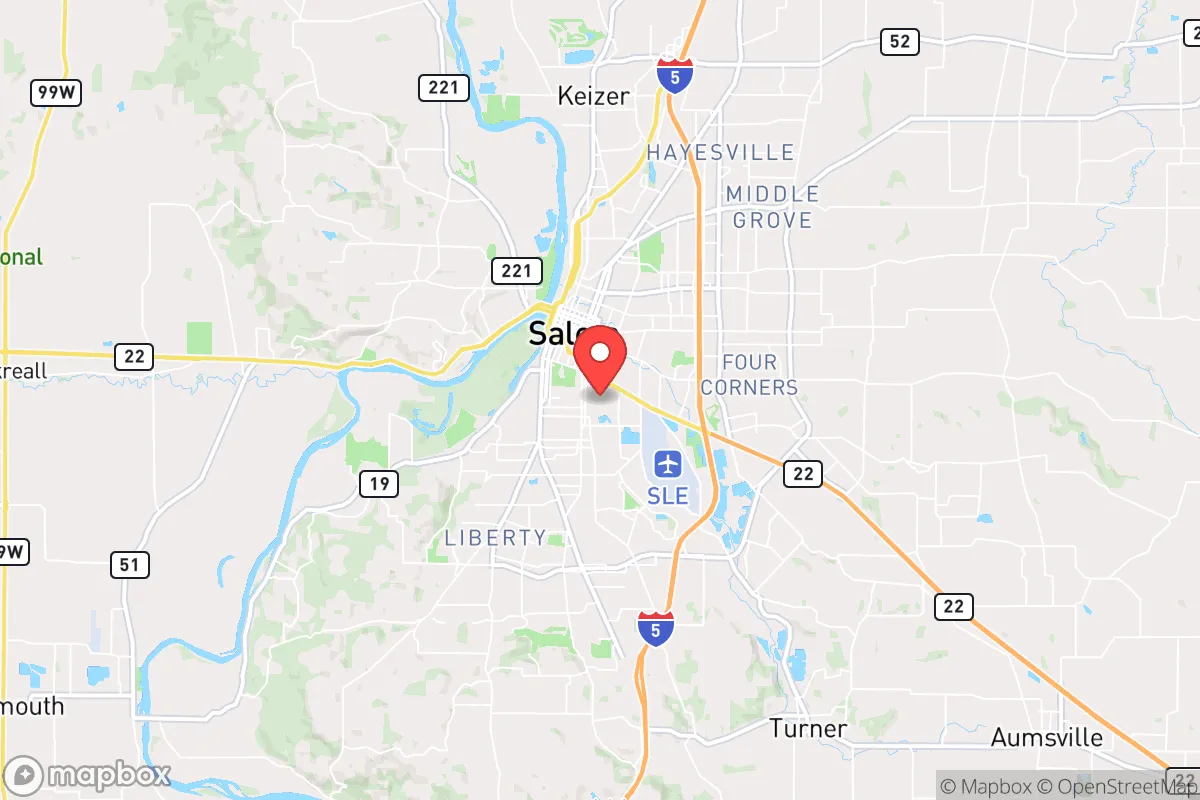
District shown is the primary district for this city’s centroid. Cities may span multiple districts.
Local Political AnalysisPolitical Analysis of Salem, OR
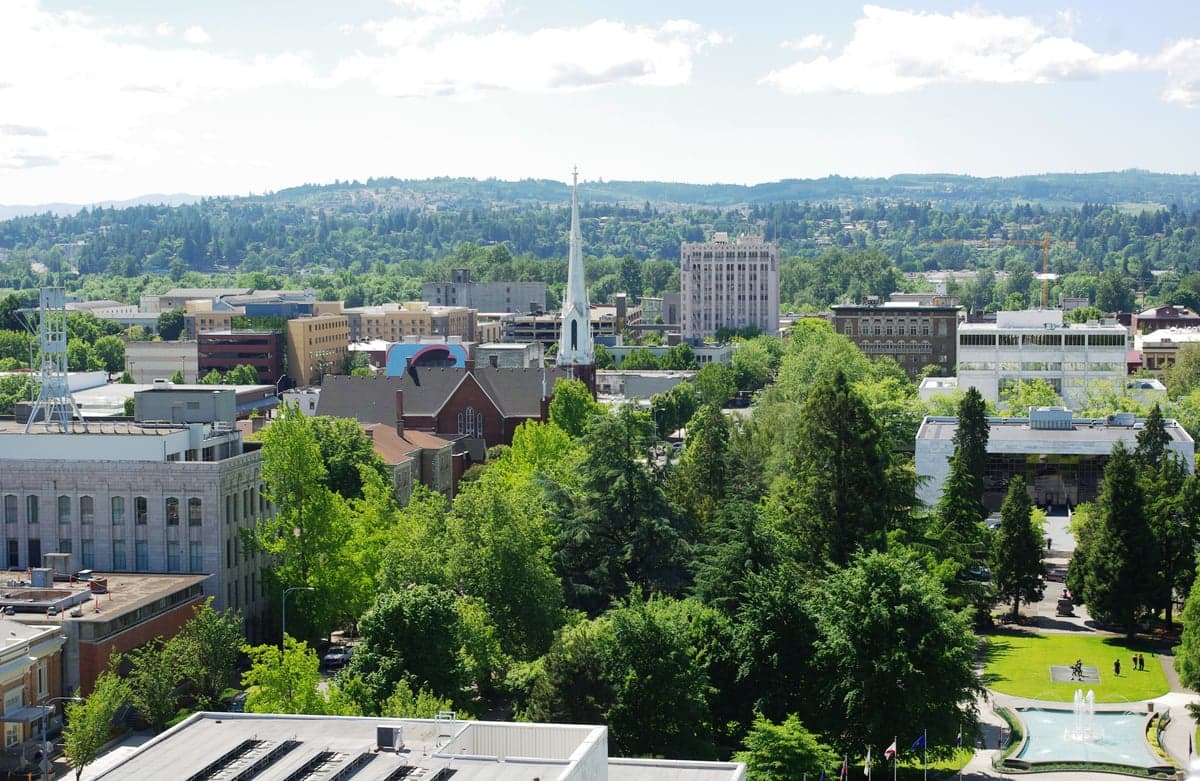
Salem’s political climate has shifted hard to the left over the past decade, and if you’ve lived here as long as I have, you’ve felt it in everything from local ordinances to state mandates. The city itself now carries a Cook PVI of D+6, meaning it votes about six points more Democratic than the national average—a far cry from the moderate, blue-collar town I remember from the 1990s. The real story isn’t just the partisan lean, though; it’s how fast the progressive agenda has taken over, especially in the state capitol, where Salem’s own legislators often lead the charge on policies that feel disconnected from the average working family.
How it compares
Drive just 15 minutes south to Keizer or east to Silverton, and you’ll find a completely different political world. Keizer still leans conservative, with many residents voting against the same tax hikes and land-use regulations that Salem’s city council pushes through. Silverton is even more stark—a tight-knit community where Second Amendment rights and local control are still taken seriously. Meanwhile, Salem itself has become a bubble of state government employees, university staff, and activists who rarely interact with the farmers and loggers that built this valley. The contrast is jarring: you can cross the Willamette River and feel like you’ve left a mini-Portland for actual Oregon.
What this means for residents
For families and small business owners, the practical effect is a steady creep of government overreach into daily life. Salem’s city council has pushed through rental caps, strict building codes, and a “climate action plan” that adds red tape to everything from home renovations to starting a landscaping business. The state legislature, meeting just a few blocks away, has made it harder to own a firearm, mandated electric vehicle quotas, and expanded mail-in voting in ways that erode trust in election integrity. Property taxes keep climbing to fund programs many residents never voted for. If you value personal freedom—the right to run your business, choose your healthcare, or send your kids to a school that matches your values—Salem’s political direction is a growing concern.
On the cultural side, Salem has lost a lot of its old identity. The Oregon State Fairgrounds still host the annual fair, but the city’s character is now shaped more by state worker unions and out-of-state transplants than by the timber families and church communities that used to dominate. You’ll see more “In This House We Believe” signs than American flags in some neighborhoods. The long-term trajectory worries me: if the current trend holds, Salem will continue mirroring Portland’s policies—just slower, with less media attention. For anyone considering a move here, I’d recommend looking closely at the local school board races and city council candidates. Those elections, not the national headlines, will tell you whether Salem can still respect the rights of its conservative residents or if it’s fully committed to the progressive experiment.

State Political ClimatePolitical Climate in Oregon
State Political AnalysisPolitical Environment in the State
Oregon has shifted from a purple swing state to a solidly Democratic stronghold over the past 20 years, with Democrats controlling the governorship, both legislative chambers, and all statewide offices since 2016. The state’s overall partisan lean is roughly D+10 in presidential elections, but that number masks a deep and growing chasm between the liberal Willamette Valley and the conservative rest of the state. For a conservative considering relocation, Oregon offers stunning natural beauty and a relatively low cost of living outside the metro areas, but the policy environment has become increasingly hostile to traditional values, with Portland and Eugene driving the agenda while rural counties like Lake, Harney, and Grant vote 70-80% Republican.
Urban vs. rural divide
The political map of Oregon is a tale of two states. The Portland metro area—Multnomah, Washington, and Clackamas counties—generates about 45% of the state’s vote and leans heavily Democratic, with Multnomah County going 78% for Biden in 2020. Eugene and Corvallis in Lane and Benton counties are similarly progressive, driven by the University of Oregon and Oregon State University. Meanwhile, the rest of the state is deeply red: Lake County voted 81% for Trump, Harney County 79%, and Grant County 78%. The I-5 corridor from Portland to Medford is the Democratic spine, while the eastern two-thirds of the state—including Bend, Pendleton, and Klamath Falls—vote Republican, though Bend itself is rapidly trending left as Californians move in. The suburbs of Portland, like Beaverton and Hillsboro, are solidly blue, but exurbs like Canby and Newberg are more purple, with Newberg recently making national news for a conservative school board fight over critical race theory and mask mandates.
Policy environment
Oregon’s policy environment is a mixed bag for conservatives. The state has no sales tax, which is a major plus, but income taxes are among the highest in the nation—top marginal rate of 9.9%—and property taxes are moderate but rising. The regulatory climate is heavy: Oregon has some of the strictest land-use laws in the country, a cap-and-trade carbon program (though it’s been paused by ballot measures), and a statewide rent control law passed in 2019. Education policy is dominated by teachers unions, with Portland Public Schools spending over $20,000 per student but producing mediocre outcomes. School choice is limited—no vouchers, and charter schools are tightly regulated. On election laws, Oregon was the first state to vote entirely by mail, which conservatives often criticize for lacking voter ID requirements and enabling ballot harvesting. The state also has automatic voter registration and same-day registration, which critics say undermines election integrity. Healthcare is heavily regulated, with a state-run insurance exchange and Medicaid expansion under the Affordable Care Act.
Trajectory & freedom
Oregon is becoming less free by almost any measure, especially for conservatives. The 2023 legislative session saw a flurry of bills that expanded government control: a new gun control law (Measure 114) that requires a permit to purchase a firearm and bans magazines over 10 rounds, though it’s been blocked by court challenges. Parental rights took a hit with a 2023 law that allows minors as young as 15 to access gender-affirming care without parental consent, and another law that prohibits schools from notifying parents if a child changes their gender identity. Medical freedom was curtailed with a 2022 law that mandates COVID-19 vaccines for healthcare workers, and the state still has a mask mandate for healthcare settings. Property rights are under pressure from the land-use system, which makes it nearly impossible to build new housing in rural areas. On the plus side, Oregon has no income tax on Social Security benefits, and the state’s constitutional right-to-hunt-and-fish amendment offers some protection for gun owners, though it’s been weakened by recent legislation. The trend is clear: the state legislature is moving further left every cycle, with Portland’s progressive activists setting the agenda for the entire state.
Civil unrest & political movements
Oregon has a long history of political activism, but the 2020 protests in Portland made national headlines. The city saw over 100 consecutive nights of demonstrations, with the federal government deploying DHS agents to protect federal buildings. The left-wing activist scene is centered in Portland, with groups like Rose City Antifa and Pacific Northwest Youth Liberation Front organizing regularly. On the right, the Oregon Republican Party has become more populist and confrontational, with some counties like Josephine and Douglas passing resolutions to join the “Greater Idaho” movement, which seeks to secede from Oregon and join Idaho. The movement has gained traction, with 11 of 15 eastern Oregon counties voting to consider the idea. Immigration politics are tense: Portland is a sanctuary city, and the state has a “sanctuary state” law that limits cooperation with federal immigration enforcement. Election integrity remains a flashpoint, with the 2022 gubernatorial race between Democrat Tina Kotek and Republican Christine Drazan being decided by just 3 points, despite the state’s blue lean. The 2020 election saw widespread allegations of ballot harvesting in Multnomah County, though no major fraud was proven. A new resident would notice the stark contrast between Portland’s street protests and the quiet, conservative communities in places like Medford and Redmond.
Projection
Over the next 5-10 years, Oregon is likely to continue its leftward drift, driven by in-migration from California and the growing political power of Portland’s suburbs. The state’s population growth has slowed, but the people moving in are disproportionately young, college-educated, and liberal. The rural exodus is real: counties like Lake and Harney are losing population, which reduces their political clout. The “Greater Idaho” movement is unlikely to succeed in the near term, but it could force a conversation about rural representation. The 2024 election will be a test: if Democrats lose the governorship or the legislature, they may moderate, but if they hold, expect more progressive policies on housing, climate, and social issues. For a conservative moving in now, the best bet is to settle in a red county like Deschutes (Bend area) or Jackson (Medford area), where local government is more aligned with conservative values, even as the state government becomes more hostile. The next decade will see continued conflict between Portland and the rest of the state, with no resolution in sight.
For a conservative considering Oregon, the bottom line is this: the state’s natural beauty and lack of sales tax are real draws, but the political climate is increasingly adversarial to traditional values. You’ll find like-minded communities in the eastern and southern parts of the state, but you’ll be fighting an uphill battle against a state government that is actively expanding its control over your life. If you value personal freedom, gun rights, and parental authority, Oregon is a state to approach with caution—or to move to with the intention of fighting for change. The best strategy is to pick a red county, get involved in local politics, and brace for a long-term cultural war.
* Values derived from national, state, county, city and local statistics and may differ in a specific area. Last updated: 2026-05-02T22:11:54.000Z
Narrative content on this page is AI-generated and may contain mistakes. Verify any details that matter before acting on them.
ReloMaps may earn a commission from affiliate links at no extra cost to you.

