Photo: Wikipedia
Quality of Life in Salem, OR
Above-average quality of iife. The area offers a reasonable cost of living, decent mobility, and a mix of neighborhood amenities.
What does Quality of Life tell us?
Quality of Life blends cost of living, nearby amenities, socioeconomic signals, and neighborhood character. City-level scores represent the whole municipality; individual neighborhoods can differ.
What does this tell us?
Quality of Life blends cost of living, nearby amenities, socioeconomic signals, and neighborhood character. City-level scores represent the whole municipality; individual neighborhoods can differ.
Cost of Living
23% above national average
The Real Cost of Living in Salem, OR for 2026
| Tier | Individual | Family (4) |
|---|---|---|
| Survival | $21k | $40k |
| Comfortable | $74k | $109k |
| Luxury | $123k+ | $191k+ |
| Elite (Top 5%) | $145k+ | $225k+ |
66%
The Area Signal
A metric tracking the socioeconomic signals of the area.
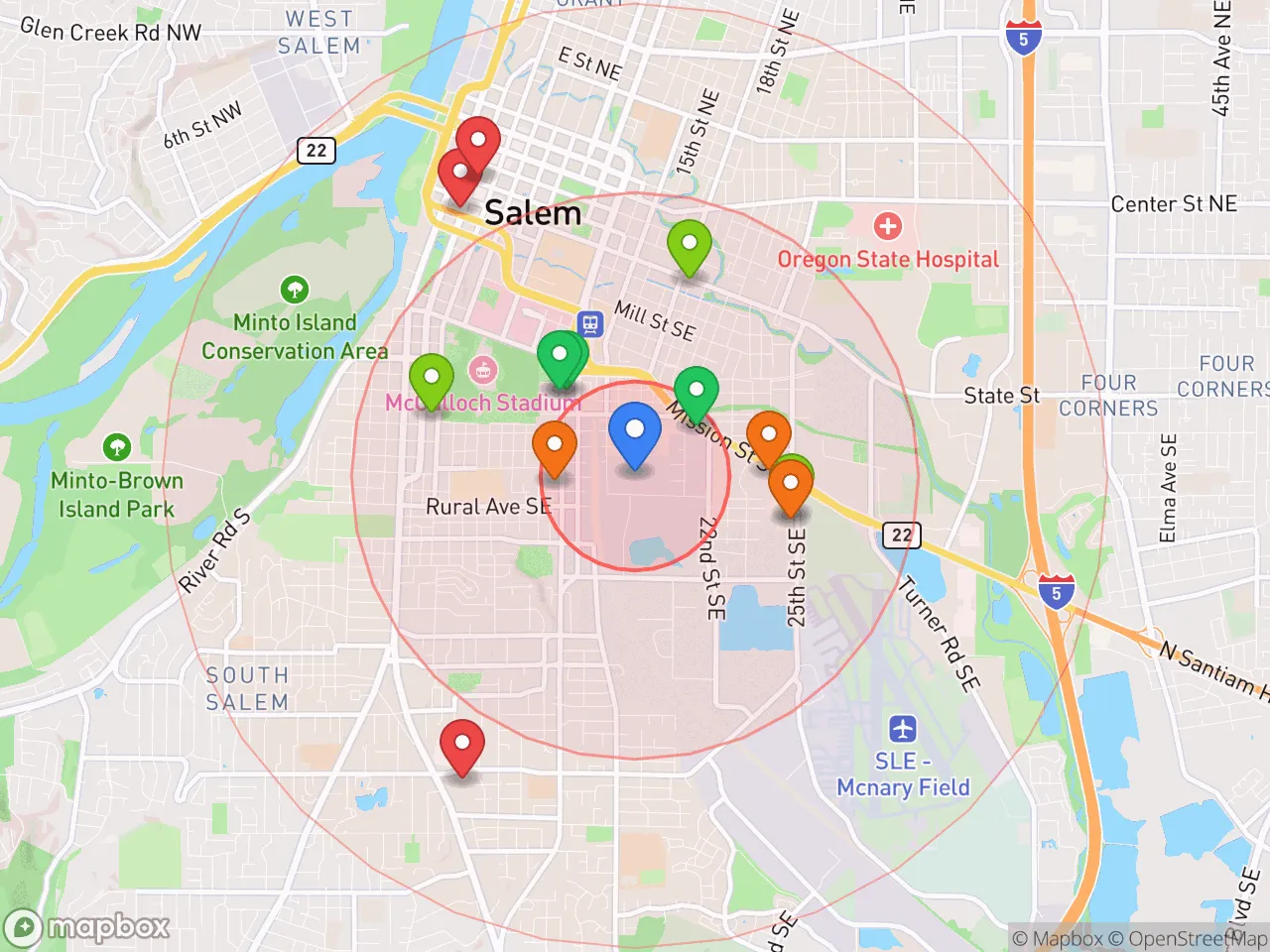
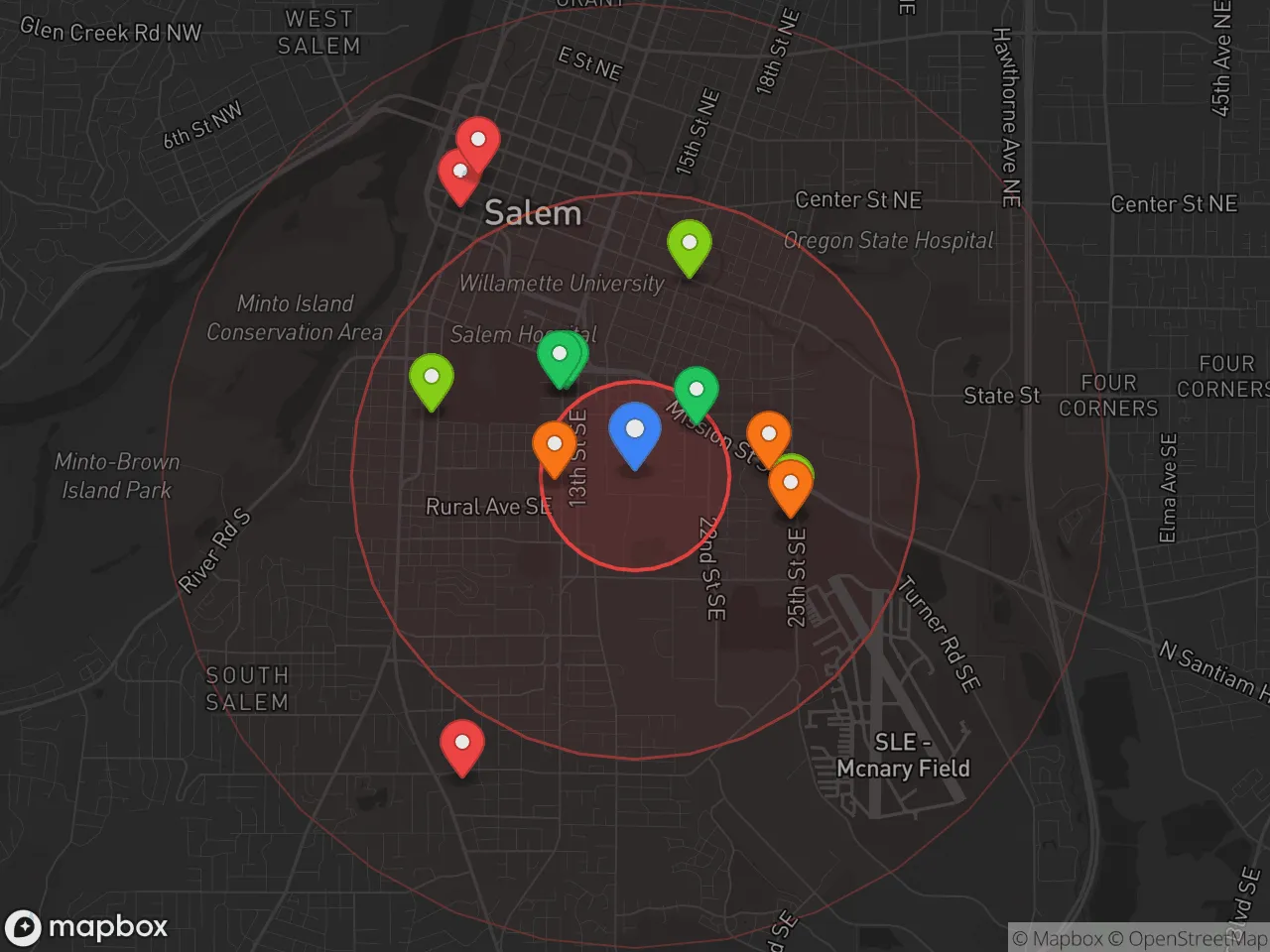
Hobbies
Explore the areaGroceries
8 within 10 miles
Gas
20 within 10 miles
Hospital
6 within 20 miles
Airport
PDX — Portland International
Post Office
USPS — Salem, OR
Critical Amenities
Quality-of-Life Analysis
Salem, Oregon, presents a quality of life defined by moderate affluence and a strong sense of community, attracting a mix of state government employees, healthcare professionals, and families seeking a more affordable alternative to Portland. With a cost of living index of 123 (23% above the national average), the city sits in a middle ground—more expensive than much of the Willamette Valley but significantly cheaper than the Portland metro area. The population skews toward middle-income households, with a notable presence of public-sector workers due to the state capitol, alongside a growing number of remote workers drawn by the area's relative affordability and access to nature.
Cost of living and housing affordability compared to Portland and Eugene
Housing is the primary driver of Salem's cost of living, though it remains a relative bargain compared to Portland. The median home value in Salem is $382,400, which is roughly 35% lower than Portland's median and about 10% below Eugene's. Median rent sits at $1,323, a figure that undercuts Portland by nearly $500 per month and is competitive with smaller cities like Corvallis. While the overall COL index of 123 is elevated by Oregon's income tax and utility costs, Salem's housing affordability—especially for first-time buyers—stands out. The average commute of 22.4 minutes is notably shorter than Portland's 30-minute average, reducing transportation costs and improving daily quality of life. However, property taxes in Marion County average about 1.1% of assessed value, slightly higher than in neighboring Polk County, which can affect monthly budgets for homeowners.
Schools, amenities, and daily life for families and professionals
Daily life in Salem revolves around a mix of state government stability, outdoor recreation, and a modest but functional cultural scene. The Salem-Keizer School District, the second-largest in Oregon, serves over 40,000 students and includes several highly rated options like Sprague High School and West Salem High School, though performance varies by neighborhood. For amenities, the city offers the Riverfront Park along the Willamette River, the Salem Saturday Market, and the Oregon State Capitol grounds, which host seasonal events. Healthcare access is strong, anchored by Salem Health Hospital, a major regional employer. The commute is a standout feature: at 22.4 minutes, it is one of the shortest among Oregon's mid-sized cities, allowing residents more time for family or hobbies. Dining and nightlife are less robust than in Portland, but the city has seen growth in craft breweries and farm-to-table restaurants, particularly in the downtown core near the Capitol Mall.
Salem is best suited for state workers, healthcare professionals, and families who prioritize housing affordability and a manageable commute over urban intensity. Remote workers and retirees also find the city appealing due to its lower housing costs and proximity to the Oregon Coast and Cascade Mountains. Those seeking a vibrant nightlife or a dense urban core may find Salem underwhelming, but for residents who value a stable, family-oriented environment with easy access to nature and a short drive to Portland, it offers a compelling balance of cost and convenience.

Crime in Salem, OR
Crime rates similar to the national median for U.S. locations.
Violent CrimeViolent Crime Analysis
Property CrimeProperty Crime Analysis
Crime Analysis
Salem, Oregon, reports a violent crime rate of 420.3 per 100,000 residents and a property crime rate of 2,356 per 100,000, placing it above both state and national averages for overall crime. While not the most dangerous city in the Pacific Northwest, these figures indicate a community where residents face a heightened risk of theft, burglary, and assault compared to typical U.S. cities. The city’s safety profile is further complicated by its status as the state capital, which brings a mix of transient populations, political demonstrations, and concentrated social services that can strain local law enforcement resources.
Crime in context
Salem’s violent crime rate of 420.3 per 100,000 is roughly 20% higher than the national average of approximately 380 per 100,000 and significantly exceeds Oregon’s statewide rate of about 290 per 100,000. Property crime in Salem, at 2,356 per 100,000, is nearly double the national average of roughly 1,950 per 100,000 and well above Oregon’s average of 2,100 per 100,000. These numbers place Salem in a tier of mid-sized Western cities—comparable to Eugene, Oregon, or Spokane, Washington—where property offenses like vehicle theft and larceny are persistent problems. A key factor driving these elevated rates is the region’s progressive criminal justice policies, including district attorneys who prioritize diversion programs and reduced sentencing for non-violent offenders. While intended to reduce incarceration, these policies have been criticized for creating a revolving door for repeat property criminals, directly contributing to Salem’s high theft and burglary numbers.
What residents experience
For Salem residents, the most tangible daily safety concern is property crime. Car break-ins, mail theft, and package theft are common, particularly in neighborhoods near downtown, the Lancaster Drive corridor, and areas adjacent to major transit routes. Violent crime, while less frequent, is concentrated in specific hotspots, including the downtown core near the State Capitol Mall and parts of the Northeast Salem district. Residents report that progressive prosecution policies in Marion County often result in reduced charges or plea deals for repeat offenders, leading to a perception that the justice system prioritizes offender rehabilitation over public safety. This dynamic is especially frustrating for victims of property crime, who frequently see little follow-through on investigations. The presence of the Oregon State Hospital and numerous social service agencies in the city also contributes to visible homelessness and public disorder, which, while not always criminal, can heighten residents’ sense of insecurity.
Neighborhood-level safety varies considerably. South Salem and West Salem generally report lower crime rates, with suburban subdivisions and gated communities offering a safer environment. In contrast, North Salem and the downtown area experience higher rates of both property and violent crime, with the area around the Lancaster Mall being a known hotspot for theft and drug-related activity. Prospective residents should research specific neighborhood crime maps and consider that even in safer areas, the city’s overall property crime problem means that basic precautions—like locking cars and securing packages—are essential. The combination of elevated crime rates and a justice system perceived as lenient makes Salem a location where safety requires active vigilance rather than passive assumption.
* Values derived from national, state, county, city and local statistics and may differ in a specific area. Last updated: 2026-05-02T22:11:54.000Z
Narrative content on this page is AI-generated and may contain mistakes. Verify any details that matter before acting on them.
ReloMaps may earn a commission from affiliate links at no extra cost to you.

