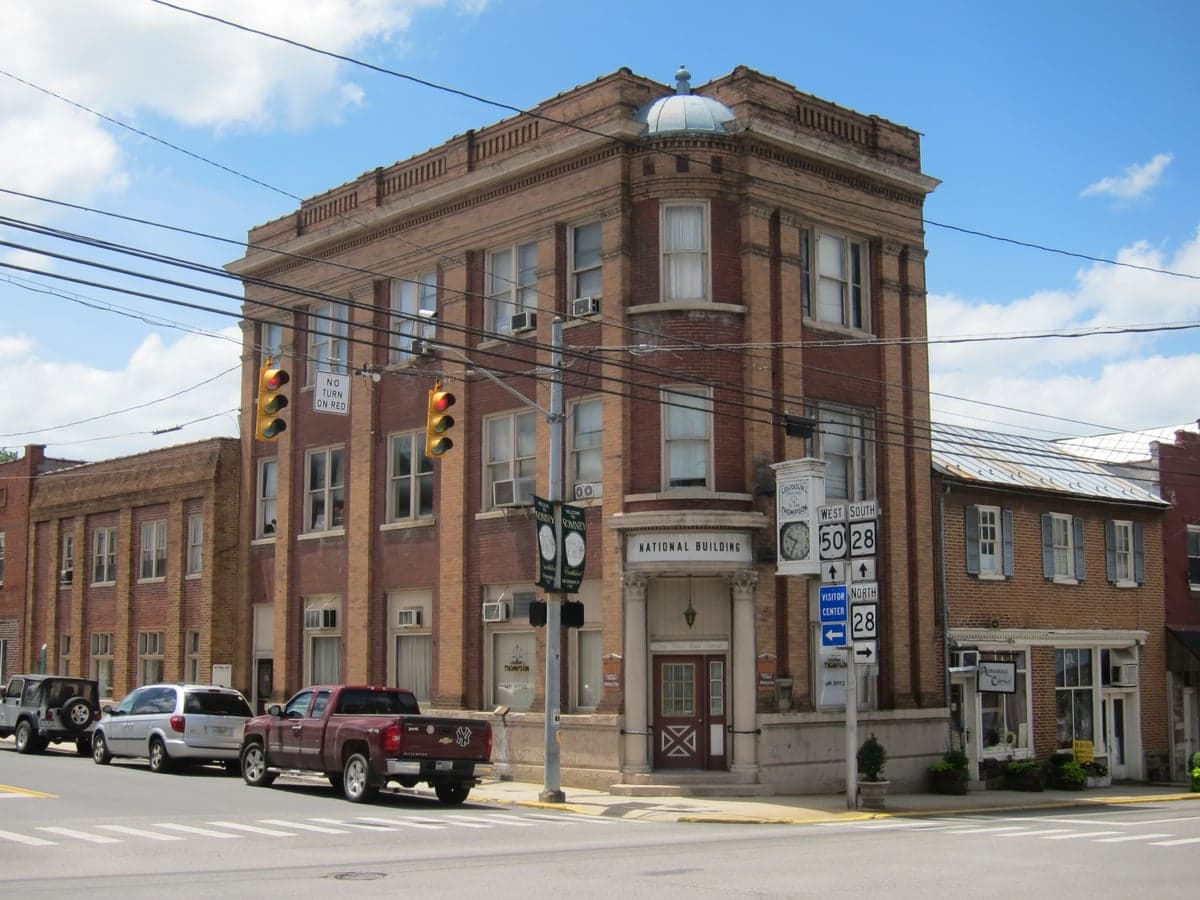
Photo: Wikipedia
Political ClimatePolitical Climate in Romney, WV
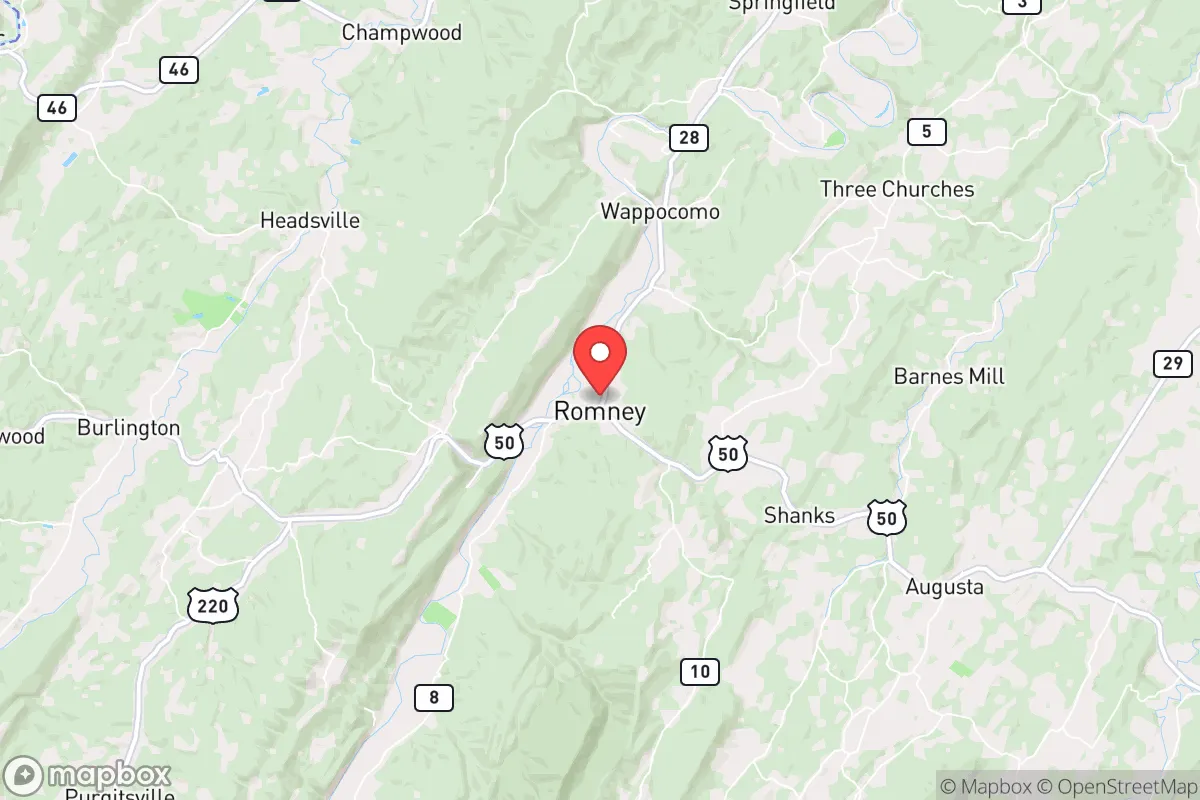
District shown is the primary district for this city’s centroid. Cities may span multiple districts.
Local Political AnalysisPolitical Analysis of Romney, WV
Romney, West Virginia, is about as solidly Republican as a place can get in the Mountain State, with a Cook Partisan Voting Index (PVI) of R+20. That means the area votes about 20 points more Republican than the national average, which is a deep shade of red even by West Virginia standards. The political trajectory here has been stable for decades—this isn't a place that flipped recently; it's been reliably conservative for as long as anyone can remember, with local elections often decided in the GOP primary rather than the general. If you're looking for a bellwether of Appalachian conservative values, Romney is it.
How it compares
Compared to the rest of West Virginia, Romney is actually a bit more Republican than the state average. West Virginia as a whole has a Cook PVI of R+22, so Romney's R+20 is slightly less red, but in practice, the difference is negligible—both are deep-red territory. The real contrast comes when you look at nearby towns like Keyser (Mineral County) or Moorefield (Hardy County), which are also heavily Republican but have a slightly more moderate streak due to their proximity to the Eastern Panhandle's growing population from Maryland and Virginia. Romney, by contrast, feels more insulated and traditional, with a political culture rooted in local agriculture, small business, and a strong sense of self-reliance. The nearest city of any size, Cumberland, Maryland (about 20 miles north), is a Democratic-leaning town in a blue state, which creates a noticeable political border at the state line—Romney residents often joke that they cross into Maryland for shopping but not for politics.
What this means for residents
For conservative residents, Romney's political climate is a comfortable fit. Local government, school boards, and law enforcement tend to reflect conservative priorities like low taxes, Second Amendment rights, and limited regulation. You'll find that most community events, from the Hampshire County Fair to church suppers, have an undercurrent of shared political values—it's not something people argue about because there's broad agreement. For liberal residents, life in Romney can feel isolating. There's no organized Democratic presence to speak of, and progressive viewpoints are rare in public discourse. That said, most folks are neighborly regardless of party—politics doesn't usually get in the way of helping a neighbor fix a fence or borrow a tractor. The key is that political differences here are more about national issues than local ones; at the county commission level, everyone tends to agree on the basics like keeping roads paved and schools funded.
Culturally, Romney stands apart from West Virginia's more liberal enclaves like Morgantown (home to WVU) or Charleston (the state capital), where you'll find more diversity of thought and a younger, more transient population. Romney is older, whiter, and more rooted—many families have been here for generations. Policy-wise, the area leans heavily on local control: there's a strong resistance to state or federal mandates, whether it's about land use, education, or health mandates. The biggest political flashpoints in recent years have been around school funding and broadband access, with most residents favoring local solutions over state intervention. Looking ahead, the political climate is unlikely to shift much—Romney's demographics and economic base (farming, small manufacturing, and some tourism from the nearby Potomac River) don't point to any major realignment. It's a place where the politics match the landscape: steady, stubborn, and quietly proud of it.

State Political ClimatePolitical Climate in West Virginia
State Political AnalysisPolitical Environment in the State
West Virginia has become one of the most reliably Republican states in the nation, with a partisan lean of roughly +39 points for the GOP in the 2024 presidential election, a dramatic shift from its historically Democratic roots. The state’s political transformation over the past 20 years is staggering: in 2000, it voted for Al Gore; by 2024, Donald Trump carried it by nearly 40 points. This realignment is driven by a collapse of the old union-based Democratic coalition, replaced by a culturally conservative, populist Republican majority that dominates every level of government. For a relocator, this means a state where conservative values are deeply embedded in policy and daily life, but where the old coal-and-union culture still flavors local politics in places like Morgantown and Charleston.
Urban vs. rural divide
The political map of West Virginia is starkly divided between a few small, liberal-leaning islands and a vast, deeply red rural expanse. The most notable blue dot is Morgantown, home to West Virginia University, where Monongalia County has trended Democratic in recent cycles, voting for Biden in 2020 and Harris in 2024 by narrow margins. This is driven by the university’s faculty, students, and younger professionals. Charleston, the state capital, is a purple-to-light-blue area in Kanawha County, with a mix of government workers and union households that still lean slightly Democratic in local races. Huntington (Cabell County) and Wheeling (Ohio County) are more competitive but have shifted rightward, while Parkersburg (Wood County) and Martinsburg (Berkeley County) are solidly red. The rural counties—like McDowell, Mingo, and Logan in the southern coalfields—are now among the most Republican in the nation, with Trump winning some precincts by 80+ points. The divide isn’t just geography; it’s economic. The old coal towns that once voted Democratic out of union loyalty now vote Republican out of cultural alignment and resentment of federal environmental policies.
Policy environment
West Virginia’s policy environment is aggressively conservative, with a focus on low taxes, minimal regulation, and cultural traditionalism. The state has no personal income tax on Social Security benefits and has been phasing down its personal income tax rate, which currently sits at a flat 3.99% as of 2026, with a goal of elimination. Property taxes are among the lowest in the nation, capped by the state constitution. The regulatory posture is business-friendly, with a right-to-work law (2016) and a tort reform system that caps non-economic damages. Education policy is a flashpoint: the state passed a school choice law in 2021 creating Education Savings Accounts (ESAs) for all students, one of the most expansive in the country, though implementation has been slowed by legal challenges. Healthcare is a mixed bag—the state expanded Medicaid under the ACA, but the legislature has resisted further expansion and passed a near-total abortion ban in 2022 with no exceptions for rape or incest. Election laws are restrictive: voter ID is required, early voting is limited to 10 days, and no-excuse absentee voting was eliminated in 2021. For a conservative relocator, this is a state that largely aligns with their values; for a liberal one, it’s a place where their policy preferences are actively opposed.
Recent policy direction
Recent legislation in West Virginia points toward a consolidation of conservative priorities across the full spectrum of liberties a relocator might weigh. On gun and self-defense law, the state passed constitutional carry in 2016 and a “Stand Your Ground” law in 2018, with no permit required to carry concealed. Parental and education rights saw a major win with the 2021 ESA law, which allows parents to use state funds for private school, homeschooling, or tutoring. The state also passed a “Don’t Say Gay” style law in 2023 restricting classroom discussion of sexual orientation and gender identity. On speech and privacy, West Virginia has no specific shield law for journalists, but it does have a broad public records law. Medical and bodily autonomy is sharply restricted: the 2022 abortion ban is one of the strictest in the nation, and medical marijuana is legal only for a limited list of conditions (no recreational use). Property rights are strong, with no statewide zoning and a “right to farm” law protecting agricultural operations from nuisance lawsuits. Taxation is trending downward, with the income tax rate scheduled to drop further if revenue triggers are met. Voting and ballot access has tightened: the 2021 election integrity law shortened the absentee ballot window and banned ballot drop boxes. For a relocator, this means a state that is actively moving toward fewer taxes, more school choice, and stricter cultural regulations, while maintaining strong gun rights and property protections.
Civil unrest & political movements
West Virginia has a history of labor unrest, but modern political movements are more focused on cultural and environmental flashpoints. The 2018 teachers’ strike—which shut down schools statewide for nine days—was a rare moment of cross-party unity, driven by low pay and rising healthcare costs. It succeeded in winning a 5% pay raise and a pause on a PEIA restructuring. On the right, the “Take Back West Virginia” movement has pushed for school choice and anti-abortion legislation, with significant grassroots support in rural counties. Immigration politics are muted—the state has one of the smallest foreign-born populations in the U.S.—but there have been symbolic resolutions opposing sanctuary cities, though none exist. Election integrity controversies flared after 2020, with the state GOP pushing for the 2021 voting law, but there were no major fraud allegations. The most visible flashpoint is environmental: the Mountain Valley Pipeline, which runs through southern West Virginia, has sparked protests from environmental activists and landowners, with occasional clashes with law enforcement. For a new resident, political activism is less about street protests and more about local school board meetings and county commission hearings, where the culture war over education and library books plays out.
Projection
Over the next 5-10 years, West Virginia’s political trajectory is likely to remain deeply conservative, but with some demographic and economic shifts that could moderate the edges. The state is losing population—down about 3% since 2020—with the biggest losses in rural coal counties and modest growth in the Eastern Panhandle (Martinsburg, Charles Town) driven by commuters to the D.C. metro area. This in-migration from the D.C. suburbs could introduce a small but growing libertarian-leaning or moderate Republican cohort, especially in Berkeley and Jefferson counties. The aging population (median age 43) means the electorate will become even more conservative, as younger, more liberal residents leave for jobs elsewhere. The income tax phase-down could accelerate, making the state more attractive to retirees and remote workers, but the lack of economic diversification—coal, natural gas, and healthcare are still the big three—limits growth. Expect continued fights over school choice funding, abortion access (with potential further restrictions), and energy policy, as the state tries to balance its coal legacy with the renewable transition. For someone moving in now, the state will likely be even more Republican in a decade, with lower taxes and more school choice, but also with a shrinking population and a culture that remains resistant to change.
For a new resident, the bottom line is that West Virginia offers a deeply conservative policy environment with low taxes, strong gun rights, and expansive school choice, but also with limited economic opportunity and a shrinking population. If you align with those values, you’ll find a welcoming community and a low cost of living. If you don’t, you’ll face a state where your political views are in the minority and where policy is actively moving in the opposite direction. The practical takeaway: come for the land and the lifestyle, but understand that the politics are baked in and unlikely to shift anytime soon.
* Values derived from national, state, county, city and local statistics and may differ in a specific area. Last updated: 2026-10-05T19:37:22.000Z
Narrative content on this page is AI-generated and may contain mistakes. Verify any details that matter before acting on them.
ReloMaps may earn a commission from affiliate links at no extra cost to you.

