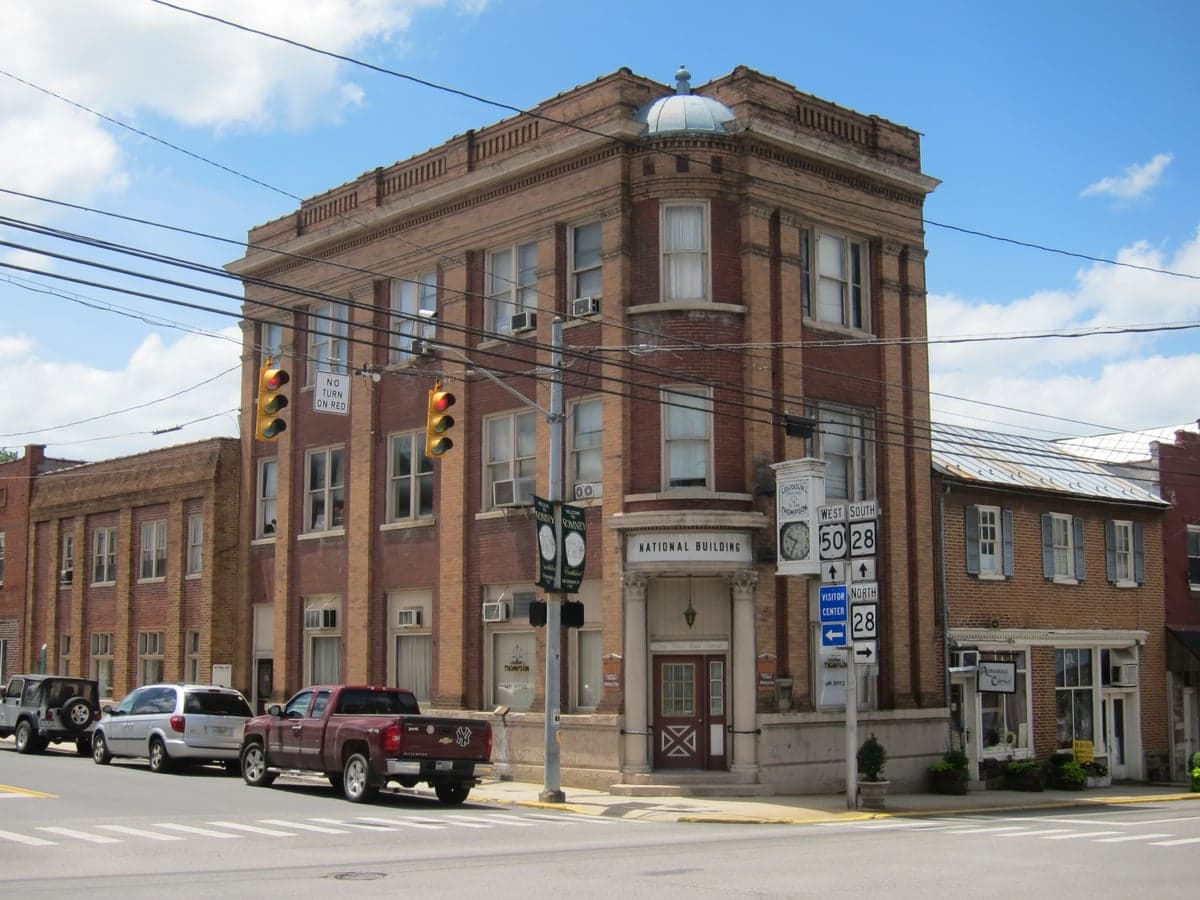
Photo: Wikipedia
Quality of Life in Romney, WV
A high quality of life with strong walkability, manageable living costs, healthy neighborhood signals, and solid amenity access.
What does Quality of Life tell us?
Quality of Life blends cost of living, nearby amenities, socioeconomic signals, and neighborhood character. City-level scores represent the whole municipality; individual neighborhoods can differ.
What does this tell us?
Quality of Life blends cost of living, nearby amenities, socioeconomic signals, and neighborhood character. City-level scores represent the whole municipality; individual neighborhoods can differ.
Cost of Living
48% below national average
The Real Cost of Living in Romney, WV for 2026
| Tier | Individual | Family (4) |
|---|---|---|
| Survival | $9k | $18k |
| Comfortable | $29k | $43k |
| Luxury | $71k+ | $110k+ |
| Elite (Top 5%) | $91k+ | $141k+ |
91%
The Area Signal
A metric tracking the socioeconomic signals of the area.
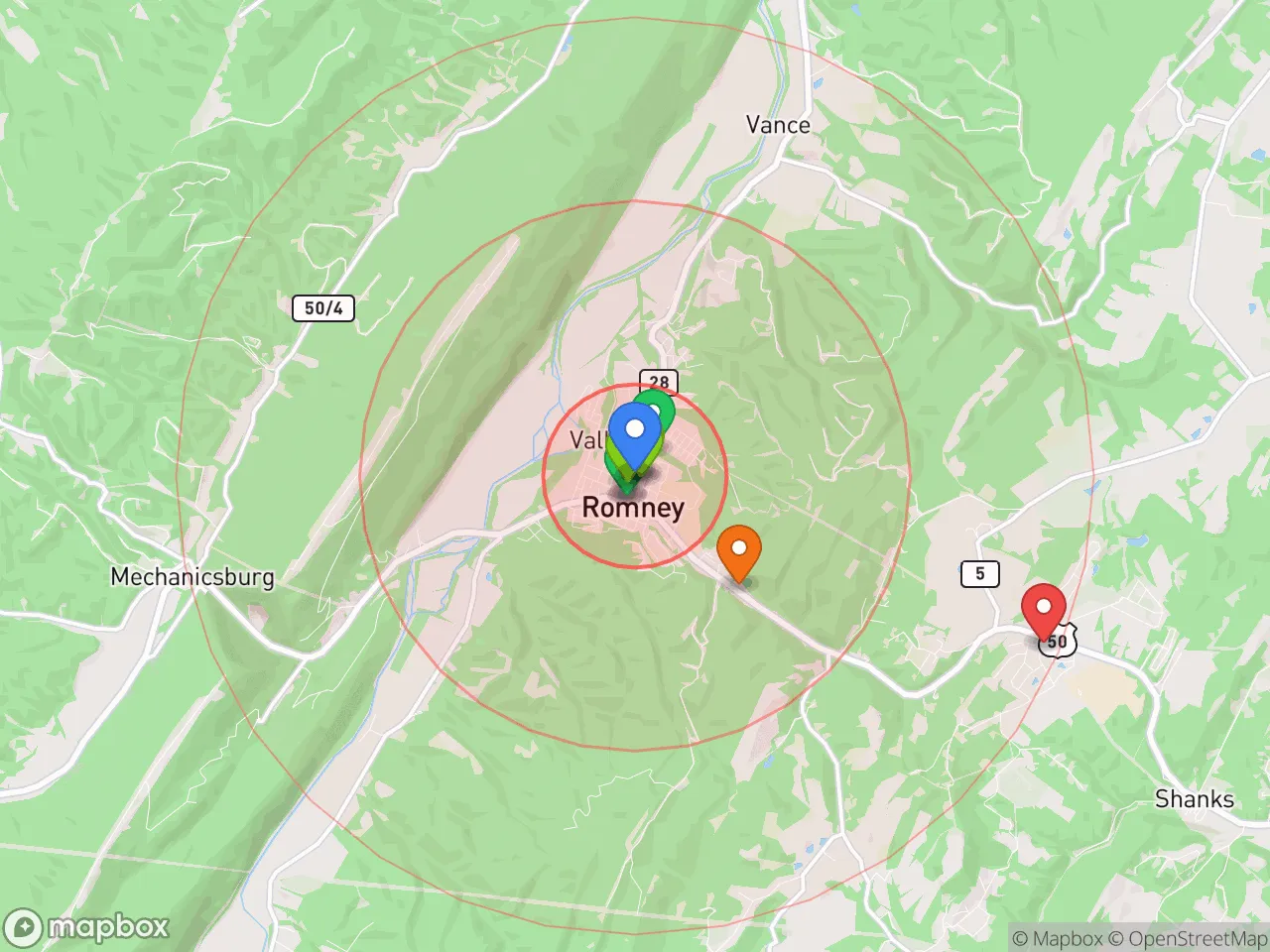
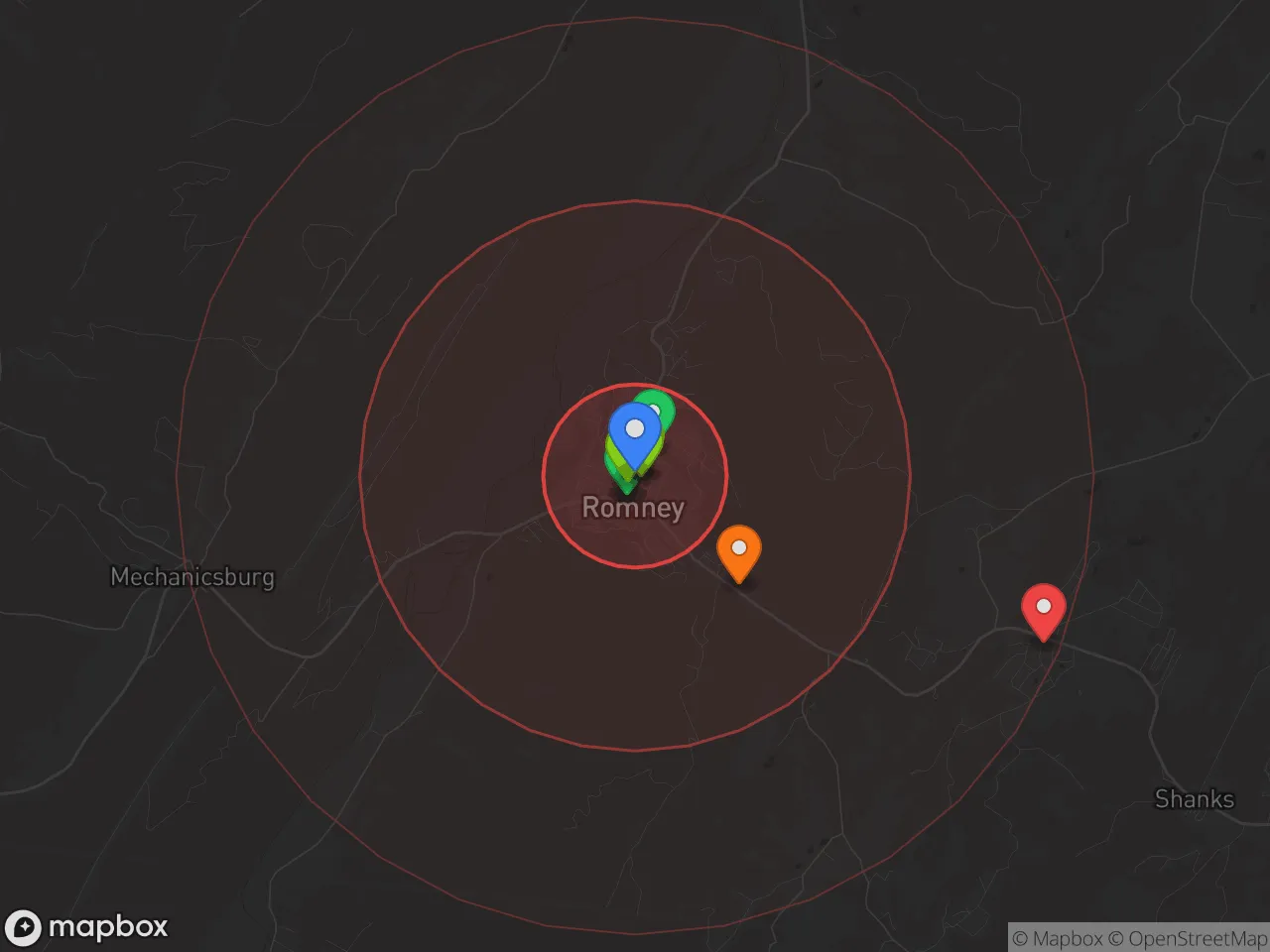
Hobbies
Explore the areaGroceries
0 within 10 miles
Gas
0 within 10 miles
Hospital
0 within 20 miles
Airport
IAD — Washington Dulles International
Post Office
Critical Amenities
Quality-of-Life Analysis
Romney, West Virginia, presents a distinctly affordable quality of life that appeals to residents seeking a low-cost, rural lifestyle. With a cost of living index of 52—roughly half the national average—the town attracts a mix of retirees, remote workers, and families priced out of larger metro areas. The population is predominantly white and older, with a median age around 45, and the local economy is anchored by government services, education, and the nearby Hampshire County Schools system.
Cost of living, housing affordability, and how Romney compares to nearby towns
Romney’s cost of living is among the lowest in the Eastern Panhandle, significantly undercutting nearby Winchester, Virginia (index ~90) and even Martinsburg (index ~85). The median home value sits at $150,000, roughly one-third the national median, while the median rent of $586 is less than half the U.S. average. This affordability allows many households to own a home on a single income, though inventory is limited and homes often sell quickly. Property taxes in Hampshire County are low—around 0.5% of assessed value—further reducing monthly housing costs. The average commute of 26.6 minutes reflects the area’s rural layout; many residents drive to jobs in Keyser, Moorefield, or even Winchester, with Interstate 68 providing a direct route west to Cumberland, Maryland.
Local amenities, schools, and what daily life feels like in Romney
Daily life in Romney revolves around a small-town pace with limited commercial amenities. The town has a single grocery store (Food Lion), a few fast-food chains, and a handful of locally owned restaurants and shops. For major retail and healthcare, residents typically drive 30–40 minutes to Winchester or Cumberland. The Hampshire County School system serves the area, with Romney Elementary and Hampshire High School being the primary public options; the district’s graduation rate hovers around 85%, slightly below the state average. Outdoor recreation is a key draw: the South Branch Potomac River runs through town, offering fishing and kayaking, while the nearby George Washington National Forest provides hiking and hunting. The town’s historic district, with its 19th-century architecture and the Romney Literary Society building, adds a quiet cultural anchor. Internet access has improved in recent years, with fiber-optic service available in parts of town, supporting remote work—though coverage remains spotty in outlying areas.
Romney is best suited for those who prioritize low housing costs and a slow, rural rhythm over urban amenities and career diversity. Retirees on fixed incomes, outdoor enthusiasts, and remote workers who can tolerate a 25-minute drive for groceries or medical care will find the affordability compelling. Families should weigh the limited school options and lack of after-school activities against the financial breathing room. For anyone seeking a true low-cost, low-stress lifestyle in the Potomac Highlands, Romney delivers—provided they are prepared for the trade-offs in convenience and opportunity.

Crime in Romney, WV
Lower crime rates than 77% of comparable U.S. locations.
Violent CrimeViolent Crime Analysis
Property CrimeProperty Crime Analysis
Crime Analysis
Romney, West Virginia, presents a mixed safety profile that diverges sharply from national averages. The town’s violent crime rate of 684.5 per 100,000 residents is roughly double the U.S. average, while its property crime rate of 342.3 per 100,000 sits well below the national figure. This combination means residents face a higher-than-typical risk of serious personal crimes but a lower risk of theft and vandalism compared to most American communities.
Crime in context
Romney’s violent crime rate is significantly elevated relative to both West Virginia’s statewide average (approximately 350 per 100,000) and the national average (about 380 per 100,000). The town’s figure of 684.5 per 100,000 places it in a higher-risk tier for a small city. By contrast, the property crime rate of 342.3 per 100,000 is roughly half the national average and below the state average of around 1,500 per 100,000. This disparity suggests that while Romney is not a high-theft environment, it struggles with violent offenses—a pattern that may reflect concentrated socioeconomic pressures rather than widespread criminal opportunism. Readers should note that Hampshire County, where Romney is the seat, operates under a traditional justice system; there is no evidence of progressive prosecutorial policies that would artificially inflate crime statistics by reducing accountability.
What residents experience
For those living in Romney, the elevated violent crime rate translates into a tangible concern about assaults, robberies, and aggravated incidents. The 684.5 per 100,000 figure means roughly 1 in 146 residents is a victim of violent crime annually, a ratio that demands vigilance. Property crime, however, is less pressing: the 342.3 per 100,000 rate equates to about 1 in 292 households experiencing burglary, theft, or motor vehicle theft each year. Daily life for most residents involves standard precautions—locking doors, avoiding isolated areas at night—but the town does not feel like a high-crime urban corridor. The absence of a large, liberal metro area with soft-on-crime policies means that local law enforcement and courts generally prioritize public safety over offender rehabilitation, which helps keep property crime low and violent crime from escalating further.
Neighborhood-level variation in Romney is modest but worth noting. The historic downtown core and areas near the South Branch of the Potomac River tend to see slightly higher incident reports, likely due to foot traffic and transient populations. Outlying residential streets and newer subdivisions on the town’s periphery report fewer violent incidents. Prospective residents should focus on block-level data rather than town-wide averages, as pockets of safety and risk exist within a few blocks of each other. Overall, Romney offers a livable environment for those who accept the higher violent crime baseline and take standard urban precautions.
* Values derived from national, state, county, city and local statistics and may differ in a specific area. Last updated: 2026-10-05T19:37:22.000Z
Narrative content on this page is AI-generated and may contain mistakes. Verify any details that matter before acting on them.
ReloMaps may earn a commission from affiliate links at no extra cost to you.

