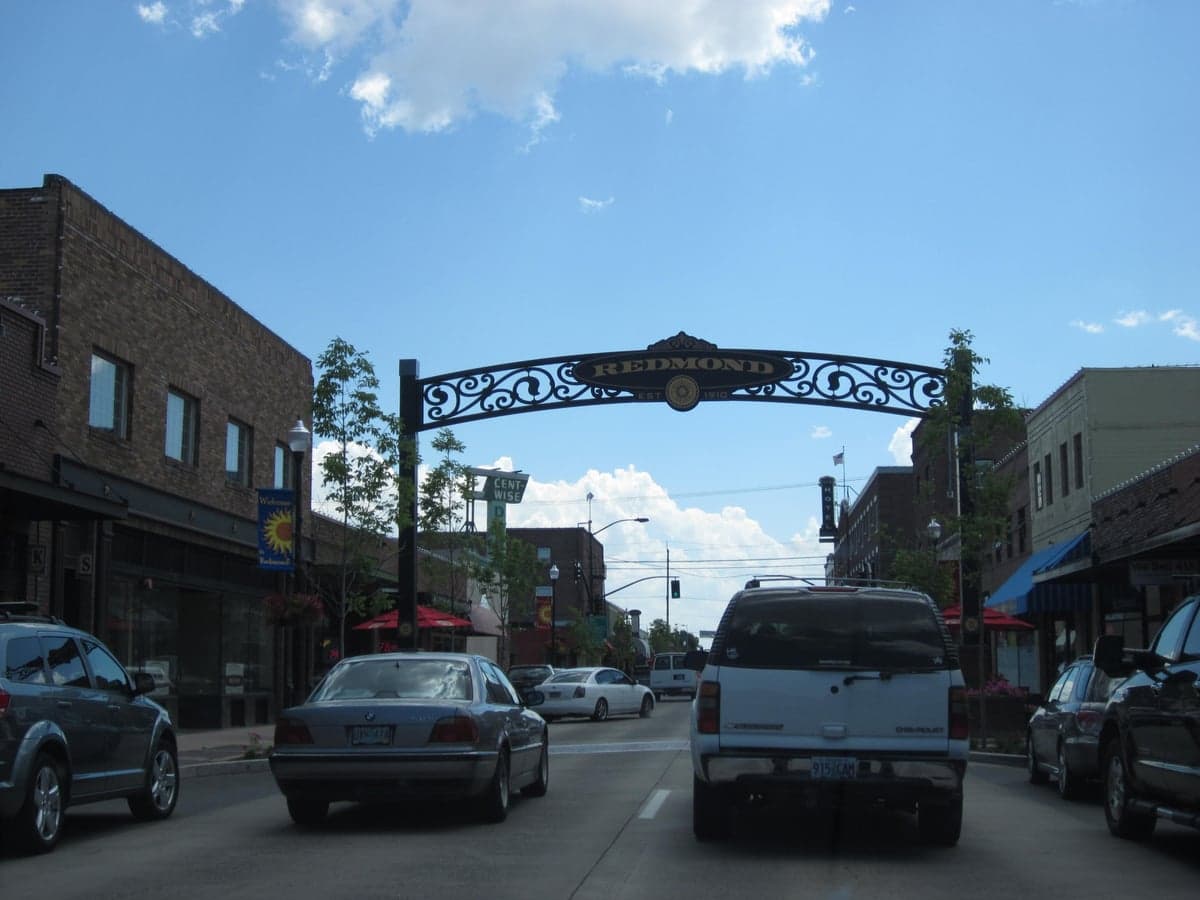
Photo: Wikipedia
Strategic Assessment of Redmond, OR
Workable tactical position. Some exposure to population density or targets, but generally defensible in a crisis.
What does the Strategic Assessment tell us?
Our Strategic Assessment grades tactical survivability of an area. Major population centers, military targets, fallout zones, natural disasters, and border exposure all drive risk — lower exposure means a more defensible position in a crisis.
This is heavily inspired by Joel Skousen's Strategic Relocation book. Highly recommended you checkout the book ($)What does this tell us?
Our Strategic Assessment grades tactical survivability of an area. Major population centers, military targets, fallout zones, natural disasters, and border exposure all drive risk — lower exposure means a more defensible position in a crisis.
This is heavily inspired by Joel Skousen's Strategic Relocation book. Highly recommended you checkout the book ($)Strategic Pillars

Key Distances
Regional Safe Places
Below is our recommended "safe zones" in Oregon and the surrounding area based on our strategic heuristics. For most people, it's unrealistic to live in a “safe zone” full-time due to work, family or other personal reasons. They tend to be more rural. However, many of these areas are perfect for second homes and retreat properties that double as a vacation home or even a short-term rental.


Important Note: For informational purposes only. This does not mean nothing bad ever happens in the green zones. Please use common sense. This is based on public data and modeled with AI. We tried to take a conservative approach but mistakes happen. We update this regularly as new information becomes available.
Solar Generator Recommendations
Backup power matters more here than in safer locations. We've picked three solar generators across budgets and capacity tiers — start with the budget unit if you only need a few essentials, or step up if you want to run a fridge and HVAC for days at a time.

Jackery Portable Power Station Explorer 300
Budget OptionPower on the Go: Weighing only 11 lbs, it's convenient to set up and store with book-sized foldable solar panels

BLUETTI Portable Power Station AC180
Designed for both indoor and outdoor scenarios, AC180 is highly capable as it has a robost capacity and continuous output power.

EF ECOFLOW DELTA Pro Ultra Power Station
Upgraded PickEcoFlow DELTA Pro Ultra is a whole-home energy system designed to grow with your family. Integrated with the Smart Home Panel 2, it scales to meet your evolving energy needs — keeping your home powered, intelligent, and secure through every stage of life.
We earn a commission, at no additional cost to you.
Strategic Assessment Analysis
Redmond, Oregon offers a compelling mix of geographic isolation and practical infrastructure that makes it a serious contender for relocation-minded individuals and families prioritizing resilience and self-sufficiency. Situated in the high desert of Central Oregon at roughly 3,000 feet elevation, the city benefits from a dry climate, low population density relative to the Willamette Valley, and a strategic position away from the state’s major urban and industrial targets. While no location is without risk, Redmond’s combination of natural defensibility, access to critical resources, and distance from high-consequence fallout zones gives it a measurable advantage over many other Pacific Northwest towns.
Geographic position and natural advantages for long-term stability
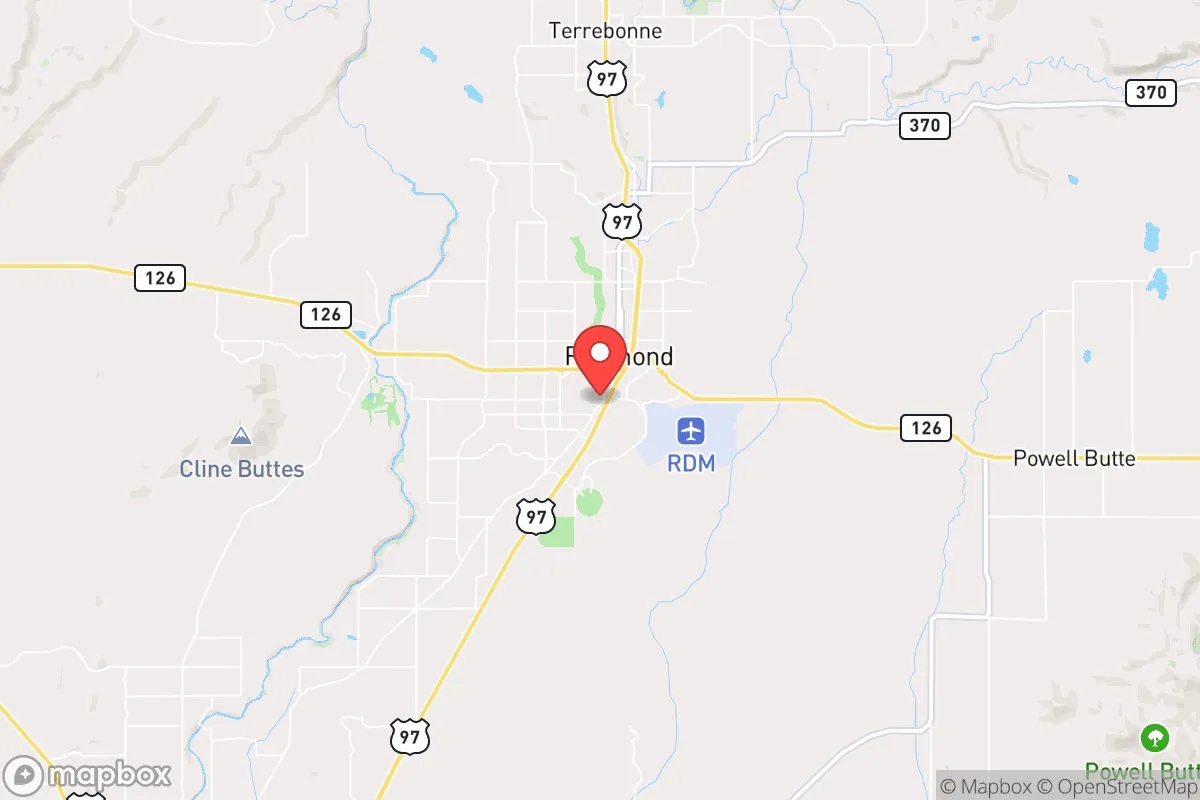
Redmond sits on the eastern edge of the Deschutes River basin, roughly 20 miles northeast of Bend and 130 miles southeast of Portland. This location places it well outside the blast and fallout radius of Portland, Salem, or Eugene—cities that would be primary targets in a major conflict or catastrophic event. The surrounding landscape is high desert sagebrush and juniper, with the Cascade Range acting as a natural barrier to prevailing westerly winds. In a fallout scenario, this mountain barrier would significantly reduce the deposition of radioactive particles from a strike on the coast or Willamette Valley, as prevailing winds would carry contamination eastward but the Cascades would force much of it to drop on the western slopes. The local geology is stable: the area is not prone to major earthquakes (the nearest significant fault lines are west of the Cascades), and the dry climate means flooding risks are minimal outside of the immediate Deschutes River floodplain. The volcanic risk from Newberry Volcano or the Three Sisters is low-probability and slow-moving, offering ample warning time. For a relocator, the key takeaway is that Redmond’s physical setting provides a natural buffer against the most common catastrophic scenarios affecting the Pacific Northwest.
Risks, exposures, and proximity to fallout-relevant landmarks
The most significant risk for Redmond is not direct attack but secondary effects from regional destabilization. The city lies roughly 130 miles from the Portland metro area (population 2.5 million), which would be a high-priority target in a major conflict. In a nuclear exchange, fallout from a Portland strike could reach Redmond within 6–12 hours depending on wind patterns, though the Cascade Range would substantially reduce particulate concentration. The nearest military or strategic infrastructure includes the U.S. Army’s Umatilla Chemical Depot (about 90 miles northeast), which is a potential target, and the Hanford Site (about 150 miles north), a decommissioned nuclear production facility with massive stored waste. Neither is close enough to pose a direct blast threat, but both could be secondary targets. Wildfire is the most immediate natural risk: Redmond sits in a high desert ecosystem that experiences annual fire seasons, and the 2020 Labor Day fires came within 15 miles of the city. However, the built environment is largely modern and fire-resistant, and the city has a robust fire department with mutual aid agreements across Deschutes County. The dry climate also means no hurricane, tornado, or blizzard threats. For a relocator, the risk profile is moderate: low probability of direct man-made catastrophe, moderate wildfire risk, and manageable secondary fallout exposure.
Practical resilience for a relocator: food, water, energy, and defensibility
Redmond’s practical resilience is above average for a city of its size (population roughly 35,000). The city draws its municipal water from the Deschutes River and several deep aquifers, with the Deschutes Basin being one of the most reliable water sources in the arid West. For a relocator seeking self-sufficiency, the high water table in the area means private wells are feasible on larger parcels outside city limits, with typical depths of 100–300 feet producing good yields. The local climate supports dryland farming of grains and legumes, and the short growing season (about 90–100 frost-free days) is suitable for cold-hardy vegetables, root crops, and greenhouse production. The surrounding agricultural base includes hay, alfalfa, and cattle ranching, meaning local food production is real and accessible. Energy infrastructure is solid: Redmond is served by Pacific Power, with a grid that is relatively modern and less prone to the rolling blackouts seen in California. Solar potential is excellent—the area averages over 300 sunny days per year—and many rural properties already have off-grid solar setups. Natural gas is available in town, but propane is common in outlying areas. For defensibility, Redmond’s layout is compact and surrounded by open ranchland, providing clear sightlines and limited approach vectors. The local law enforcement presence is adequate, and the community has a strong volunteer ethic (evident in the local fire department and search-and-rescue teams). The nearest major medical center is St. Charles Redmond, a 50-bed hospital with a Level IV trauma center, which is sufficient for routine care but not for major trauma—Bend’s St. Charles Medical Center (Level II) is 20 minutes south. For a relocator, the practical takeaway is that Redmond offers a realistic foundation for self-sufficiency: reliable water, good solar potential, a local food system, and a defensible geography.
The overall strategic picture for Redmond is one of moderate-high resilience with manageable trade-offs. It is not a remote bunker location—it has a functioning economy, a regional airport, and proximity to Bend’s amenities—but it is far enough from major population centers and strategic targets to avoid the worst consequences of a large-scale event. The dry climate reduces many natural disaster risks, the Cascade Range provides a fallout buffer, and the local resource base supports a self-sufficient lifestyle. The primary downsides are the wildfire risk (which can be mitigated through defensible space and building materials) and the dependence on a single major highway (US 97) for evacuation or supply routes. For a family or individual looking to relocate with resilience as a priority, Redmond represents a balanced choice: not the most isolated option in the West, but one of the most practical for maintaining a normal life while being prepared for the abnormal.

* Values derived from national, state, county, city and local statistics and may differ in a specific area. Last updated: 2026-06-25T20:59:50.000Z
Narrative content on this page is AI-generated and may contain mistakes. Verify any details that matter before acting on them.
ReloMaps may earn a commission from affiliate links at no extra cost to you.

