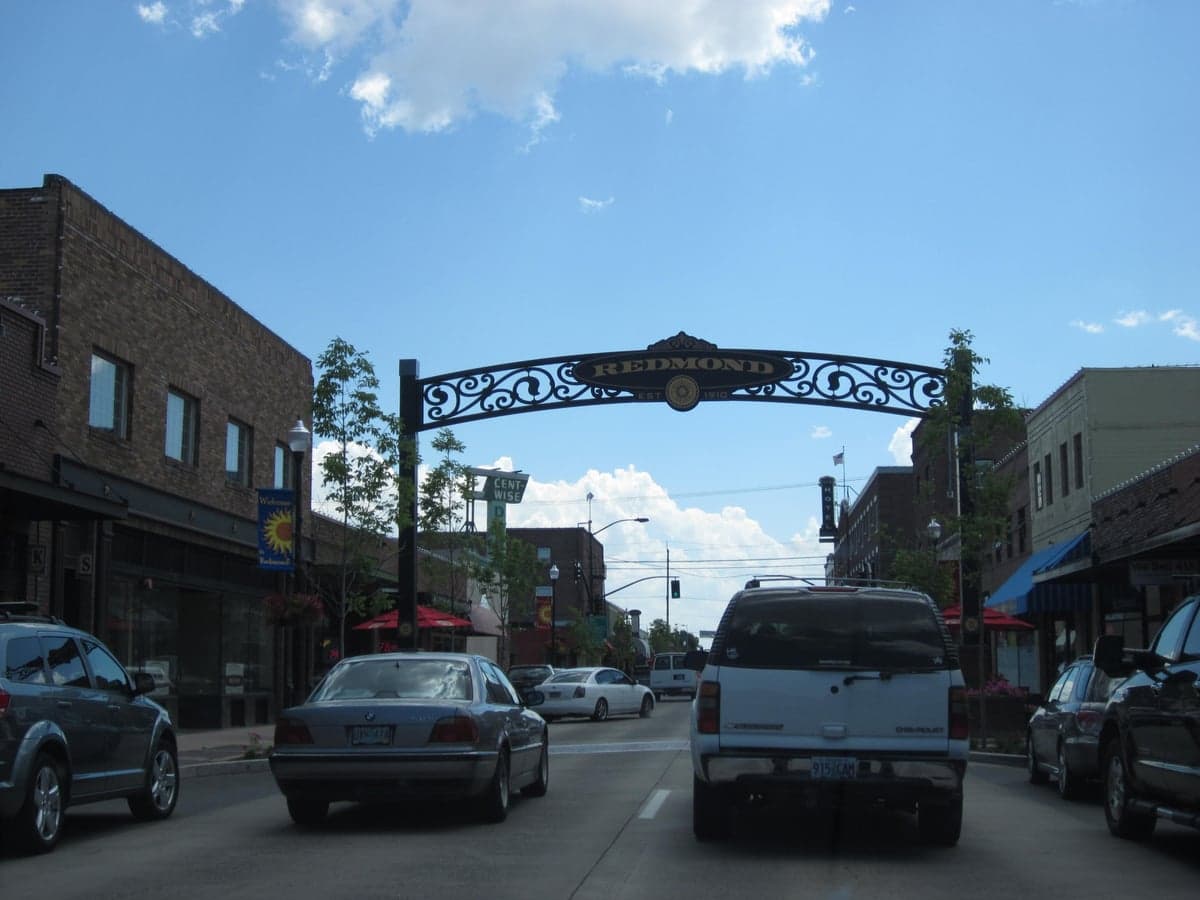
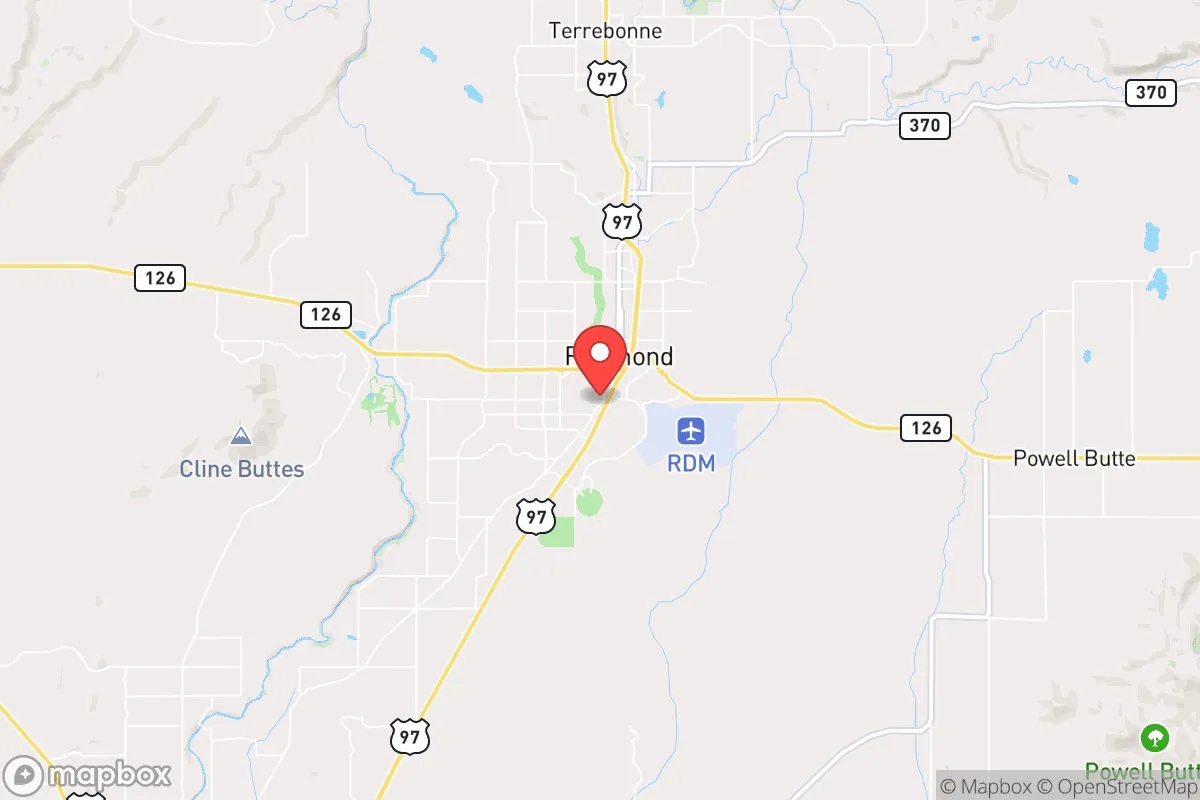
Photo: Wikipedia
Demographics of Redmond, OR
Affluence Level in Redmond, OR
A middle-class area roughly in line with national averages across income, home values, education, and employment.
People of Redmond, OR
The people of Redmond, Oregon, today form a predominantly white, family-oriented community of 35,161 residents, characterized by a strong sense of local independence and a growing Hispanic minority. With 79.7% of the population identifying as white and 15.4% as Hispanic, the city is noticeably less diverse than Oregon’s major cities but is becoming more varied than its high-desert past. A relatively low foreign-born share (4.6%) and a modest college attainment rate (29.3%) reflect a population shaped more by domestic in-migration from other Western states than by international immigration, giving Redmond a practical, working-to-middle-class character. Residents often describe the city as “the real Central Oregon”—less tourist-driven than Bend, more centered on trade, construction, and family life.
How the city was settled and grew
Redmond was founded in 1905 as a railroad town, named after Frank T. Redmond, who homesteaded the area along the Oregon Trunk Railway. The original population was almost entirely white, drawn from the Midwest and Northern Plains by the promise of dryland farming and, later, irrigation from the Deschutes River. The first wave of settlers clustered around the original townsite, now the Downtown Redmond Historic District, where frame houses and storefronts were built by homesteaders working small wheat and potato farms. A second early wave came during the 1910s-1930s via the Carey Act irrigation projects, which opened sagebrush flats to farming. These families—many of German, Scandinavian, and Irish ancestry—settled in the Old Farm District, an area of large lots and rural lanes southwest of downtown that still retains a non-suburban feel. By 1950, Redmond’s population was still under 1,500, and its people were almost entirely white, native-born, and tied to agriculture or the railroad.
Modern era (post-1965)
Redmond’s modern growth began in the 1970s and accelerated sharply after 1990, driven by domestic migration from California, the Pacific Northwest, and the Mountain West. The era’s defining neighborhood is Eagle Crest, a large resort-and-residential development that broke ground in the 1980s on the west side. It attracted second-home owners and retirees—overwhelmingly white and affluent—who sought golf and mountain views. Simultaneously, the Southwest Redmond tract (roughly between 27th Street and 43rd Street) filled with starter homes for young families and workers in construction, transportation, and warehouse logistics. The most notable demographic shift post-1965 has been the growth of the Hispanic population, which rose from under 5% in 1990 to over 15% today. This community is concentrated in the North Redmond area, around the industrial zones near the airport and Highway 97, where many work in food processing, roofing, and hospitality. The city’s East Asian (1.2%) and Black (0.1%) populations remain very small and are scattered across newer subdivisions such as Dry Canyon Heights (southeast), where tech-adjacent families from Bend’s spillover have settled. No significant Indian-subcontinent community exists in Redmond.
The future
Redmond’s population is projected to continue growing steadily, likely exceeding 45,000 by 2040, driven by housing affordability relative to Bend and the expansion of the Roberts Field airport and industrial park. The population is becoming moderately more diverse: the Hispanic share is expected to rise toward 20-22% over the next two decades, concentrated in the North Redmond and Airport District areas, while the white share (currently 79.7%) will decline proportionally. Newer developments on the city’s western fringe—particularly the Cline Butte and Homestead subdivisions—are attracting mostly white families and remote workers from California and Seattle, reinforcing a pattern of income sorting by geography. The city’s cultural identity is likely to remain conservative-to-moderate, with a growing bilingual flavor in the north, while the west side becomes more suburban and amenity-focused. East/Southeast Asian and Black populations are expected to remain very small, as Redmond lacks the universities, tech campuses, or professional networks that draw these groups to larger metro areas.
For a mover today, Redmond offers a community that is still predominantly white, family-centered, and moderately conservative, with a substantial and growing Hispanic minority concentrated in the northern industrial working-class neighborhoods. The city is not becoming a cosmopolitan hub—it remains a practical, affordable alternative to Bend, with demographic change happening gradually and mainly along ethnic and economic lines that already exist. New arrivals will find a place where the people are rooted, the schools are full, and the identity is still being shaped by who arrives next.

* Values derived from national, state, county, city and local statistics and may differ in a specific area. Last updated: 2026-06-25T20:59:50.000Z
Narrative content on this page is AI-generated and may contain mistakes. Verify any details that matter before acting on them.
ReloMaps may earn a commission from affiliate links at no extra cost to you.

