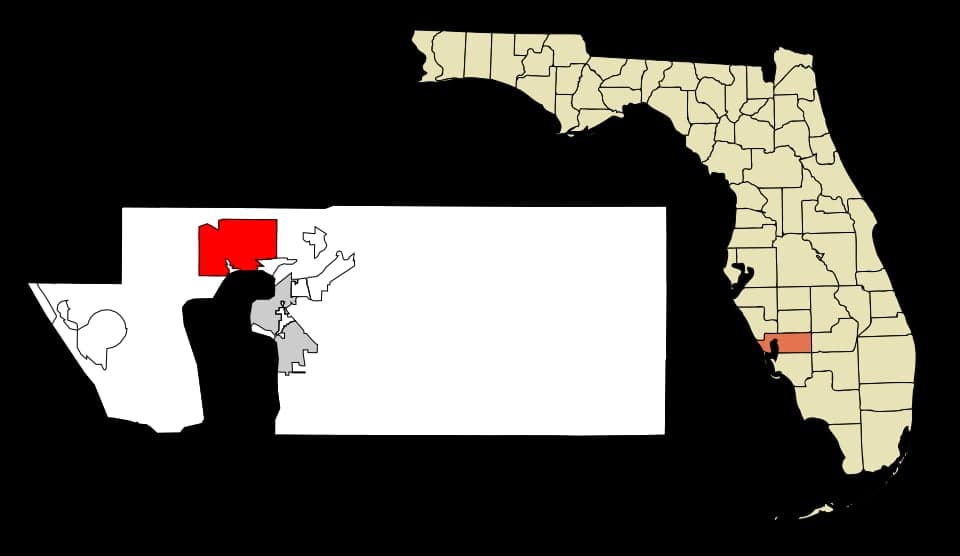
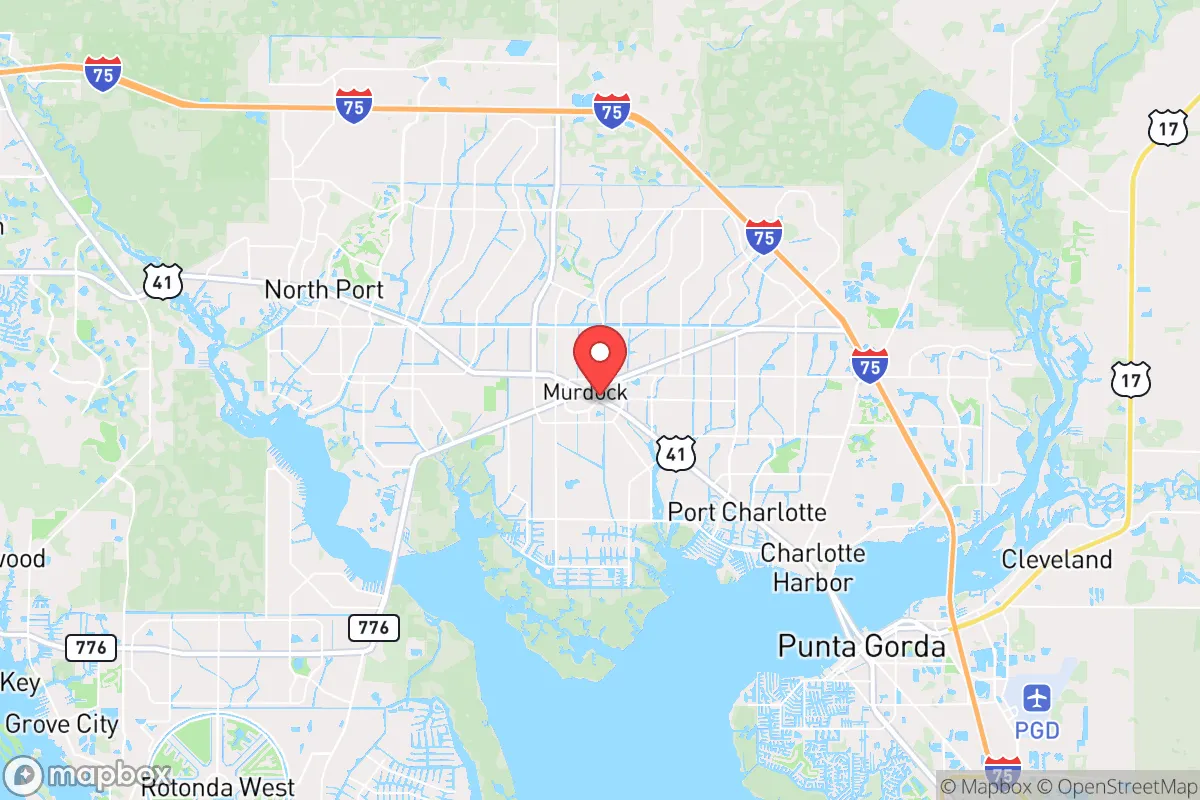
Photo: Wikipedia
Political ClimatePolitical Climate in Port Charlotte, FL
District shown is the primary district for this city’s centroid. Cities may span multiple districts.
Local Political AnalysisPolitical Analysis of Port Charlotte, FL
Port Charlotte leans solidly Republican, with a Cook Partisan Voting Index (PVI) of R+11, making it significantly more conservative than Florida as a whole, which sits at R+5. This isn’t a recent shift—the area has been reliably red for decades, driven by a mix of retiree transplants from the Midwest and Northeast, military veterans, and families seeking a quieter, lower-tax lifestyle. Over the past five years, the political temperature has actually risen a notch, as new housing developments and snowbird influxes have amplified the conservative base, though the core character remains steady rather than swinging wildly.
How it compares
To put the R+11 in context, Port Charlotte is about 6 points more Republican than the statewide average. That’s a meaningful gap. Drive 20 minutes north to North Port, and you’ll find a slightly more moderate mix, with a PVI around R+9, while heading south to Punta Gorda (R+12) or east to the rural stretches of DeSoto County (R+18) reveals even deeper red territory. The contrast is sharpest if you cross the Peace River into Sarasota County—Sarasota proper leans R+7, but the city itself has a visible Democratic minority, especially in its artsy downtown and older neighborhoods. In Port Charlotte, you’re more likely to see Trump signs on lawns year-round, and local elections are often decided in the Republican primary. The Democratic presence is real but quiet, concentrated among a small number of retirees from blue states and younger service workers.
What this means for residents
For conservative residents, the political climate feels like a natural fit. Local government, from the Charlotte County Commission to the school board, is dominated by Republicans, so policies around taxes, development, and public safety tend to align with small-government principles. You’ll find plenty of churches, gun ranges, and veteran organizations, and the local news is heavy on county commission meetings and infrastructure debates rather than partisan fireworks. For liberal residents, life is perfectly comfortable day-to-day—people are neighborly, and no one’s checking your bumper stickers—but you’ll feel outnumbered at town halls and in local politics. There’s no progressive caucus to speak of, and issues like environmental regulation or affordable housing often get framed through a fiscal-conservative lens. That said, the area’s rapid growth is starting to nudge the conversation: newer residents from blue states sometimes bring different priorities, like stronger wetland protections or more public transit, though these haven’t yet shifted the overall lean.
One cultural distinction worth noting: Port Charlotte is less about political activism and more about daily life. You won’t find the intense partisan street-corner protests you see in Fort Myers or Tampa. Instead, the politics here are baked into the landscape—low property taxes, a strong sheriff’s office presence, and a general expectation that government stays out of the way. The trajectory over the next decade likely stays red, but as the population ages and new families move in, the margin could narrow slightly. For now, it’s a place where the Republican lean is deep, stable, and woven into the fabric of how things get done.

State Political ClimatePolitical Climate in Florida
State Political AnalysisPolitical Environment in the State
Florida is a solidly Republican-leaning state with a Cook PVI of R+5, but calling it a simple red state misses the real story. Over the past 20 years, the state has shifted from a classic swing state—where George W. Bush won by just 537 votes in 2000 and Barack Obama carried it in 2008 and 2012—to a reliably right-of-center powerhouse. The dominant coalition today is a mix of conservative retirees from the Midwest and Northeast, Cuban and Venezuelan exiles in South Florida, and fast-growing exurban and rural populations in the I-4 corridor and the Panhandle. Democrats still hold sway in dense urban cores like Miami-Dade, Broward, and Orange counties, but their margins have eroded, and the state’s overall trajectory is unmistakably Republican.
Urban vs. rural divide
The political map of Florida is a study in contrasts. The Democratic strongholds are Miami-Dade County (though it flipped from +29 D in 2016 to +11 D in 2024), Broward County (Fort Lauderdale), and Orange County (Orlando). These three counties alone deliver hundreds of thousands of Democratic votes, but they’re increasingly surrounded by red suburbs and exurbs. The I-4 corridor—stretching from Tampa through Lakeland to Orlando—is the state’s political battleground, with fast-growing suburbs like Winter Garden and Clermont trending right. The Panhandle, anchored by Pensacola and Panama City, is deeply conservative, while Southwest Florida, including Naples and Fort Myers, is a Republican stronghold of wealthy retirees. The rural interior—places like Ocala in Marion County and Lake City in Columbia County—votes overwhelmingly red. The urban-rural split is stark: Miami and Orlando are blue islands in a sea of red, and the gap is widening as new residents favor the suburbs and exurbs.
Policy environment
Florida’s policy environment is defined by low taxes, light regulation, and a hands-off approach to business. There is no state income tax, which is a major draw for relocators. The corporate income tax rate is 5.5%, but many small businesses are exempt. Property taxes are moderate, with a median effective rate of 0.83%, though they vary by county. The state’s regulatory posture is business-friendly, with fast permitting for construction and a right-to-work law that limits union power. Education policy has shifted rightward: the state has a robust school choice program, including the Family Empowerment Scholarship and the Florida Tax Credit Scholarship, which allow public funds to follow students to private or charter schools. Higher education has seen a push toward “intellectual freedom” via the Stop WOKE Act, which restricts mandatory diversity training and certain classroom discussions on race. Healthcare policy is mixed: Florida did not expand Medicaid under the Affordable Care Act, leaving roughly 800,000 residents in the coverage gap, but the state has a competitive private insurance market. Election laws have tightened since 2020, with stricter voter ID requirements, limits on drop boxes, and a ban on third-party ballot collection. The state also has a “stand your ground” self-defense law and a permitless carry law (effective July 2023), allowing concealed carry without a license.
Recent policy direction
The last five years have seen a flurry of legislation that signals where Florida is heading. On gun rights, the permitless carry law (HB 543) eliminated the need for a concealed weapons license, though a three-day waiting period for handgun purchases remains. On education and parental rights, the Parental Rights in Education Act (HB 1557, dubbed “Don’t Say Gay” by critics) restricts classroom instruction on sexual orientation and gender identity through third grade, and was expanded to all grades in 2023. The Stop WOKE Act (HB 7) limits workplace and school training on race and gender. On speech and privacy, the state has targeted social media platforms with a law (SB 7072) that prohibits banning political candidates, though it’s been partially blocked in court. Medical and bodily autonomy saw a six-week abortion ban (HB 5) signed in 2023, with exceptions for rape, incest, and the life of the mother, but no exceptions for fetal anomalies. Property rights remain strong, with no state-level rent control and a homestead exemption that protects primary residences from creditors. On voting, SB 90 (2021) added restrictions on mail-in ballots and drop boxes, and the state has aggressively purged voter rolls for non-citizens. Taxation remains low, with no plans for an income tax, and the state has cut corporate taxes and eliminated the business rent tax. The overall direction is toward expanding individual liberties on gun and speech issues while restricting them on abortion and classroom content.
Civil unrest & political movements
Florida has seen its share of political flashpoints. The 2020 Black Lives Matter protests in Miami and Tampa were large but mostly peaceful, though they led to a state-level crackdown on “mob intimidation” via HB 1 (2021), which enhanced penalties for rioting and blocking roads. Immigration politics are a constant undercurrent, especially in South Florida, where the state has taken a hard line: Governor DeSantis sent migrants to Martha’s Vineyard in 2022, and the state passed SB 1718 (2023), which requires businesses with 25+ employees to use E-Verify and makes it a felony to transport undocumented immigrants into the state. There is no sanctuary city policy; in fact, the state bans them. Election integrity controversies have been a major theme, with the creation of the Office of Election Crimes and Security in 2022, which has investigated and prosecuted dozens of cases of alleged voter fraud, though most have been minor. Organized activist movements include the conservative Moms for Liberty, which has chapters across the state and has influenced school board elections, and progressive groups like the Florida Rising coalition, which focuses on voter registration and criminal justice reform. Secession or nullification rhetoric is minimal, but there is a strong strain of “state sovereignty” talk among Republican leaders, particularly around immigration and COVID-19 mandates. A new resident would notice the political polarization in everyday life: bumper stickers, yard signs, and local news coverage are heavily partisan, especially in the I-4 corridor.
Projection
Over the next 5-10 years, Florida is likely to become more Republican, not less. In-migration is driving this: roughly 1,000 people move to the state each day, and they tend to be conservative-leaning retirees from blue states like New York, Illinois, and California. The fastest-growing counties—Sumter (The Villages), St. Johns (St. Augustine), and Lake (north of Orlando)—are all deep red. The Hispanic vote, once a Democratic firewall, is shifting right: Cuban and Venezuelan voters in Miami-Dade are reliably Republican, and Puerto Rican voters in Central Florida are more split than a decade ago. The Democratic Party’s base is shrinking in rural areas and aging out in urban cores. By 2030, expect the Cook PVI to move to R+7 or R+8, with Republicans holding supermajorities in the legislature and the governor’s mansion. Climate change and hurricane risk could slow growth in coastal areas, but inland suburbs will continue to boom. A relocator moving in now should expect a state where conservative policies on taxes, guns, and education are locked in, and where the political culture is increasingly assertive about its identity as a red state.
For a new resident, the bottom line is that Florida offers a low-tax, business-friendly environment with strong protections for gun rights and parental control over education, but with significant restrictions on abortion and a hard line on immigration. If you lean conservative, you’ll find a state that matches your values and is actively shaping policy in your direction. If you lean liberal, you’ll find vibrant blue cities like Miami and Orlando, but you’ll also face a state government that is hostile to many of your priorities. The practical takeaway: know your neighborhood. A move to St. Petersburg or Gainesville will feel very different from a move to Naples or Pensacola. Florida is a big, diverse state, and its politics are as varied as its beaches.
* Values derived from national, state, county, city and local statistics and may differ in a specific area. Last updated: 2026-07-20T01:34:21.000Z
Narrative content on this page is AI-generated and may contain mistakes. Verify any details that matter before acting on them.
ReloMaps may earn a commission from affiliate links at no extra cost to you.

