Photo: Wikipedia
Demographics of Port Charlotte, FL
Affluence Level in Port Charlotte, FL
A middle-class area roughly in line with national averages across income, home values, education, and employment.
People of Port Charlotte, FL
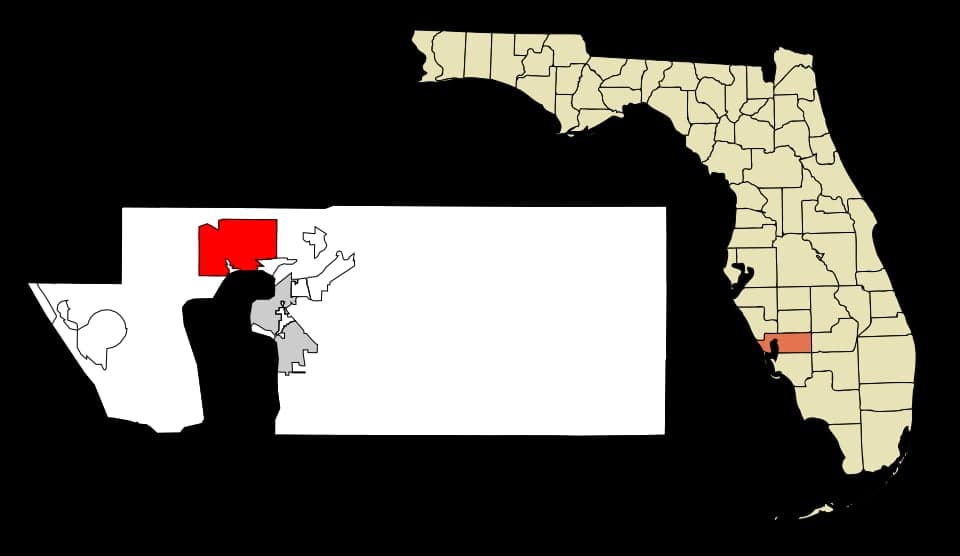
The people of Port Charlotte, Florida today form a predominantly white, middle-income, and older community of roughly 65,000 residents, shaped by decades of domestic migration from the Northeast and Midwest. With a foreign-born population of just 4.5% and a college attainment rate of 19.6%, the city is less diverse and less educated than the national average, reflecting its roots as a planned retirement and working-class suburb. The population is 74.7% white, 11.7% Hispanic, 7.8% Black, and 1.6% East/Southeast Asian, with a very small Indian-subcontinent community at 0.2%. This is a place where the dominant cultural identity remains that of a quiet, car-dependent Sun Belt enclave, though recent in-migration from younger families and some Hispanic growth are slowly shifting its character.
How the city was settled and grew
Port Charlotte was not a historic settlement but a planned community, conceived in the 1950s by the General Development Corporation (GDC) as part of a massive land-sales scheme targeting retirees and northerners seeking affordable waterfront property. The area was largely undeveloped pine flatwoods and scrub before GDC drained wetlands, dredged canals, and laid out a grid of streets and lots. The first wave of residents—mostly white, middle-class retirees from New York, New Jersey, Ohio, and Michigan—arrived in the late 1950s and 1960s, buying cheap lots sight-unseen and building modest concrete-block homes. The original neighborhoods, such as Deep Creek (a master-planned golf-course community) and Harbor Heights (one of the earliest canal-front sections), became the heart of this first generation. A smaller wave of working-class families, many employed in construction and retail, followed in the 1970s, settling in areas like Charlotte Harbor along the Peace River. No significant pre-1900 population existed; the city's entire human history is a post-World War II phenomenon.
Modern era (post-1965)
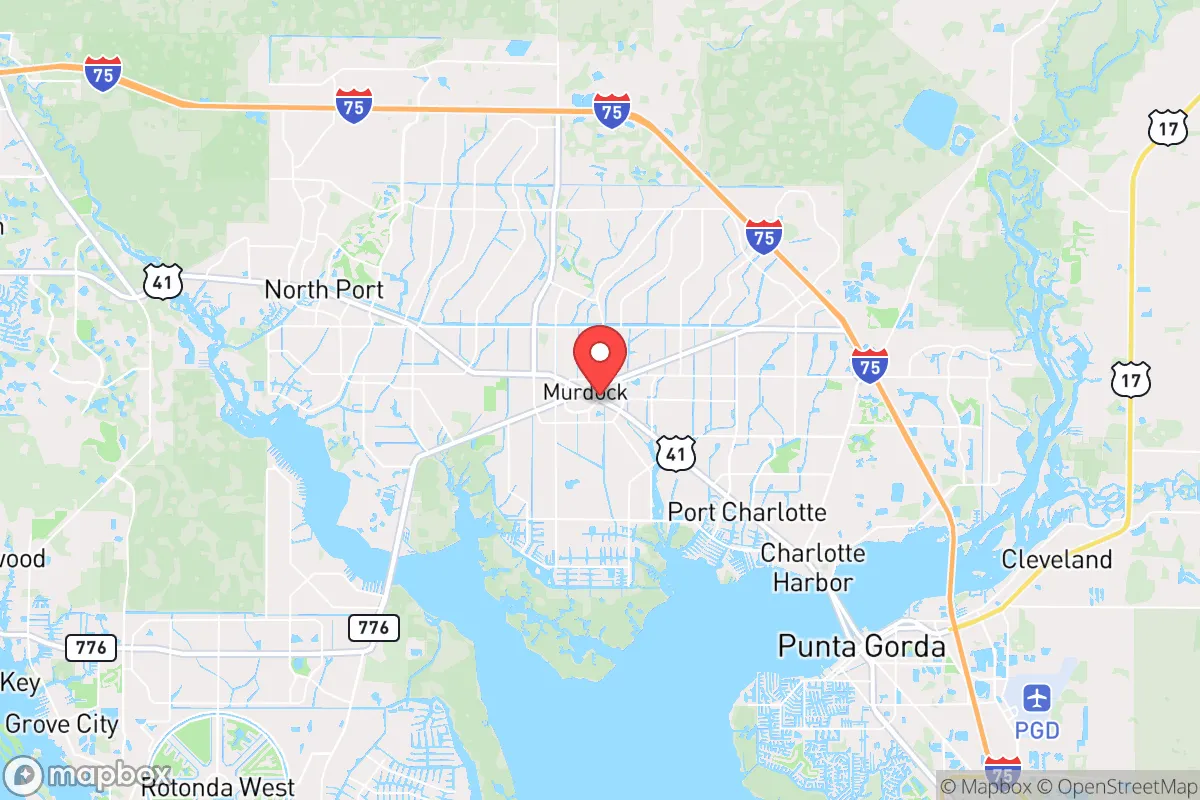
After the 1965 Hart-Cellar Act, Port Charlotte saw only modest immigration, as the city's economy—centered on retail, healthcare, and construction—offered few of the high-skilled or low-skilled jobs that drew immigrants to larger Florida metros. The foreign-born share remains low at 4.5%, with the largest group being Hispanic (11.7% of the total population), many of whom are Puerto Ricans and Cubans who arrived in the 1990s and 2000s for construction and service work. These families concentrated in the North Port Charlotte area, near the U.S. 41 corridor, where older, smaller homes offered affordable entry points. The Black population (7.8%) is largely composed of African American families who moved from other parts of Florida and the rural South during the 1970s and 1980s, settling in the South Gulf Cove and Rotonda West sections, which offered lower lot prices. The East/Southeast Asian community (1.6%) is small and dispersed, with no single ethnic enclave; Filipino and Vietnamese families are the most common, many working in healthcare at the local hospitals. The Indian-subcontinent population (0.2%) is negligible, limited to a few professionals in medical and tech roles. The white population, while still dominant, has aged significantly: the median age is over 50, and many original retirees have passed away or moved to assisted living, creating a slow turnover of housing stock.
The future
Port Charlotte's population is slowly becoming more diverse, driven by two trends: the arrival of younger, more Hispanic families seeking affordable housing, and the gradual departure of older white retirees to higher-care facilities or other states. The Hispanic share is projected to rise to 15-18% by 2035, with growth concentrated in the North Port Charlotte and Harbor Heights neighborhoods, where older homes are being bought and renovated by first-time buyers. The Black population is expected to remain stable or grow slightly, as South Gulf Cove continues to attract African American families from the Tampa Bay area. The white population will likely decline in share but remain the majority, as the area's reputation as a quiet, low-tax retirement haven continues to appeal to older white migrants from the Midwest. The East/Southeast Asian and Indian communities are expected to remain small, as the local economy lacks the high-tech or academic sectors that draw these groups. The overall population is projected to grow modestly, reaching 70,000-75,000 by 2040, but the city will remain a predominantly white, middle-income suburb with a growing Hispanic minority.
For someone moving in now, Port Charlotte is a place in gradual transition: still defined by its retiree-era character and low cost of living, but slowly absorbing a more diverse, younger population. The cultural identity is shifting from a purely retirement community to a more mixed-age suburb, though the pace of change is slow enough that newcomers seeking a stable, conservative-leaning environment will find it largely intact. The key neighborhoods to watch are North Port Charlotte for Hispanic growth, South Gulf Cove for Black families, and Deep Creek for continued white retiree in-migration.

* Values derived from national, state, county, city and local statistics and may differ in a specific area. Last updated: 2026-07-20T01:34:21.000Z
Narrative content on this page is AI-generated and may contain mistakes. Verify any details that matter before acting on them.
ReloMaps may earn a commission from affiliate links at no extra cost to you.

