Photo: Wikipedia
Strategic Assessment of Port Charlotte, FL
Workable tactical position. Some exposure to population density or targets, but generally defensible in a crisis.
What does the Strategic Assessment tell us?
Our Strategic Assessment grades tactical survivability of an area. Major population centers, military targets, fallout zones, natural disasters, and border exposure all drive risk — lower exposure means a more defensible position in a crisis.
This is heavily inspired by Joel Skousen's Strategic Relocation book. Highly recommended you checkout the book ($)What does this tell us?
Our Strategic Assessment grades tactical survivability of an area. Major population centers, military targets, fallout zones, natural disasters, and border exposure all drive risk — lower exposure means a more defensible position in a crisis.
This is heavily inspired by Joel Skousen's Strategic Relocation book. Highly recommended you checkout the book ($)Strategic Pillars

Key Distances
Regional Safe Places
Below is our recommended "safe zones" in Florida and the surrounding area based on our strategic heuristics. For most people, it's unrealistic to live in a “safe zone” full-time due to work, family or other personal reasons. They tend to be more rural. However, many of these areas are perfect for second homes and retreat properties that double as a vacation home or even a short-term rental.

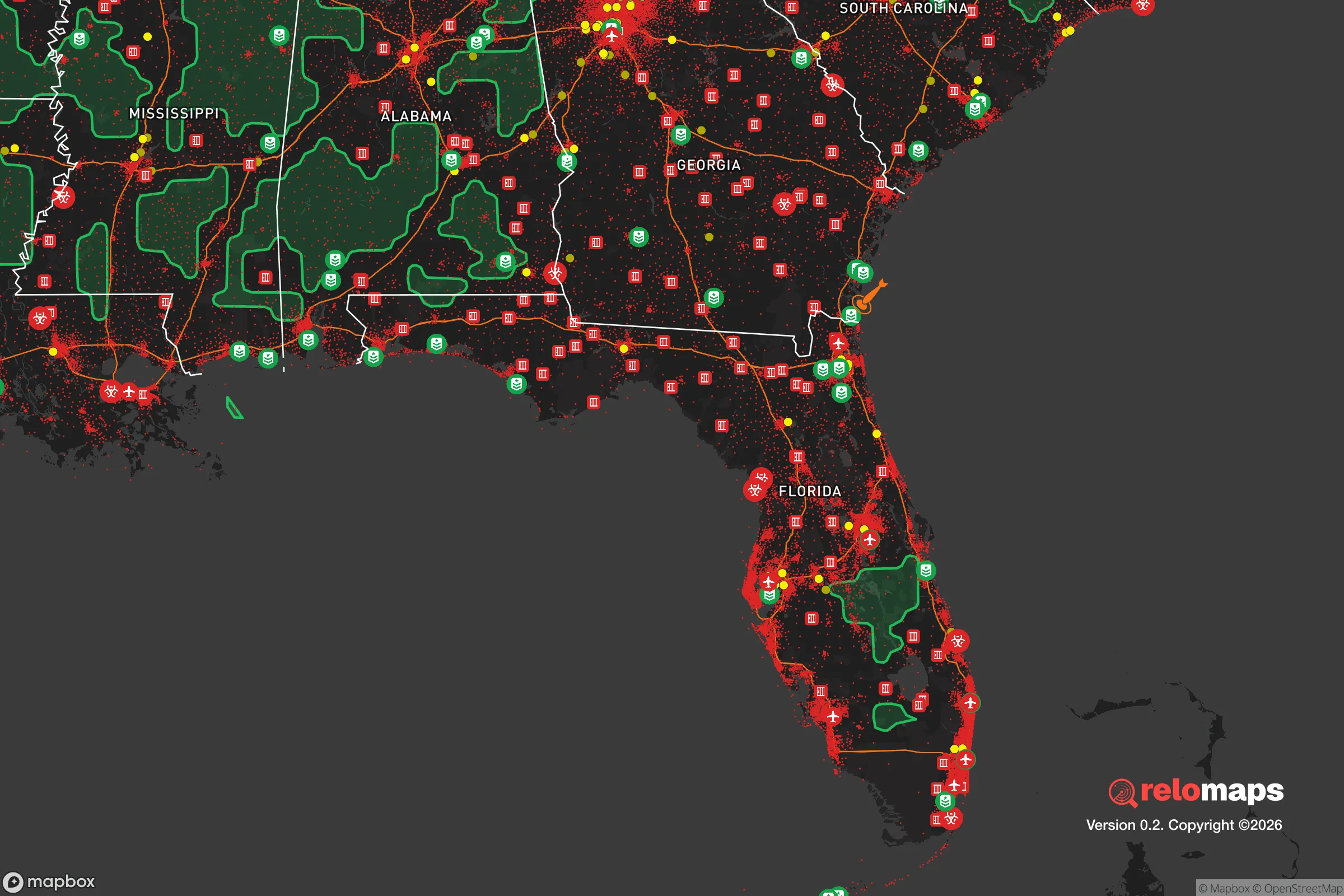


Important Note: For informational purposes only. This does not mean nothing bad ever happens in the green zones. Please use common sense. This is based on public data and modeled with AI. We tried to take a conservative approach but mistakes happen. We update this regularly as new information becomes available.
Solar Generator Recommendations
Backup power matters more here than in safer locations. We've picked three solar generators across budgets and capacity tiers — start with the budget unit if you only need a few essentials, or step up if you want to run a fridge and HVAC for days at a time.

Jackery Portable Power Station Explorer 300
Budget OptionPower on the Go: Weighing only 11 lbs, it's convenient to set up and store with book-sized foldable solar panels

BLUETTI Portable Power Station AC180
Designed for both indoor and outdoor scenarios, AC180 is highly capable as it has a robost capacity and continuous output power.

EF ECOFLOW DELTA Pro Ultra Power Station
Upgraded PickEcoFlow DELTA Pro Ultra is a whole-home energy system designed to grow with your family. Integrated with the Smart Home Panel 2, it scales to meet your evolving energy needs — keeping your home powered, intelligent, and secure through every stage of life.
We earn a commission, at no additional cost to you.
Strategic Assessment Analysis
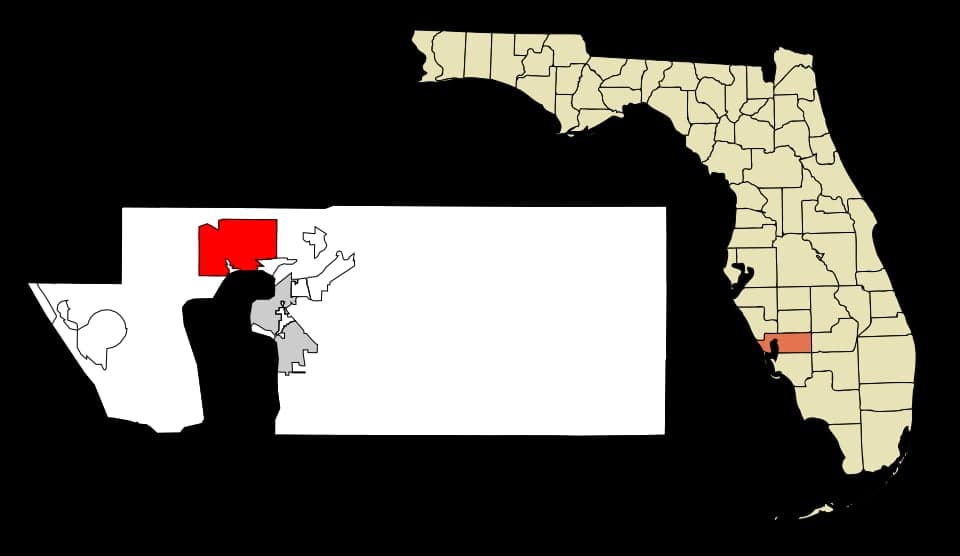
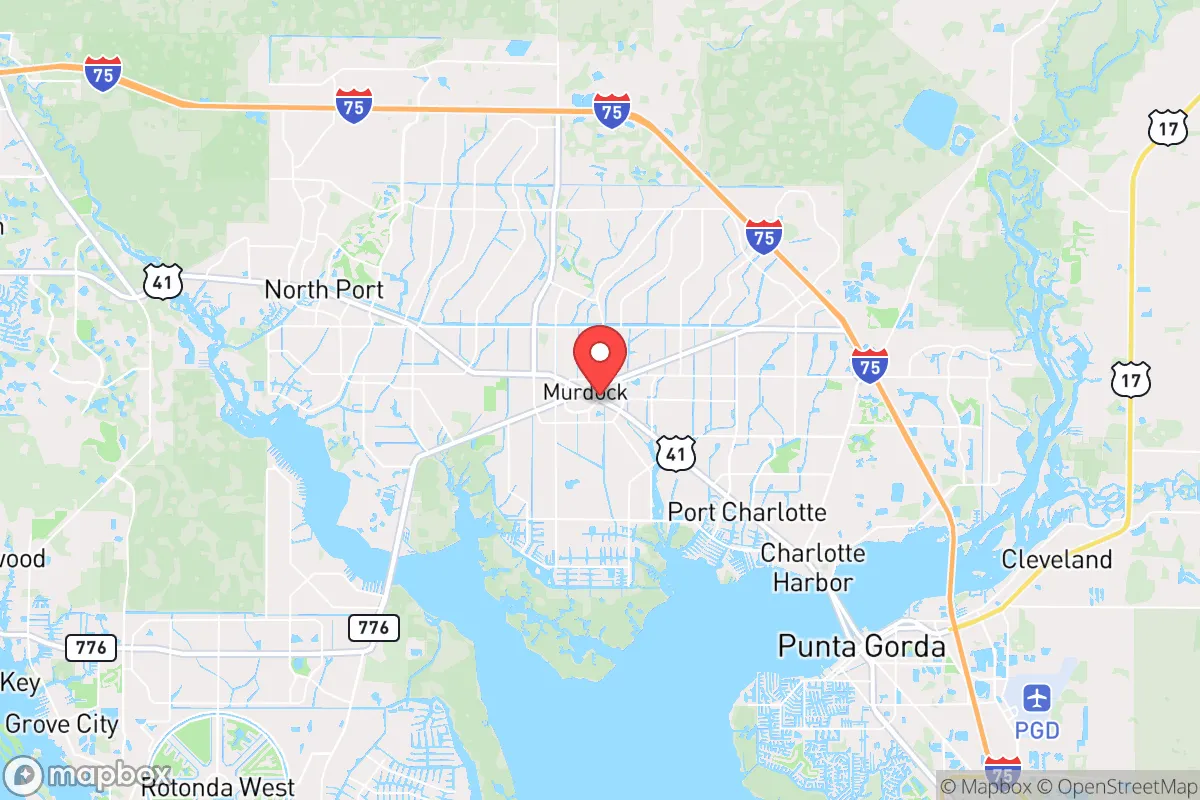
Port Charlotte, Florida, occupies a strategic position on the Gulf Coast that offers a mix of genuine resilience advantages and notable exposure risks for a relocator prioritizing disaster readiness and self-sufficiency. Located roughly 100 miles south of Tampa and 30 miles north of Fort Myers, this unincorporated community in Charlotte County sits on the Peace River estuary, providing access to both inland waterways and the Gulf of Mexico. For a conservative-leaning individual or family thinking seriously about long-term preparedness, Port Charlotte presents a workable base—if you understand its specific geographic trade-offs and plan accordingly.
Geographic position and natural advantages for self-sufficiency
Port Charlotte’s location on the southwest Florida coast gives it several structural advantages for resilience-minded relocators. The area sits on a relatively flat coastal plain, but its position along the Peace River means access to fresh water—a critical resource for any self-sufficiency plan. The river itself is tidal for much of its lower reach, but upstream sections and the numerous canals that lace the community provide potential for rainwater catchment and small-scale irrigation. The region’s subtropical climate supports year-round growing seasons, with average highs ranging from 74°F in January to 91°F in August, allowing for continuous food production if you have the right setup.
The broader Charlotte County area is less densely populated than the Tampa Bay or Fort Myers metros, which reduces some of the logistical vulnerabilities associated with large urban centers. Port Charlotte’s population hovers around 60,000, with the county total near 200,000—enough to support basic infrastructure but not so dense that evacuation routes become impassable during a crisis. The area’s position roughly midway between Tampa and Naples means you’re within a 90-minute drive of major medical centers and supply hubs, but far enough from those population centers to avoid the worst of any urban collapse scenario. For a relocator, this balance of isolation and access is a genuine asset.
Risks, exposures, and proximity to fallout-relevant landmarks
No honest assessment of Port Charlotte’s resilience can ignore its exposure to natural hazards, particularly hurricanes. The area sits in a zone that has been directly hit by major storms, most notably Hurricane Charley in 2004 (a Category 4 that made landfall just north of Port Charlotte) and Hurricane Ian in 2022 (which caused catastrophic storm surge along the coast). The flat topography means storm surge is the primary threat for properties within a few miles of the coast or along the Peace River and its canals. Properties farther inland, especially those above the 10-foot elevation mark, face significantly lower surge risk but remain vulnerable to wind damage from any major hurricane.
From a man-made risk perspective, Port Charlotte’s location is relatively favorable. The nearest major fallout-relevant landmarks are the Tampa Bay area’s port facilities and MacDill Air Force Base, roughly 90 miles north. While these are potential targets in a conflict scenario, the prevailing wind patterns in southwest Florida (typically from the east and southeast) mean that fallout from a strike on Tampa would likely be carried away from Port Charlotte, not toward it. The area is also far from any nuclear power plants—the closest is the St. Lucie plant on the Atlantic coast, over 120 miles away—and has no major chemical or industrial facilities that would pose a secondary hazard. The Peace River’s water treatment plants and the county’s waste management facilities are standard municipal infrastructure, not high-risk targets.
For a relocator concerned about societal collapse or supply chain disruption, Port Charlotte’s reliance on a single major evacuation route—Interstate 75, which runs north-south about 10 miles inland—is a vulnerability. During a hurricane evacuation, that road can become gridlocked, and in a broader crisis, it would be a natural chokepoint. The area’s many canals and waterways offer alternative movement options for those with boats, but for land-based travel, the road network is limited.
Practical resilience for a relocator: food, water, energy, and defensibility
Port Charlotte offers a mixed picture for practical self-sufficiency. On the positive side, the growing season is long and productive. With proper planning, a household can produce a significant portion of its own vegetables, fruits, and herbs year-round. The local soil is sandy and alkaline, typical of coastal Florida, so raised beds or container gardening with amended soil are recommended. Citrus, avocados, and mangoes grow well, and the area’s numerous farmers’ markets and agricultural supply stores (like the Charlotte County Fairgrounds’ weekly market) provide access to seeds, tools, and local knowledge.
Water is a more complex issue. The Peace River is the primary surface water source, but it’s tidal and brackish in the lower reaches, so direct use requires desalination or significant treatment. The Floridan Aquifer lies beneath the area, and many homes have private wells—a major advantage for self-sufficiency. However, well water in coastal areas can be saline or high in minerals, so testing and treatment are essential. The county’s public water system draws from the Peace River and treats it at the Port Charlotte Water Treatment Plant, but in a prolonged grid-down scenario, that system would fail. Rainwater catchment is legal in Florida and highly practical here, given the region’s average 53 inches of annual rainfall. A well-designed system with first-flush diverters and storage tanks can provide a reliable independent water supply.
Energy resilience is achievable but requires upfront investment. The area gets abundant solar radiation—an average of 5.5 peak sun hours per day—making solar panels a viable primary or backup power source. Net metering is available through Florida Power & Light, but for true self-sufficiency, a battery storage system (like Tesla Powerwall or a DIY lithium setup) is necessary. Propane is widely available for cooking and heating, and many homes already have propane tanks for pool heaters or generators. The county’s building codes have been updated since Hurricane Charley, so newer homes are built to stricter wind standards, but older homes (pre-2000) may need retrofitting with impact windows or storm shutters.
Defensibility is a relative concept in a suburban setting. Port Charlotte’s layout is a mix of single-family homes on large lots (many with acreage) and denser subdivisions. For a relocator seeking a more defensible property, look for homes on the outskirts of town, particularly along the Peace River or near the Myakka River State Forest to the east. These areas offer more privacy, natural barriers (water, forest), and fewer neighbors. The local sheriff’s office (Charlotte County Sheriff’s Office) is well-regarded and has a strong community presence, but in a crisis, law enforcement resources would be stretched thin. Building a resilient community with like-minded neighbors is arguably the most effective defense strategy here.
The overall strategic picture for a conservative relocator
Port Charlotte is not a hardened bunker location, nor is it a remote wilderness retreat. It is a mid-sized Gulf Coast community that offers a realistic balance of climate advantages, resource access, and manageable risk for a relocator who is serious about preparedness. The area’s primary vulnerabilities—hurricanes, storm surge, and a limited evacuation network—are well-understood and can be mitigated through property selection, structural hardening, and a solid emergency plan. Its strengths—long growing seasons, groundwater access, solar potential, and relative distance from major urban targets—make it a viable base for a family or individual looking to build a self-sufficient lifestyle without going completely off-grid. The key is to treat Port Charlotte as a starting point, not a finished solution: choose your property carefully, invest in resilience infrastructure, and build relationships with the local community of like-minded residents. Done right, it’s a location that can support a prepared, independent life in an uncertain future.

* Values derived from national, state, county, city and local statistics and may differ in a specific area. Last updated: 2026-07-20T01:34:21.000Z
Narrative content on this page is AI-generated and may contain mistakes. Verify any details that matter before acting on them.
ReloMaps may earn a commission from affiliate links at no extra cost to you.

