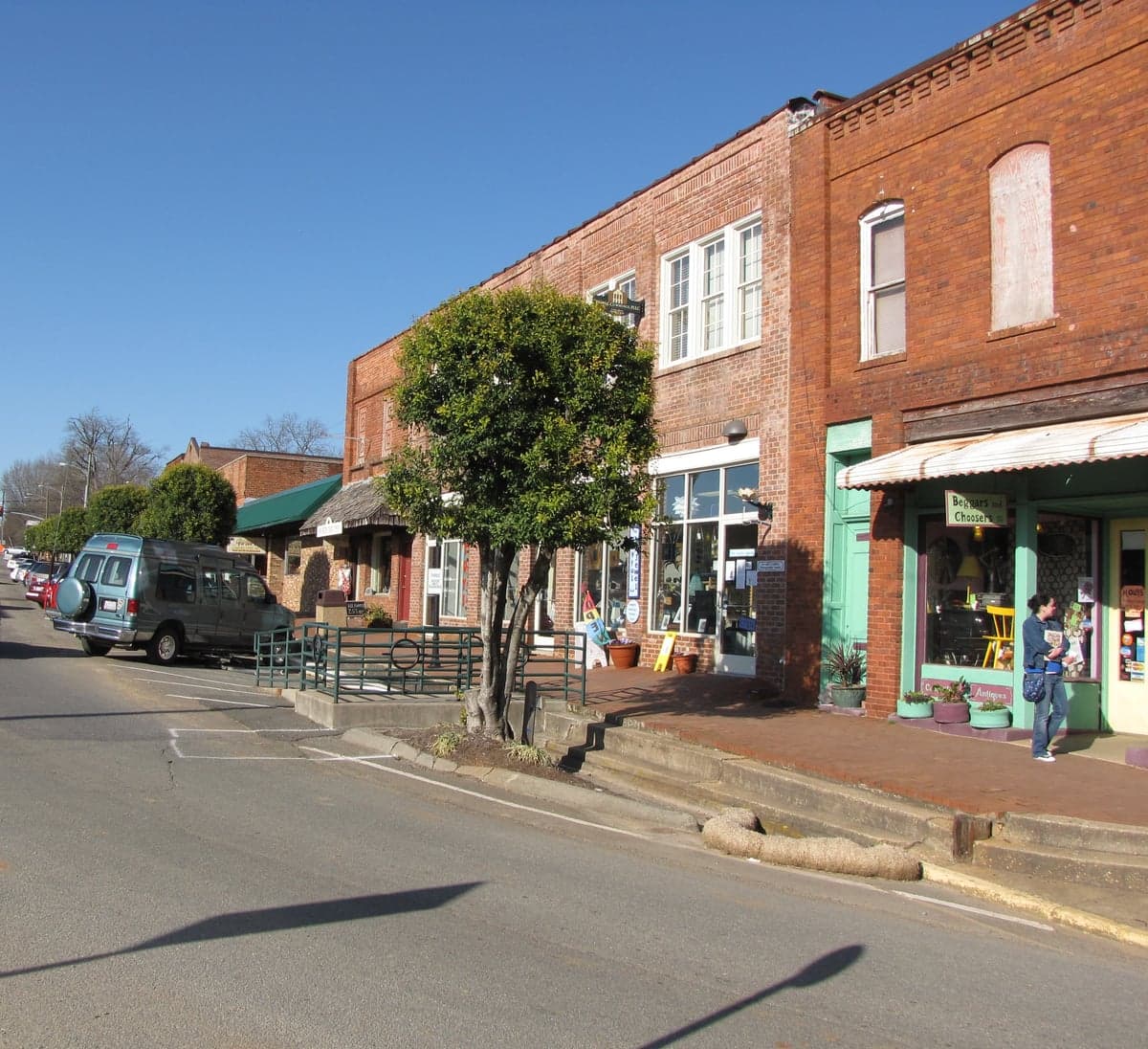
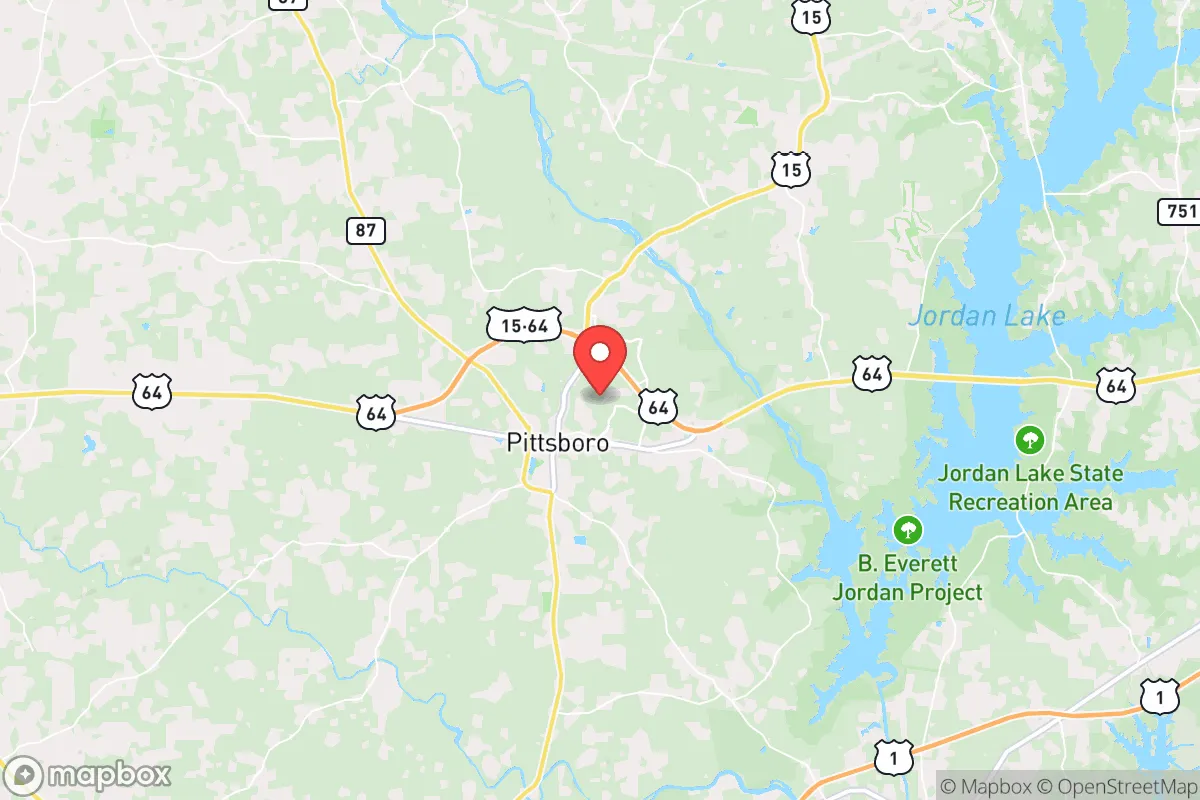
Photo: Wikipedia
Personal Sovereignty in Pittsboro, NC
Viable for self-reliance. Generally workable, though some barriers may limit total independence.
What does Personal Sovereignty tell us?
Personal Sovereignty measures your capacity for self-reliance and independence with minimal government friction. Higher scores mean fewer barriers between you and the way you want to live... but it assumes you have the space you need and good neighbors.
What does this tell us?
Personal Sovereignty measures your capacity for self-reliance and independence with minimal government friction. Higher scores mean fewer barriers between you and the way you want to live... but it assumes you have the space you need and good neighbors.
State Policy
Energy independence: Importer (24% of energy produced in-state)
Personal Liberty
Homesteading

Personal Liberty Analysis
Pittsboro, North Carolina, offers a notably high degree of personal sovereignty within the framework of a state that consistently ranks among the most freedom-oriented in the Southeast. As the seat of Chatham County, the town balances a rural, small-town character with proximity to the Research Triangle, creating an environment where individual autonomy is generally respected, though local governance can introduce some friction. For those prioritizing self-reliance, North Carolina’s state-level protections—particularly in areas like gun rights, tax policy, and property use—provide a strong foundation, while local zoning and regulatory nuances in Pittsboro itself require careful navigation.
Tax burden and regulatory posture: How light is the touch in Chatham County?
North Carolina’s tax burden is one of the lowest in the nation, and Pittsboro residents benefit directly from this. The state levies a flat income tax rate of 4.75% (as of 2026), with no progressive brackets, and the state sales tax is 4.75%, with local options bringing the total in Chatham County to 7.25%. Property taxes in Chatham County are moderate, with a rate of approximately $0.78 per $100 of assessed value (2025-2026 fiscal year), which is lower than neighboring Orange County (Chapel Hill) but higher than more rural counties like Randolph. The regulatory posture at the state level is generally light-touch, with North Carolina being a right-to-work state and having no state-level minimum wage above the federal $7.25. However, Pittsboro’s local government has a reputation for being more interventionist than surrounding unincorporated areas. The town has adopted a Unified Development Ordinance that includes design standards and environmental regulations, particularly around the Haw River and Jordan Lake watersheds. This means that while state-level burdens are low, homeowners and small business owners in Pittsboro proper should expect more permitting requirements and stricter land-use rules than in the county’s rural pockets. For a freedom-minded individual, the key is location: living just outside town limits can significantly reduce regulatory friction.
Self-defense and gun law specifics: What can you legally do in Pittsboro?
North Carolina is a strong Second Amendment state, and Pittsboro residents enjoy the full scope of state law. The state has permitless carry for handguns (effective since 2023), meaning any law-abiding adult 18 or older can carry a concealed handgun without a permit. Open carry is also legal without a permit for anyone legally allowed to possess a firearm. For those who want reciprocity when traveling, a North Carolina concealed carry permit is still available and recognized by 40+ states. There is no state-level red flag law, no universal background checks beyond federal requirements, and no magazine capacity restrictions. The Castle Doctrine is firmly in place: there is no duty to retreat in one’s home, vehicle, or workplace, and deadly force is presumed justified if an intruder unlawfully enters. Stand Your Ground laws extend this protection to any place where the individual has a lawful right to be. Pittsboro itself has no local ordinances that restrict firearms beyond state law, though discharging a firearm within town limits is generally prohibited except on shooting ranges or in self-defense. For practical purposes, a resident living on a few acres just outside town can shoot on their own property, provided they are not within 100 yards of an occupied dwelling. The Chatham County Sheriff’s Office is known for being pro-Second Amendment, and permit processing times are typically under 90 days.
Self-reliance and homesteading viability: Lot sizes, zoning, and off-grid feasibility
Pittsboro and its surrounding areas offer genuine opportunities for self-reliance, but the feasibility depends heavily on whether you are inside or outside the town’s extraterritorial jurisdiction (ETJ). Within Pittsboro’s ETJ, minimum lot sizes for single-family homes are typically around 0.5 to 1 acre, and the town’s zoning code requires connections to public water and sewer where available. This makes true off-grid living—well water, septic, solar power—difficult within town limits. However, in unincorporated Chatham County, the minimum lot size for a single-family home on a well and septic system is generally 1 to 2 acres, depending on soil conditions. Many parcels of 3 to 10 acres are available within a 15-minute drive of downtown Pittsboro, particularly in areas like the Silk Hope and Moncure communities. These areas allow for rainwater collection, solar panels (with no county-level restrictions), and small-scale livestock such as chickens, goats, and even a cow on larger parcels. The county does have a zoning ordinance, but it is relatively permissive for agricultural uses. There are no county-level bans on backyard chickens or beekeeping, though homeowners’ associations (HOAs) in newer subdivisions may impose restrictions. Off-grid feasibility is high in the county: well drilling is straightforward, septic permits are issued by the county health department with reasonable standards, and solar installation is common. The state has net metering requirements, but some residents choose to go fully off-grid to avoid utility connection fees. The main regulatory hurdle is the state’s building code, which applies everywhere and requires permits for structural changes, but this is standard across North Carolina.
Personal liberties: Parental rights, medical autonomy, speech, and property
North Carolina has a strong track record on several fronts of personal liberty. Parental rights are explicitly protected under state law, with the Parents’ Bill of Rights (enacted in 2023) requiring school districts to notify parents of any changes in a child’s health or well-being and to obtain parental consent for certain medical or mental health services. Chatham County Schools generally follow this law, though some parents report variability in implementation at the school level. Medical autonomy is more mixed: North Carolina has not expanded Medicaid (as of 2026), which limits healthcare access for lower-income individuals, but the state also has no vaccine mandates for adults and allows for broad exemptions from school vaccine requirements (medical and religious). The state has a Certificate of Need (CON) law that restricts the opening of new healthcare facilities, which some argue limits choice and drives up costs—a point of frustration for those seeking more medical freedom. Free speech is robustly protected, with no state-level hate speech laws that go beyond the First Amendment, and Pittsboro’s public meetings are generally open. Property rights are strong: North Carolina has a right-to-farm law that protects agricultural operations from nuisance lawsuits, and there is no state-level property tax on intangible personal property. However, eminent domain is used occasionally for infrastructure projects, such as the ongoing expansion of U.S. 64 and the proposed Chatham Park development, which has been a source of tension between developers and some landowners. The town’s planning board has a reputation for being pro-development, which can feel like a threat to property autonomy for long-time residents.
Overall, Pittsboro offers a solid foundation for personal sovereignty, particularly for those who choose to live just outside the town’s regulatory reach. The state’s low taxes, strong gun rights, and permissive homesteading environment create a baseline that is more freedom-oriented than many parts of the Northeast or West Coast. The trade-off is that Chatham County’s rapid growth—driven by the massive Chatham Park development and proximity to the Research Triangle—is bringing more regulation, higher property values, and a more suburban mindset to the area. For a conservative-leaning individual or family who values self-reliance, the sweet spot is buying 5+ acres in unincorporated Chatham County, within 20 minutes of Pittsboro’s amenities but outside its ETJ. This combination gives you the legal and practical ability to live with minimal government interference while still having access to a charming historic downtown and regional employment centers. Compared to areas like Orange County (Chapel Hill) or Wake County (Raleigh), Pittsboro and its rural surroundings offer a noticeably lighter regulatory touch and a stronger culture of personal responsibility.

* Values derived from national, state, county, city and local statistics and may differ in a specific area. Last updated: 2026-11-13T01:55:02.000Z
Narrative content on this page is AI-generated and may contain mistakes. Verify any details that matter before acting on them.
ReloMaps may earn a commission from affiliate links at no extra cost to you.

