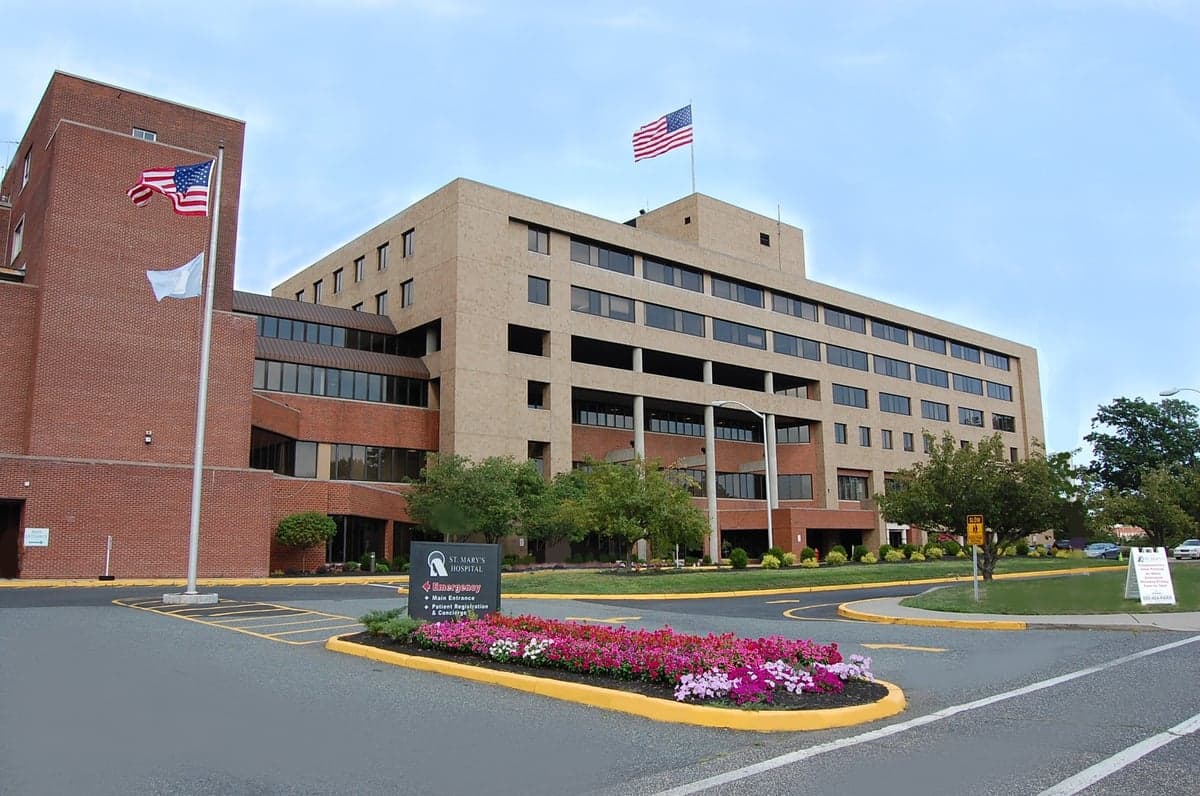
Photo: Wikipedia
Political ClimatePolitical Climate in Passaic, NJ
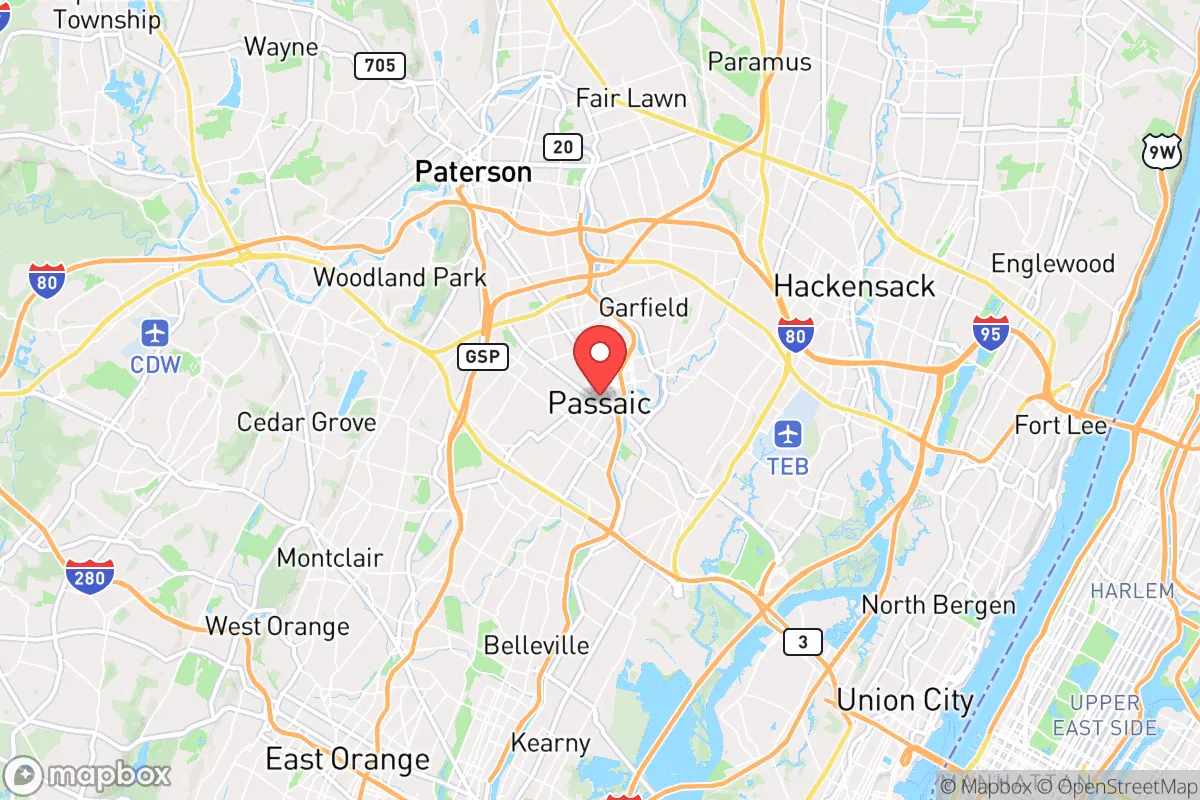
District shown is the primary district for this city’s centroid. Cities may span multiple districts.
Local Political AnalysisPolitical Analysis of Passaic, NJ
Passaic, New Jersey, has long been a Democratic stronghold, but its political lean is notably more moderate than the state as a whole. With a Cook Partisan Voting Index (PVI) of D+2, Passaic is a solidly blue city, yet it sits to the right of New Jersey’s statewide D+5 rating. This means that while Democrats reliably win local elections, the margin is narrower than in deep-blue suburbs like Montclair or Maplewood, and the city’s working-class, immigrant-heavy population often produces more centrist results than the progressive coastal enclaves.
How it compares
Passaic’s D+2 PVI places it in a different political lane than much of New Jersey. For context, the state as a whole leans D+5, meaning Passaic is about three points more competitive. This gap reflects the city’s unique demographic and economic makeup. Unlike affluent, heavily educated towns like Princeton or Hoboken—where progressive policies on housing and taxes dominate—Passaic’s electorate is more focused on bread-and-butter issues like jobs, public safety, and infrastructure. Nearby cities like Paterson (also D+2) and Clifton (D+1) share a similar blue-but-pragmatic profile, while suburban Bergen County towns like Ridgewood (D+4) or Tenafly (D+6) lean further left. The contrast is sharpest with rural Sussex County, which votes R+15, but even within Passaic County, the city stands out as a moderate Democratic anchor compared to the more liberal suburbs of Wayne or Woodland Park.
What this means for residents
For conservative residents, Passaic’s D+2 lean means their votes aren’t entirely symbolic—local races can be competitive, especially in city council or mayoral elections where turnout and candidate quality matter more than party registration. Republican candidates occasionally win seats, particularly in wards with strong Italian or Polish communities. For liberal residents, the city’s trajectory is stable but not transformative; progressive policies like rent control or sanctuary city status pass, but they face more pushback than in Newark or Jersey City. The practical effect is a political climate that feels less polarized than the national headlines. Neighbors might disagree on taxes or development, but the shared experience of navigating Passaic’s dense, diverse streets keeps the conversation grounded. You won’t see the kind of ideological warfare that plays out in more affluent, activist-heavy towns.
Culturally, Passaic’s political identity is shaped by its large Dominican, Puerto Rican, and Polish populations, which produce a mix of social conservatism on issues like family values and economic populism on jobs and wages. The city’s policy priorities—like funding for public schools, fixing aging water mains, and attracting warehouse or logistics jobs—reflect this blend. Unlike the statewide push for green energy mandates or affordable housing quotas, Passaic’s leaders focus on practical, incremental improvements. The result is a place where politics feels less like a battle of ideologies and more like a negotiation over resources. For anyone moving here, the takeaway is simple: you’ll find a community that votes blue but argues in shades of gray, where the biggest fights are about potholes, not party lines.

State Political ClimatePolitical Climate in New Jersey
State Political AnalysisPolitical Environment in the State
New Jersey is a solidly Democratic state with a Cook PVI of D+5, but that number only tells part of the story. The state hasn't voted Republican for president since 1988, yet it's home to some of the most competitive congressional districts in the country and a long tradition of moderate Republican governors. Over the past 10-20 years, the dominant trend has been a slow but steady leftward drift driven by the growing political weight of the urban corridor, even as the rural and suburban south and west have become more reliably Republican.
Urban vs. rural divide
The political map of New Jersey is essentially a tale of two corridors. The northeastern "Gold Coast" — Newark, Jersey City, Hoboken, and the rest of Hudson and Essex counties — is the engine of Democratic dominance. These dense, transit-oriented cities have become overwhelmingly Democratic, often delivering 70-80% of the vote for Democratic candidates. The same is true of New Brunswick and the rest of Middlesex County, a major university and immigrant hub. In contrast, the rural and exurban counties of the northwest and south — Sussex, Warren, Hunterdon, Salem, and Cape May — have been trending Republican for a generation. The most dramatic shift has been in Ocean County, a massive retirement and suburban community that has become a Republican stronghold, often voting 60%+ for GOP candidates. The suburbs of Morris and Somerset counties are the true battlegrounds; they were once reliably Republican but have become competitive, with Democrats making steady inroads among college-educated voters, particularly women. The result is a state where the Democratic majority is built on a narrow geographic base of dense, diverse cities, while the rest of the state leans right.
Policy environment
New Jersey's policy environment is defined by its high-tax, high-regulation posture. The state has the highest property taxes in the nation, with an average effective rate around 2.2%, and a progressive income tax that tops out at 10.75% for income over $1 million. The regulatory climate is business-friendly in some sectors (pharmaceuticals, finance) but burdensome in others (construction, energy). Education policy is a major flashpoint: the state spends more per pupil than almost any other, but the funding formula heavily favors urban districts, leading to constant litigation and resentment from suburban and rural taxpayers. Healthcare is heavily regulated, with a strong push toward Medicaid expansion and a state-based insurance exchange. Election laws are among the most accessible in the country: no-excuse mail-in voting, automatic voter registration, and same-day registration are all in place. Gun laws are among the strictest nationally, including a permit-to-purchase requirement, an assault weapons ban, and a magazine capacity limit of 10 rounds.
Recent policy direction
The last five years have seen a clear acceleration of progressive policy. In 2022, the state passed a comprehensive gun safety package that banned carrying in sensitive places and tightened licensing requirements, which is currently being challenged in court. On education, the state has expanded LGBTQ-inclusive curriculum mandates and strengthened protections for transgender students, while also maintaining a robust school choice program through inter-district public school transfers and charter schools. Property tax reform has been a perennial issue, with the Anchor program providing direct relief to homeowners and renters, but the underlying structure remains unchanged. On medical and bodily autonomy, New Jersey has become a sanctuary state for abortion access, passing a law in 2022 that protects providers and patients from out-of-state prosecution. Privacy and surveillance laws are mixed: the state has strong data breach notification requirements but has also expanded automated license plate reader networks used by law enforcement. Voting access has been expanded significantly, with the 2020 election seeing a massive shift to mail-in voting that has been made permanent. For a conservative relocator, the bottom line is that the state's policy direction is unambiguously leftward, but the pace is slower than in New York or California, and there are still pockets of resistance, particularly in the legislature's more moderate Democratic faction.
Civil unrest & political movements
New Jersey has a history of organized political activism on both sides. The 2020 Black Lives Matter protests were large and sustained in Newark, Jersey City, and Trenton, leading to police reform legislation that included a ban on chokeholds and a requirement for body cameras. On the right, the New Jersey Second Amendment Society and other gun rights groups have been highly active, organizing protests at the statehouse and filing lawsuits against the state's gun laws. Immigration politics are a constant flashpoint: the state has a sanctuary state policy that limits cooperation between local law enforcement and federal immigration authorities, which has led to tensions in more conservative towns like Jackson and Lacey, where local officials have tried to push back. Election integrity has been a major issue since 2020, with Republican activists raising concerns about mail-in voting procedures, though no evidence of widespread fraud has been found. The most visible political flashpoint for a new resident would likely be the annual "March for Life" in Trenton and the counter-protests, which draw thousands and highlight the deep cultural divide between the urban corridor and the rest of the state.
Projection
Looking ahead 5-10 years, the trajectory is clear: New Jersey will continue to become more Democratic, but the margin of control will likely narrow rather than widen. The key demographic driver is the continued growth of the urban corridor, particularly among young professionals and immigrant communities who lean heavily Democratic. However, the state is also seeing significant out-migration of middle-class families to lower-tax states like Florida and Texas, which tends to remove moderate voters from the electorate. The wild card is the suburban shift: if college-educated voters in Morris and Somerset counties continue to move left, the GOP's path to statewide office becomes nearly impossible. But if inflation and housing costs continue to rise, there could be a backlash that benefits more moderate Republicans. For someone moving in now, expect to see a state that remains Democratic but with a more contentious, polarized politics than the PVI suggests. The practical reality is that your vote will matter most in local and legislative races, where the margins are often razor-thin.
For a conservative-leaning relocator, the bottom line is that New Jersey offers a high standard of living, excellent schools, and proximity to major job markets, but you will be living in a state where your political views are in the minority and where policy will continue to move left. The key is to find a town that matches your values: Ocean County for a reliably red environment, Morris or Somerset counties for a purple suburban experience, or the urban corridor if you're willing to be a political outlier. The state's politics are not monolithic, and with careful town selection, you can find a community that feels like home even if the state as a whole does not.
* Values derived from national, state, county, city and local statistics and may differ in a specific area. Last updated: 2026-06-14T02:06:34.000Z
Narrative content on this page is AI-generated and may contain mistakes. Verify any details that matter before acting on them.
ReloMaps may earn a commission from affiliate links at no extra cost to you.

