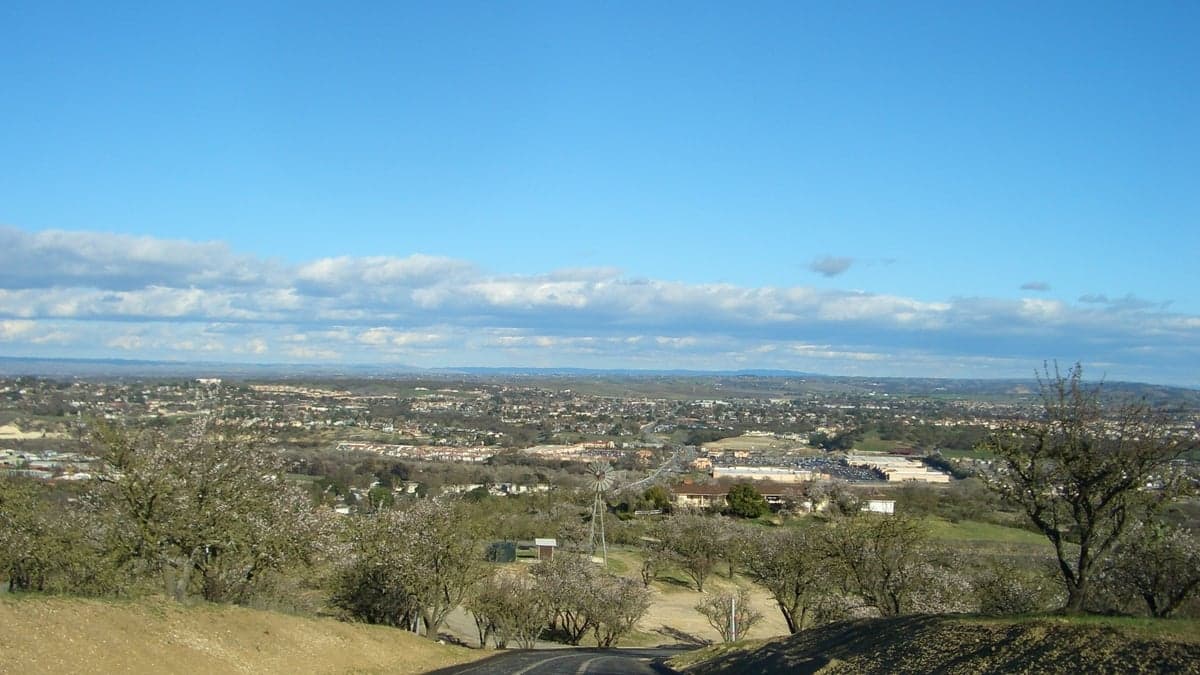
Photo: Wikipedia
Political ClimatePolitical Climate in Paso Robles, CA
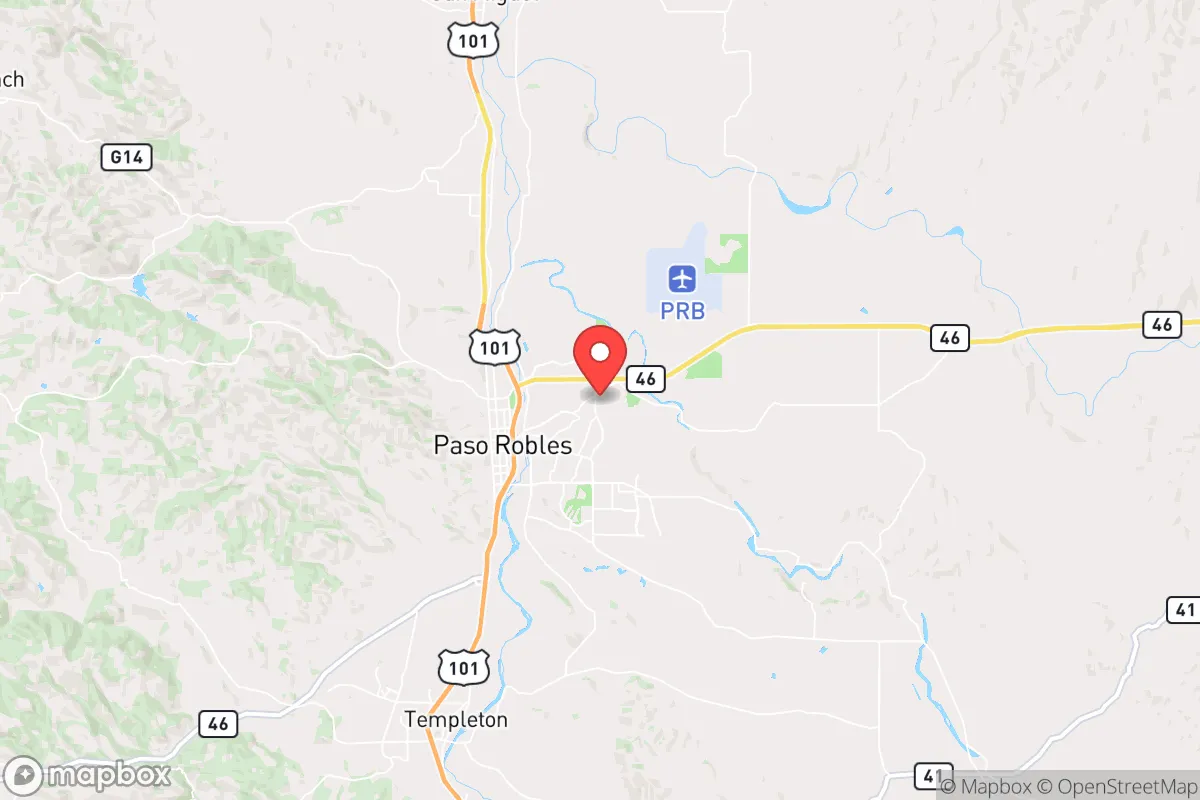
District shown is the primary district for this city’s centroid. Cities may span multiple districts.
Local Political AnalysisPolitical Analysis of Paso Robles, CA
Paso Robles sits in a unique political pocket within California’s deeply blue Central Coast. While the state as a whole carries a Cook Partisan Voting Index of D+18, Paso Robles itself leans more conservative than its coastal neighbors, with registered Republicans often outnumbering Democrats in local precincts. That said, the city has been shifting leftward over the past decade, mirroring statewide trends but at a slower pace. If you’ve lived here as long as I have, you’ve watched the old guard of cattle ranchers and vintners slowly give way to a younger, more diverse population that’s nudging the local politics toward purple.
How it compares
Drive 30 minutes west to Morro Bay or San Luis Obispo, and you’ll land in reliably blue territory—SLO County’s coastal towns vote Democratic by margins of 15 to 20 points in most elections. Paso Robles, by contrast, is the county’s conservative anchor. In the 2022 gubernatorial race, Gavin Newsom still won the city, but by a much narrower margin than his statewide 59%—closer to 52-48 here. The real contrast comes when you look at Atascadero, just 10 miles south: it’s a genuine swing town, flipping between red and blue depending on the cycle. Paso Robles has historically been redder than Atascadero, but that gap is closing. The Cook PVI of D+18 for California means the state is overwhelmingly Democratic, but Paso Robles operates as a local outlier—a place where a Republican candidate can still win a city council seat or a school board race without much trouble.
What this means for residents
For conservative residents, Paso Robles offers a rare California refuge where their votes actually feel competitive. Local elections often hinge on water policy, agricultural land use, and housing density—issues where conservative voices carry real weight. You’ll find a strong gun culture here, with multiple shooting ranges and a local chapter of the California Rifle and Pistol Association that’s active in city politics. For liberal residents, the climate is more challenging but not hostile. The city’s growing wine and tourism economy has brought in younger professionals from the Bay Area and Los Angeles, and they’ve pushed for more bike lanes, affordable housing initiatives, and climate resilience planning—measures that often pass but face stiff opposition from the old-timers. The practical reality is that both sides have to compromise. You won’t see the kind of partisan gridlock that paralyzes Sacramento; instead, you get pragmatic deals on things like sewage treatment upgrades or downtown parking that keep the city running.
Culturally, Paso Robles stands apart from coastal California in ways that go beyond voting. Wineries here are more family-run and less corporate than in Napa, and many of them still fly the American flag alongside the California bear. The annual California Mid-State Fair is a deeply conservative affair—rodeos, 4-H livestock auctions, and country music concerts—but it also draws liberals from the coast who come for the food and the carnival. The city’s water politics are a microcosm of the broader divide: longtime residents push for agricultural priority and limited growth, while newcomers advocate for conservation and urban density. Neither side has won outright, and that tension is likely to define Paso Robles for the next decade. If you’re moving here, expect a place where your political identity matters less than your willingness to show up at a town hall and talk about septic systems or fire safety—because that’s where the real decisions get made.

State Political ClimatePolitical Climate in California
State Political AnalysisPolitical Environment in the State
California is a deeply blue state where Democrats hold every statewide office and supermajorities in both legislative chambers, but that monolithic label hides a far more complex reality. The state hasn't voted Republican in a presidential race since 1988, and the Democratic voter registration advantage has grown from about 8 points in 2000 to over 20 points today. However, this leftward drift is driven almost entirely by the massive coastal metros—Los Angeles, the San Francisco Bay Area, and San Diego—while vast inland regions have moved in the opposite direction, creating one of the sharpest urban-rural political divides in the country.
Urban vs. rural divide
The political map of California is essentially a story of two states. The coastal corridor from Santa Barbara up through San Francisco and into the North Bay is solidly Democratic, with San Francisco County delivering 85% of its vote to Joe Biden in 2020. Los Angeles County, home to a quarter of the state's population, is the Democratic engine room, but its suburbs are shifting—Orange County, once a Republican stronghold, has flipped to purple and now votes Democratic in presidential races. Inland, the story is reversed. The Central Valley cities of Bakersfield and Fresno remain Republican-leaning, while rural counties like Modoc, Lassen, and Siskiyou in the far north vote 70-80% Republican. The Inland Empire—Riverside and San Bernardino counties—is the state's true battleground, trending blue but still hosting conservative strongholds in places like Temecula and Murrieta. The Sierra Nevada foothills, including Placer and El Dorado counties east of Sacramento, have become a magnet for conservative refugees from the Bay Area, turning them into reliable red territory.
Policy environment
California's policy environment is defined by high taxes and heavy regulation. The state has the highest marginal income tax rate in the nation at 13.3%, a top sales tax rate over 10% in many cities, and some of the highest gas taxes. Proposition 13, passed in 1978, caps property tax increases at 2% annually for existing homeowners, but new buyers face rates around 1% of purchase price. The regulatory posture is aggressively pro-labor, pro-environment, and pro-consumer. Education policy is dominated by the California Teachers Association, with per-pupil spending around $15,000 but middling outcomes. Healthcare is heavily regulated, with the state running its own insurance exchange (Covered California) and expanding Medi-Cal to cover all low-income adults regardless of immigration status. Election laws are among the most liberal: universal mail-in voting, same-day registration, and no-excuse absentee ballots are all standard. The state also has a top-two primary system, which often locks minor-party candidates out of general elections.
Recent policy direction
The last five years have seen California accelerate leftward on nearly every front. On gun rights, the state passed SB 2 (2023), which effectively bans concealed carry in most public places, and AB 1598, which allows private citizens to sue gun manufacturers—a direct copy of Texas's abortion law structure. Parental rights took a hit with AB 1955 (2024), which prohibits school districts from requiring parental notification when a child changes gender identity. On speech, AB 587 (2022) requires social media platforms to disclose their content moderation policies, but critics say it pressures them to suppress conservative viewpoints. Privacy law is mixed: the California Consumer Privacy Act (CCPA) gives residents strong data rights, but the state also expanded surveillance with SB 54 (2023), which allows police to access automated license plate reader data without a warrant. Medical autonomy is broadly protected, with AB 2096 (2024) shielding providers who prescribe abortion pills from out-of-state prosecution. Property rights remain constrained by the California Environmental Quality Act (CEQA), which gives neighbors and unions broad power to block development. On taxes, Proposition 19 (2020) limited the ability to pass property tax protections to children, effectively raising taxes on inherited homes. Voting access expanded further with AB 122 (2023), mandating ballot drop boxes in every county.
Civil unrest & political movements
California has been a flashpoint for political activism on both sides. The 2020 George Floyd protests saw massive, sometimes violent demonstrations in Los Angeles, Oakland, and San Francisco, with property damage estimates exceeding $1 billion. The 2021 recall election against Governor Gavin Newsom was a major conservative mobilization, but failed by a 24-point margin. Immigration politics are a constant battleground: California is a sanctuary state under SB 54 (2017), which limits local police cooperation with federal immigration enforcement, and the state has sued the Trump administration multiple times over border policy. The secession movement "Calexit" gained traction after Trump's 2016 win but has fizzled, with no serious political support. Election integrity controversies are less visible than in swing states, but conservative groups have raised concerns about the state's universal mail-in system, particularly after 2020 when then-Governor Newsom sent ballots to all registered voters. Visible flashpoints include the homeless encampment crisis in Los Angeles' Skid Row and San Francisco's Tenderloin, which has become a symbol of progressive governance failures, and the school board wars in places like Temecula and Orange County, where conservative parents have clashed with progressive boards over curriculum and library books.
Projection
Over the next 5-10 years, California's political trajectory points toward continued Democratic dominance at the state level, but with growing internal friction. Demographic trends favor the left: the state's Latino population, which leans Democratic, continues to grow, while white conservative voters are leaving for Texas, Idaho, and Arizona. However, the exodus of high-income earners—driven by taxes and housing costs—is slowly eroding the tax base, which could force fiscal reckoning. The housing crisis is the wild card: if the state actually builds its way out (as recent legislation like SB 9 and SB 10 attempts), it could attract new residents and moderate the cost-of-living pressure that fuels conservative grievances. If it doesn't, the urban-rural divide will only deepen, with coastal cities becoming more progressive and inland areas more resentful. The 2026 gubernatorial race will be a key signal: if a moderate Democrat wins, expect a slight tempering of the most aggressive policies; if a progressive prevails, brace for more of the same. For a new resident, the practical reality is that California will remain a high-tax, high-regulation state with strong individual liberties on some fronts (abortion, LGBTQ rights, privacy) and weak ones on others (property rights, gun rights, school choice).
For a conservative-leaning relocator, the bottom line is that California offers a beautiful, economically vibrant environment but demands a high tolerance for progressive governance. You'll find like-minded communities in the Central Valley, the Sierra foothills, and parts of the Inland Empire, but you'll be living under state laws that actively oppose many conservative priorities. For a liberal relocator, the state delivers on its promises of progressive policy and cultural alignment, but you'll pay for it in taxes and cost of living, and you'll encounter a growing backlash in rural areas. Either way, California is not a place for the politically indifferent—its politics are as dramatic as its landscapes.
* Values derived from national, state, county, city and local statistics and may differ in a specific area. Last updated: 2026-09-02T21:56:32.000Z
Narrative content on this page is AI-generated and may contain mistakes. Verify any details that matter before acting on them.
ReloMaps may earn a commission from affiliate links at no extra cost to you.

