 Popular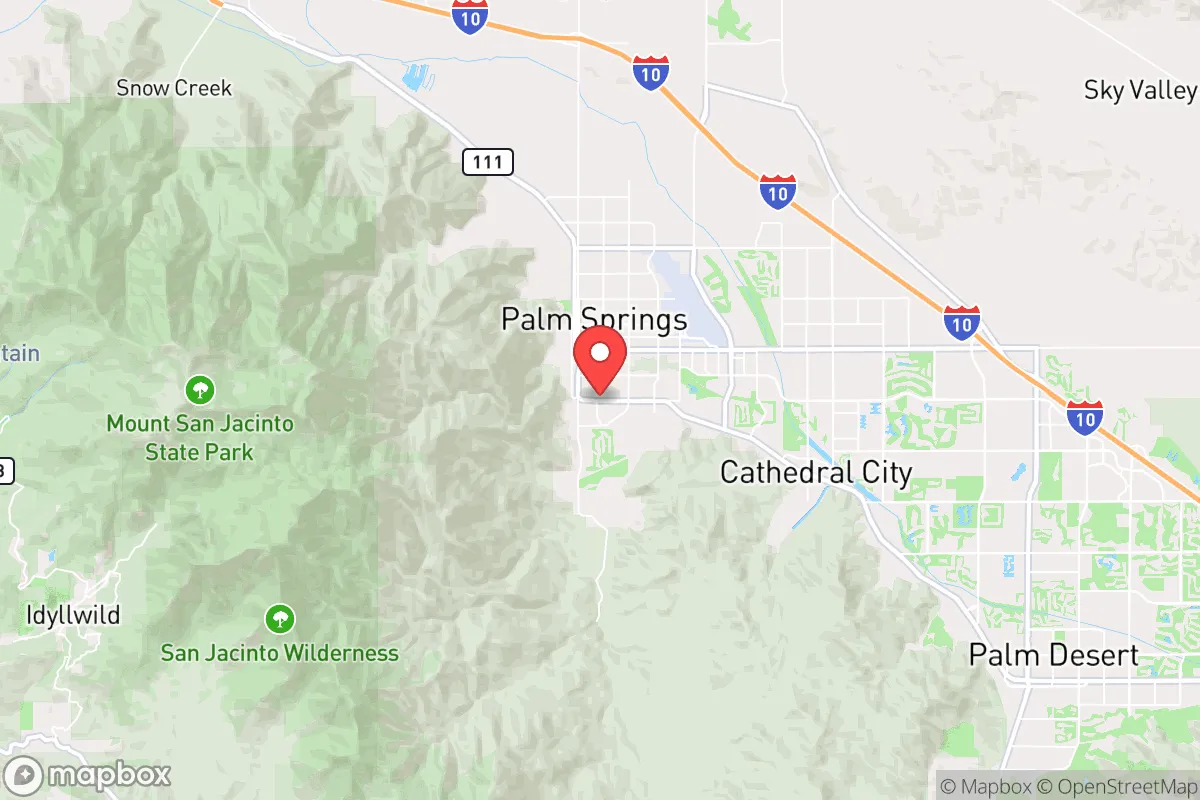
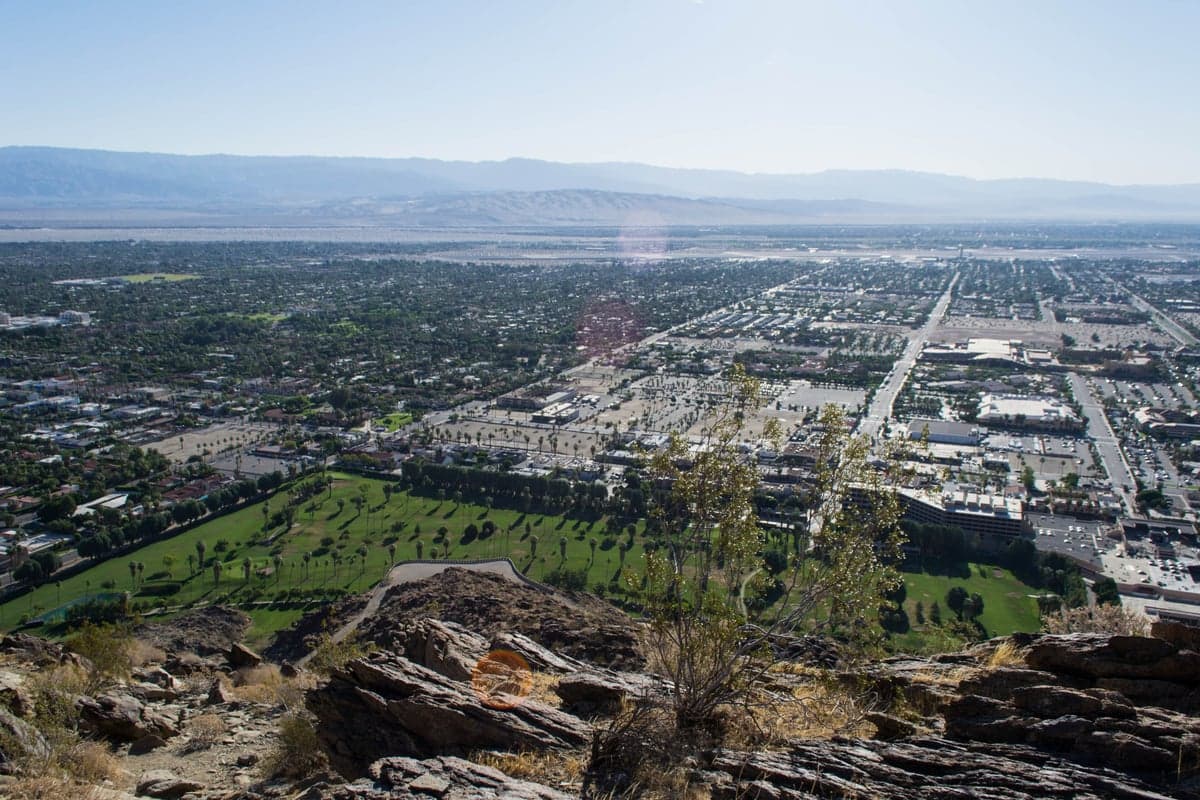
Photo: Wikipedia
Political ClimatePolitical Climate in Palm Springs, CA
District shown is the primary district for this city’s centroid. Cities may span multiple districts.
Local Political AnalysisPolitical Analysis of Palm Springs, CA
Palm Springs has long stood out as a politically liberal oasis in a region that, outside its city limits, leans more conservative than many realize. While California as a whole carries a Cook PVI of D+12, meaning it votes about 12 points more Democratic than the national average, Palm Springs City itself operates in a distinctly progressive bubble. The immediate surrounding county, Riverside, is more of a purple battleground, with areas like Cathedral City and Rancho Mirage tilting left but places like La Quinta and Palm Desert pulling the overall area to a more balanced R+2 rating for the broader congressional district. Locals will tell you that the city’s politics have become more pronouncedly Democratic in the last decade, driven by an influx of retirees and new residents from bluer parts of the state, even as the nearby desert communities hold steady with a more moderate-to-conservative base.
How it compares
The gap between Palm Springs and the rest of California is less about whether it votes blue—it does, overwhelmingly—and more about the intensity of that blue. In a typical statewide election, California’s D+12 PVI reflects a broad, diverse coalition of coastal suburbanites, urban progressives, and Central Valley moderates. Palm Springs, by contrast, sits in a district that is 14 points more Republican than the state average, weighing in at R+2. That means while the city itself might vote 65-70% Democratic, you don't have to drive far—say, 20 minutes east to La Quinta or south to the 74 corridor—to find neighborhoods where Trump signs were common in 2020. The political reality is that Palm Springs is a deep blue island in a sea of purple and red, a dynamic that creates more friction than you’d find in, say, San Francisco or Los Angeles, where the entire surrounding region is equally liberal.
What this means for residents
For liberal residents, Palm Springs offers a comfortable, affirming environment where progressive values on LGBTQ+ rights, environmental policy, and social services are the norm in local governance. City council meetings regularly address rent control, sustainability, and inclusivity measures without much pushback. Conservative residents, however, also find a surprising amount of breathing room. The surrounding desert communities provide a nearby counterbalance for shopping, dining, and social circles that feel more aligned with traditional values. In practice, a conservative living in Palm Springs might need to navigate a city government that doesn’t share their views, but they can easily spend their weekends in Indian Wells or Palm Desert where the local paper’s editorial board is more centrist. The long-term trajectory suggests Palm Springs will only get bluer as new housing attracts more coastal transplants, but the region as a whole is likely to remain a mixed bag, keeping local politics lively.
Culturally, Palm Springs distinguishes itself from the rest of California with its proudly out queer identity—it has one of the highest per-capita LGBTQ+ populations in the country—and a city-sponsored embrace of mid-century modern preservation that feels uniquely its own. Where California generally debates housing density and high-speed rail, Palm Springs argues about short-term rental caps and the height of palm trees. The city’s sales tax is a bit higher than surrounding areas to fund these local priorities, a trade-off that both sides understand. For newcomers, the advice from locals is simple: your vote matters less on the national scale here than your willingness to engage with neighbors who may think differently, because the district’s competitive nature means every election feels a little more real than in a safe blue state seat.

State Political ClimatePolitical Climate in California
State Political AnalysisPolitical Environment in the State
California is a solidly Democratic state with a Cook PVI of D+12, meaning it leans about 12 points more Democratic than the national average in presidential elections. The dominant coalition is a mix of urban progressives, Latino voters who trend Democratic but are not monolithic, and a growing Asian-American electorate, while the state GOP has been reduced to a weak minority party at the statewide level. Over the last 20 years, California has shifted leftward overall—driven by demographic change and suburban moderates abandoning the Republican label—but the move hasn’t been uniform. The coastal metros went bluer while the Central Valley and inland counties actually shifted right in some races by 2024, creating a sharper urban vs. rural split than ever.
Urban vs. rural divide
The political map of California is a study in extremes. The Democratic strongholds are the big coastal metros: Los Angeles, the San Francisco Bay Area (including San Francisco and Oakland), and San Diego. These regions collectively supply the overwhelming majority of Democratic votes. Los Angeles County alone has more people than 40 other states and votes about D+30. In contrast, the Central Valley and far northern counties are deeply red. Bakersfield (Kern County) votes R+20 or worse, and Redding (Shasta County) is even redder. The Inland Empire—places like Riverside and San Bernardino—is more mixed, trending blue in presidential years but electing local Republicans. A few suburbs have become notable outliers: Orange County, once a GOP bastion, flipped to Democratic in 2018 and hasn’t looked back, though its northern cities like Fullerton retain conservative pockets. Meanwhile, Fresno in the Central Valley is a purple city in a red county, with its downtown voting blue while the outskirts go heavy red.
Policy environment
California’s policy environment is defined by high taxation and aggressive regulation. The state has the nation’s highest top marginal income tax rate (13.3%) and a statewide sales tax of 7.25% that climbs to over 10% in some cities. Property taxes are capped at 1% of assessed value under Prop 13, but annual increases are limited, and reassessment only happens at sale—which can be a double-edged sword for newcomers buying later. Regulatory posture is heavy: environmental review under the California Environmental Quality Act (CEQA) slows nearly everything. Education policy is run from Sacramento, with strong teacher union influence and a statewide curriculum that emphasizes ethnic studies and LGBTQ+ inclusion. Healthcare is near-universal via Medi-Cal expansion and a state-run insurance exchange (Covered California), though costs remain high. Election laws are some of the most accessible in the country: every registered voter gets a mail ballot automatically, same-day registration is allowed, and voting by mail is the default. The result is high turnout but frequent complaints about ballot harvesting and late-arriving ballots, especially from conservatives.
Recent policy direction
The recent legislative direction under Governor Gavin Newsom has been a wholesale expansion of progressive priorities, with implications for every liberty a relocator might care about. On gun and self-defense law, California has some of the strictest regulations in the nation: an assault weapons ban, a 10-day waiting period, a "may-issue" concealed carry system (now "shall-issue" due to a 2024 Supreme Court ruling but with heavy restrictions on where guns can be carried), and a new tax on firearm and ammunition sales starting in 2024. On parental and education rights, the state passed AB 1955 in 2024, which bans school policies requiring teachers to notify parents if a child changes their gender identity—a direct rebuke to "parental rights" movements. Speech laws are restrictive: the state’s workplace harassment laws limit certain speech, and a 2023 law (AB 1482) criminalizes online "hate speech" in a way that free-speech advocates say chills private expression. Privacy and surveillance are mixed: the California Consumer Privacy Act (CCPA) is a national model for data rights, but the state also expanded license-plate reader networks and police surveillance powers in 2024 (SB 1170). Medical and bodily autonomy is broadly protected for abortion and gender transition care (the state is a "sanctuary" for out-of-state patients), but it also expanded forced mental health treatment for the homeless under the 2024 CARE Court reforms. Property rights remain weak: rent control was expanded statewide in 2019 (AB 1482), and new construction is heavily restricted by local zoning and CEQA, though the state has preempted local single-family zoning in 2021 (SB 9) to allow lot splits. Taxation has become more aggressive: a 1.1% wealth tax on stock buybacks passed in 2024 as a stopgap, and a state ballot measure in November 2026 proposes a graduated property tax surcharge on commercial buildings over $4 million. Voting and ballot access remain easy, but new voter ID requirements for in-person voting were rejected in 2024, while signature verification standards have been tightened slightly after 2020 controversies.
Civil unrest & political movements
California has been a hotbed of political activism on both sides. The 2020 George Floyd protests were particularly intense, with widespread looting and arson in Los Angeles and Oakland. In 2024, pro-Palestinian encampments at UC Berkeley and UCLA sparked counter-protests and arrests. On the right, the "Recall Newsom" movement collected over 2 million signatures in 2021 and forced a recall election that Newsom survived by 23 points. The "John Birch Society"-style secession movements like "Calexit" have fizzled, but far-north counties like Modoc and Sutter have passed resolutions declaring "Second Amendment sanctuary" status, refusing to enforce some state gun laws. Immigration politics are a daily fact of life: the state is a "sanctuary state" under SB 54 (2017), barring local law enforcement from cooperating with federal immigration authorities, though state prisons still cooperate for serious felonies. Border crossings in the south—especially near San Diego and the Calexico area—create constant tension, with feds and state often at odds. Election integrity controversies flared in 2020 and 2022, with Republican activists alleging ballot harvesting and vote-counting delays, though no fraud sufficient to overturn any race was proven. The 2024 primary saw fights over ballot drop-box security in Orange County.
Projection
Over the next 5-10 years, California is likely to stay Democratic but with growing internal friction. Demographic shifts favor the left: Latino and Asian-American voters are growing share, but recent trends from 2020-2024 show Latinos moving right slightly (especially in the Central Valley), so the margin could tighten in some districts. In-migration patterns are draining blue voters to Texas and Idaho while red-leaning departures from California are slightly faster, but the state still gains international immigrants who trend left. The real wild card is housing: if the state manages to build significantly more homes (a big if), younger voters might stay; if not, continued out-migration could slowly flatten Democratic margins. Expect more statewide ballot initiatives on taxes and housing, with wealthy coastal voters fighting to protect Prop 13 while inland renters push for more state control. The GOP is unlikely to win any statewide office in the next decade—Newsom terms out in 2026, but any Democrat will start with a D+12 edge—but Republicans could pick up 2-3 House seats in the Central Valley and Orange County if Democrats overreach on crime and homelessness policies.
Bottom line for a new resident: If you lean conservative, you’ll be a minority voice in most coastal cities but will find like-minded neighbors in the Central Valley or inland suburbs like Murrieta or Simi Valley. You’ll pay high income taxes and face a regulatory environment that even many business owners find exhausting, and you’ll need to plan around strict gun laws and parental-rights limitations. If you lean progressive, you’ll find your values encoded into law, but you’ll also face a sky-high cost of living and a state government that is often slow to deliver on its promises. Either way, the state rewards high-income earners who can afford its lifestyle and punishes those who can’t—that’s the consistent thread through California’s politics.
* Values derived from national, state, county, city and local statistics and may differ in a specific area. Last updated: 2026-06-25T05:14:10.000Z
Narrative content on this page is AI-generated and may contain mistakes. Verify any details that matter before acting on them.
ReloMaps may earn a commission from affiliate links at no extra cost to you.

