 Popular
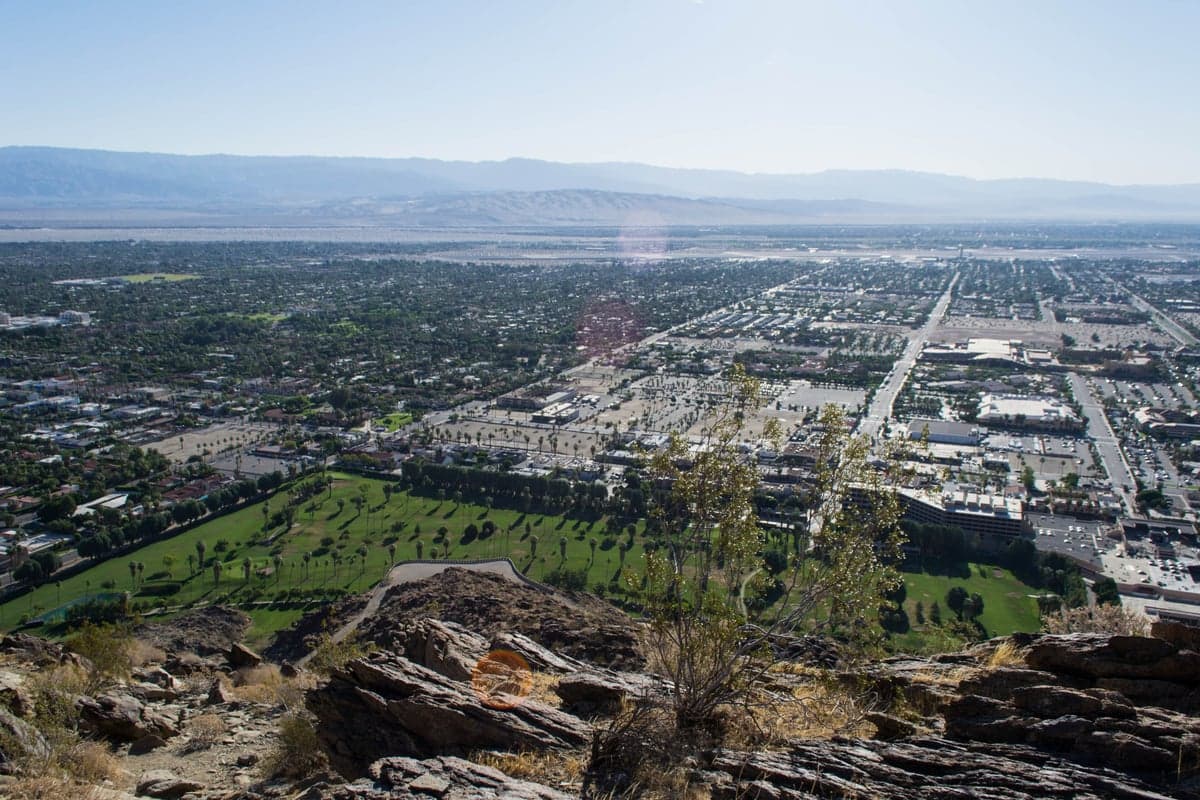
Photo: Wikipedia
Personal Sovereignty in Palm Springs, CA
Moderate friction. Expect trade-offs in some aspect of personal liberty and independence.
What does Personal Sovereignty tell us?
Personal Sovereignty measures your capacity for self-reliance and independence with minimal government friction. Higher scores mean fewer barriers between you and the way you want to live... but it assumes you have the space you need and good neighbors.
What does this tell us?
Personal Sovereignty measures your capacity for self-reliance and independence with minimal government friction. Higher scores mean fewer barriers between you and the way you want to live... but it assumes you have the space you need and good neighbors.
State Policy
Energy independence: Importer (33% of energy produced in-state)
Personal Liberty
Homesteading

Personal Liberty Analysis
Palm Springs presents a nuanced personal sovereignty environment that balances California’s broad state-level regulatory framework with distinctly local permissive policies, making it a moderately constrained but strategically navigable area for freedom-oriented individuals and families. While the state imposes some of the nation’s highest taxes and strictest gun laws, Palm Springs itself offers a relatively light-touch municipal approach to property use, short-term rentals, and land development that can reward self-reliant residents who plan carefully. For a conservative-leaning reader, the key trade-off is accepting higher baseline costs and limited self-defense options in exchange for a dry desert climate, a high degree of local autonomy in housing choices (including accessory dwelling units and ADU rentals), and a community that largely tolerates non-conformist lifestyles—provided one doesn’t challenge the dominant social norms.
How state and local taxes affect your finances and property decisions
California’s tax burden is among the highest in the nation, with a top marginal state income tax rate of 13.3% (applying to incomes over $1 million for single filers) and a state sales tax rate of 7.25%, which local add-ons push to roughly 8.5% in Palm Springs. Property taxes are capped at 1% of assessed value under Proposition 13, but assessments increase up to 2% annually—so long-term owners benefit, while new buyers pay based on current market value, which averages around $650,000 for a single-family home in Palm Springs as of 2025. The regulatory posture at the city level is surprisingly permissive for California: Palm Springs streamlined its accessory dwelling unit (ADU) approval process, allowing homeowners to add rental units on single-family lots with minimal red tape, and short-term rental permits are available (though not unlimited) with a fee structure and occupancy taxes of 11.5% plus a 1.5% tourism assessment. This makes Palm Springs more favorable for property-based income strategies than many California cities; you can essentially run a boutique vacation rental from a home that also serves as your primary residence. However, the state’s California Environmental Quality Act (CEQA) still applies to larger developments, so any major off-grid or homestead-style project involving grading, water diversion, or new structures will face environmental review, which adds months and thousands of dollars to planning.
Self-defense and gun law: what’s allowed and what’s restricted
California has some of the strictest firearm regulations in the United States, and Palm Springs residents must adhere to them fully. Concealed carry is issued on a “may-issue” basis, meaning the Riverside County Sheriff’s Department evaluates each application for “good cause,” which generally requires a documented specific threat or a business-related need; as of 2025, the county issues fewer than 1,000 CCW permits annually (roughly 1.5% of eligible adults). Open carry is illegal in incorporated areas like Palm Springs. The state’s “assault weapons” ban prohibits many semi-automatic rifles with certain features, and magazine capacity is limited to 10 rounds. Background checks are universal for all firearm purchases, including private sales, and there is a 10-day waiting period. No-exception “stand your ground” laws do not exist; California imposes a duty to retreat before using deadly force in public, unless the person is in their home (where the Castle Doctrine applies, but only for reasonable force against a home invader). For self-reliant individuals, the practical takeaway is that Palm Springs is not a destination for those who prioritize armed self-defense as a fundamental right; the legal environment is highly restrictive, with few pathways for routine concealed carry. Pepper spray and stun guns are legal without a permit, and non-lethal options like tasers are allowed for individuals over 18 with no felony record. Home defense is legally strongest inside the home, but the duty to retreat outside it is a significant limitation.
Homesteading and off-grid feasibility: lot sizes, zoning, and self-reliance
Palm Springs’ arid environment and urbanized zoning impose tight limits on traditional homesteading—raising livestock, large-scale gardening, or living fully off-grid. Most residential lots in the city are between 0.25 and 0.5 acres in neighborhoods like the Historic Tennis Club or Deepwell Estates, though older neighborhoods near downtown may offer larger parcels up to 1 acre. The city’s municipal code prohibits beekeeping, chickens (except hens with a permit in some areas), goats, or any animals other than standard pets on residential lots under 2 acres; even on larger lots, permits are required and neighbors can file nuisance complaints. Water is a critical constraint: Palm Springs averages 4.5 inches of rain annually, and residential use is metered by the Desert Water Agency, which charges over $6 per 1,000 gallons for higher tiers of usage. Off-grid well drilling is not feasible within city limits—groundwater rights are tightly regulated by the Coachella Valley Water District, and new wells are essentially prohibited for residential lots under 5 acres. Solar panels are allowed and incentivized (net metering available from Southern California Edison), but battery storage for full off-grid independence requires a special permit and inspection. Wastewater must connect to municipal sewer; composting toilets are not permitted for permanent dwellings. For true self-reliance, the nearby unincorporated communities of Desert Hot Springs or Morongo Valley allow larger parcels (5–10 acres) with fewer zoning restrictions, including allowed goat and chicken keeping, but still face state water regulations. Within Palm Springs proper, homesteading is best understood as high-end food gardening (with drip irrigation) and energy independence via solar—not as animal husbandry or full resource self-sufficiency.
Personal liberties: parental rights, medical autonomy, speech, and property
California state policy significantly shapes personal liberties in Palm Springs, with both expansive protections and notable constraints from a conservative viewpoint. Parental rights in education are limited—California law prohibits school districts from notifying parents when a child requests a name or pronoun change at school (unless the student consents), and parents do not have a statutory right to opt children out of specific curriculum materials, including LGBTQ+ inclusive content. The Palm Springs Unified School District has implemented these state mandates without local variation. Medical autonomy is broadly supported: vaccine mandates remain in effect for school attendance (with a personal belief exemption only through the kindergarten-entry medical exemption process), but the city has not imposed local mask or gathering restrictions since 2023; medical freedom is generally respected for adults who choose alternative or non-standard treatments, though insurance reimbursement for such treatments is limited. Free speech is protected under the First Amendment, but California’s “anti-SLAPP” law provides strong protections against lawsuits intended to chill speech; however, the state also has some of the strictest defamation laws, which can be used to limit critical speech. Property rights are moderately secure: zoning changes require public hearings, and the city’s rent control ordinance (covering multi-unit buildings constructed before 1995) limits annual rent increases to 5% plus local CPI, not exceeding 10%—a constraint for landlords but a protection for tenants. Voter registration in Palm Springs is heavily Democratic (roughly 56% D, 25% R, 10% NPP), but local elections are nonpartisan, and city council members are generally pragmatic. The overall environment favors individual lifestyle choices (e.g., cannabis use for adults is legal and widely available) but places higher regulatory burdens on family structure, children’s education, and medical consent than many conservative-leaning readers might prefer.
In summary, Palm Springs delivers medium-to-high autonomy in property use and lifestyle expression, but low autonomy in self-defense, taxation, and parental rights compared to conservative-leaning areas in Texas or Florida. It is a viable relocation choice for freedom-oriented individuals who prioritize climate, scenic beauty, and flexible housing income strategies over low taxes and robust gun rights, and who are comfortable navigating California’s regulatory environment with strategic planning—such as leveraging ADU permits, solar incentives, and remote-work flexibility. For those seeking truly minimal government interference, the Inland Empire’s unincorporated desert communities offer more latitude on property size and animal keeping, but Palm Springs itself is best viewed as a high-tradeoff environment where personal sovereignty is conditional: high on lifestyle and property income, low on self-defense and educational control.

* Values derived from national, state, county, city and local statistics and may differ in a specific area. Last updated: 2026-06-25T05:14:10.000Z
Narrative content on this page is AI-generated and may contain mistakes. Verify any details that matter before acting on them.
ReloMaps may earn a commission from affiliate links at no extra cost to you.

