Photo: Wikipedia
Demographics of Otis, MA
Affluence Level in Otis, MA
An upper-middle-class area. Household wealth, education levels, and homeownership run ahead of national benchmarks.
People of Otis, MA
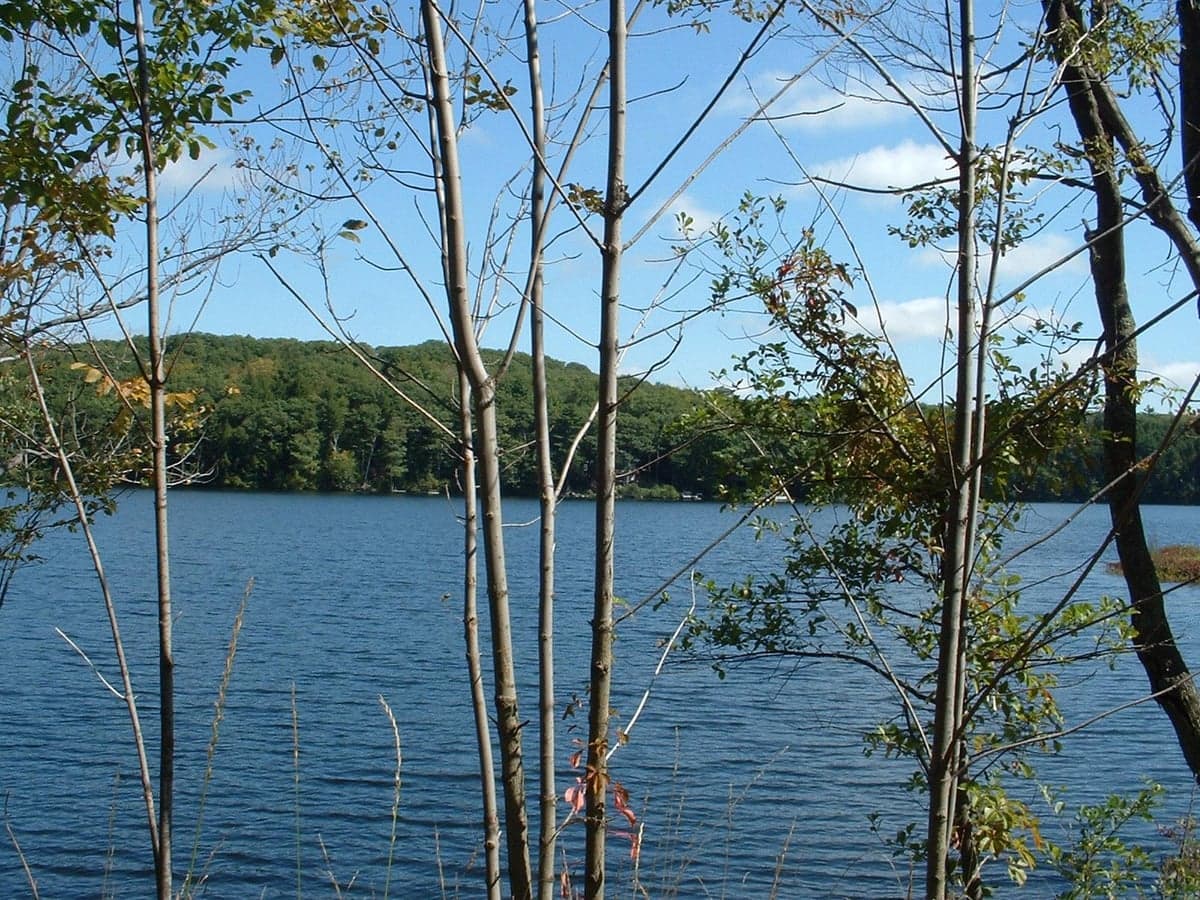
The people of Otis, Massachusetts, today number just 2,566, forming one of the most ethnically homogeneous communities in Berkshire County. With a population that is 93.3% white and only 0.3% foreign-born, Otis retains a distinctly rural, old-stock New England character, where seasonal residents and year-round families share a landscape of lakes, state forest, and working farms. The town’s identity is shaped by its low density, its deep-rooted Yankee and French-Canadian heritage, and a quiet, self-reliant culture that appeals to those seeking privacy and tradition over suburban convenience.
How the city was settled and grew
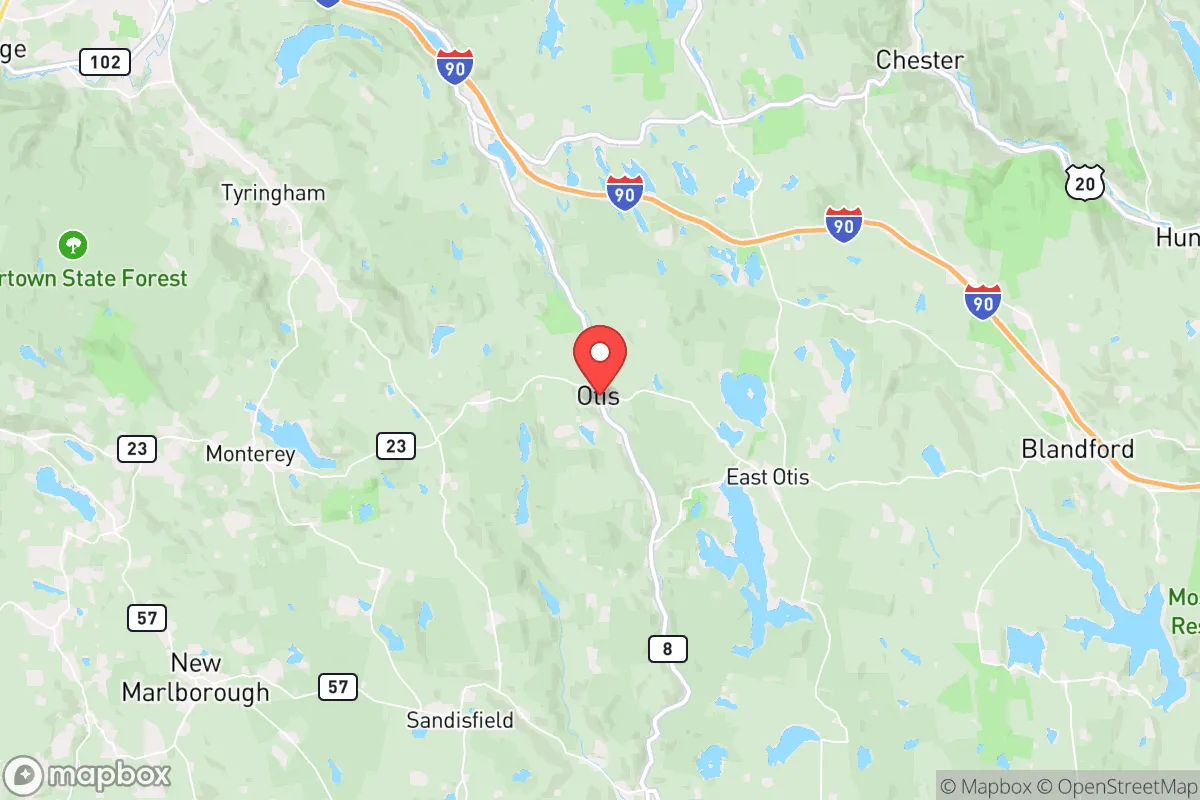
Otis was incorporated in 1810 from part of the town of Blandford, but its human history begins earlier with the westward push of English colonists from the Connecticut River Valley. The original settlers were primarily farmers of English descent, drawn by the promise of fertile intervals along the Farmington River and the abundant timber of the surrounding hills. These families—names like Bishop, Clark, and Root—established the first homesteads in what is now Otis Center, the historic village around the intersection of Route 8 and East Otis Road. By the mid-19th century, the town’s economy shifted from subsistence farming to small-scale industry, powered by the rivers. Sawmills, gristmills, and a tannery clustered in East Otis, a hamlet that grew around the dam on the Big Brook. A second wave of settlers arrived in the late 1800s: French-Canadian families from Quebec, who came to work in the mills and on the railroads. They settled primarily in West Otis, near the Tolland line, where they built St. Patrick’s Church (now closed) and maintained a distinct Catholic, French-speaking community into the early 20th century. The town’s population peaked at around 1,200 in 1850, then declined as industry consolidated and younger generations left for factory jobs in Pittsfield and Hartford.
Modern era (post-1965)
The post-1965 period brought no major immigration wave to Otis. The 1965 Hart-Cellar Act, which reshaped U.S. immigration, had virtually no effect here: the foreign-born share remains 0.3%, and the town’s racial composition has changed only marginally. What did change was domestic in-migration. Beginning in the 1970s, second-home buyers from the Hartford and New York metro areas discovered Otis’s lakes—Otis Reservoir, Lake Buel, and Big Pond—and began building seasonal cottages and year-round retirement homes. This new population concentrated in the Otis Reservoir area, particularly along the eastern shore in the North Otis neighborhood, where lakefront properties now command premium prices. A smaller wave of younger families, priced out of the Berkshires’ more famous towns like Lenox and Stockbridge, moved into East Otis and Otis Center during the 1990s and 2000s, drawn by lower property taxes and the Tolland State Forest’s recreational access. The Hispanic population, now 2.5%, is a very recent phenomenon, consisting mostly of workers in the hospitality and landscaping sectors who live scattered across the town rather than in any single enclave. The Black (0.7%) and East/Southeast Asian (0.2%) populations remain negligible, and there is no recorded Indian-subcontinent population.
The future
Otis’s population is aging and slowly declining. The median age is approximately 52, well above the state average, and the school-age population has shrunk to the point where the town shares a regional school district with neighboring Becket. Future growth will likely come from two sources: continued second-home development around the lakes, and a modest trickle of remote workers seeking rural Berkshire properties. These newcomers are overwhelmingly white and domestic, so the town’s racial homogeneity is expected to persist. The Hispanic share may rise slightly as seasonal hospitality work becomes more year-round, but Otis lacks the rental housing stock and public transit to attract a large immigrant workforce. The most notable demographic shift may be generational: as older seasonal homeowners pass away, their properties are being bought by younger families from the Boston and New York exurbs, who bring a slightly more liberal political outlook but otherwise fit the town’s existing cultural mold. No new neighborhoods are forming; instead, infill development is occurring along the Route 8 corridor between Otis Center and East Otis.
For someone moving in now, Otis offers a stable, predictable community where the population is unlikely to change dramatically in the next two decades. It is a place for those who value deep quiet, low taxes, and a population that knows its neighbors—not for those seeking diversity or urban amenities. The town’s future is one of slow, gentle turnover, not transformation.

* Values derived from national, state, county, city and local statistics and may differ in a specific area. Last updated: 2026-09-29T17:16:35.000Z
Narrative content on this page is AI-generated and may contain mistakes. Verify any details that matter before acting on them.
ReloMaps may earn a commission from affiliate links at no extra cost to you.

