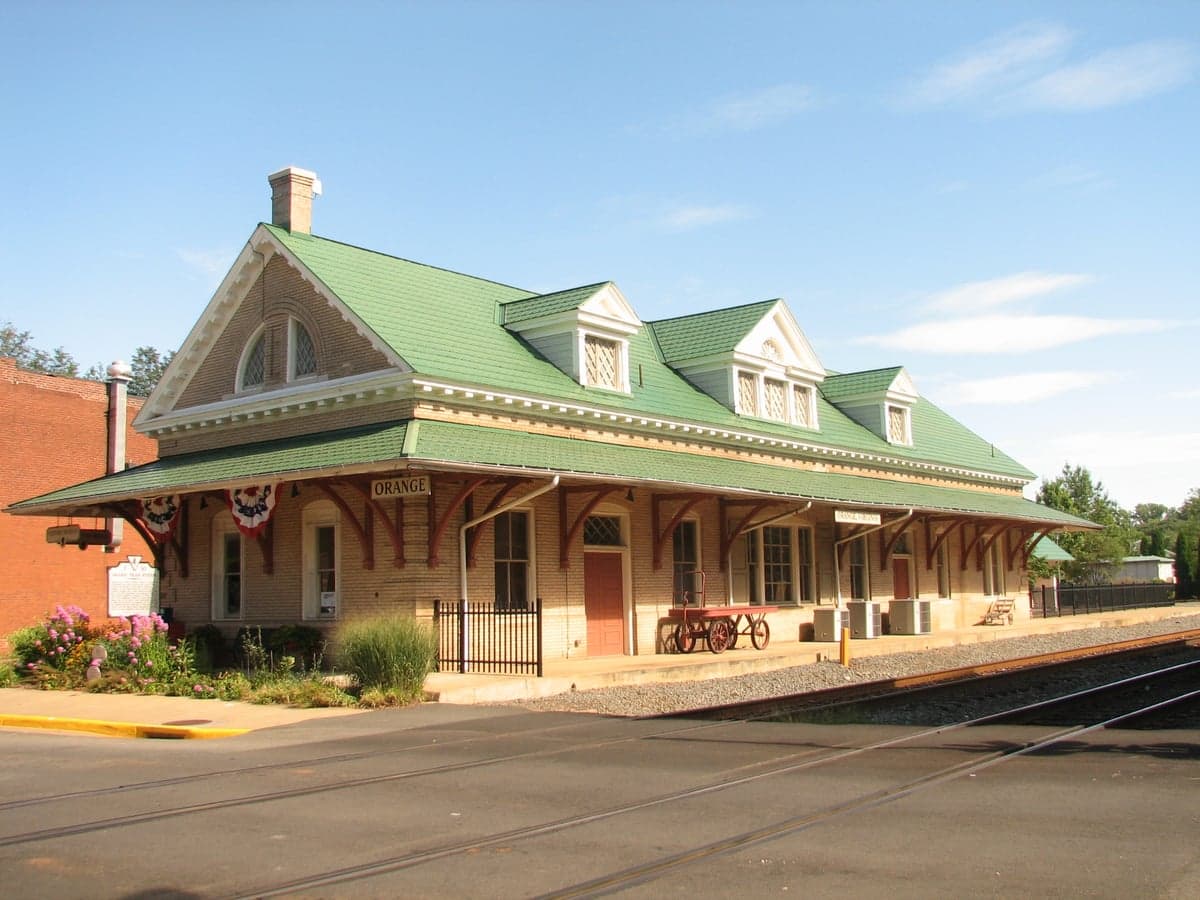
Photo: Wikipedia
Political ClimatePolitical Climate in Orange, VA
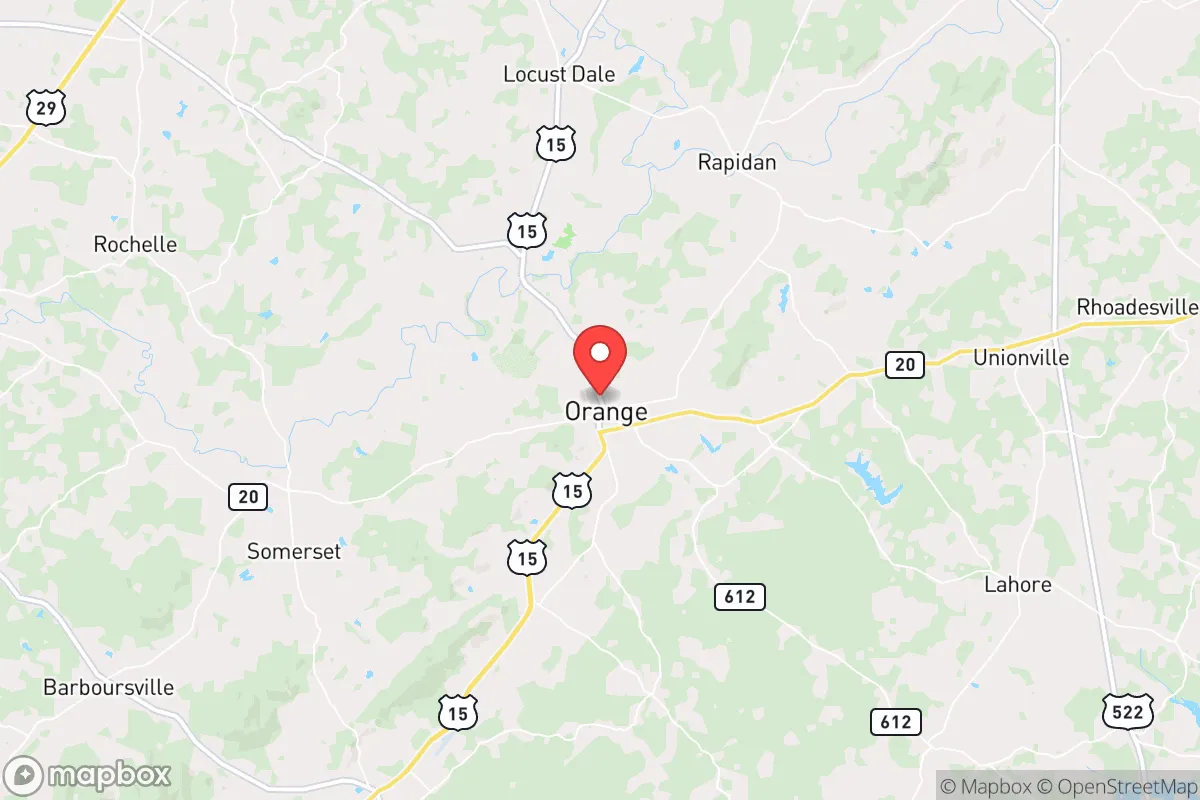
District shown is the primary district for this city’s centroid. Cities may span multiple districts.
Inherited from parent state — no local data available.
Local Political AnalysisPolitical Analysis of Orange, VA
Orange, Virginia, sits in a politically interesting pocket of the state. While the surrounding county leans reliably Republican in most statewide races, the town of Orange itself has shifted left in recent cycles, now carrying a Cook Partisan Voting Index (PVI) of D+2. That’s a meaningful swing from a decade ago, when the area was more of a toss-up, and it puts the town slightly to the left of the national average but still to the right of Virginia as a whole, which sits at D+4. If you’ve been around here long enough, you remember when local elections barely got a mention; now you’ll see yard signs for both parties on the same block, especially along Main Street and near the historic district.
How it compares
The contrast between Orange and the broader state is subtle but real. Virginia’s D+4 PVI reflects the deep-blue suburbs of Northern Virginia and Richmond, plus the growing Democratic lean in places like Charlottesville (just 30 minutes south of Orange). Orange, by contrast, is more of a purple-to-light-blue island in a sea of red. Drive 15 minutes west to the town of Madison, and you’ll find a solidly Republican area (R+12 or so). Head east toward Spotsylvania, and you hit a mix of exurban conservatives and military families. So Orange’s D+2 isn’t a fluke—it’s a product of new residents moving in from Charlottesville and Northern Virginia, drawn by lower home prices and a slower pace, and they’ve brought their voting habits with them. Statewide, Virginia has trended blue steadily since 2008, but Orange’s shift has been more recent and more contested. In the 2024 presidential race, the town of Orange went for the Democratic candidate by about 4 points, while the county outside town went Republican by 12. That split tells you everything: the town is a small blue bubble, but the surrounding countryside hasn’t budged much.
What this means for residents
For conservatives living in Orange, the practical effect is that you’re still in a county that votes Republican for sheriff, commonwealth’s attorney, and most board of supervisors seats. You won’t feel outnumbered at the grocery store or at the high school football game. But you’ll notice more Harris-Walz signs than you did a few years ago, and the local Democratic committee is more active than it’s ever been. For liberals, the town offers a comfortable pocket where your vote isn’t wasted—you can win a town council seat or a school board position if you organize. The county-level politics, though, remain conservative, so progressive policies on land use or taxes often stall at the county level. Both sides agree on a few things: nobody wants Orange to become a bedroom community for D.C., and there’s broad support for preserving the area’s rural character. The real friction comes over growth—how much, how fast, and who gets to decide.
Culturally, Orange is more of a “live and let live” place than the national headlines might suggest. You’ll see Confederate memorials on the courthouse lawn and Pride flags on Main Street within the same mile. The local farmers’ market is a melting pot where political talk is usually set aside for talk about tomatoes and weather. Policy-wise, the town has adopted some progressive zoning changes (allowing accessory dwelling units, for example) while the county has held the line on property tax rates. The biggest distinction from the rest of Virginia is that Orange lacks the intense partisan infrastructure you find in Northern Virginia or Richmond—there’s no political machine here, just a lot of neighbors who disagree but still show up to the same church suppers and volunteer fire department fundraisers. That’s likely to hold for the near future, even as the town’s D+2 lean slowly deepens with each new housing development.

State Political ClimatePolitical Climate in Virginia
State Political AnalysisPolitical Environment in the State
Virginia has shifted from a reliably conservative-leaning swing state to a solidly Democratic-leaning one over the past two decades, now carrying a Cook PVI of D+4. The transformation is driven almost entirely by explosive growth in the Washington, D.C. suburbs, particularly in Northern Virginia, which now dominates statewide elections. While the state still elects Republican governors in off-years (Glenn Youngkin won in 2021), the legislature has been under Democratic control for most of the last decade, and the state has voted for the Democratic presidential candidate in every election since 2008. For a conservative relocator, this means the state’s political center of gravity is clearly left-of-center, but the experience varies dramatically depending on where you land.
Urban vs. rural divide
The political map of Virginia is a textbook case of urban-rural polarization. The Democratic stronghold is Northern Virginia—Arlington, Alexandria, Fairfax, Loudoun, and Prince William counties—which alone accounts for roughly one-third of the state’s population and votes overwhelmingly blue (often 65-70% Democratic). Richmond and its inner suburbs (Henrico, Chesterfield) are also reliably Democratic, as is Norfolk and the Hampton Roads area, though the latter has a stronger military and conservative presence. The rural southside and southwestern Virginia—places like Danville, Martinsville, and Bristol—remain deeply Republican, often voting 70% or more for GOP candidates. The key battlegrounds are the exurban and suburban counties that have been trending blue: Loudoun County flipped from red to deep blue in the 2010s, and Chesterfield County near Richmond is now a true swing county. The result is a state where a Republican can win statewide only by running up huge margins in rural areas while keeping losses in Northern Virginia within single digits—a math problem that gets harder every year as the D.C. suburbs grow.
Policy environment
Virginia’s policy environment is a mixed bag that reflects its purple-to-blue trajectory. The state has a flat income tax rate of 5.75% (one of the highest flat rates in the country) and a sales tax of 5.3% (higher in Northern Virginia with local add-ons). Property taxes are set locally and vary widely—Loudoun County has rates around $1.20 per $100 of assessed value, while rural counties like Lee County are under $0.50. The state has a right-to-work law, which keeps union influence relatively low. Education policy has been a flashpoint: under Governor Youngkin, the state eliminated the use of “critical race theory” in K-12 curriculum and created a “tip line” for parents to report divisive content, but local school boards in blue areas largely ignored the directives. Healthcare is dominated by a Medicaid expansion passed in 2018 under Democratic Governor Ralph Northam, which added roughly 400,000 low-income adults to the rolls. Election laws are relatively moderate: Virginia has no-excuse absentee voting, same-day voter registration, and early voting starting 45 days before an election—all enacted under Democratic control.
Recent policy direction
The last five years have seen Virginia lurch left on several fronts, then partially pull back under Youngkin. In 2020, Democrats passed a sweeping gun control package that included universal background checks, a “red flag” law, a one-handgun-per-month limit, and a ban on assault weapons for those under 21. In 2021, they legalized simple possession of marijuana for adults 21 and over, though retail sales are still not operational (expected in 2024-2025). On education, Youngkin’s administration has pushed for more parental oversight, including a model policy requiring schools to notify parents if a child requests a name or pronoun change—a policy that has been challenged in court. On abortion, Virginia remains a relative outlier in the South: abortion is legal up to the second trimester (26 weeks), and a 2023 law protects providers from out-of-state lawsuits. On property rights, the state has no statewide zoning reform, but localities in Northern Virginia have imposed rent control and “missing middle” housing mandates. On voting, the state has moved to automatic voter registration and expanded early voting, which conservatives argue has eroded ballot security. The net effect is a state that is moderately liberal on social issues and gun rights, but still relatively business-friendly on taxes and labor.
Civil unrest & political movements
Virginia has been a flashpoint for political violence and activism. The 2017 “Unite the Right” rally in Charlottesville—which turned deadly when a white nationalist drove his car into counter-protesters—left a lasting scar and made the city a symbol of far-right extremism. Since then, the state has seen organized protests from both sides: Black Lives Matter demonstrations in Richmond led to the toppling of Confederate statues in 2020, while Second Amendment sanctuary resolutions were passed by over 100 counties in 2019-2020 in response to the Democratic gun control push. Immigration politics are relatively quiet compared to border states, though Prince William County has a history of aggressive immigration enforcement (2007-2008) that has since softened. There is no serious secession or nullification movement, though some rural counties have passed symbolic resolutions asserting local control. Election integrity remains a live issue: after the 2020 election, some Republican activists pushed for audits, but no widespread fraud was found. A new resident in a blue suburb will see little visible political tension day-to-day, while in a rural county, “Don’t Tread on Me” flags and pro-police signs are common.
Projection
Over the next 5-10 years, Virginia will almost certainly continue its leftward drift. The demographic engine is relentless: Northern Virginia is adding population at a rate of 5-10% per decade, while rural counties are stagnant or shrinking. The 2030 redistricting cycle will likely lock in Democratic control of the state legislature for the foreseeable future. However, the state’s off-year gubernatorial elections (2025, 2029) will remain competitive because they attract lower turnout and are less nationalized. A conservative moving to Virginia today should expect that by 2035, the state will have a Democratic trifecta (governor + legislature) more often than not, with policies on guns, abortion, and voting that reflect that. The wild card is whether the exurban counties like Stafford and Spotsylvania continue trending blue or stabilize as swing areas—if they flip, the GOP’s path to statewide office becomes nearly impossible.
For a new resident, the practical takeaway is that Virginia offers a genuinely bifurcated experience. If you settle in a rural or exurban county like Augusta or Bedford, you’ll live in a conservative bubble with low taxes, strong gun rights, and a school board that aligns with your values—but you’ll have little influence on state policy. If you move to a blue suburb like Arlington or Fairfax, you’ll enjoy excellent schools and amenities but pay higher taxes and live under liberal governance. The state’s political trajectory means that conservative residents should expect to be in the minority on statewide issues for the foreseeable future, but they can still find communities where their values are the local norm.
* Values derived from national, state, county, city and local statistics and may differ in a specific area. Last updated: 2026-09-11T00:59:06.000Z
Narrative content on this page is AI-generated and may contain mistakes. Verify any details that matter before acting on them.
ReloMaps may earn a commission from affiliate links at no extra cost to you.

