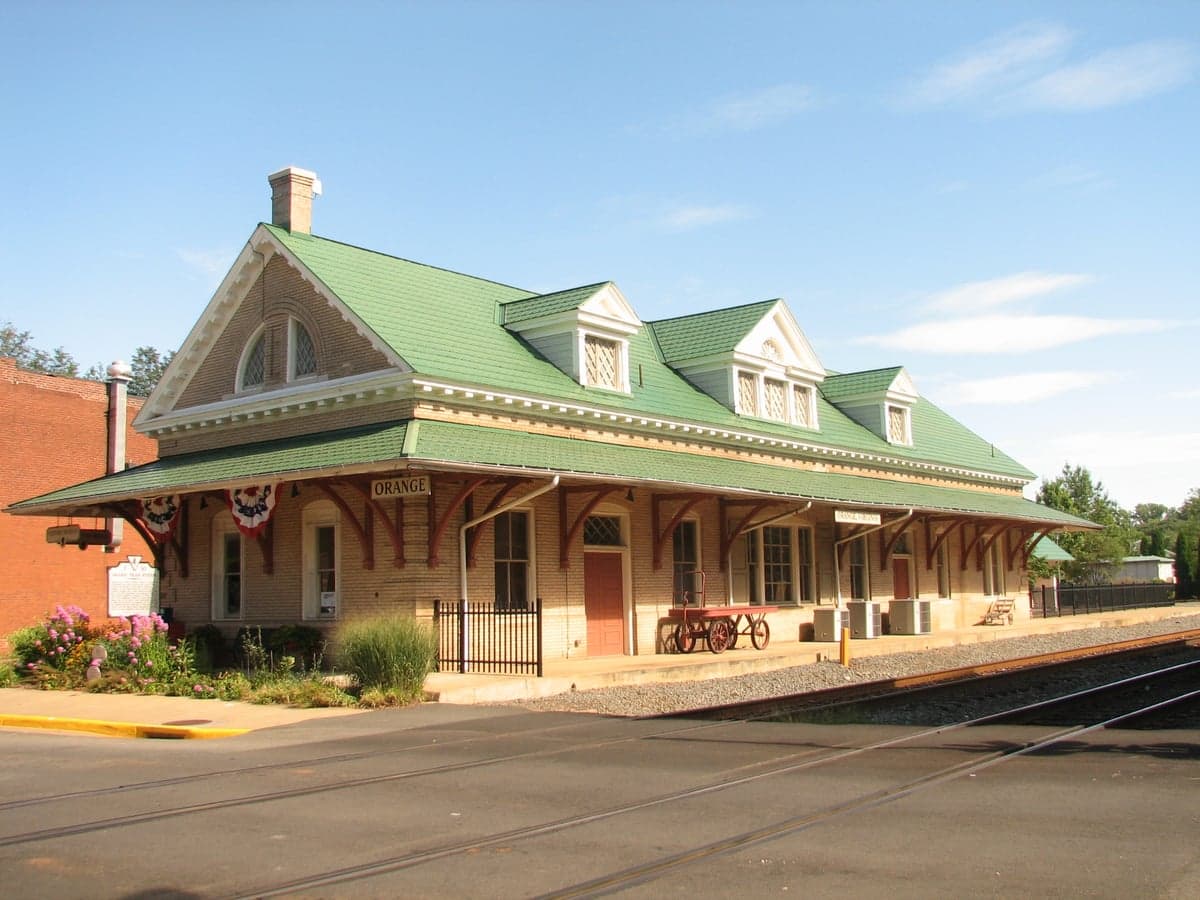
Photo: Wikipedia
Quality of Life in Orange, VA
Above-average quality of iife. The area offers a reasonable cost of living, decent mobility, and a mix of neighborhood amenities.
What does Quality of Life tell us?
Quality of Life blends cost of living, nearby amenities, socioeconomic signals, and neighborhood character. City-level scores represent the whole municipality; individual neighborhoods can differ.
What does this tell us?
Quality of Life blends cost of living, nearby amenities, socioeconomic signals, and neighborhood character. City-level scores represent the whole municipality; individual neighborhoods can differ.
Cost of Living
9% below national average
The Real Cost of Living in Orange, VA for 2026
| Tier | Individual | Family (4) |
|---|---|---|
| Survival | $17k | $32k |
| Comfortable | $49k | $72k |
| Luxury | $85k+ | $132k+ |
| Elite (Top 5%) | $100k+ | $155k+ |
95%
The Area Signal
A metric tracking the socioeconomic signals of the area.


Hobbies
Explore the areaGroceries
1 within 10 miles
Gas
11 within 10 miles
Hospital
1 within 20 miles
Airport
IAD — Washington Dulles International
Post Office
USPS — Orange, VA
Critical Amenities
Quality-of-Life Analysis
Orange, Virginia, offers a quality of life defined by small-town character, historical roots, and a cost of living that undercuts much of the surrounding region. The town of roughly 5,000 residents draws a mix of retirees seeking quiet, families priced out of Charlottesville and Fredericksburg, and professionals who commute to jobs in those cities or to Washington, D.C. The area’s affluence is modest compared to the booming exurbs to the east, but its slower pace and lower expenses attract those who prioritize space and community over urban amenities.
Cost of living, housing, and how Orange compares to nearby towns
Orange’s cost of living index sits at 91, nine points below the national average, making it one of the more affordable options in the Piedmont region. The median home value of $252,800 is roughly half of what buyers would pay in Charlottesville (around $480,000) and significantly less than in Fredericksburg (about $380,000). Median rent of $1,070 is similarly accessible, though rental inventory is tight. The average commute of 23.6 minutes is manageable for those working locally or in nearby Culpeper, but residents commuting to Charlottesville (40 minutes) or D.C. (90 minutes) face longer drives. Property taxes remain low relative to Northern Virginia, and the lack of a city income tax in Virginia helps stretch household budgets further.
What daily life is like: amenities, schools, and local rhythm
Daily life in Orange centers on a walkable downtown with independent shops, the historic Orange County Courthouse, and community events like the Orange Farmers Market and the annual Orange County Fair. The town’s public schools, part of Orange County Public Schools, serve about 4,800 students and have received mixed ratings—Orange County High School holds a 6/10 on GreatSchools, while Locust Grove Elementary and Orange Elementary score 7/10. For groceries and errands, residents rely on a Food Lion and a Walmart Supercenter; for more variety, they drive 20 minutes to Culpeper or 35 minutes to Charlottesville. Outdoor recreation is a major draw: Lake Orange offers fishing and boating, and the nearby Rapidan River provides hiking and trout fishing. The area’s rhythm is distinctly unhurried, with few chain restaurants and a social scene built around churches, civic clubs, and school sports.
Orange is best suited for those who value affordability, space, and a slower pace over urban convenience. Retirees and remote workers will appreciate the low housing costs and quiet streets, while families can find good-enough schools and safe neighborhoods. Commuters to Charlottesville or Fredericksburg will accept a longer drive in exchange for a lower mortgage. Those seeking nightlife, diverse dining, or a fast-paced job market should look elsewhere—Orange rewards patience and a preference for the simple, rooted life of rural Virginia.

Crime in Orange, VA
Lower crime rates than 79% of comparable U.S. locations.
Violent CrimeViolent Crime Analysis
Property CrimeProperty Crime Analysis
Crime Analysis
Orange, Virginia, presents a mixed safety profile for prospective residents. The town's violent crime rate of 226.8 per 100,000 residents is notably lower than the national average, but its property crime rate of 1,511.7 per 100,000 is significantly higher, indicating that theft and burglary are the primary public safety concerns. As a small town within commuting distance of the Washington, D.C., metro area, Orange's crime dynamics are influenced by its proximity to larger urban centers, though it maintains a distinctly quieter, rural character.
Crime in context
When compared to state and national benchmarks, Orange's violent crime rate is a relative bright spot. The national violent crime rate stands at approximately 380 per 100,000, making Orange's rate about 40% lower. However, the property crime rate of 1,511.7 per 100,000 is roughly 30% higher than the national average of about 1,160 per 100,000. This pattern—lower violence but elevated property crime—is common in towns that serve as regional hubs for surrounding rural areas. The town's location near the larger Fredericksburg and Culpeper markets also means it experiences some spillover crime from those areas, particularly vehicle break-ins and package thefts.
What residents experience
Daily life in Orange for most residents is characterized by low fear of violent confrontation, but a need for vigilance regarding property. The most common incidents reported to the Orange Police Department include larceny from vehicles, burglary of sheds and outbuildings, and occasional vandalism. Residents typically feel safe walking downtown and using local parks during daylight hours. However, the town's justice system operates within Virginia's broader judicial framework, which has seen increasing progressive influence in nearby larger jurisdictions. Prosecutorial policies in the surrounding judicial circuit have, at times, prioritized diversion programs over incarceration for property crimes, a trend that concerns many residents who feel it contributes to repeat offenses and a perception that property crime carries minimal consequences. This is a key consideration for anyone moving from an area with stricter enforcement.
Neighborhood-level variation
Safety in Orange varies noticeably by neighborhood. The historic downtown core and newer subdivisions along Route 20 and Route 15 generally experience lower crime rates, benefiting from better lighting, neighborhood watch programs, and higher police patrol density. In contrast, areas near the town's outskirts, particularly along the railroad corridor and some older rental-heavy streets, see a higher concentration of property crime incidents. The most significant safety disparity exists between the town limits and the unincorporated areas of Orange County, where response times from the Sheriff's Office can be longer and property crime rates are often higher due to the prevalence of isolated homes and farm structures. Prospective renters and homebuyers are advised to check specific street-level crime maps and speak with local real estate agents about block-by-block conditions before committing to a lease or purchase.
* Values derived from national, state, county, city and local statistics and may differ in a specific area. Last updated: 2026-09-11T00:59:06.000Z
Narrative content on this page is AI-generated and may contain mistakes. Verify any details that matter before acting on them.
ReloMaps may earn a commission from affiliate links at no extra cost to you.

