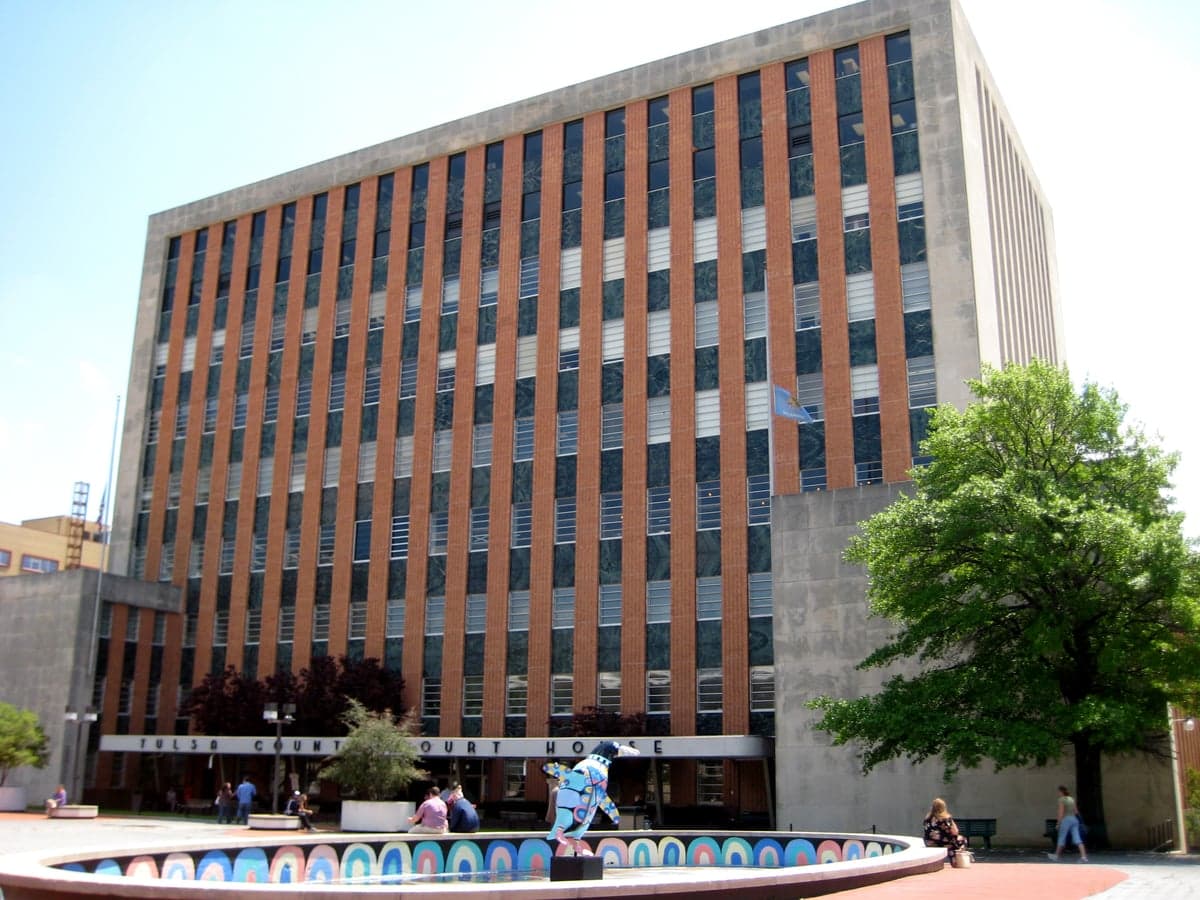
Photo: Wikipedia
Personal Sovereignty in Tulsa County
Strong independent fundamentals that actively favor personal liberty and low regulation.
What does Personal Sovereignty tell us?
Personal Sovereignty measures your capacity for self-reliance and independence with minimal government friction. Higher scores mean fewer barriers between you and the way you want to live... but it assumes you have the space you need and good neighbors.
What does this tell us?
Personal Sovereignty measures your capacity for self-reliance and independence with minimal government friction. Higher scores mean fewer barriers between you and the way you want to live... but it assumes you have the space you need and good neighbors.
State Policy
Energy independence: Net exporter (180% of energy produced in-state)
Personal Liberty
Homesteading

Personal Liberty Analysis
Tulsa County offers a notably high degree of personal sovereignty compared to many urbanized areas in the United States, particularly for those who value low taxes, strong self-defense rights, and a light regulatory touch. The environment is shaped by Oklahoma’s deeply conservative state-level framework, which consistently ranks among the most freedom-oriented in the nation for gun laws, property rights, and parental control. While the county itself contains the city of Tulsa, a mid-sized urban center, the surrounding communities like Broken Arrow, Owasso, Jenks, Bixby, and the more rural fringes near Sapulpa and Sand Springs present a gradient of autonomy that rewards careful neighborhood selection.
Tax burden and regulatory posture: how light is the government footprint?
Oklahoma’s state-level tax burden is among the lowest in the country, and Tulsa County residents benefit directly. There is no state income tax on retirement income, and the flat state income tax rate is a competitive 4.75% as of 2026. Property taxes are exceptionally low, with effective rates in Tulsa County averaging around 0.85% of assessed value, roughly half the national average. Sales tax is the primary local revenue tool, with Tulsa city levying a combined rate of 8.517% (state + county + city), while suburban cities like Broken Arrow and Owasso are slightly lower at 8.35%. The regulatory posture at the county level is generally permissive. Zoning is minimal outside incorporated city limits, and the county commission takes a hands-off approach to business licensing and land use. For a family or individual seeking to minimize government interaction in daily financial life, Tulsa County ranks favorably against peer metros like Oklahoma City or Dallas-Fort Worth.
Self-defense and gun law specifics: what the Second Amendment looks like on the ground
Oklahoma is a constitutional carry state, meaning no permit is required to carry a firearm openly or concealed for anyone legally allowed to possess one. Tulsa County law enforcement, including the Tulsa County Sheriff’s Office and suburban police departments in Jenks and Bixby, are publicly supportive of gun rights and do not enforce any local ordinances that restrict state preemption. Stand-your-ground and Castle Doctrine laws are fully in effect, providing broad legal protection for the use of deadly force in self-defense. There is no state-level red flag law, and no waiting periods or magazine capacity restrictions apply. For a reader prioritizing the ability to defend themselves and their family without bureaucratic hurdles, Tulsa County is among the most accommodating urban counties in the nation. The only practical difference between city and rural areas is that discharging a firearm is restricted within Tulsa city limits, whereas in unincorporated areas near Sapulpa or Sand Springs, target shooting on private property is generally permitted.
Self-reliance and homesteading viability: lot sizes, zoning, and off-grid feasibility
The viability of a self-reliant lifestyle varies significantly across Tulsa County. Inside the Tulsa city limits, standard residential lots are typically 6,000 to 10,000 square feet, and city zoning restricts livestock, accessory dwelling units, and rainwater collection for primary water supply. However, moving to the county’s unincorporated areas or smaller towns like Bixby and Owasso changes the picture dramatically. Bixby’s rural zoning districts allow lots as small as one acre for keeping chickens, goats, and up to two horses, while unincorporated areas east of Broken Arrow permit larger parcels with no restrictions on livestock. Off-grid living is legally feasible in unincorporated Tulsa County, as there are no county-level building codes for owner-occupied single-family homes, and rainwater catchment is explicitly legal under state law. Solar panel installation is straightforward, with no HOA restrictions in rural areas, though homeowners associations in newer subdivisions in Jenks and Owasso may impose covenants. For a family seeking to grow food, raise animals, or reduce utility dependence, the best options are parcels of 2-5 acres in the county’s eastern or southern fringes, particularly near the Wagoner County line.
Personal liberties: parental rights, medical autonomy, speech, and property
Oklahoma law strongly protects parental rights, including the right to direct a child’s education, medical care, and religious upbringing. Tulsa County is home to a robust homeschooling community, with numerous co-ops and support networks in Broken Arrow and Owasso. Medical autonomy is more limited than in some states; Oklahoma has not expanded Medicaid under the ACA, and the state maintains strict regulations on abortion access. However, vaccine mandates are prohibited by state law for both employment and education, giving families significant control over medical decisions. Free speech and property rights are strongly protected. There are no county-level noise or sign ordinances that would restrict political expression on private property, and the state’s right-to-farm law shields agricultural operations from nuisance lawsuits. For a reader who values the ability to live according to their own values without government interference in family or medical matters, Tulsa County offers a legal environment that is among the most permissive in the central United States.
Overall, Tulsa County provides a level of personal sovereignty that is rare for a metropolitan area of its size. The combination of low taxes, constitutional carry, minimal zoning outside city limits, and strong parental rights places it in the top tier of U.S. counties for individual autonomy. The key distinction is geographic: the city of Tulsa itself has more regulations and higher taxes, while the surrounding communities of Broken Arrow, Owasso, Bixby, Jenks, and the unincorporated areas near Sapulpa and Sand Springs offer a progressively lighter government footprint. For a conservative-leaning individual or family prioritizing self-reliance and freedom from government overreach, Tulsa County is a strong contender, comparable to rural Texas counties but with better access to urban infrastructure.

* Values derived from national, state, county, city and local statistics and may differ in a specific area. Last updated: 2026-06-22T14:10:49.000Z
Narrative content on this page is AI-generated and may contain mistakes. Verify any details that matter before acting on them.
ReloMaps may earn a commission from affiliate links at no extra cost to you.

