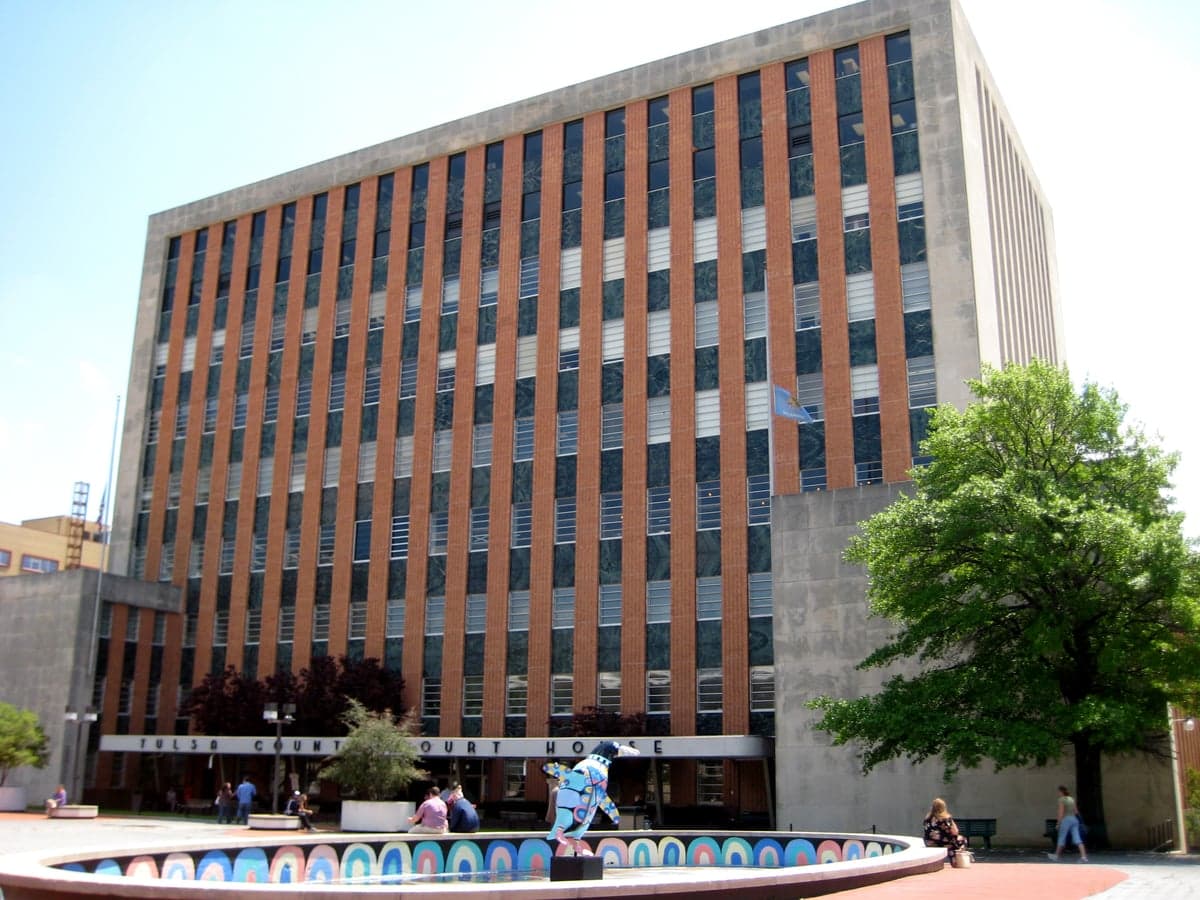
Photo: Wikipedia
Demographics of Tulsa County
Affluence Level in Tulsa County
A middle-class area roughly in line with national averages across income, home values, education, and employment.
People of Tulsa County
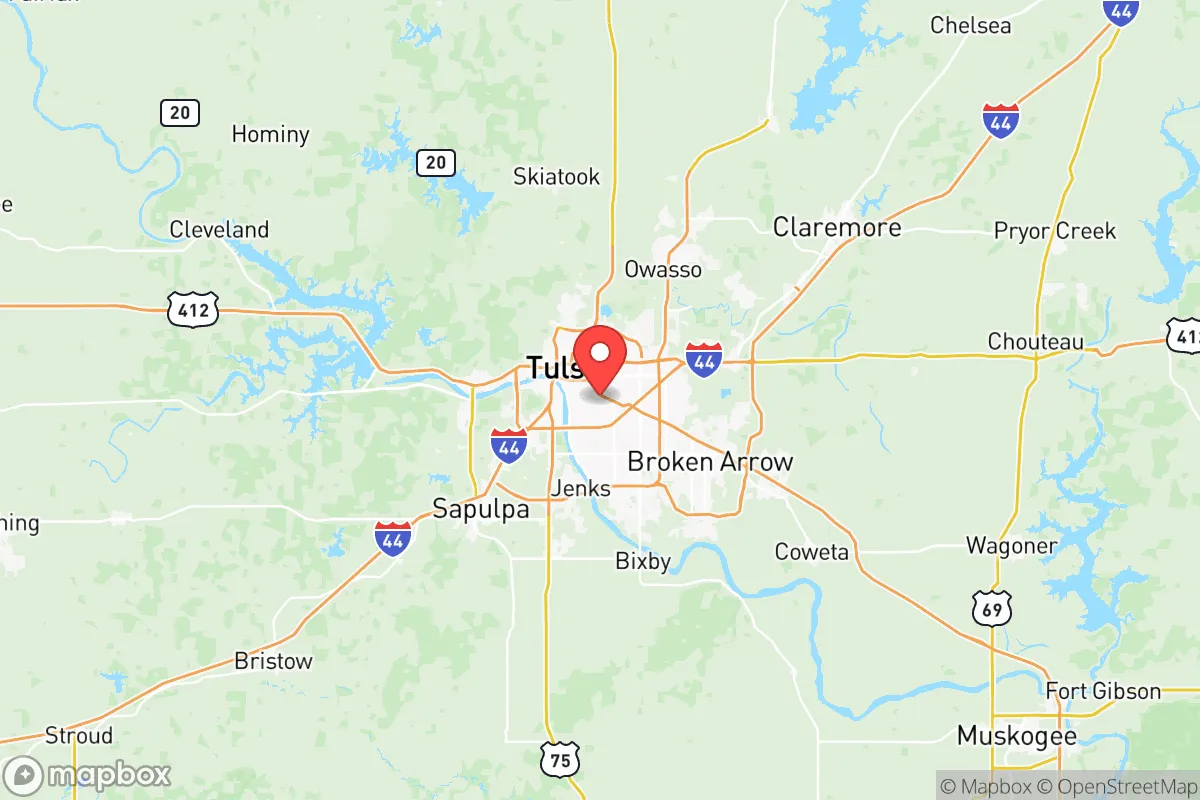
Tulsa County today is a densely populated urban core of 673,708 residents, characterized by a predominantly White (58.2%) population with a significant and growing Hispanic minority (15.2%) and a stable Black community (9.5%). The county’s identity is rooted in its history as a crossroads of Native American displacement, oil-fueled migration, and modern Sun Belt growth, creating a place that feels both distinctly Oklahoman and increasingly diverse. Its population is more educated (33.7% college degree) and slightly more foreign-born (6.1%) than the state average, yet it retains a conservative-leaning, family-oriented character shaped by its suburban expansion and energy-sector economy.
Settlement & growth (pre-1960)
Long before European settlement, the area now known as Tulsa County was a hunting ground and contested territory for several Native American nations, including the Osage, who controlled the region, and the Cherokee and Creek (Muscogee) who were forcibly relocated here in the 1830s along the Trail of Tears. The U.S. government’s Indian Removal Act of 1830 led to the establishment of the Cherokee Nation and Creek Nation within what is now Tulsa County, with the Creek Nation founding the settlement of Tulsa (then spelled Tulsey Town) around 1836 as a permanent village along the Arkansas River. The area remained predominantly Native American territory, with sparse non-Native settlement, until the post-Civil War era when the federal government began pressuring tribes to allot land to individual members and open "surplus" lands to non-Native homesteaders.
The first major wave of non-Native settlement came in the 1880s and 1890s, driven by the 1889 Land Run and subsequent land openings that drew tens of thousands of white settlers, primarily from the Midwest and Upper South. These settlers—many of them farmers of Scots-Irish, English, and German descent—established small agricultural communities like Broken Arrow (founded 1902), Collinsville (1897), Owasso (1904), and Bixby (1905), which began as railroad stops and farming hubs. The discovery of oil at the Glenn Pool field in 1905, just south of Tulsa, transformed the region overnight. Tulsa quickly became the "Oil Capital of the World," attracting a wave of white American entrepreneurs, engineers, and roughnecks from Pennsylvania, Texas, and the Midwest, as well as European immigrants—particularly Germans, Irish, and Italians—who found work in the oil fields and refineries. The city of Tulsa itself boomed from a town of 1,390 in 1900 to 72,000 by 1920, with the oil industry creating a wealthy elite that built mansions along what is now Route 66 and established institutions like the University of Tulsa (1894).
The Black population in Tulsa County grew significantly during the early 20th century, as African Americans from the Deep South—particularly Mississippi, Arkansas, and Louisiana—migrated to Tulsa for oil-field and domestic work. By 1920, Tulsa’s Black community numbered nearly 9,000, concentrated in the prosperous Greenwood District, known nationally as "Black Wall Street." This community was devastated by the 1921 Tulsa Race Massacre, which destroyed 35 blocks of the district and killed an estimated 300 people. Despite this trauma, many Black families remained in Tulsa, rebuilding in the North Tulsa area, which remains the historic and cultural heart of the county’s Black community today. The Dust Bowl of the 1930s brought another wave of white migrants—"Okies" from the rural western parts of the state—who settled in Tulsa and its surrounding towns, seeking work in the still-booming oil industry. By 1950, Tulsa County’s population had reached 251,686, with the city of Tulsa dominating as the economic and cultural center, while suburbs like Sand Springs (founded 1911) and Jenks (1905) grew as industrial and residential satellites.
Modern era (post-1965)
The 1965 Hart-Cellar Act, which abolished national-origin quotas, had a modest but notable impact on Tulsa County compared to coastal cities. The county’s foreign-born population today stands at just 6.1%, well below the national average, but the composition of that population has shifted significantly since the 1970s. The most visible change has been the growth of the Hispanic population, which rose from less than 2% in 1980 to 15.2% today. This wave began in the 1970s and accelerated through the 1990s and 2000s, driven by immigrants from Mexico and Central America who came for work in construction, meatpacking, and the energy sector. Hispanic families have concentrated in East Tulsa and the suburb of Broken Arrow, where a growing network of Spanish-language churches, grocery stores, and small businesses has created a vibrant community. The Asian population (East and Southeast Asian) reached 2.9% by 2020, with Vietnamese and Chinese immigrants forming the largest groups, many of whom arrived as refugees after the Vietnam War and later through family reunification. These communities are most visible in Tulsa’s midtown and in Owasso, where a growing number of Asian-owned medical and tech businesses have taken root. The Indian (subcontinent) population, at 0.8%, is smaller but growing, concentrated among professionals in the energy, engineering, and healthcare sectors, with clusters in Tulsa’s southern suburbs and Bixby.
Domestic migration has reshaped Tulsa County even more dramatically than immigration. Since the 1970s, the county has experienced steady in-migration from the Rust Belt—particularly Ohio, Michigan, and Illinois—as families and retirees sought lower costs of living, milder winters, and a more conservative political climate. This "Sun Belt shift" accelerated after 2000, with Tulsa County adding over 100,000 residents between 2000 and 2020. The growth has been overwhelmingly suburban, with Broken Arrow (population 113,000), Owasso (38,000), Bixby (28,000), and Jenks (25,000) absorbing most of the new arrivals. These suburbs have become increasingly diverse, with Hispanic and Asian families moving into formerly all-white neighborhoods, though they remain predominantly White and politically conservative. The city of Tulsa itself has seen a more modest population increase, with some gentrification in the downtown and midtown areas attracting younger professionals, while North Tulsa has experienced population loss and disinvestment. The Black population, which peaked at around 16% in the 1970s, has declined to 9.5% as some families have moved to suburbs or left the state entirely, though North Tulsa remains a culturally significant anchor.
The future
Tulsa County is on track to become more diverse, but slowly and unevenly. The Hispanic population is projected to grow from 15.2% to roughly 20-22% by 2040, driven by both immigration and higher birth rates, with the most significant growth expected in Broken Arrow and East Tulsa. The Asian and Indian populations, while small, are likely to grow as the energy and aerospace sectors recruit skilled workers from abroad, with Owasso and Bixby emerging as preferred destinations for these families. The White population, while still a majority, is aging and declining as a share of the total, a trend seen across the state. The Black population is expected to remain stable or grow slightly, with some reverse migration from the West Coast as African American families seek lower housing costs and a slower pace of life in Tulsa’s North Side and Sand Springs. The county’s cultural identity is likely to remain conservative-leaning but with a growing suburban diversity that is more visible in schools, restaurants, and local politics. For someone moving in now, Tulsa County offers a relatively affordable, family-oriented environment with a strong job market in energy, aerospace, and healthcare, but with the understanding that its diversity is still emerging and its social fabric remains shaped by the legacy of the oil boom and the 1921 massacre.
Bottom line: Tulsa County is becoming a more diverse, suburbanized version of its historically White, oil-driven self, with Hispanic and Asian communities growing steadily while the Black population stabilizes and the White majority slowly shrinks. For a new resident, this means a place that is still deeply rooted in its conservative, family-focused culture but is gradually opening to a wider range of backgrounds and experiences, particularly in the fast-growing suburbs of Broken Arrow, Owasso, and Bixby.

* Values derived from national, state, county, city and local statistics and may differ in a specific area. Last updated: 2026-06-22T14:10:49.000Z
Narrative content on this page is AI-generated and may contain mistakes. Verify any details that matter before acting on them.
ReloMaps may earn a commission from affiliate links at no extra cost to you.

