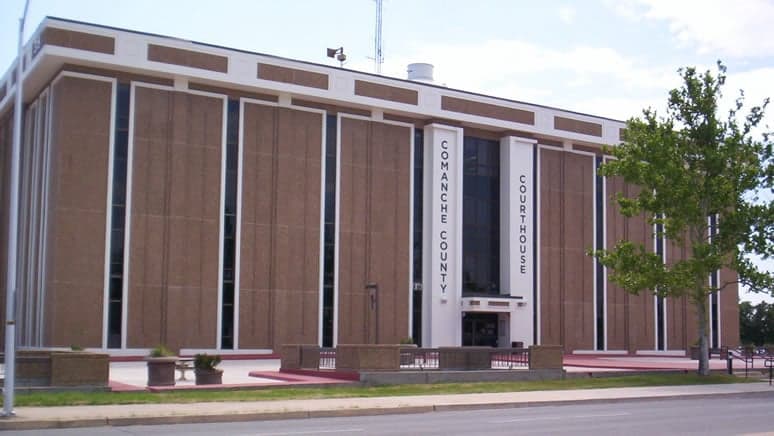
Photo: Wikipedia
Political ClimatePolitical Climate in Comanche County
Showing district-level results — no local-only data available.
Local Political AnalysisPolitical Analysis of Comanche County
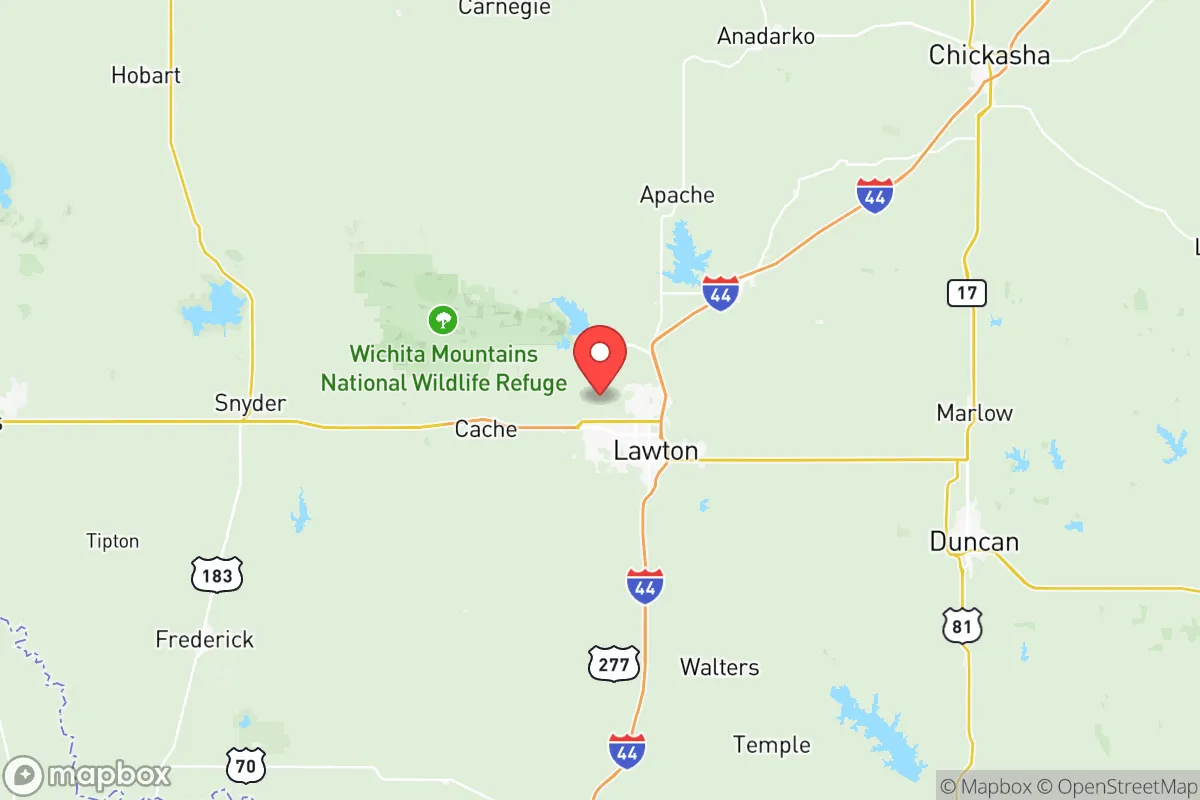
Comanche County, Oklahoma, is a solidly Republican stronghold with a Cook PVI of R+17, making it slightly more conservative than the state of Oklahoma as a whole, which sits at R+18. However, that one-point difference masks a fascinating internal dynamic: the county is a political patchwork, not a monolith. The city of Lawton, the county seat and home to Fort Sill, provides a reliable Democratic-leaning base, while the surrounding towns like Cache, Elgin, and Fletcher are deeply red. This split creates a local political reality that is more nuanced than the raw PVI suggests, and it’s a reality that shapes everything from local elections to the feel of daily life.
How it compares
On paper, Comanche County and Oklahoma are nearly identical in their partisan lean. But the key difference is the presence of Fort Sill and the city of Lawton, which together inject a significant Democratic and independent voting bloc into an otherwise deeply conservative region. In the 2020 presidential election, Lawton’s precincts around the base and the city’s core voted for Joe Biden, while the rural precincts in Cache, Elgin, and the county’s eastern reaches went heavily for Donald Trump. This is a stark contrast to the state’s overall pattern, where Democratic votes are largely concentrated in Oklahoma City and Tulsa. In Comanche County, the blue vote is a localized, military-and-minority-driven phenomenon. The county’s trajectory is also interesting: while the state has been trending rightward for decades, Comanche County has held relatively steady, with the Democratic vote in Lawton proving stubbornly resilient. The swing precincts are the suburban areas just outside Lawton, like the neighborhoods around the Great Plains Technology Center and the newer developments near the Lawton-Fort Sill Regional Airport, where voters are more moderate and less predictable.
What this means for residents
For a conservative resident in Cache or Elgin, the political climate is comfortable and affirming. Local government, school boards, and county commissions are reliably Republican, and conservative values are the default in public discourse. For a liberal resident in Lawton, the experience is different. While you’re not politically isolated—your neighbors and coworkers likely share your views—you are outnumbered in countywide elections. This means local policy tends to reflect rural, conservative priorities, such as lower taxes and limited government, even if Lawton’s urban needs (like public transit, affordable housing, and infrastructure) might call for a different approach. The practical effect is that progressive residents often focus their energy on city-level politics and community organizations, where they can have a real impact. The military presence also creates a unique cultural buffer: Fort Sill brings in people from all over the country, so the county is less insular than its rural neighbors. You’ll find a wider range of political opinions at a coffee shop in Lawton than you would in a diner in Fletcher.
Culturally, the county’s political divide is visible in its policy choices. Comanche County is a Second Amendment sanctuary county, a symbolic but meaningful gesture that resonates strongly in the rural towns. Lawton, meanwhile, has a more diverse economy and a larger public sector workforce, which influences its local politics. The county’s political future likely hinges on the growth of Lawton and the base. If Lawton continues to attract new residents and diversify its economy, the Democratic vote could hold steady or even grow. But if the rural areas continue to outpace the city in population growth, the county will only get redder. For now, it’s a place where the two Americas coexist, separated by a few miles of Oklahoma highway.

State Political ClimatePolitical Climate in Oklahoma
State Political AnalysisPolitical Environment in the State
Oklahoma is one of the most reliably Republican states in the country, with a Cook Partisan Voting Index of R+18, meaning it votes about 18 points more Republican than the national average. The state hasn't voted for a Democratic presidential candidate since 1968, and over the last 20 years, the GOP has consolidated power at every level—from the governor's mansion to supermajorities in both legislative chambers. That said, the political reality is more layered than the raw numbers suggest: a deep urban-rural split, a strong libertarian streak, and a recent shift toward hardline conservative policy that has reshaped daily life for residents.
Urban vs. rural divide
The political map of Oklahoma is a textbook case of the urban-rural divide. The two major metros—Oklahoma City and Tulsa—are the only places where Democrats can compete. Oklahoma County (Oklahoma City) has trended purple in recent cycles, with Joe Biden winning 46% of the vote there in 2020, while Tulsa County remains reliably red but with a Democratic stronghold in the city core. Outside these two hubs, the state is overwhelmingly Republican. Norman, home to the University of Oklahoma, is a blue dot in a sea of red, consistently voting Democratic in statewide races. Meanwhile, Stillwater (Oklahoma State) and Edmond (a wealthy Oklahoma City suburb) lean heavily Republican. The rural panhandle and southeastern counties—places like McCurtain County and Texas County—routinely deliver 80%+ margins for GOP candidates. The key takeaway: if you live in Oklahoma City or Tulsa, you'll encounter a mix of political views; anywhere else, expect a deeply conservative environment.
Policy environment
Oklahoma's policy environment is shaped by a Republican supermajority that has pursued a consistent agenda of low taxes, limited regulation, and cultural conservatism. The state has a flat income tax of 4.75%, with a goal of reducing it to 3.99% by 2027, and no estate or inheritance tax. Sales taxes are high—often over 10% in cities like Lawton and Muskogee—because local governments rely heavily on them. Education policy has been a flashpoint: the state passed a universal school voucher program in 2024, allowing any family to use public funds for private or homeschool expenses. Healthcare is a mixed bag—Oklahoma expanded Medicaid under a 2020 ballot initiative, but the state has some of the strictest abortion laws in the nation, banning the procedure at fertilization with no exceptions for rape or incest. Election laws have tightened: voter ID is required, and the state purged over 100,000 inactive voters in 2023. For a relocator, this means a low-tax, low-service environment where cultural issues dominate the legislative calendar.
Recent policy direction
Over the past five years, Oklahoma has moved decisively toward a more aggressive conservative posture. In 2022, the state enacted a near-total abortion ban (SB 612) with no exceptions for rape or incest, and in 2024, it passed a law requiring schools to display the Ten Commandments in every classroom. On gun rights, Oklahoma is a constitutional carry state—no permit needed to carry a concealed firearm—and in 2023, it passed a law prohibiting state enforcement of any future federal gun restrictions. Parental rights have been a major focus: the "Parents' Bill of Rights" (HB 1440) gives parents broad authority to review curriculum and opt their children out of any instruction they object to. On the privacy front, the state passed a biometric privacy law in 2024, but it's weak compared to Illinois or Texas. Property rights are strong—Oklahoma is a "right to farm" state, limiting nuisance lawsuits against agricultural operations. For a relocator weighing liberties, the state leans heavily into individual autonomy on guns and education, but imposes strict limits on medical and bodily autonomy. Voting access is straightforward but not expansive: early voting exists, but no-excuse absentee voting was eliminated in 2023.
Civil unrest & political movements
Oklahoma has seen its share of political flashpoints, though large-scale civil unrest is rare. The most visible recent movement was the 2023 teacher walkout, which drew thousands to the state capitol demanding higher pay and more school funding—a rare moment of cross-party mobilization. On the right, the "Ten Commandments" and school voucher debates have energized evangelical activists, while the state's strong Second Amendment culture means gun rights rallies are common. Immigration politics are less heated than in border states, but in 2024, Oklahoma passed a law (HB 4156) making it a state crime to be in the country illegally, mirroring Texas's SB 4. There's no sanctuary city movement—Oklahoma City and Tulsa both cooperate with federal immigration enforcement. Election integrity has been a persistent theme: the 2020 election saw no major controversies in Oklahoma, but the legislature has passed multiple bills tightening voting rules, including a ban on ballot drop boxes. A new resident would notice the strong presence of church-affiliated political groups and a general lack of visible protest culture outside of the university towns.
Projection
Over the next 5-10 years, Oklahoma's political trajectory is likely to stay deeply conservative, but with some demographic cracks. The state is growing slowly—about 1% annually—with most growth in the Oklahoma City and Tulsa suburbs, which are trending slightly more moderate as they attract out-of-state transplants. Moore and Yukon, for example, are becoming more diverse and less reliably Republican. The rural population is shrinking, which could gradually shift the balance of power toward the suburbs. However, the state's Republican supermajority shows no signs of weakening, and the 2024 voucher law and abortion ban are likely to be defended aggressively. The biggest wildcard is the state's budget: oil and gas revenue still funds about 20% of the state budget, and a long-term decline in fossil fuel demand could force painful cuts or tax increases. For someone moving in now, expect the next decade to look much like the last—low taxes, cultural battles in the legislature, and a political environment where conservative values are the default, but with a growing suburban middle that may push for more pragmatic governance on issues like education funding and healthcare access.
For a new resident, the bottom line is straightforward: Oklahoma offers a low-tax, culturally conservative environment where your personal freedoms on guns, education, and property are broad, but your medical and bodily autonomy are tightly restricted. If you're a conservative family, you'll find a state that aligns with your values on most fronts. If you're a liberal, you'll find a small but active community in Oklahoma City, Tulsa, and Norman, but you'll be living under a government that is actively hostile to many of your priorities. The state is stable, affordable, and politically predictable—which is exactly what many relocators are looking for, as long as they know what they're signing up for.
* Values derived from national, state, county, city and local statistics and may differ in a specific area. Last updated: 2026-07-20T00:31:34.000Z
Narrative content on this page is AI-generated and may contain mistakes. Verify any details that matter before acting on them.
ReloMaps may earn a commission from affiliate links at no extra cost to you.

