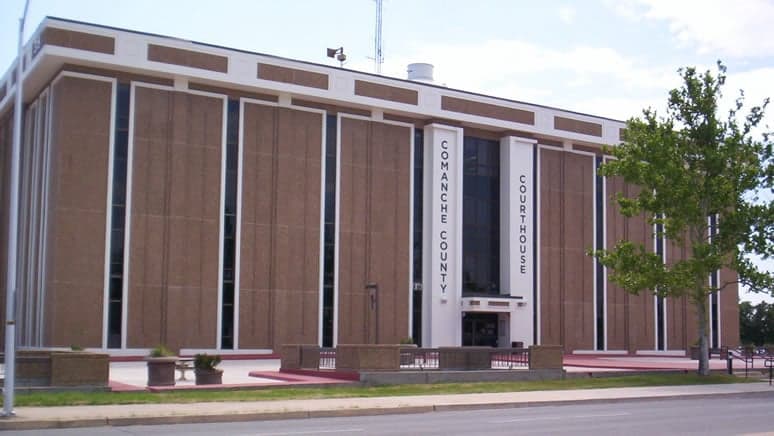
Photo: Wikipedia
Personal Sovereignty in Comanche County
Strong independent fundamentals that actively favor personal liberty and low regulation.
What does Personal Sovereignty tell us?
Personal Sovereignty measures your capacity for self-reliance and independence with minimal government friction. Higher scores mean fewer barriers between you and the way you want to live... but it assumes you have the space you need and good neighbors.
What does this tell us?
Personal Sovereignty measures your capacity for self-reliance and independence with minimal government friction. Higher scores mean fewer barriers between you and the way you want to live... but it assumes you have the space you need and good neighbors.
State Policy
Energy independence: Net exporter (180% of energy produced in-state)
Personal Liberty
Homesteading

Personal Liberty Analysis
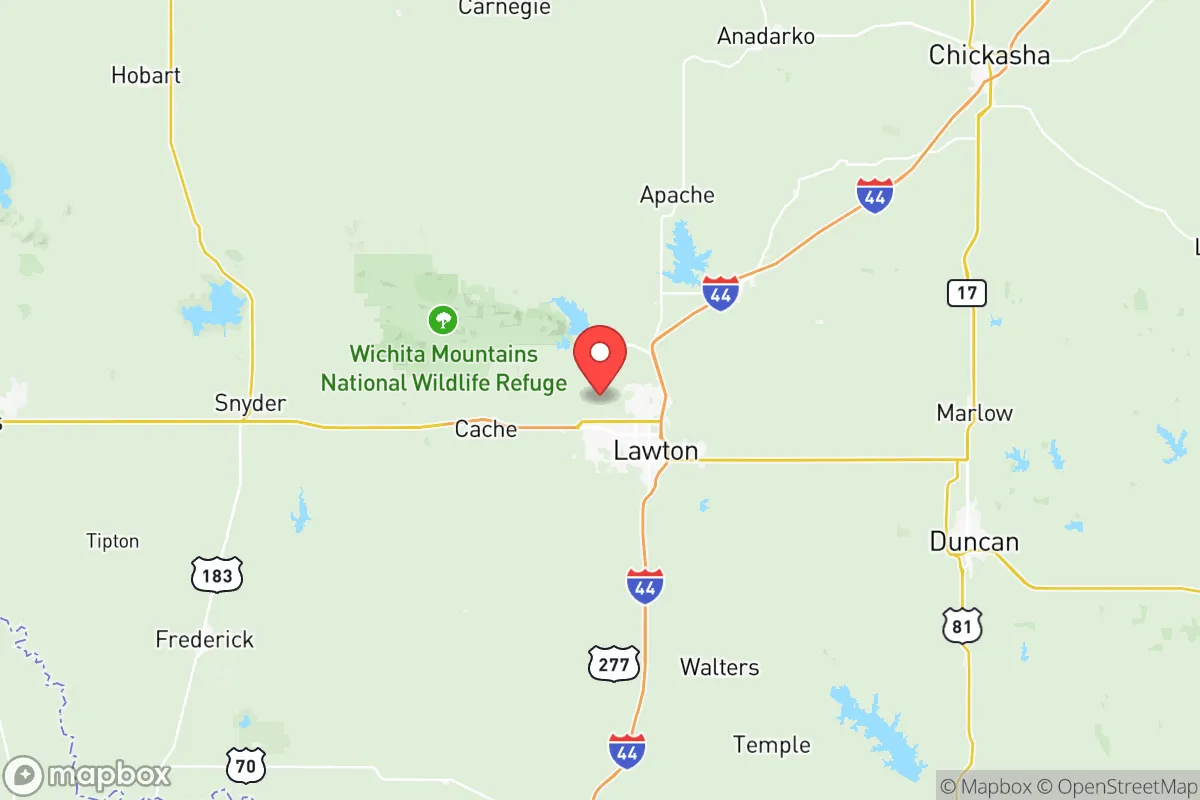
Comanche County, Oklahoma, offers a notably high degree of personal sovereignty, grounded in Oklahoma’s strong constitutional protections for individual rights and a light-touch regulatory environment. The county’s mix of rural expanses, small towns like Lawton, Cache, and Elgin, and the Fort Sill military installation creates a culture where self-reliance is not just valued but expected. For individuals and families prioritizing autonomy, the area presents a legal and practical framework that consistently favors personal choice over government oversight, particularly when compared to more heavily regulated states like California or New York.
Tax burden and regulatory posture: How Oklahoma’s policies affect daily life
Oklahoma’s tax structure is designed to minimize the state’s footprint on personal income and property, which directly benefits Comanche County residents. The state levies a flat income tax of 4.75% on all taxable income, with no progressive brackets, meaning high earners are not penalized at a higher rate. Property taxes are among the lowest in the nation, with an effective rate in Comanche County averaging around 0.85% of assessed value—a fraction of the rates found in states like Texas or Illinois. Sales tax in Lawton, the county seat, is 8.75% (state and local combined), but this is offset by the absence of a state-level sales tax on groceries. The regulatory posture is similarly restrained: Oklahoma is a right-to-work state, and Comanche County has no county-level zoning in unincorporated areas, allowing landowners in places like Fletcher or Sterling to use their property for agriculture, small businesses, or home-based enterprises without extensive permitting. Business licensing requirements are minimal, and there is no state-level inventory tax, which benefits small-scale manufacturers and retailers. This combination of low taxes and light regulation means that a family moving to a rural parcel near Indiahoma can set up a workshop or sell produce from their driveway with far fewer bureaucratic hurdles than in more urbanized or coastal jurisdictions.
Self-defense and gun law specifics: What Oklahoma’s permitless carry means for you
Oklahoma’s firearm laws are among the most permissive in the United States, and Comanche County reflects that culture deeply. Since 2019, the state has allowed permitless (constitutional) carry for any law-abiding adult 21 or older, both openly and concealed, with no license required. This applies throughout the county, including in Lawton, though federal restrictions still apply on Fort Sill. For those who want reciprocity when traveling, Oklahoma issues a handgun license that is recognized in over 30 states. The county has a strong gun-friendly culture, with multiple shooting ranges and gun shops in Lawton and Cache, and the local sheriff’s office is known for a pro-Second Amendment stance. Stand-your-ground laws are in effect, meaning there is no duty to retreat before using deadly force in self-defense if you are lawfully present. Additionally, Oklahoma preempts local governments from enacting stricter gun ordinances than state law, so a resident in Elgin enjoys the same legal protections as someone in rural Meers. For a family prioritizing self-defense autonomy, Comanche County offers a legal environment where the right to bear arms is treated as a fundamental, nearly unrestricted liberty.
Self-reliance and homesteading viability: Lot sizes, zoning, and off-grid feasibility
Comanche County’s land-use policies make it a strong candidate for those seeking a self-reliant, homesteading lifestyle. Unincorporated areas have no county-wide zoning, which means a landowner near Faxon or Chattanooga can build a home, keep livestock, and install alternative energy systems without applying for variances. Minimum lot sizes vary by subdivision but are often as small as one acre in rural subdivisions, while raw land parcels of 5 to 40 acres are common and affordable—prices in 2025 range from $2,000 to $5,000 per acre depending on proximity to Lawton. Off-grid living is legally feasible: Oklahoma has no state law prohibiting rainwater collection, and solar panel installation is straightforward, though net metering policies with local utilities like Public Service Company of Oklahoma (PSO) are available for grid-tied systems. Composting toilets and septic systems are permitted with standard health department approval, and there are no state-level bans on alternative building materials like straw bale or earthbag construction. However, residents within the Lawton city limits face stricter building codes and zoning, so a family wanting maximum freedom should target parcels in the county’s unincorporated areas. Water access is a practical consideration: many rural lots rely on wells, which require drilling permits but are generally straightforward to obtain. For a family aiming to grow food, raise animals, and minimize reliance on municipal services, the regulatory environment in Comanche County is highly accommodating.
Personal liberties: Parental rights, medical autonomy, speech, and property
Oklahoma law provides strong protections for personal liberties that resonate with conservative-leaning families. Parental rights are explicitly protected under state statute, giving parents the legal authority to direct their children’s education, healthcare, and religious upbringing. The state has a robust school choice system, including charter schools, virtual schools, and a tax-credit scholarship program for private school tuition, which families in Lawton and Cache can utilize. Medical autonomy is similarly broad: Oklahoma does not mandate COVID-19 or other adult vaccinations, and there is no state-level requirement for health insurance coverage. The state has also enacted laws protecting healthcare providers who decline to participate in procedures they find morally objectionable. Free speech is protected under the Oklahoma Constitution, which has its own free speech clause that courts have interpreted broadly. Property rights are reinforced by Oklahoma’s “private property rights” laws, which require government entities to demonstrate a clear public need before exercising eminent domain. In Comanche County, this means a landowner near Sterling is unlikely to face a taking for a private development project. The overall legal climate is one where the default assumption is that the individual, not the state, knows what is best for their family and property.
Compared to other regions of the country, Comanche County, Oklahoma, stands out as a jurisdiction where personal sovereignty is not just tolerated but structurally supported. The combination of low taxes, minimal zoning, permissive gun laws, and strong protections for parental and property rights creates an environment where a family can live largely as they see fit. While the area is not entirely free of regulation—state health and safety codes still apply, and the federal presence at Fort Sill imposes some constraints—the overall posture is one of restraint. For a reader weighing relocation options, Comanche County offers a level of autonomy that is increasingly rare in the United States, particularly when compared to the dense regulatory frameworks of the Northeast or West Coast. It is a place where the government’s role is more about enabling individual choice than directing it.

* Values derived from national, state, county, city and local statistics and may differ in a specific area. Last updated: 2026-07-20T00:31:34.000Z
Narrative content on this page is AI-generated and may contain mistakes. Verify any details that matter before acting on them.
ReloMaps may earn a commission from affiliate links at no extra cost to you.

