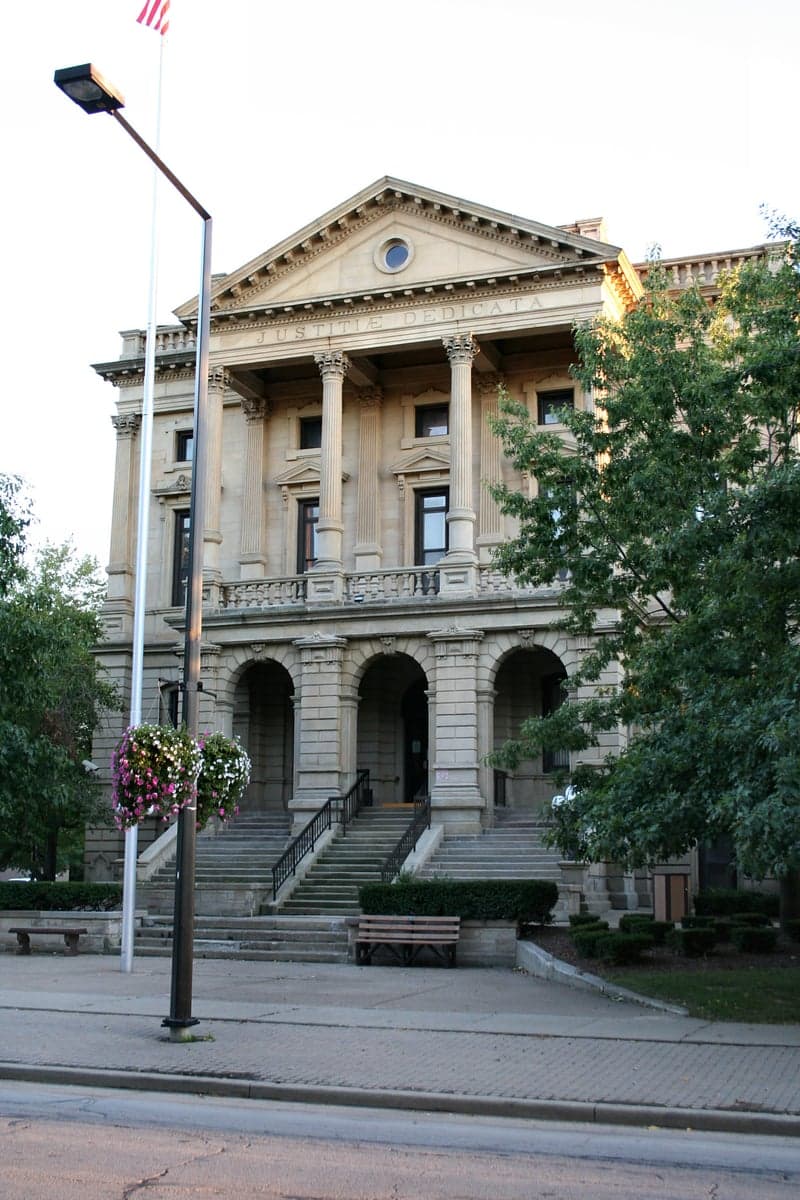
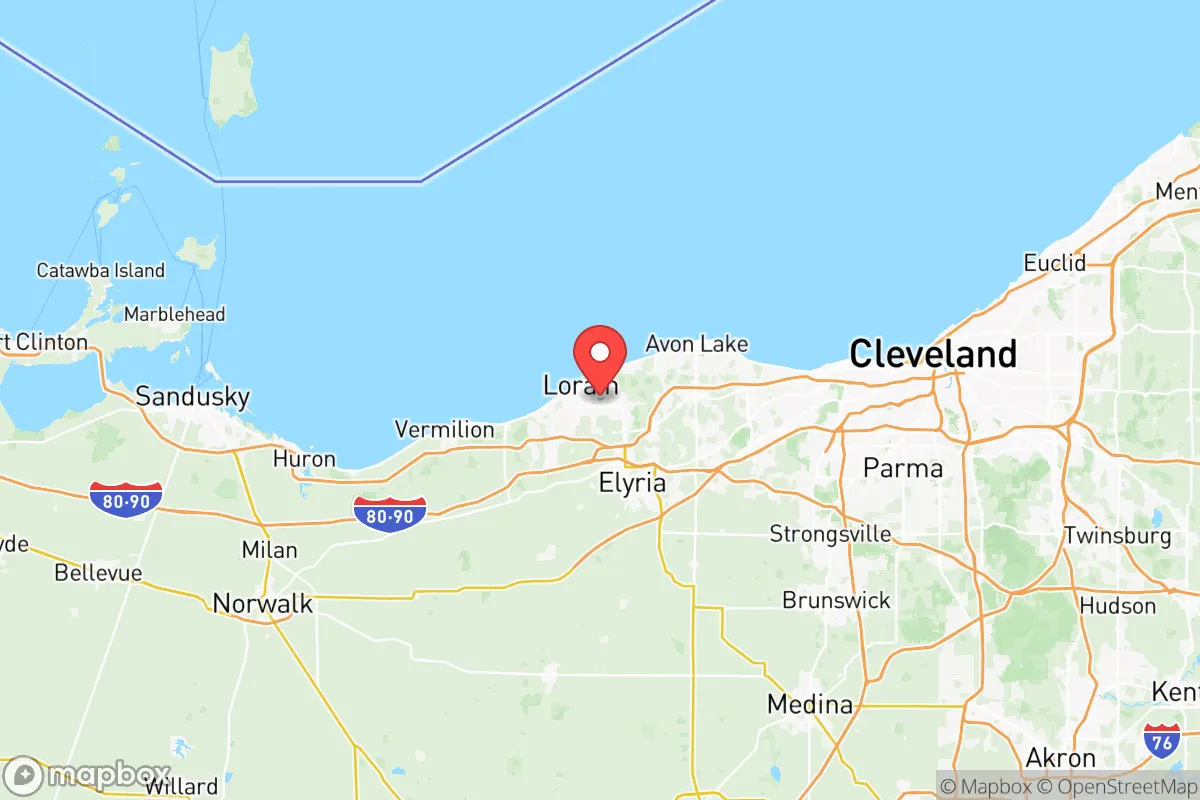
Photo: Wikipedia
Political ClimatePolitical Climate in Lorain County
Showing district-level results — no local-only data available.
Local Political AnalysisPolitical Analysis of Lorain County
Lorain County, Ohio, has shifted decisively to the right in recent cycles, carrying a Cook Partisan Voting Index of R+14—a full nine points more Republican than the state of Ohio itself, which sits at R+5. This isn’t a fluke of one election; it’s a trend that’s been building since the mid-2010s, driven by working-class voters in the county’s western and rural townships who have moved away from the Democratic Party in droves. While the county seat of Elyria and the lakefront city of Lorain still lean blue, places like Amherst, Avon, and North Ridgeville have become solidly red, and the swing precincts are now found in the fast-growing suburbs around Avon Lake and Sheffield Village, where independent voters decide races.
How it compares
To understand Lorain County’s politics, you have to look at the contrast with Ohio as a whole. The state’s R+5 rating reflects a mix of deep-red rural areas and blue-leaning urban centers like Columbus and Cleveland. Lorain County, however, lacks a major Democratic stronghold to balance its red tide. The city of Lorain, once a reliable blue anchor, has seen its Democratic margins shrink as union membership declined and cultural issues rose in importance. Meanwhile, the county’s western townships—like Camden, Pittsfield, and Wellington—vote similarly to the most conservative parts of rural Ohio, often delivering 70-75% of their votes to Republican candidates. The net effect is a county that’s more uniformly conservative than the state, with fewer competitive races and a Republican tilt that’s now baked into local elections for county commissioner and sheriff.
What this means for residents
For conservative residents, the R+14 lean means their votes carry extra weight in local primaries, where the real contests often happen. School board races in Avon and North Ridgeville, for example, have become battlegrounds over curriculum and library policies, with conservative slates winning consistently. For liberal residents, the reality is more about organizing in the few remaining blue pockets—Elyria’s 4th Ward, Lorain’s South Side, and Oberlin, which remains a progressive island thanks to Oberlin College. Practical consequences include a county government that’s cautious on tax increases, with a focus on economic development in the I-90 corridor rather than social programs. The county’s Republican leadership has also pushed for stricter gun ordinances at the local level, though state preemption laws limit what they can do.
Culturally, Lorain County feels more like a collection of small towns than a unified region, and that’s reflected in its politics. The lakefront communities—Vermilion, Sheffield Lake, and Avon Lake—tend to be more moderate, with a mix of retirees and commuters to Cleveland who prioritize infrastructure and lake access. Inland, places like Grafton and Lagrange are deeply conservative, with strong ties to agriculture and manufacturing. The county’s policy distinctions are subtle but real: it’s one of the few in Ohio where local school levies still pass regularly, even in red townships, because voters see them as investments in property values. But don’t expect any major shifts soon—the demographic trends of aging white voters and suburban growth favor the GOP, and the county’s R+14 rating looks stable for the next decade. For anyone moving here, the takeaway is simple: if you’re conservative, you’ll feel at home almost everywhere; if you’re liberal, you’ll want to stick close to Oberlin or the old industrial wards of Lorain.

State Political ClimatePolitical Climate in Ohio
State Political AnalysisPolitical Environment in the State
Ohio is a classic swing state that has shifted rightward over the past decade, now carrying a Cook PVI of R+5. The state voted for Donald Trump by 8 points in 2020 and 11 points in 2024, a marked departure from its bellwether days when it went for Obama in 2012 and then flipped to Trump in 2016. The dominant coalition is a mix of working-class voters in the Mahoning Valley and Appalachian southeast, rural conservatives across the western half, and a growing exurban base around Cincinnati and Columbus, while the Democratic stronghold is shrinking to a core of Cuyahoga County, Franklin County, and a few urban islands like Lucas County (Toledo) and Summit County (Akron).
Urban vs. rural divide
The political map of Ohio is a study in stark contrasts. The three Cs — Columbus (Franklin County), Cleveland (Cuyahoga County), and Cincinnati (Hamilton County) — are the Democratic anchors, with Franklin and Cuyahoga alone delivering roughly 40% of the statewide Democratic vote. But the rest of the state is deeply red. The rural northwest, from Defiance to Lima, votes Republican by 30-40 points. The Appalachian southeast, including counties like Meigs, Vinton, and Noble, is even more conservative, often hitting 70-80% Republican. The real battlegrounds are the suburban rings: Delaware County (north of Columbus) flipped from purple to solid red after 2016, while Warren County (northeast of Cincinnati) is now reliably Republican. The most politically distinct suburb is probably Shaker Heights, a Cleveland inner-ring suburb that votes 80% Democratic, while West Chester in Butler County is a classic exurban swing area that has trended right. The Mahoning Valley around Youngstown, once a union Democratic stronghold, has shifted hard toward Trump — Mahoning County itself went from Obama by 20 points in 2012 to Trump by 4 points in 2024, a 24-point swing that explains the state's rightward tilt.
Policy environment
Ohio's policy environment is a mix of conservative-leaning fiscal policy and occasional moderate social compromises. The state has a flat income tax rate of 3.5% as of 2025, down from a progressive top rate of nearly 5% a decade ago, and the sales tax is 5.75% with local add-ons. Property taxes are relatively high, especially in the urban counties, but there's a homestead exemption for seniors. The regulatory posture is business-friendly — Ohio is a right-to-work state in practice (though not by statute), and the state has aggressively courted manufacturing and logistics jobs, particularly in the I-71 corridor. Education policy is a flashpoint: the state has a universal school voucher program (EdChoice) that has expanded significantly since 2020, allowing families to use public funds for private or religious schools. Healthcare is mixed — Ohio expanded Medicaid under the Affordable Care Act in 2014, covering about 700,000 low-income residents, but the state also has some of the strictest abortion laws in the Midwest, with a ban on most abortions after cardiac activity is detected (roughly six weeks), though this is currently tied up in court. Election laws have tightened: Ohio requires a photo ID to vote, has limited early voting hours compared to some states, and purges inactive voters from the rolls regularly, a practice upheld by the Supreme Court in 2018.
Recent policy direction
The last five years have seen Ohio move decisively in a conservative direction on most fronts. On gun rights, Ohio became a permitless carry state in 2022, allowing any adult who can legally possess a firearm to carry it concealed without a license. On parental rights, the state passed the Parents' Bill of Rights in 2023, requiring schools to notify parents about curriculum changes and medical services. On education, the state banned teaching of "divisive concepts" related to race and gender in K-12 classrooms via executive order and subsequent legislation. On speech, there's been no major crackdown, but the state has passed laws requiring social media platforms to disclose content moderation policies. On privacy and surveillance, Ohio has no comprehensive data privacy law, but it does have a biometric privacy law that has spawned class-action lawsuits. On medical and bodily autonomy, the six-week abortion ban is the headline, but the state also has a 24-hour waiting period and mandatory counseling. Property rights are strong — Ohio is a "Dillon's Rule" state, meaning local governments have only the powers explicitly granted by the state, which has limited local rent control and zoning restrictions. On voting, the state passed a law in 2023 requiring all absentee ballot applications to include a copy of the voter's ID, and it shortened the post-election canvass period. The overall direction is toward more individual liberty on guns and education, but tighter regulation on abortion and voting access.
Civil unrest & political movements
Ohio has seen its share of political flashpoints. The 2020 George Floyd protests in Columbus and Cleveland were large but largely peaceful, though there were nights of property damage in downtown Columbus. The state has a visible and organized anti-abortion movement, with groups like Ohio Right to Life holding annual rallies at the Statehouse. On the right, the "election integrity" movement is strong — after the 2020 election, there were widespread claims of fraud in Ohio, though no evidence was found, and the state's Republican secretary of state, Frank LaRose, pushed for the voter ID law. Immigration politics are less heated than in border states, but there have been controversies over the resettlement of refugees in cities like Columbus and Toledo, with some rural counties passing symbolic "sanctuary city" bans. There's no serious secession or nullification rhetoric in Ohio. The most visible flashpoint for a new resident would be the ongoing debate over abortion — Issue 1, a 2023 ballot measure to enshrine abortion rights in the state constitution, passed with 57% of the vote, but the legislature has since tried to limit its implementation. This has created a persistent tension between the Republican-controlled legislature and the voters, who have shown they support abortion rights even in a red-leaning state.
Projection
Over the next 5-10 years, Ohio is likely to stay R+5 to R+7, with the rural and exurban growth continuing to outweigh urban gains. The big demographic shift is the aging of the population — Ohio has one of the oldest median ages in the Midwest, and older voters lean Republican. In-migration is modest, with most new residents coming from other Midwest states and a small but growing number from California and New York, who tend to settle in the Columbus and Cincinnati suburbs. The Columbus metro is the fastest-growing part of the state, and it's becoming more Democratic as it diversifies, but it's not growing fast enough to offset the rural losses. The Mahoning Valley and southeast Ohio are likely to stay red, as the union Democratic tradition fades. The wild card is the abortion issue — if the legislature continues to push restrictions that voters reject at the ballot box, there could be a backlash that flips a few suburban statehouse seats, but it's unlikely to change the statewide partisan balance. A new resident moving in now should expect a state that is reliably Republican in statewide elections but with a Democratic foothold in the cities, and a policy environment that will continue to lean conservative on taxes, guns, and education, while remaining contested on abortion and healthcare.
For a new resident, the bottom line is that Ohio offers a conservative-leaning policy environment with a few liberal pockets. If you're a conservative, you'll find a state that respects gun rights, offers school choice, and keeps taxes relatively low. If you're a liberal, you'll find strong communities in Columbus, Cleveland, and Cincinnati, but you'll be voting in a state where your vote for president or Senate is unlikely to be competitive. The practical takeaway is that Ohio is a good place for someone who wants a low-cost, business-friendly state with a mix of urban and rural options, but who is comfortable living in a place where the political winds are blowing rightward and the culture wars are fought out in the legislature and the courts.
* Values derived from national, state, county, city and local statistics and may differ in a specific area. Last updated: 2026-07-14T07:26:33.000Z
Narrative content on this page is AI-generated and may contain mistakes. Verify any details that matter before acting on them.
ReloMaps may earn a commission from affiliate links at no extra cost to you.

