
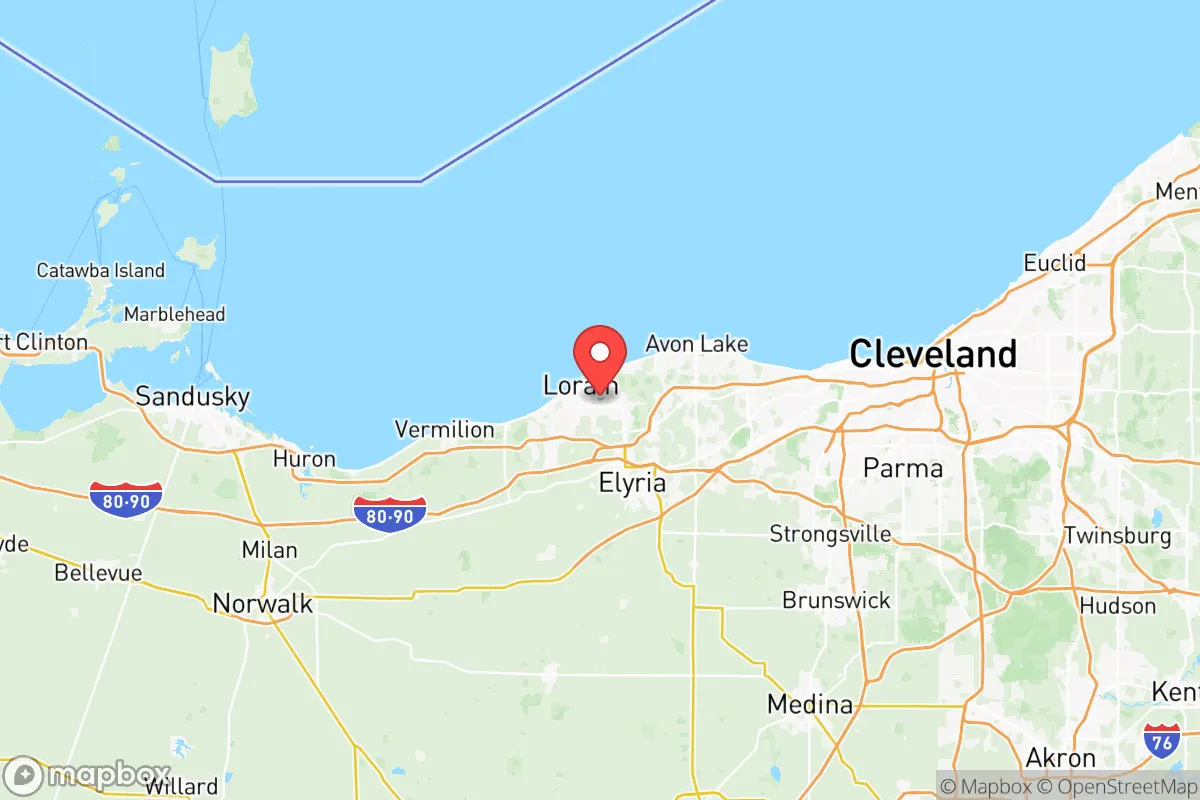
Photo: Wikipedia
Personal Sovereignty in Lorain County
Viable for self-reliance. Generally workable, though some barriers may limit total independence.
What does Personal Sovereignty tell us?
Personal Sovereignty measures your capacity for self-reliance and independence with minimal government friction. Higher scores mean fewer barriers between you and the way you want to live... but it assumes you have the space you need and good neighbors.
What does this tell us?
Personal Sovereignty measures your capacity for self-reliance and independence with minimal government friction. Higher scores mean fewer barriers between you and the way you want to live... but it assumes you have the space you need and good neighbors.
State Policy
Energy independence: Importer (40% of energy produced in-state)
Personal Liberty
Homesteading

Personal Liberty Analysis
Lorain County, Ohio, offers a notably mixed personal sovereignty environment that balances the autonomy of rural living with the regulatory realities of a suburbanizing Great Lakes region. While Ohio’s state-level framework provides a solid baseline for self-defense rights and property freedom, Lorain County’s local implementation of taxes, zoning, and land-use rules creates distinct pockets of high and low personal autonomy. For a relocation-minded individual or family prioritizing self-reliance, the county’s eastern townships near the Cuyahoga County line feel markedly different from its western agricultural stretches, and understanding these micro-differences is key to maximizing personal freedom.
Tax burden and regulatory posture in Lorain County
Ohio’s state income tax, which ranges from 0% to 3.99% on earned income, is moderate by national standards, but Lorain County adds a 1.5% county sales tax on top of the state’s 5.75% rate, bringing the total to 7.25% in most unincorporated areas. Property taxes are the heavier burden: the county’s effective property tax rate averages roughly 1.8% of assessed home value, which is above the national median but typical for Northeast Ohio. This funds well-regarded local schools in communities like Avon and North Ridgeville, but it also means homeowners in those suburbs face a higher annual tax bill than those in less-developed townships such as Brighton Township or Rochester Township. The county’s regulatory posture is generally business-friendly at the township level, with minimal zoning enforcement in unincorporated areas, but cities like Elyria and Lorain impose stricter building codes, rental inspections, and business licensing requirements. For a self-reliant individual, the path of least regulatory resistance lies in the western and southern townships, where county oversight is lighter and property taxes are lower.
Self-defense and gun law specifics in Lorain County
Ohio is a constitutional carry state as of 2022, meaning no permit is required for concealed carry of a handgun by any law-abiding adult 21 or older. Lorain County’s Sheriff’s Office processes concealed carry permits efficiently, with typical wait times under 30 days, and the county has no local ordinances that restrict firearm possession beyond state law. Open carry is legal without a permit, though it is less common in the more densely populated eastern suburbs like Avon Lake and Sheffield Lake, where police encounters are more likely. The county’s gun culture is strongest in the rural townships—Wellington and Pittsfield Township have active shooting ranges and a visible hunting tradition—while the urban cores of Lorain and Elyria see higher rates of firearm theft and a more cautious public posture. Stand-your-ground laws apply statewide, and Ohio’s castle doctrine provides a strong legal shield for defensive use of force inside one’s home or vehicle. For a relocation-minded individual, Lorain County offers a solid legal foundation for self-defense, with the practical caveat that exercising that right openly is socially smoother in the western half of the county.
Self-reliance and homesteading viability across Lorain County
Homesteading viability in Lorain County varies dramatically by location. The county’s agricultural zoning in townships like Camden Township and Brownhelm Township allows for livestock, large gardens, and accessory structures on parcels as small as 2-3 acres, with no county-level permit required for standard outbuildings under 200 square feet. Off-grid feasibility is limited by state building codes that mandate grid-tied electrical connections for new permanent dwellings, but many rural properties already have wells and septic systems, making partial self-sufficiency achievable. Lot sizes in unincorporated areas start at 1 acre minimum, with many parcels available at 5-10 acres for under $15,000 per acre in the county’s southern tier. In contrast, the eastern suburbs—Avon, North Ridgeville, and Elyria—enforce minimum lot sizes of 0.5 to 1 acre and prohibit livestock in residential zones. Rainwater collection is legal statewide without restriction, and solar panel installation is permitted without special county approval, though homeowners associations in newer subdivisions may impose aesthetic limits. For a family seeking genuine self-reliance, the western and southern townships offer the most permissive environment, while the eastern suburbs prioritize suburban conformity over homesteading flexibility.
Personal liberties in Lorain County: parental rights, medical autonomy, and property freedom
Ohio law provides strong parental rights in education, including a parental bill of rights that requires school districts to notify parents of any changes to a student’s health or well-being. Lorain County’s school districts—particularly in Avon and Wellington—have generally complied with these laws, though the more urban districts in Lorain and Elyria have faced occasional parent-led disputes over curriculum transparency. Medical autonomy is robust: Ohio does not mandate COVID-19 or childhood vaccination for school attendance, and the state’s 2023 law prohibits vaccine passports and discrimination based on vaccination status. Property freedom is well-protected by state law, with no county-level rent control or short-term rental bans in unincorporated areas, though cities like Lorain and Sheffield Lake have enacted registration requirements for Airbnb-style rentals. Speech and assembly rights are fully protected under state and federal law, and Lorain County has no local ordinances restricting political signage or public gatherings beyond standard time-place-manner rules. For a relocation-minded individual, the county’s personal liberties are strongest in the unincorporated townships and weakest in the older industrial cities, where local ordinances add layers of bureaucracy to property use and business operation.
Overall, Lorain County’s personal sovereignty environment is best described as a tiered system: the western and southern townships offer a light regulatory touch, low property taxes relative to the eastern suburbs, and strong self-defense and homesteading freedoms, while the eastern suburbs and urban cores impose higher taxes, stricter zoning, and more bureaucratic oversight. For a conservative-leaning individual or family seeking maximum autonomy, the county’s rural townships—particularly Brighton, Camden, and Pittsfield—provide a freedom-friendly base that rivals any in Northeast Ohio, while the eastern suburbs trade some personal liberty for higher property values and school quality. Compared to neighboring counties like Cuyahoga or Summit, Lorain County offers a noticeably lighter regulatory hand and a more permissive gun culture, making it a strong contender for relocation within the region.

* Values derived from national, state, county, city and local statistics and may differ in a specific area. Last updated: 2026-07-14T07:26:33.000Z
Narrative content on this page is AI-generated and may contain mistakes. Verify any details that matter before acting on them.
ReloMaps may earn a commission from affiliate links at no extra cost to you.

