Photo: Wikipedia
Demographics of Lorain County
Affluence Level in Lorain County
A middle-class area roughly in line with national averages across income, home values, education, and employment.
People of Lorain County
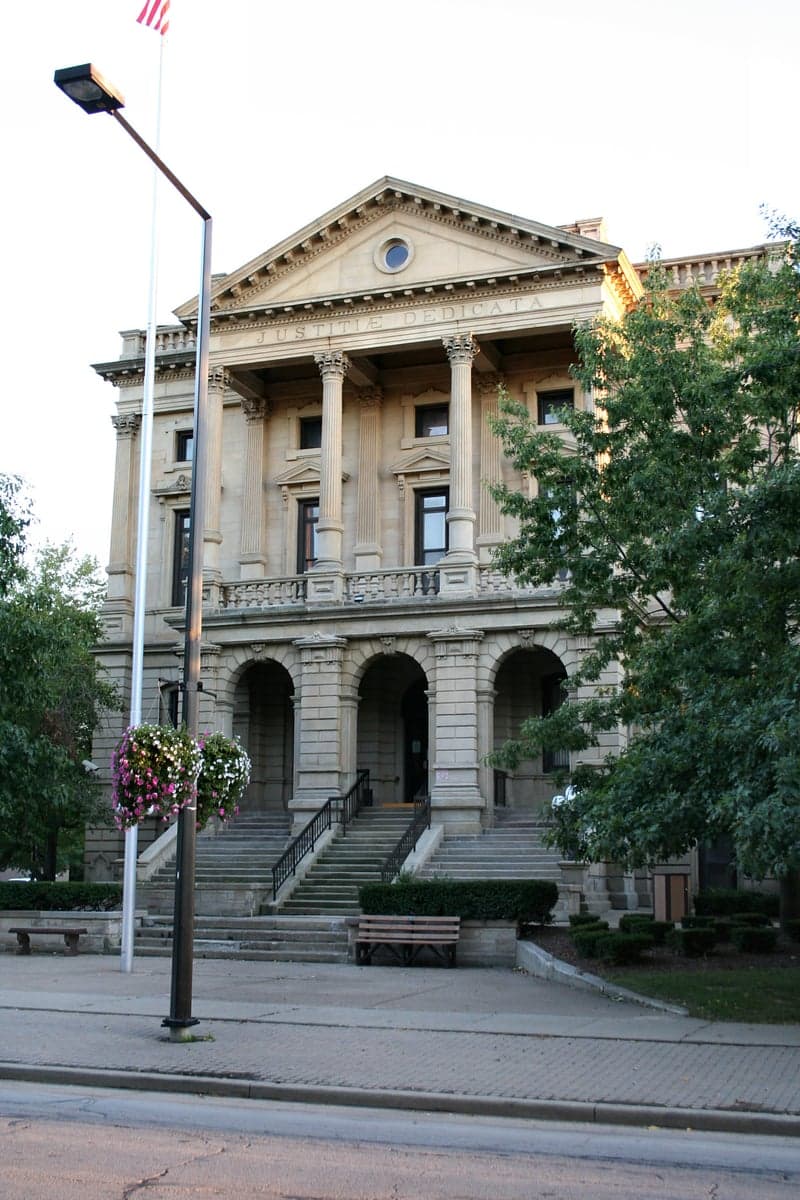
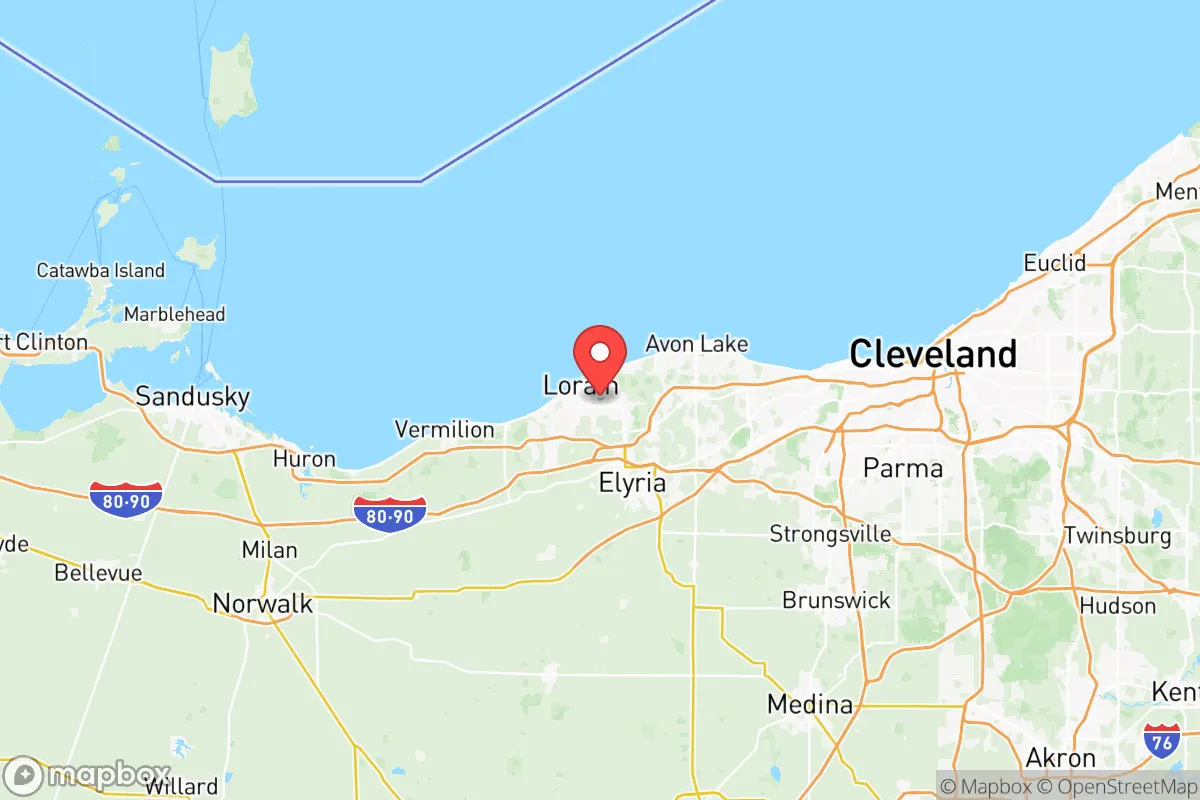
Lorain County, Ohio, is home to 314,588 residents, a population that reflects a classic Great Lakes industrial heritage now undergoing gradual diversification. The county is predominantly White (76.1%) with a significant Hispanic community (10.8%) concentrated in Lorain and Sheffield Lake, a Black population of 7.2% centered in Elyria and Lorain, and a very small foreign-born share of just 1.2%. Its identity is rooted in the steel mills, shipyards, and auto plants that drew waves of European immigrants and Southern migrants, creating a blue-collar, union-friendly character that persists even as manufacturing employment has declined.
Settlement & growth (pre-1960)
Before European settlement, the area now known as Lorain County was the territory of the Erie people, followed by the Wyandot, Ottawa, and Ojibwe nations after the Erie were dispersed in the 17th century. The region was part of the Connecticut Western Reserve, a land grant that attracted New England Yankees—primarily from Connecticut and Massachusetts—starting in the early 1800s. These settlers founded the county's earliest towns: Elyria (1817), Oberlin (1833), and Wellington (1818). They brought Congregationalist and Presbyterian traditions, a strong emphasis on education, and abolitionist politics that made Oberlin a key stop on the Underground Railroad.
The first major non-Yankee wave arrived with Irish immigrants in the 1840s and 1850s, drawn by canal and railroad construction. They settled in Lorain and Elyria, working as laborers and later in the emerging steel industry. German immigrants followed in the 1850s-1880s, establishing farming communities in Amherst and Vermilion and bringing Lutheran and Catholic churches, breweries, and a strong craft tradition. By 1900, the county's population had reached roughly 55,000.
The industrial boom of the early 20th century transformed Lorain County. The National Tube Company (U.S. Steel) plant in Lorain opened in 1898, and the Ford Motor Company's Lorain Assembly Plant began operations in 1958. These employers triggered a massive influx of Southern and Eastern European immigrants: Poles, Italians, Slovaks, Hungarians, and Slovenes arrived between 1900 and 1920, settling overwhelmingly in the city of Lorain and the steel-mill neighborhoods along the Black River. They built dense ethnic parishes, fraternal organizations, and neighborhood grocery stores that defined Lorain's character for generations.
The Great Migration brought Black families from the Deep South—primarily Alabama, Mississippi, and Georgia—to Lorain and Elyria between 1915 and 1960, seeking industrial jobs. By 1960, Lorain's Black population had grown to roughly 8% of the city's total. A smaller wave of Appalachian white migrants from Kentucky and West Virginia arrived during and after World War II, settling in Sheffield Lake and South Amherst, drawn by factory wages that far exceeded coal-mining or farming income back home.
Modern era (post-1965)
The 1965 Hart-Cellar Act had a modest impact on Lorain County compared to coastal regions, but it did open the door for a new wave of immigration. The most significant post-1965 group has been Hispanic immigrants, primarily from Puerto Rico and Mexico, who began arriving in the 1970s and 1980s. They concentrated in the city of Lorain, particularly the South Side and the neighborhoods around the former steel plant, where they found affordable housing and entry-level manufacturing jobs. Today, Lorain is roughly 30% Hispanic, making it one of Ohio's most Hispanic-majority cities. The Hispanic community has also grown in Elyria and Sheffield Lake, though at lower concentrations.
Domestic migration has been more transformative than international immigration. The decline of heavy manufacturing after 1980 triggered a steady outflow of residents to the Sun Belt—particularly Florida, Texas, and the Carolinas—and to suburban counties in Ohio. Lorain County's population peaked at roughly 301,000 in 1970, dipped to 284,000 in 1990, and has since recovered slowly to 314,588, driven largely by suburban expansion from neighboring Cuyahoga County. Avon and Avon Lake in the county's northeast corner have experienced the fastest growth, attracting middle-class families from Cleveland's west side with newer housing, good schools, and lower taxes. These communities are overwhelmingly White and non-Hispanic, with small but growing Asian and Indian populations drawn to professional jobs in healthcare and engineering.
The county's East/Southeast Asian population (0.8%) and Indian-subcontinent population (0.5%) are small but growing, concentrated in Avon and North Ridgeville, where tech and medical professionals have settled. The Black population has remained stable at roughly 7.2%, with the largest concentrations still in Lorain and Elyria, though some middle-class Black families have moved to Avon and Amherst in recent decades. The foreign-born share of 1.2% is well below the national average of 13.7%, reflecting the county's limited draw for new international immigrants.
The future
Lorain County is becoming slightly more diverse, but the pace is slow. The Hispanic share is projected to grow from 10.8% to roughly 14-16% by 2040, driven by natural increase and continued migration from Puerto Rico and Mexico. The White non-Hispanic share will continue to decline gradually, from 76.1% to perhaps 70-72%, as older residents age out and younger, more diverse cohorts replace them. The Asian and Indian populations will likely double from their current small bases, concentrated in Avon and North Ridgeville, as the county attracts more professionals priced out of Cleveland's eastern suburbs.
The biggest demographic story is suburbanization within the county. Avon, Avon Lake, and North Ridgeville are absorbing most of the growth, while Lorain city continues to lose population—down from 78,000 in 1970 to roughly 64,000 today. This creates a cultural divide: the eastern suburbs are becoming more affluent, more educated, and slightly more diverse, while the western half of the county (Lorain, Elyria, Sheffield Lake) remains older, more industrial, and more ethnically rooted in its European and Hispanic heritage. The county's college-educated share of 27.9% is below the national average of 33.1%, but rising in the suburbs.
For someone moving in now, Lorain County offers a choice between two distinct environments. The eastern suburbs provide good schools, newer infrastructure, and proximity to Cleveland's job market, with a growing but still modestly diverse population. The western cities offer lower housing costs, a stronger sense of industrial history, and a more established Hispanic and Black community, but face ongoing economic challenges as manufacturing continues to shrink. The county as a whole remains a predominantly White, working-to-middle-class place with a slow drift toward greater diversity—a typical pattern for a Midwestern manufacturing region that has not yet been transformed by the immigration and tech booms reshaping coastal America.

* Values derived from national, state, county, city and local statistics and may differ in a specific area. Last updated: 2026-07-14T07:26:33.000Z
Narrative content on this page is AI-generated and may contain mistakes. Verify any details that matter before acting on them.
ReloMaps may earn a commission from affiliate links at no extra cost to you.

