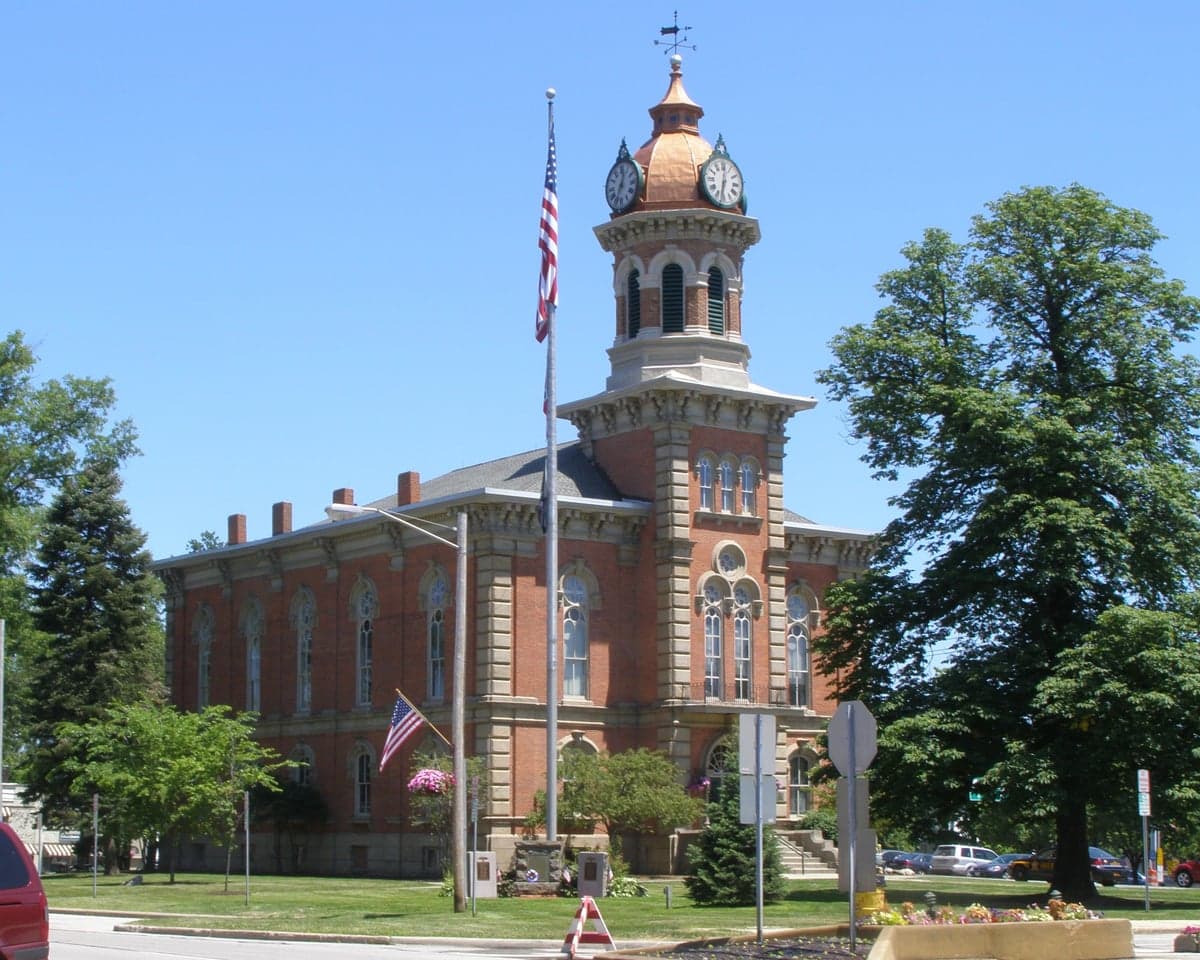
Photo: Wikipedia
Political ClimatePolitical Climate in Geauga County
Showing district-level results — no local-only data available.
Local Political AnalysisPolitical Analysis of Geauga County
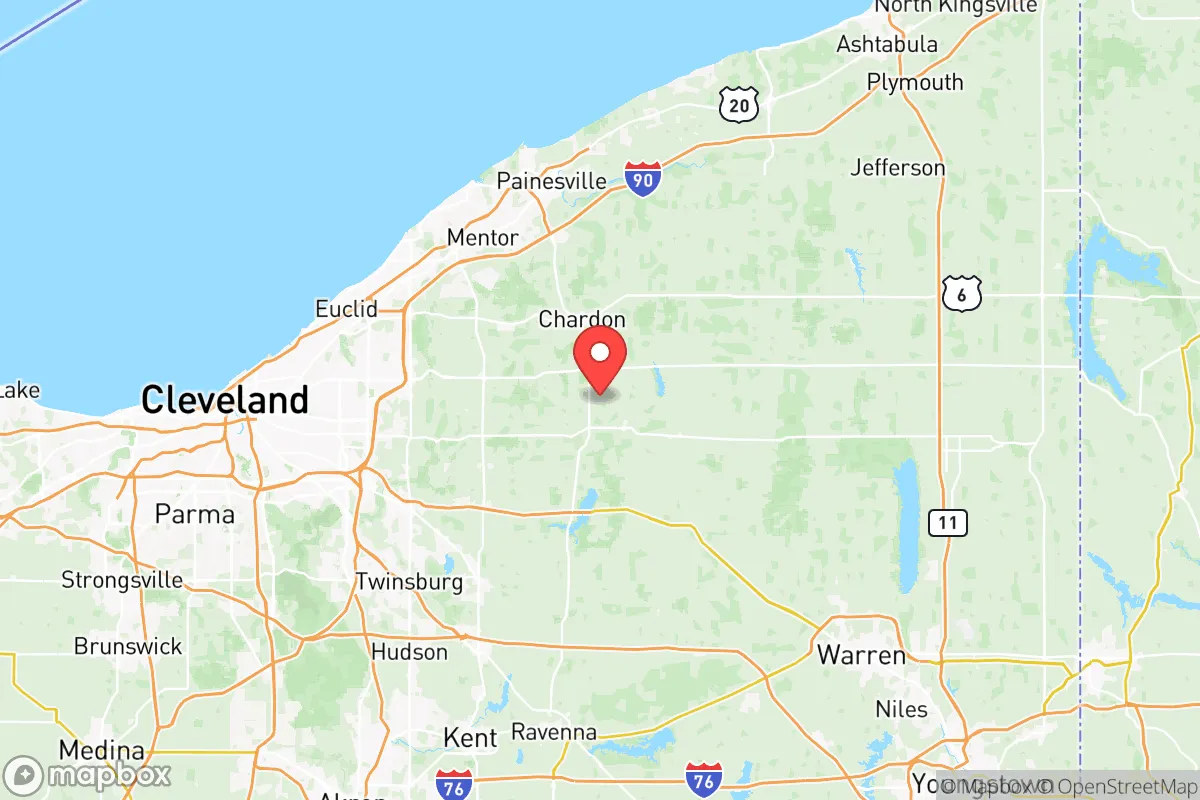
Geauga County has long been one of Ohio’s most reliably Republican strongholds, carrying a Cook Partisan Voting Index of R+9 — a full four points more conservative than the state of Ohio as a whole, which sits at R+5. That gap has actually widened slightly over the past decade as the county’s outer-ring exurban and rural precincts have hardened their GOP allegiance, even as the state overall has drifted modestly rightward. In the 2024 presidential election, Geauga County gave the Republican ticket roughly 63% of the vote, compared to about 55% statewide, a margin that tracks closely with its PVI. The county’s political identity is shaped by its demographics — predominantly white, well-educated, upper-middle-income, and heavily concentrated in single-family home neighborhoods — and by a local culture that prizes low taxes, limited government, and traditional social values.
How it compares to Ohio as a whole
Ohio’s R+5 PVI reflects a state that has become a reliable Republican lean in presidential years, but one that still contains competitive pockets — places like Franklin County (Columbus) and Cuyahoga County (Cleveland) that vote heavily Democratic and keep the state from tilting further right. Geauga County, by contrast, is part of the conservative exurban ring that encircles Cleveland, and it votes more like a rural Appalachian county than a suburban one. The county’s R+9 rating places it among the top 10% most Republican counties in Ohio by PVI, alongside neighbors like Lake County (R+8) and Ashtabula County (R+11). But the comparison isn’t uniform across Geauga’s townships. Chardon, the county seat, leans Republican but is more moderate — its precincts typically vote 55-58% GOP — while Bainbridge Township and Russell Township in the western part of the county are the most conservative, regularly hitting 70% Republican or higher. Burton Township and Middlefield Village are slightly less red, with GOP margins in the low 60s, reflecting a mix of Amish and working-class voters. The only precincts that occasionally vote Democratic are in South Russell Village and parts of Chester Township, where higher education levels and proximity to Cleveland’s east-side suburbs produce a small but consistent liberal minority — typically around 35-40% of the vote in those areas.
What this means for residents
For conservative residents, Geauga County’s political climate means their values are broadly reflected in local governance — the county commission, school boards, and township trustees are almost uniformly Republican, and tax policy remains among the most business-friendly in Northeast Ohio. Property taxes are relatively low, and there is little appetite for new county-level spending initiatives. For liberal residents, the reality is more isolating. Democratic candidates rarely win countywide office, and progressive policy proposals — such as zoning changes for denser housing or expanded public transit — face steep uphill battles. That said, the county’s small but vocal Democratic minority is organized, particularly in the western townships, and local elections are sometimes decided by single-digit margins in primary races. The practical effect is that Geauga County feels politically homogeneous day-to-day, but not hostile; most residents describe a live-and-let-live culture where political conversations are avoided in mixed company.
One cultural distinction worth noting: Geauga County’s politics are shaped less by the culture-war intensity seen in some other Ohio counties and more by a pragmatic, small-government ethos. The county has a significant Amish population — concentrated around Middlefield — whose political influence is felt in low-regulation stances on agriculture and land use. There is also a notable strain of environmental conservatism, particularly around the Geauga Park District, which enjoys broad bipartisan support. In practice, this means a resident can expect excellent county parks, low taxes, and a school system that ranks among Ohio’s best — but also limited public transportation, few rental housing options, and a social scene that revolves around churches, sports, and community festivals rather than political activism. For someone moving from a more politically mixed area, the adjustment is less about hostility and more about the sheer uniformity of political signs in yards during election season.

State Political ClimatePolitical Climate in Ohio
State Political AnalysisPolitical Environment in the State
Ohio has shifted from a quintessential swing state to a solidly Republican-leaning one, carrying a Cook PVI of R+5 as of 2026. The state voted for Donald Trump by 8 points in both 2016 and 2020, and by a similar margin in 2024, marking a decisive break from its longtime bellwether status. Over the past 20 years, the GOP has consolidated power at the state level, controlling the governorship, both legislative chambers, and the Ohio Supreme Court, while Democrats have become increasingly concentrated in a handful of urban counties.
Urban vs. rural divide
The political map of Ohio is a study in stark contrasts. The three major metropolitan hubs—Cuyahoga County (Cleveland), Franklin County (Columbus), and Hamilton County (Cincinnati)—are Democratic strongholds, collectively delivering over 1.5 million votes for Joe Biden in 2020. However, the rest of the state is overwhelmingly Republican. The rural Appalachian counties in the southeast, such as Meigs and Monroe, routinely vote 70-80% Republican, while the northwestern farm belt, including counties like Mercer and Auglaize, is even more conservative. The key shift has been in the once-blue working-class suburbs and exurbs. Places like Stark County (Canton) and Mahoning County (Youngstown), which voted for Obama twice, flipped hard to Trump and have stayed red. The Cincinnati suburbs tell a more nuanced story: Warren County is a deep-red GOP stronghold, while Hamilton County itself has trended blue as the city of Cincinnati has gentrified and its inner-ring suburbs have become more diverse. The result is a state where the partisan geography is simple: the cities and a few college towns (Athens, Oberlin) are blue; everything else is red.
Policy environment
Ohio's policy environment reflects its Republican trifecta. The state has a flat income tax rate of 3.5% as of 2025, down from a progressive top rate of nearly 5% a decade ago, with further cuts planned. Sales tax is 5.75% at the state level, with local add-ons pushing it to 7-8% in most cities. Property taxes are moderate but vary wildly by school district. The state is a "right-to-work" state in practice if not in law—a 2011 collective bargaining reform law (SB 5) was repealed by voters, but union membership has steadily declined. On education, Ohio has a robust school choice program, including the EdChoice voucher system that allows students in low-performing districts to attend private schools, and a growing network of charter schools. The state also passed a "Parents' Bill of Rights" (HB 8) in 2023, requiring schools to notify parents of any changes to a student's health or well-being. On election law, Ohio requires a photo ID to vote, has restricted drop boxes to one per county, and has purged inactive voters from rolls, all of which have been controversial. The state's constitution still allows for citizen-initiated ballot measures, which has been a key avenue for progressive policy wins, including the 2023 enshrinement of abortion rights (Issue 1) and the 2024 legalization of recreational marijuana (Issue 2).
Recent policy direction
The last few years have seen Ohio move decisively in a conservative direction on most fronts, with notable exceptions driven by direct democracy. On gun and self-defense law, Ohio became a permitless carry state in 2022 (HB 227), meaning any adult who can legally possess a firearm can carry it concealed without a license. "Stand Your Ground" language was also strengthened. On parental and education rights, the state passed the "Save Women's Sports Act" (HB 151) in 2024, banning transgender athletes from female sports, and the aforementioned HB 8 on parental notification. On speech and privacy, Ohio has not passed a broad social media content moderation law, but it has restricted TikTok on state devices. On medical and bodily autonomy, the 2023 Issue 1 amendment enshrined abortion access up to fetal viability, overriding a 2019 "heartbeat bill" that had banned abortion at six weeks. This was a major defeat for the GOP legislature, which had tried to raise the threshold for passing future amendments to 60% (a measure voters also rejected in 2023). On property rights, Ohio is generally friendly to landowners, with limited eminent domain abuse and no statewide rent control. On taxation, the trajectory is toward lower income taxes and higher consumption taxes; the state has not legalized sports betting (it did, in 2021) but has seen a boom in casino and lottery revenue. On voting and ballot access, the trend is toward restriction: the 2023 voter ID law (SB 148) eliminated most forms of non-photo ID, and early voting hours were standardized to reduce county-by-county variation.
Civil unrest & political movements
Ohio has seen its share of political flashpoints. The 2020 protests in Columbus and Cleveland over the murder of George Floyd were large but largely peaceful, though the state did see property damage and curfews. The 2023 Issue 1 abortion rights campaign drew massive grassroots organizing on both sides, with door-knocking and advertising that rivaled a presidential race. On the right, the "Ohio Freedom Alliance" and local Moms for Liberty chapters have been active in school board races, particularly in suburbs like Delaware and Powell (north of Columbus). Immigration politics are less heated than in border states, but the 2024 influx of Haitian migrants to Springfield (Clark County) became a national story after unsubstantiated claims about pet-eating circulated online, leading to bomb threats and a heavy police presence. There is no sanctuary city policy in Ohio; the state passed a law in 2024 (HB 180) requiring local law enforcement to cooperate with ICE. Election integrity remains a live issue: the 2020 and 2024 results were certified without major incident, but the GOP-controlled legislature has continued to tighten voting laws, citing "confidence" concerns. A new resident would notice the prevalence of yard signs and bumper stickers, especially in rural areas, but political violence is rare.
Projection
Over the next 5-10 years, Ohio is likely to remain R+5 to R+7, with the GOP trifecta intact. The key demographic trends are suburbanization and aging. The Columbus metro area is growing and diversifying, which could make Franklin County even more Democratic and potentially flip a few nearby suburban districts (like Delaware County) from red to purple. However, the rest of the state is aging and losing population, which tends to benefit Republicans. The big wildcard is the ballot initiative process: if Democrats and progressive groups continue to use Issue 1-style campaigns to bypass the legislature, we could see more policy clashes, such as a potential minimum wage increase or expanded Medicaid. The state's political trajectory is one of consolidation: the GOP will likely continue to cut taxes and restrict voting access, while the courts and ballot box will be the main arenas for progressive pushback. A new resident moving in now should expect a stable, conservative-leaning state government with occasional dramatic policy swings driven by citizen initiatives.
For a new resident, the bottom line is that Ohio offers a reliably conservative state government with low and falling taxes, strong gun rights, and school choice, but with the caveat that major social policy (abortion, marijuana) is now set by voters, not the legislature. If you lean conservative, you'll find your values reflected in state law and local governance outside the major cities. If you lean liberal, you'll find safe havens in Columbus, Cleveland, and Cincinnati, but you'll be living under a GOP-controlled statehouse that is actively working to limit your political influence. The state is not a culture-war battleground like Florida or Texas, but it is a place where the two sides have drawn clear lines and are fighting it out through legislation and ballot measures. It's a stable, affordable, and politically engaged place to live, but the partisan divide is real and visible in every election cycle.
* Values derived from national, state, county, city and local statistics and may differ in a specific area. Last updated: 2026-06-30T18:34:21.000Z
Narrative content on this page is AI-generated and may contain mistakes. Verify any details that matter before acting on them.
ReloMaps may earn a commission from affiliate links at no extra cost to you.

