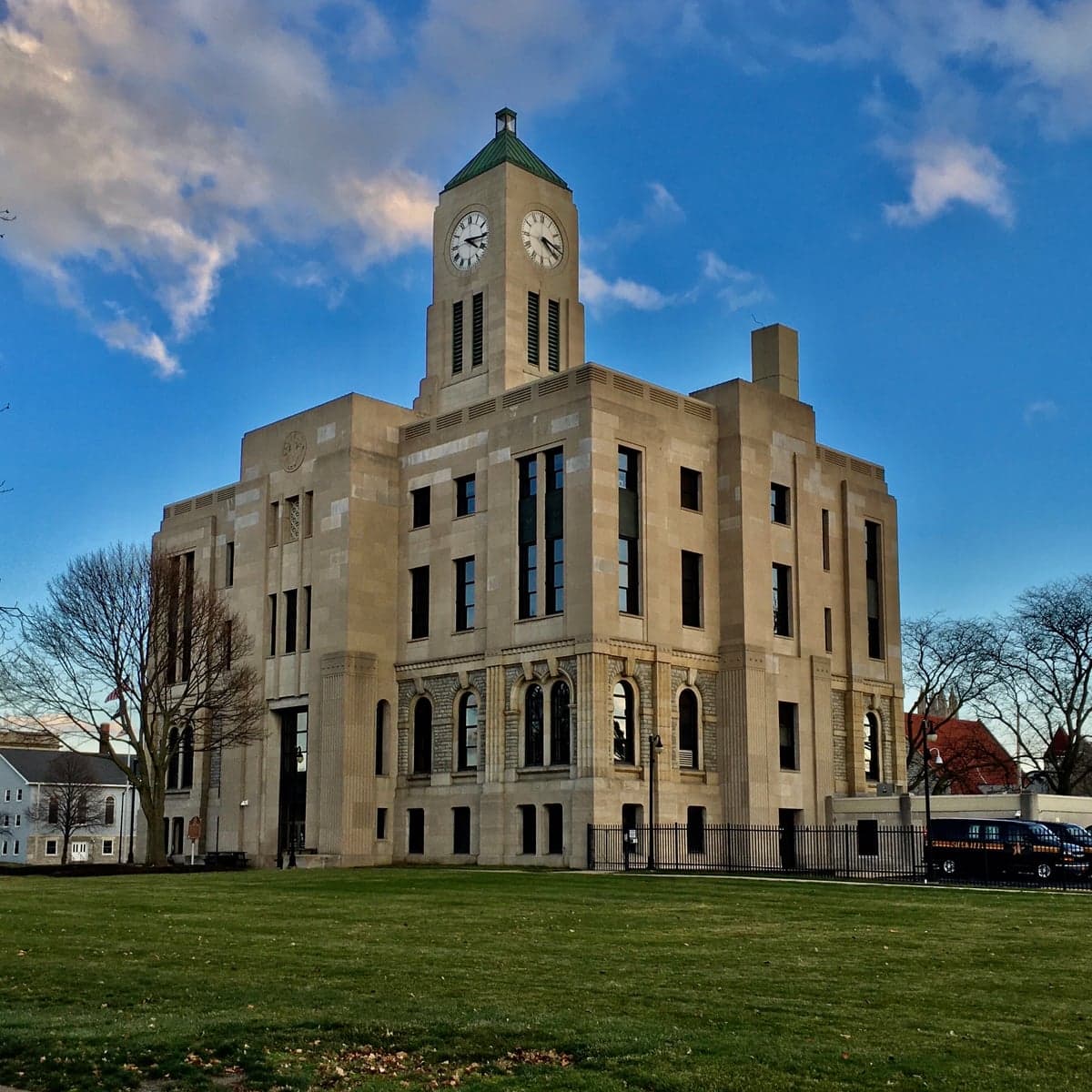
Photo: Wikipedia
Political ClimatePolitical Climate in Erie County
Showing county-level results — no local-only data available.
Lean and PVI are calculated from this county’s 2020 and 2024 presidential results, Cook-style.
Political rankings in Ohio
- Most Conservative Cities in Ohio
- Most Liberal Cities in Ohio
- Best Liberal-Leaning Towns in the Midwest
- Safest Liberal-Leaning Towns in the Midwest
- Safest Conservative-Leaning Towns in the Midwest
- Affordable Small Towns for Conservatives
- Most Affordable Liberal-Leaning Small Towns in the U.S.
- Safest Conservative-Leaning Cities in the U.S.
- Most Conservative Counties in Ohio
- Most Liberal Counties in Ohio
Local Political AnalysisPolitical Analysis of Erie County
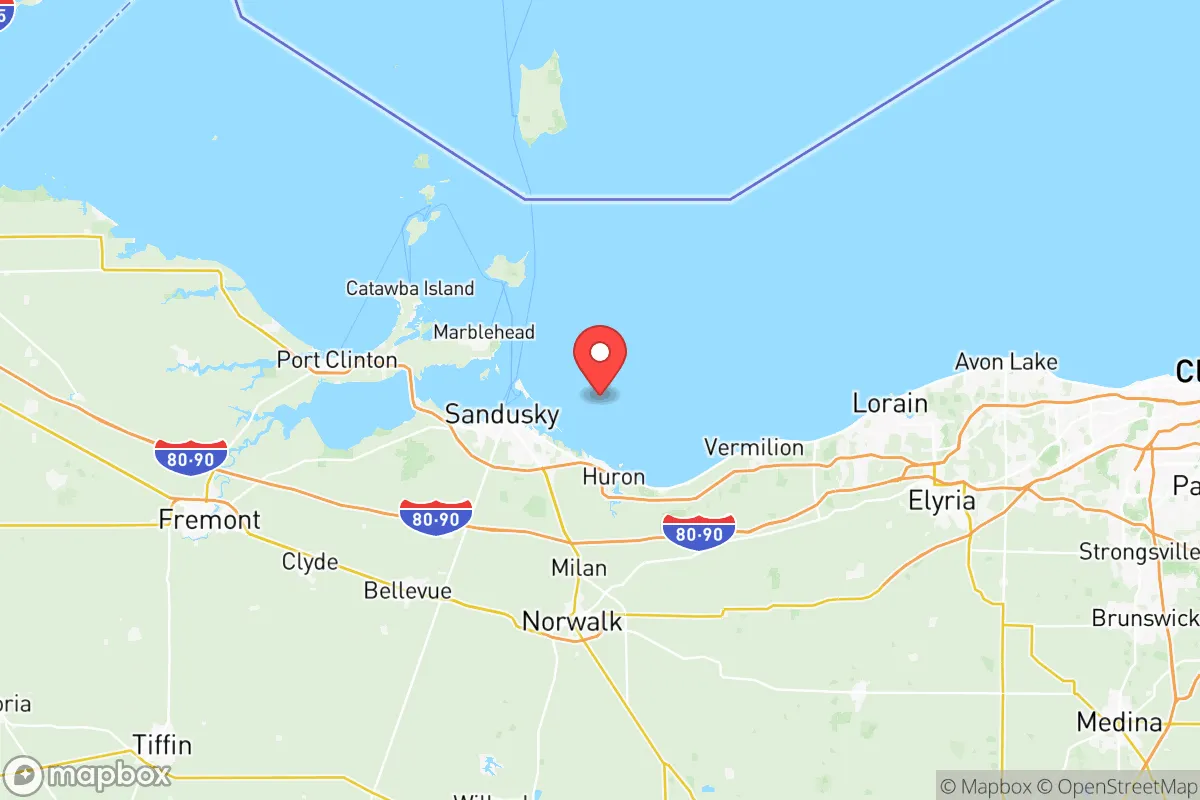
Erie County, Ohio, sits in a unique political space, leaning Republican but with a Cook PVI of R+3 that makes it noticeably more competitive than the rest of the state, which sits at R+5. This isn't a deep-red stronghold; it's a classic swing county that has drifted rightward over the past decade, but still holds enough Democratic and independent voters to keep races tight. The county backed Trump in 2016 and 2020, but by margins closer than in many neighboring counties, and local elections often hinge on a few thousand votes.
How it compares
The R+3 rating versus Ohio's R+5 means Erie County is about two points more Democratic-leaning than the state average. That gap is driven largely by the city of Sandusky, the county seat and economic hub, which consistently votes blue. Sandusky's working-class and union-heavy history, tied to the former Cedar Point amusement park and Lake Erie shipping, keeps its precincts reliably Democratic. In contrast, the rural townships and smaller communities like Milan, Huron, and Berlin Heights lean heavily Republican. The swing precincts are in the suburban and exurban areas around Sandusky—places like Perkins Township and Margaretta Township—where independent voters and moderate Republicans decide elections. In 2024, these areas broke for Trump, but by narrower margins than in 2020, suggesting a slight softening of the GOP advantage.
What this means for residents
For conservative residents, Erie County feels like a comfortable place to live politically, but not a lock. You'll find strong support for gun rights, lower taxes, and traditional values in most of the county, and Republican candidates usually win countywide races. However, you can't take victory for granted—local Democrats still hold seats on the county commission and in the state legislature, and issues like Lake Erie water quality and tourism funding can cross party lines. For liberal residents, the county offers a blue island in Sandusky where progressive candidates can win, but you'll need to build coalitions with moderates to have influence countywide. The political reality is that both sides have to engage with the other—there's no safe district where you can ignore the opposition. This makes local politics more pragmatic and less ideological than in deep-red or deep-blue parts of Ohio.
Cultural and policy distinctions
The biggest cultural distinction in Erie County is the Lake Erie effect—literally and politically. The lake drives the economy through tourism, fishing, and shipping, which creates a shared interest in environmental protection that cuts across party lines. Republican and Democratic voters alike support stricter regulations on algae blooms and industrial runoff, a rare area of consensus. Policy-wise, the county has been more willing to fund public infrastructure and parks than many other Ohio counties, reflecting a pragmatic streak. Socially, the county is more moderate than the state average—you'll see fewer "Blue Lives Matter" flags and fewer "Coexist" bumper stickers than in, say, rural Ottawa County to the east or conservative Huron County to the south. The long-term trajectory likely stays R+3 to R+4, as the county's older, white, non-college population holds steady, but the growing Hispanic community in Sandusky and the influx of remote workers from Cleveland could nudge it back toward the center over the next decade.

State Political ClimatePolitical Climate in Ohio
State Political AnalysisPolitical Environment in the State
Ohio is a classic battleground that has shifted from a true purple state to a solidly Republican-leaning one, with a Cook PVI of R+5. Over the past 10-20 years, the state has moved decisively rightward, driven by the collapse of Democratic support in rural and exurban areas, even as the major metros like Columbus and Cleveland remain blue. This isn't a deep-red state like Alabama, but it's no longer the swing state it was in 2008 and 2012—it's now a place where Republicans hold a structural advantage in statewide races, though local politics can vary wildly from one county to the next.
Urban vs. rural divide
The political map of Ohio is a textbook study in the urban-rural split. The three big Cs—Cleveland, Columbus, and Cincinnati—are the Democratic strongholds, with Cuyahoga County (Cleveland) delivering margins of 60-70% for Democrats. Columbus, the state capital and a fast-growing tech and education hub, has become increasingly blue, while Cincinnati's Hamilton County has trended Democratic in recent cycles, flipping from red to purple to light blue. Meanwhile, the rest of the state is overwhelmingly red. Rural counties like Holmes, Mercer, and Putnam routinely vote 75-80% Republican. The real story is in the exurbs and smaller cities: places like Delaware (north of Columbus) and Warren County (north of Cincinnati) have become reliably red, while once-competitive areas like Mahoning County (Youngstown) and Trumbull County have shifted from blue to purple to light red as union Democrats have moved right. The result is a state where Democrats win the cities by huge margins but can't overcome the vast rural and suburban territory.
Policy environment
Ohio's policy environment is a mix of conservative governance and pragmatic Midwestern moderation. The state has a flat income tax rate of 3.5% (as of 2025, down from a progressive top rate of nearly 5% a decade ago), and sales tax is around 5.75% with local add-ons. Property taxes are relatively high compared to the South but moderate for the Midwest. The regulatory posture is business-friendly, with a right-to-work law (though it was repealed by referendum in 2011) and a generally low regulatory burden. Education policy is a hot-button issue: Ohio has a robust school voucher program (the EdChoice system) that allows public funds to follow students to private or charter schools, and it's been expanded significantly under recent Republican governors. Healthcare is a mixed bag—the state expanded Medicaid under the Affordable Care Act in 2014, but it's also passed laws restricting abortion access (a six-week heartbeat ban that was in effect before the 2023 constitutional amendment). Election laws have tightened: Ohio requires a photo ID to vote, has limited early voting windows, and has purged inactive voters from rolls, which critics say suppresses turnout but supporters argue ensures integrity.
Recent policy direction
The last few years have seen Ohio move aggressively on several fronts. On gun and self-defense law, Ohio became a permitless carry state in 2022, meaning anyone 21 or older can carry a concealed firearm without a license or training. Stand-your-ground laws are already on the books. On parental and education rights, the state passed the "Parents Bill of Rights" in 2023, requiring schools to notify parents about curriculum changes and allowing them to opt their kids out of certain materials. Speech and privacy are less regulated—Ohio has no broad social media content laws, but it does have a data privacy law (the Ohio Data Protection Act) that's more of a voluntary framework than a strict mandate. On medical and bodily autonomy, the big story is the 2023 constitutional amendment enshrining abortion rights, which passed with 57% of the vote, overriding the legislature's six-week ban. This was a major loss for the GOP and shows the limits of legislative power when voters get a direct say. Property rights are generally strong, with no statewide rent control and limited eminent domain abuse. Taxation is trending downward: the flat income tax was cut from 3.99% to 3.5% in 2024, and there's talk of phasing it out entirely. Voting and ballot access have tightened: the 2023 law requiring photo ID and limiting drop boxes has made voting slightly harder, but early voting and absentee ballots are still available.
Civil unrest & political movements
Ohio has seen its share of political flashpoints. The 2020 protests in Columbus and Cincinnati over George Floyd's death were large but mostly peaceful, though there were some instances of property damage. The state has a strong labor movement history, but union power has waned—the 2011 fight over Senate Bill 5 (which would have limited collective bargaining for public employees) was a major battle, with the law being repealed by referendum. Immigration politics are less heated than in border states, but there's been tension in Springfield over Haitian migrant influxes, with local officials complaining about strain on resources. There's no sanctuary city policy in Ohio; most localities cooperate with federal immigration enforcement. Election integrity controversies flared in 2020 and 2022, with some Republican county officials questioning results, but no major fraud was found. The "Ohio Constitution" amendment process has become a battleground, with Republicans trying to make it harder to pass citizen initiatives after the abortion rights win. You'll see occasional protests at the Statehouse in Columbus, but nothing like the sustained unrest in Portland or Seattle.
Projection
Over the next 5-10 years, Ohio is likely to stay R+5 to R+7, with the rural areas getting redder and the cities getting bluer. The key demographic shift is the growth of Columbus and its suburbs, which are attracting younger, more diverse, and more educated residents—this will keep the state from becoming deep red. But the exurbs and smaller cities like Lima, Mansfield, and Zanesville are aging and losing population, which amplifies the rural vote. The Republican legislature is likely to continue cutting taxes and expanding school choice, while the Democratic cities will push back on social issues. The wild card is the 2026 gubernatorial race and whether the GOP can hold the statehouse without a strong candidate. For a new resident, expect a state that's conservative on fiscal and education policy, but with a strong libertarian streak on guns and a surprising amount of voter-driven moderation on social issues like abortion.
For a new resident, the bottom line is that Ohio offers a conservative-leaning policy environment with a pragmatic, not ideological, feel. You'll find lower taxes than in blue states, strong gun rights, and a school choice system that gives you options. But you'll also have to deal with higher property taxes than the South, a Medicaid expansion that keeps healthcare costs manageable, and a political landscape where your vote matters more in local races than in presidential ones. If you're a conservative, you'll feel at home in most of the state outside the major cities. If you're a liberal, you'll find your people in Columbus, Cleveland, or Cincinnati, but you'll be swimming against the tide in statewide elections. Either way, Ohio is a place where the politics are real, the debates are substantive, and the outcomes are usually moderate enough to keep things stable.
* Values derived from national, state, county, city and local statistics and may differ in a specific area. Last updated: 2026-10-21T03:14:26.000Z
Narrative content on this page is AI-generated and may contain mistakes. Verify any details that matter before acting on them.
ReloMaps may earn a commission from affiliate links at no extra cost to you.

