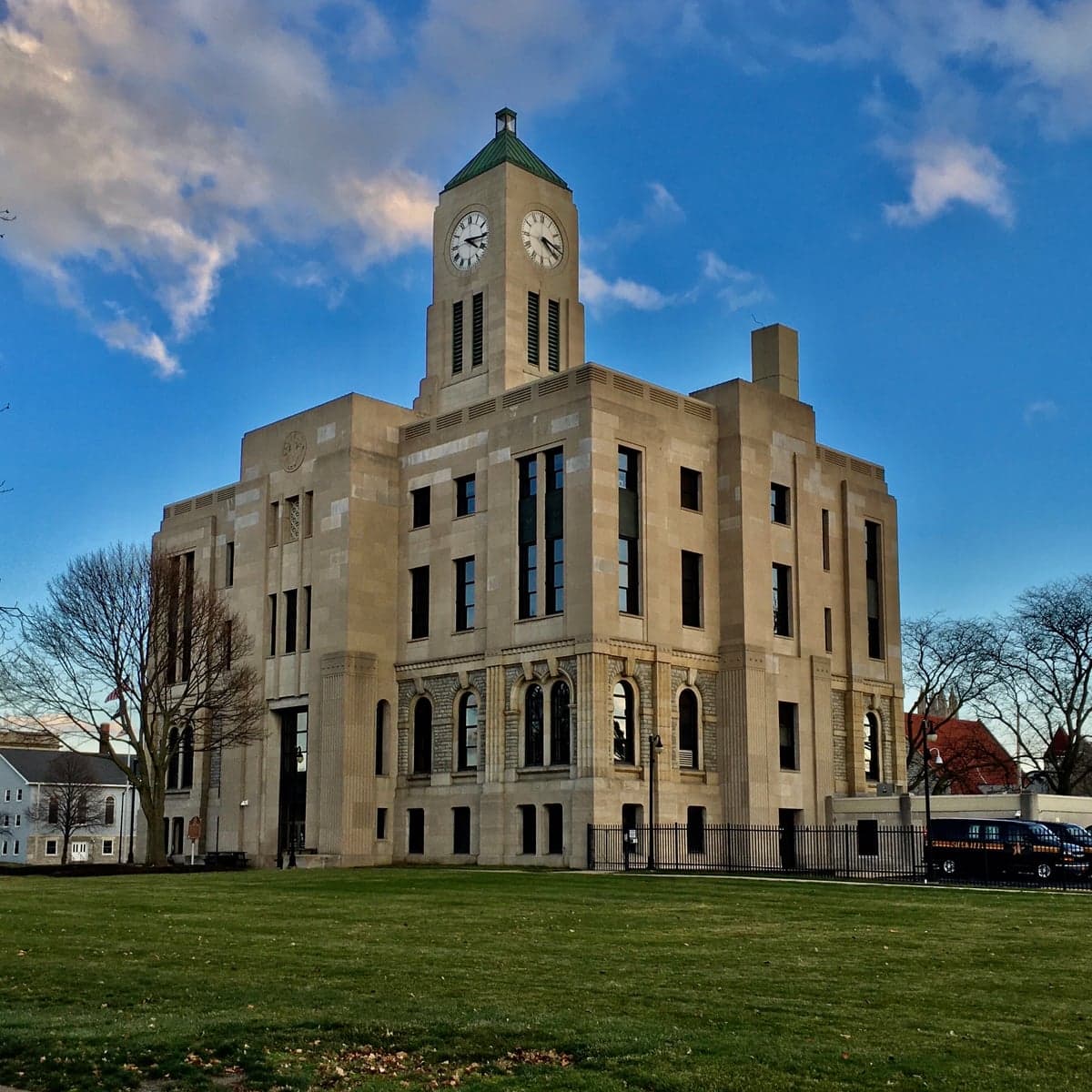
Photo: Wikipedia
Demographics of Erie County
Affluence Level in Erie County
A middle-class area roughly in line with national averages across income, home values, education, and employment.
People of Erie County
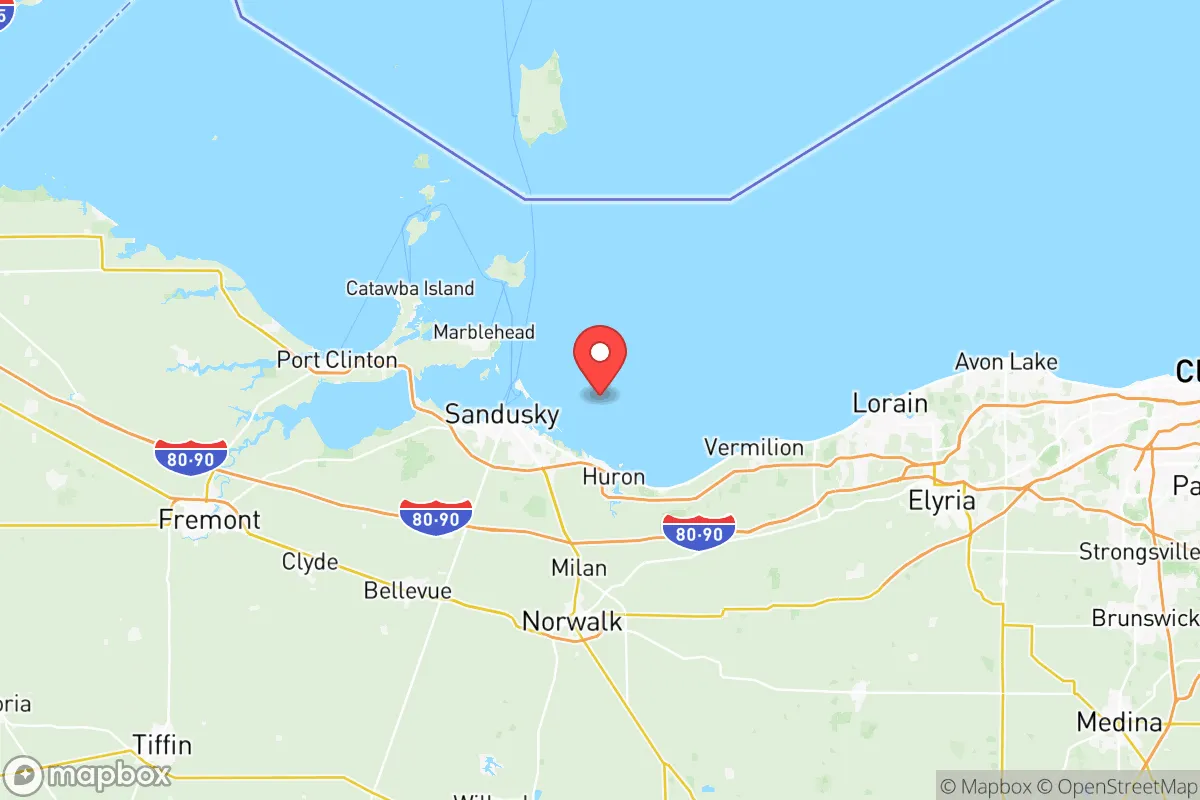
Erie County, Ohio, is a predominantly white, older, and economically modest community of 74,938 residents, anchored by the Lake Erie shoreline and the city of Sandusky. Its population is notably less diverse than the national average, with a foreign-born share of just 0.6%, and its character is shaped by a legacy of manufacturing, tourism, and a slow, decades-long population decline. The county’s identity is a blend of historic lakefront resort towns, small agricultural villages, and post-industrial communities, where a strong sense of local place and a conservative-leaning political culture remain dominant.
Settlement & growth (pre-1960)
Before American settlement, the region was home to the Erie people, a Native American tribe for whom the lake and county are named, as well as the Wyandot and Ottawa nations. The Erie were largely destroyed by the Iroquois in the mid-17th century, and the area became a contested hunting ground. The first permanent white settlers arrived after the War of 1812, when the U.S. government forcibly removed remaining Native groups through treaties like the 1817 Treaty of Fort Meigs.
The earliest American settlers were primarily of New England Yankee and Pennsylvania Dutch stock, arriving between 1815 and 1840. They founded the county’s core towns: Sandusky (1818) as the county seat and port, Huron (1815) as a fishing and shipping village, and Milan (1817) as an inland agricultural center. These settlers were drawn by the fertile lake plain soil and the commercial potential of Lake Erie shipping. The completion of the Erie Canal in 1825 and the later railroad connections made Sandusky a major transshipment point for grain, coal, and iron ore.
The second major wave came with German immigration from the 1840s through the 1880s. German farmers and craftsmen settled in the rural townships and villages, notably in Berlin Heights (founded 1835, heavily German by 1860) and Kelleys Island, where German-speaking families worked the limestone quarries and vineyards. By 1870, roughly one-third of Erie County’s population was German-born or of German parentage. The Germans brought Lutheran and Catholic churches, breweries, and a strong work ethic that shaped the county’s agricultural and small-industry base.
The third major group were Irish immigrants, who arrived in the 1850s and 1860s, largely to build the railroads and work in Sandusky’s growing docks and factories. They concentrated in the city’s west side, near the waterfront, and established St. Mary’s Catholic Church (1853) as a community anchor. A smaller but notable wave of Italian immigrants came between 1890 and 1910, settling in Sandusky’s “Little Italy” neighborhood near the Cedar Point causeway, working in the stone quarries and the emerging tourist industry.
By 1900, Erie County was a mix of Yankee, German, Irish, and Italian stock, with a small but established African American community in Sandusky (about 3% of the city’s population by 1910), many descended from fugitive slaves who crossed Lake Erie via the Underground Railroad. The county’s economy boomed through the early 20th century on the back of shipbuilding, iron foundries, and the explosive growth of Cedar Point as a resort destination after 1870. The population peaked at 75,000 in the 1960 census, driven by post-war manufacturing jobs at firms like the Sandusky Foundry & Machine Company and the Ford Motor Company’s Sandusky plant (opened 1955).
Modern era (post-1965)
The post-1965 period brought little of the immigration-driven diversification seen in larger Ohio cities. The 1965 Hart-Cellar Act opened immigration from Asia and Latin America, but Erie County’s industrial base was already contracting, and few new immigrants were drawn to the region. The foreign-born population today is just 0.6%, compared to 4.7% statewide and 13.7% nationally. The county’s Hispanic population (4.4%) is the largest minority group, but it is overwhelmingly native-born, with roots in Mexican-American families who arrived in the 1970s and 1980s to work in agriculture and food processing. They are concentrated in Sandusky and the rural township of Margaretta, where seasonal farm labor on fruit and vegetable farms remains a draw.
The Black population (8.3%) is almost entirely concentrated in Sandusky, where it has grown modestly from 6% in 1980 to 8.3% today. This growth is driven by natural increase and some domestic migration from larger Ohio cities like Cleveland and Toledo, rather than international immigration. The East/Southeast Asian population (0.7%) is tiny and dispersed, with no visible ethnic enclave; most are professionals employed at the area’s hospitals or at Cedar Point’s corporate offices. The Indian subcontinent population (0.0%) is statistically negligible.
The dominant demographic story of the modern era is domestic out-migration. Erie County lost 12% of its population between 1970 and 2020, as manufacturing jobs disappeared and younger residents left for Columbus, Charlotte, or the Sun Belt. The population has aged significantly: the median age is 44.2, compared to 39.4 for Ohio. Suburbanization within the county has been limited, as the county is small and largely rural. The only notable growth node has been the Perkins Township area (south of Sandusky), where strip-mall retail and newer subdivisions have drawn some families from Sandusky proper. The villages of Bay View and Castalia have seen modest infill development, but overall, the county’s housing stock is older and its population static.
The future
Erie County’s demographic future points toward continued slow decline, aging, and modest diversification. The county’s population is projected to fall to roughly 72,000 by 2040, according to Ohio Development Services Agency estimates. The white population share will shrink gradually, from 80.8% today to perhaps 75% by 2040, as the Hispanic and Black shares inch upward through higher birth rates and some in-migration. The foreign-born share will likely remain below 2%, as the county lacks the job base or ethnic networks to attract significant international immigration.
The most consequential trend is aging in place. The county’s 65+ population is already 21%, and will rise to nearly 28% by 2040, straining local services and housing. Younger families are increasingly concentrated in the Sandusky City School District and Perkins Local School District, while the rural townships see net out-migration of young adults. The county’s cultural identity will remain rooted in its lakefront tourism economy, conservative social values, and a sense of insularity. New residents are most likely to be retirees from the Cleveland or Toledo metro areas seeking lower property taxes and lake access, or remote workers attracted by relatively cheap housing in Huron and Milan.
For a family or individual moving in now, Erie County offers a stable, safe, and affordable environment with strong community ties, but limited economic opportunity and demographic dynamism. The county is becoming more of a retirement and second-home destination than a growth center, and its population will continue to reflect that shift. The people of Erie County are, in essence, the descendants of its 19th-century settlers, slowly diversifying but still defined by their shared lakefront heritage and a quiet, steady way of life.

* Values derived from national, state, county, city and local statistics and may differ in a specific area. Last updated: 2026-10-21T03:14:26.000Z
Narrative content on this page is AI-generated and may contain mistakes. Verify any details that matter before acting on them.
ReloMaps may earn a commission from affiliate links at no extra cost to you.

