
Photo: Wikipedia
Personal Sovereignty in Erie County
Strong independent fundamentals that actively favor personal liberty and low regulation.
What does Personal Sovereignty tell us?
Personal Sovereignty measures your capacity for self-reliance and independence with minimal government friction. Higher scores mean fewer barriers between you and the way you want to live... but it assumes you have the space you need and good neighbors.
What does this tell us?
Personal Sovereignty measures your capacity for self-reliance and independence with minimal government friction. Higher scores mean fewer barriers between you and the way you want to live... but it assumes you have the space you need and good neighbors.
State Policy
Energy independence: Self-sufficient (88% of energy produced in-state)
Personal Liberty
Homesteading

Personal Liberty Analysis
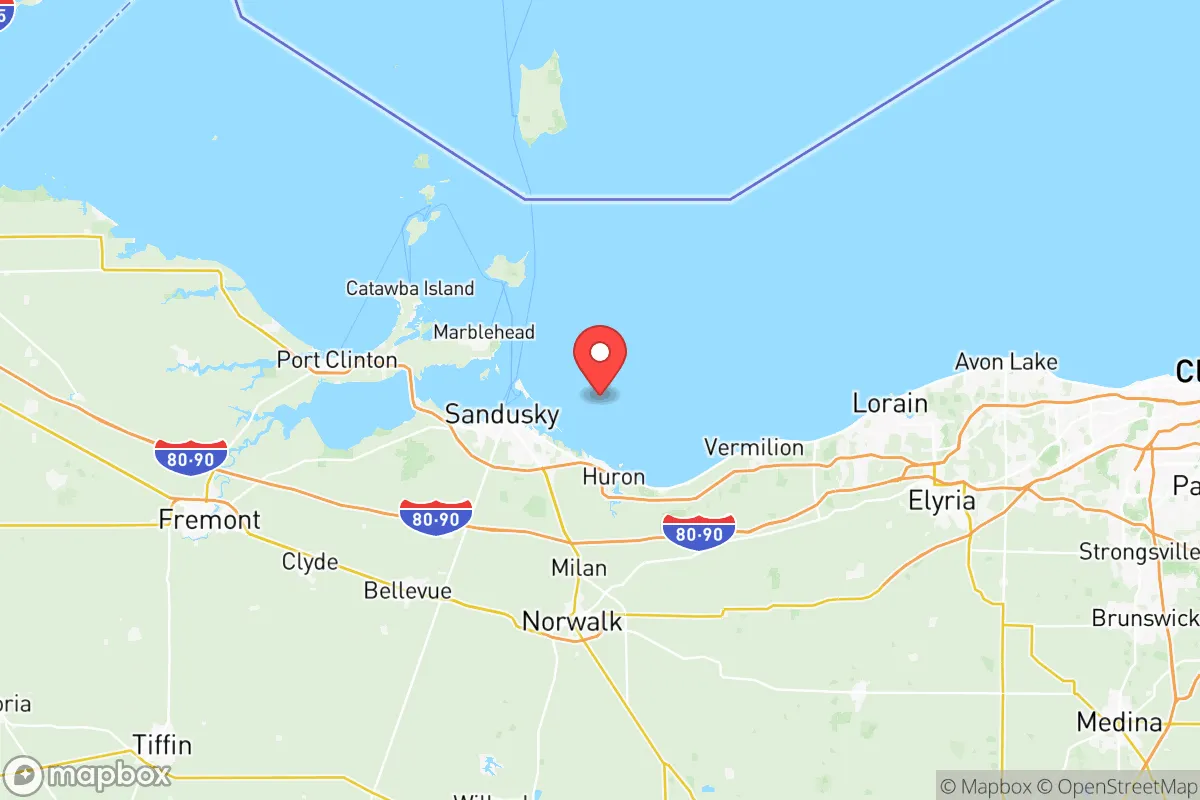
Erie County, Ohio, offers a moderately favorable environment for personal sovereignty, blending a relatively low cost of living with the constraints of Ohio’s state-level regulatory framework. While not a libertarian enclave like parts of the rural West, the county provides a workable balance for individuals and families seeking autonomy, particularly in its more rural townships. The key trade-offs involve navigating state-level tax burdens and gun laws that are permissive but not unrestricted, alongside local zoning that can either enable or limit self-reliance, depending on the specific municipality.
Tax burden and regulatory posture: How Erie County compares to Ohio’s average
Erie County’s tax burden is moderate by Ohio standards, with a combined state and local sales tax rate of 7.25% (6.5% state, 0.75% county). Property taxes are a more significant factor: the county’s effective property tax rate is approximately 1.6% of assessed home value, slightly above the state average of 1.5%. This is driven largely by school district levies, particularly in the Sandusky City Schools district, where rates can push closer to 2.0%. In contrast, townships like Margaretta Township and Perkins Township have lower effective rates due to smaller local levies. Ohio’s state income tax is a flat 3.5% on most earned income, with a top marginal rate of 3.99% for high earners—a moderate burden compared to neighboring states like Michigan (4.25% flat) but higher than Indiana (3.15% flat). Regulatory posture is mixed: Ohio has a right-to-work law (though not a constitutional amendment), and Erie County’s local governments generally follow state-level building codes without onerous local additions. However, the Ohio Environmental Protection Agency enforces strict water and septic regulations, which can complicate off-grid setups in lakefront areas like Bay View or Huron, where shoreline setbacks and wetland restrictions apply.
Self-defense and gun law specifics: What Ohio’s permitless carry means for Erie County
Ohio’s gun laws are among the most permissive in the Midwest, and Erie County reflects that. Since 2022, Ohio has allowed permitless carry (constitutional carry) for adults 21 and older who can legally possess a firearm. No license is required for open or concealed carry. However, the state still issues concealed handgun licenses (CHLs) for reciprocity with other states—a practical consideration for residents who travel. Erie County’s Sheriff’s Office processes CHL applications efficiently, with typical turnaround under 45 days. The county has no local gun ordinances beyond state law, meaning no additional restrictions on magazine capacity, firearm types, or storage. Sandusky and Vermilion have no local bans on firearms in parks or public buildings (beyond state-mandated areas like courthouses). Stand-your-ground laws apply statewide, with no duty to retreat in any place where the individual is lawfully present. For hunters, Ohio’s deer season and public land access (e.g., at Castalia State Fish Hatchery and Resthaven Wildlife Area) are well-regarded, though shotgun or straight-walled cartridge rifles are required in most of Erie County due to its flat terrain and population density. The main limitation for self-defense is the state’s 10-day waiting period for handgun purchases from licensed dealers—a rule that does not apply to private sales or long guns.
Self-reliance and homesteading viability: Lot sizes, zoning, and off-grid feasibility across Erie County
Homesteading viability varies sharply across Erie County. In rural townships like Milan Township and Oxford Township, minimum lot sizes for agricultural use are typically 1-2 acres, with many parcels available at $5,000–$10,000 per acre. Zoning in these areas is minimal: no county-wide building permit is required for structures under 200 square feet, and livestock (chickens, goats, even small cattle herds) are generally allowed without special permits. Off-grid feasibility is highest here: solar panels are permitted without county-level restrictions, though net metering with Ohio’s utility companies (primarily Ohio Edison and Firelands Electric Cooperative) is capped at 10 kW for residential systems. Rainwater collection is legal but must comply with Ohio EPA guidelines for potable use. In contrast, Sandusky and Huron have stricter zoning: minimum lot sizes of 6,000–8,000 square feet, bans on livestock within city limits, and building permits required for any structure over 120 square feet. Off-grid living in these cities is effectively impossible due to mandatory connection to municipal water and sewer systems. Bay View, a lakeside village, has additional restrictions on exterior modifications and short-term rentals, limiting self-reliance. For those seeking a balance, Perkins Township offers a middle ground: larger lots (0.5–1 acre) are common, and chickens are allowed with a permit, but full off-grid setups are hindered by utility easements.
Personal liberties: Parental rights, medical autonomy, speech, and property in Erie County
Ohio’s legal framework generally supports personal liberties, though with notable caveats. Parental rights are strong: Ohio law requires parental consent for minors’ medical procedures (including abortion, with a 24-hour waiting period), and parents have broad authority over their children’s education, including homeschooling and private school choice. Erie County has a robust homeschooling community, with the Erie County Educational Service Center providing resources and oversight. Medical autonomy is more constrained: Ohio has not expanded Medicaid under the Affordable Care Act to the same degree as some states, and the state’s vaccine mandate for schoolchildren (with medical and religious exemptions) remains in place. The COVID-19 era saw no county-level mask or vaccine mandates beyond state guidance. Free speech protections are standard under the First Amendment, with no notable local ordinances restricting public expression. Property rights are generally respected, but the county’s Sandusky Bay shoreline is subject to Ohio’s public trust doctrine, which limits private dock construction and beach access. Eminent domain is used sparingly, primarily for road projects (e.g., the US 250 widening). The county’s court system (Erie County Common Pleas Court) is known for efficient property dispute resolution, with typical civil cases resolved within 12–18 months.
Overall, Erie County offers a solid, middle-tier environment for personal sovereignty relative to other areas in the Midwest. It is more permissive than coastal states like New York or California, but less so than rural counties in Texas or Idaho. The county’s strength lies in its rural townships, where homesteading and self-defense freedoms are largely unencumbered, while its urban centers impose typical municipal constraints. For a conservative-leaning individual or family prioritizing autonomy, the best strategy is to target Milan Township or Oxford Township for maximum self-reliance, while accepting that state-level taxes and gun laws are a moderate but manageable trade-off. Compared to neighboring counties like Lorain (higher taxes, more urban regulation) or Ottawa (similar but with more lakefront restrictions), Erie County strikes a pragmatic balance that rewards those who choose their specific location carefully.

* Values derived from national, state, county, city and local statistics and may differ in a specific area. Last updated: 2026-10-21T03:14:26.000Z
Narrative content on this page is AI-generated and may contain mistakes. Verify any details that matter before acting on them.
ReloMaps may earn a commission from affiliate links at no extra cost to you.

