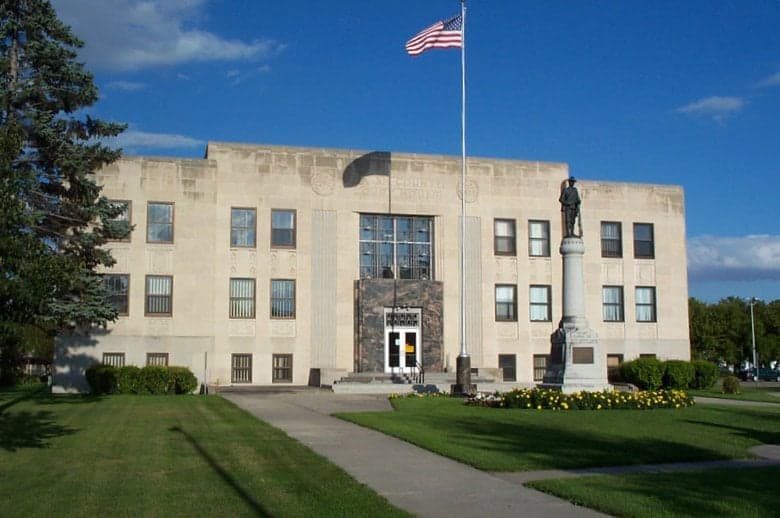
Photo: Wikipedia
Personal Sovereignty in Walsh County
Viable for self-reliance. Generally workable, though some barriers may limit total independence.
What does Personal Sovereignty tell us?
Personal Sovereignty measures your capacity for self-reliance and independence with minimal government friction. Higher scores mean fewer barriers between you and the way you want to live... but it assumes you have the space you need and good neighbors.
What does this tell us?
Personal Sovereignty measures your capacity for self-reliance and independence with minimal government friction. Higher scores mean fewer barriers between you and the way you want to live... but it assumes you have the space you need and good neighbors.
State Policy
Energy independence: Net exporter (500% of energy produced in-state)
Personal Liberty
Homesteading

Personal Liberty Analysis
Walsh County, North Dakota offers a personal sovereignty environment shaped by the state’s strong tradition of local control and limited government, making it a compelling option for individuals and families who prioritize autonomy. The county’s rural character—with a population density of roughly 5 people per square mile—means fewer layers of bureaucracy and a regulatory posture that leans heavily toward self-reliance. For those considering relocation, the combination of low taxes, permissive gun laws, and minimal zoning restrictions creates a foundation for a high degree of personal freedom, though the specific experience varies between the county seat of Grafton and smaller communities like Park River, Minto, and Hoople.
Tax burden and regulatory posture in Walsh County
North Dakota’s tax structure is among the most favorable in the nation for those seeking to keep more of their earnings. The state has no personal income tax, and Walsh County’s property tax rates are moderate, with the average effective rate hovering around 1.2% of assessed home value—lower than many Midwestern counties. Sales tax in the county is 6.5% (5% state, 1.5% local), which is competitive nationally. The regulatory environment is light-touch: there are no county-level business licensing requirements beyond basic state registration, and agricultural operations face minimal permitting. In Grafton, the largest town with about 4,000 residents, zoning is limited primarily to commercial districts, while unincorporated areas and smaller towns like Edinburg and Lankin have virtually no land-use restrictions. This means a family can buy a parcel and build a home or start a small business without navigating layers of red tape, a stark contrast to more regulated states.
Self-defense rights and gun law specifics in Walsh County
North Dakota is a constitutional carry state, meaning no permit is required to carry a concealed firearm for anyone legally allowed to possess a gun. Walsh County fully aligns with this framework, and local law enforcement in Grafton and Park River does not impose additional restrictions. The state also has strong Stand Your Ground laws, with no duty to retreat in any place where a person has a legal right to be. For those interested in firearms training, the Walsh County Sheriff’s Office in Grafton occasionally hosts safety courses, and there are multiple private shooting ranges in the area, including one near Minto. Background checks are only required for purchases from licensed dealers, not private sales. This legal environment gives residents broad latitude for self-defense, whether in town or on rural acreage.
Self-reliance and homesteading viability in Walsh County
Homesteading and off-grid living are highly feasible in Walsh County, particularly outside incorporated city limits. Agricultural land is abundant, with parcels commonly available in 40- to 160-acre increments, and prices per acre are among the lowest in the state—often under $2,000 for non-irrigated cropland. Zoning in unincorporated areas is essentially nonexistent, so building a home, installing solar panels, drilling a well, or setting up a septic system requires only state-level permits, which are straightforward. In communities like Hoople and Edinburg, residents routinely live on well water and propane, with no county mandate to connect to municipal utilities. Grafton and Park River have more structured building codes for new construction within town limits, but even there, the requirements are minimal compared to urban centers. Off-grid feasibility is high, though winters are harsh—average January lows near -5°F—so reliable heating and insulation are critical.
Personal liberties in Walsh County: parental rights, medical autonomy, speech, and property
North Dakota has strong protections for parental rights, including a state law that affirms parents’ authority to direct their children’s education and medical care. In Walsh County, this translates to a thriving homeschooling community, with families in Grafton, Minto, and rural areas forming informal support networks. The state does not require parents to notify the district of homeschooling intentions, and there are no mandated curriculum approvals. Medical autonomy is similarly broad: North Dakota has no vaccine mandate for adults, and while school immunization requirements exist, philosophical exemptions are permitted. Free speech and property rights are protected under state law, with no county-level ordinances restricting signage, political expression, or land use beyond basic nuisance codes. Property rights are further reinforced by North Dakota’s strong eminent domain protections, which require just compensation and public necessity for any taking.
Overall, Walsh County ranks among the most sovereignty-friendly areas in the Upper Midwest, with a regulatory and tax environment that consistently places it in the top 10% of U.S. counties for personal freedom. The combination of no income tax, constitutional carry, minimal zoning, and strong parental rights creates a baseline of autonomy that is rare even in conservative states. For families and individuals who value self-reliance and want to live with minimal government interference, Walsh County—especially its unincorporated areas and smaller towns like Hoople and Edinburg—offers a level of personal sovereignty that is difficult to match in more populated regions of the country.

* Values derived from national, state, county, city and local statistics and may differ in a specific area. Last updated: 2026-07-18T17:31:06.000Z
Narrative content on this page is AI-generated and may contain mistakes. Verify any details that matter before acting on them.
ReloMaps may earn a commission from affiliate links at no extra cost to you.

