Photo: Wikipedia
Personal Sovereignty in Richland County
Strong independent fundamentals that actively favor personal liberty and low regulation.
What does Personal Sovereignty tell us?
Personal Sovereignty measures your capacity for self-reliance and independence with minimal government friction. Higher scores mean fewer barriers between you and the way you want to live... but it assumes you have the space you need and good neighbors.
What does this tell us?
Personal Sovereignty measures your capacity for self-reliance and independence with minimal government friction. Higher scores mean fewer barriers between you and the way you want to live... but it assumes you have the space you need and good neighbors.
State Policy
Energy independence: Net exporter (500% of energy produced in-state)
Personal Liberty
Homesteading

Personal Liberty Analysis
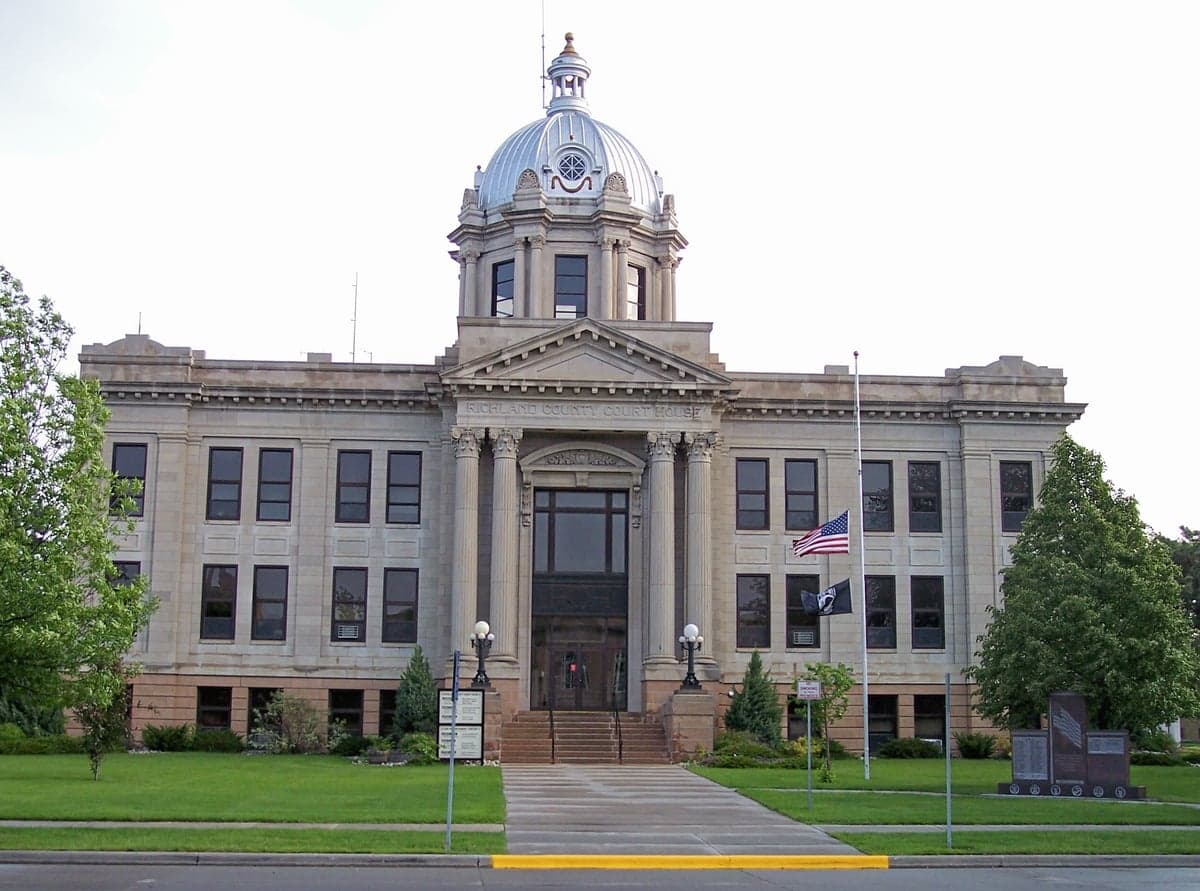
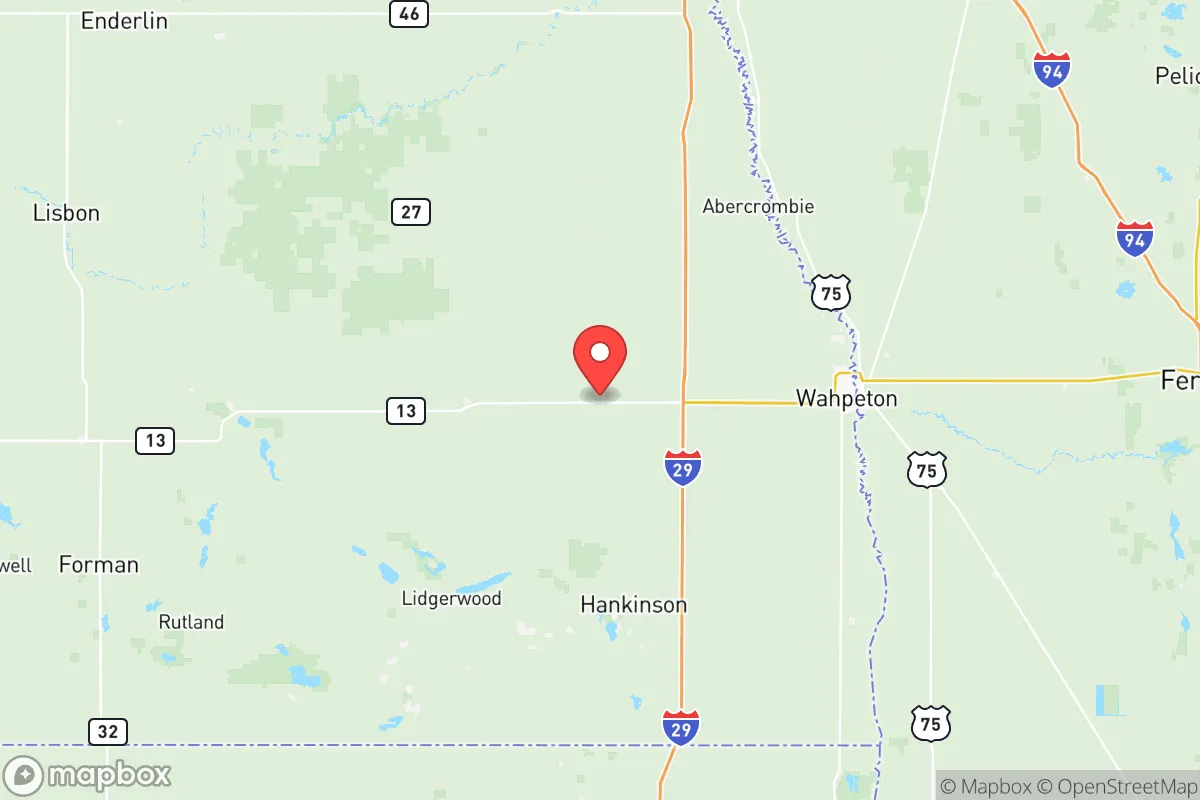
Richland County, North Dakota, offers a notably high degree of personal sovereignty, grounded in the state’s historically libertarian-leaning ethos and low population density. For individuals and families prioritizing autonomy, the county presents a regulatory environment that is light-touch by national standards, with minimal interference in daily life, strong property rights, and a legal framework that broadly supports self-reliance. The county seat, Wahpeton, serves as the commercial and governmental hub, while smaller communities like Lidgerwood, Hankinson, and Wyndmere offer even more pronounced rural independence, each with distinct local characteristics that affect the practical experience of personal freedom.
Tax burden and regulatory posture in Richland County
North Dakota’s tax climate is among the most favorable in the nation for those seeking to keep more of their earnings. The state has no personal property tax on vehicles or business equipment, and its income tax is structured with a flat rate of 1.95% on taxable income up to $44,725 for single filers, with a top marginal rate of 2.50% on income above $383,850. Property taxes in Richland County are levied at the local level, with rates varying by township. In Wahpeton, the mill levy is approximately 120 mills, translating to roughly $1,200 annually per $100,000 of assessed residential value — a moderate figure compared to many Midwestern counties. The regulatory posture in Richland County is characterized by minimal zoning outside of Wahpeton’s city limits. Unincorporated areas, such as those around Great Bend and Barney, have no county-wide building codes or land-use ordinances, allowing property owners broad discretion in construction, land use, and business operations. The county’s planning and zoning department primarily handles subdivision regulations and floodplain management, leaving most other decisions to individual landowners. This light regulatory touch extends to business licensing, where no county-level occupational licenses are required for most trades, though state-level licensing applies to professions like contracting and healthcare.
Self-defense and gun law specifics in North Dakota and Richland County
North Dakota is a constitutional carry state, meaning no permit is required for the concealed or open carry of a handgun by any legal resident aged 21 or older who is not prohibited from possessing firearms under state or federal law. Richland County’s sheriff’s office, based in Wahpeton, processes concealed weapons permits for those who wish to obtain them for reciprocity purposes, but the county does not impose any additional local restrictions on firearm ownership or carry. The state preempts all local firearm ordinances, so cities like Wahpeton, Lidgerwood, and Hankinson cannot enact their own gun control measures. Stand-your-ground and castle doctrine laws are fully codified in North Dakota Century Code 12.1-05-07 and 12.1-05-07.1, providing broad legal protection for the use of deadly force in self-defense, defense of others, and defense of property, with no duty to retreat in any place where the individual is lawfully present. The state also prohibits the seizure of firearms during declared emergencies, a provision that has been tested and upheld. For gun owners, Richland County offers a permissive environment with no waiting periods, no firearm registration, and no permit-to-purchase requirements. The practical effect is that residents in rural areas like Mooreton or Fairmount can exercise their Second Amendment rights with virtually no administrative friction.
Self-reliance and homesteading viability in Richland County
Richland County is well-suited for those pursuing a self-reliant lifestyle, with abundant agricultural land and minimal regulatory barriers to homesteading. Outside of Wahpeton’s city limits, minimum lot sizes are not regulated by the county, allowing for small-acreage homesteads on parcels as small as one acre, provided they meet state-level septic and well requirements. In townships like Dwight and Walcott, land prices remain accessible, with raw agricultural land averaging $1,500 to $3,000 per acre as of 2025, depending on soil quality and drainage. Off-grid living is feasible and legally straightforward: North Dakota has no state-level prohibition on rainwater collection, and the county does not require connection to municipal water or sewer systems outside of platted subdivisions. Solar panel installation is permitted without special permitting, and net metering is available through local cooperatives like Cass County Electric Cooperative, which serves parts of western Richland County. The county’s zoning ordinance, which applies only in unincorporated areas, is limited to floodplain management and subdivision review, meaning that building a detached garage, workshop, or secondary dwelling does not require county approval as long as it meets state building codes. For those seeking a more intentional community, the area around Colfax offers several small-scale farms and hobby homesteads, while the Red River Valley’s fertile soil supports substantial garden production. The primary practical constraint is the harsh winter climate, which necessitates robust infrastructure for heating, water storage, and road access.
Personal liberties in Richland County: parental rights, medical autonomy, and property
North Dakota law provides strong protections for parental rights, with a statutory presumption that parents have the fundamental right to direct the upbringing, education, and healthcare of their children. The state’s parental rights statute, NDCC 14-09-00.1, explicitly states that a parent’s decision regarding the care, custody, and control of their child is not subject to state interference absent clear and convincing evidence of harm. In Richland County, this translates to minimal state involvement in homeschooling, which is regulated only by a simple notification requirement and annual standardized testing or portfolio review. Medical autonomy is similarly broad: North Dakota does not mandate childhood vaccination for school attendance, allowing philosophical exemptions, and the state has no COVID-19 vaccine mandate for public employees or students. The county’s health department in Wahpeton provides voluntary services but does not enforce any compulsory health measures. Property rights are robust, with North Dakota’s right-to-farm law protecting agricultural operations from nuisance lawsuits, and the state’s eminent domain authority is narrowly circumscribed, requiring a public purpose and just compensation. In terms of speech and assembly, Richland County has no local ordinances restricting expressive activity, and the county commission meetings in Wahpeton are open to public comment without prior registration. The overall legal environment in the county reflects a consistent pattern: the default position is that individuals are free to make their own choices unless a specific, narrowly drawn law restricts them.
Compared to other regions of the country, Richland County ranks among the most sovereignty-friendly areas in the Upper Midwest. Its combination of constitutional carry, low taxation, minimal zoning, strong parental rights, and permissive homesteading regulations places it in the top tier of counties for those prioritizing personal autonomy. The county’s small population — roughly 16,000 residents spread across 1,440 square miles — means that community norms, rather than government enforcement, are the primary social regulator. For a family or individual relocating from a high-regulation state, the adjustment to Richland County’s hands-off approach is significant, but for those who value independence and self-reliance, it is precisely this environment that makes the area attractive.

* Values derived from national, state, county, city and local statistics and may differ in a specific area. Last updated: 2026-07-02T16:30:03.000Z
Narrative content on this page is AI-generated and may contain mistakes. Verify any details that matter before acting on them.
ReloMaps may earn a commission from affiliate links at no extra cost to you.

