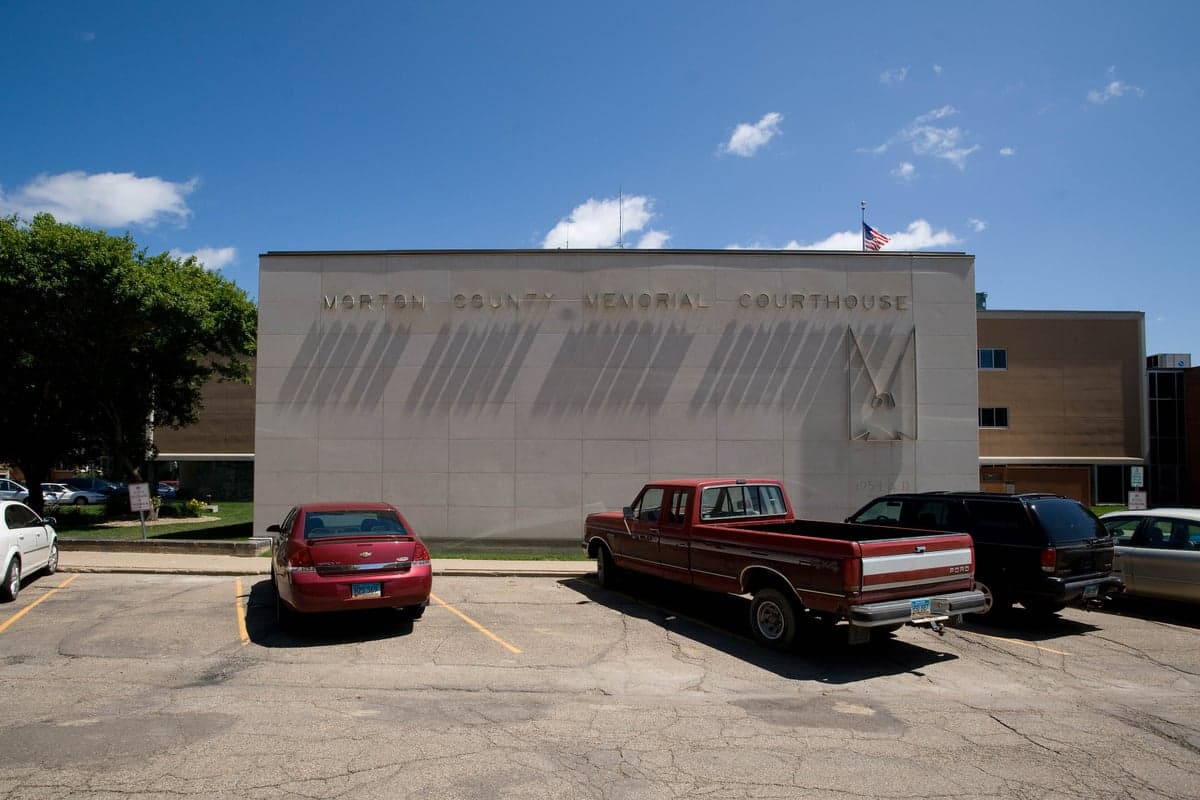
Photo: Wikipedia
Strategic Assessment of Morton County
Strong survivability profile. Good buffer from population centers, with manageable environmental and tactical risks.
What does the Strategic Assessment tell us?
Our Strategic Assessment grades tactical survivability of an area. Major population centers, military targets, fallout zones, natural disasters, and border exposure all drive risk — lower exposure means a more defensible position in a crisis.
This is heavily inspired by Joel Skousen's Strategic Relocation book. Highly recommended you checkout the book ($)What does this tell us?
Our Strategic Assessment grades tactical survivability of an area. Major population centers, military targets, fallout zones, natural disasters, and border exposure all drive risk — lower exposure means a more defensible position in a crisis.
This is heavily inspired by Joel Skousen's Strategic Relocation book. Highly recommended you checkout the book ($)Strategic Pillars

Key Distances
Strategic Assessment Analysis
Morton County, anchored by the city of Mandan, offers a compelling resilience profile for those prioritizing disaster readiness and self-sufficiency, largely due to its position on the western edge of North Dakota's central corridor. While not isolated, the county benefits from being a secondary population hub rather than a primary target, with Mandan sitting directly across the Missouri River from the state capital, Bismarck. This location provides a balance of access to critical infrastructure — including a major rail hub, an interstate highway (I-94), and a regional airport — without the density and risk profile of a coastal megacity or a major military-adjacent population center. For the relocator thinking strategically, Morton County represents a place where you can be connected to regional resources while maintaining a lower national strategic profile.
Geographic position and natural advantages for a lower-risk relocation
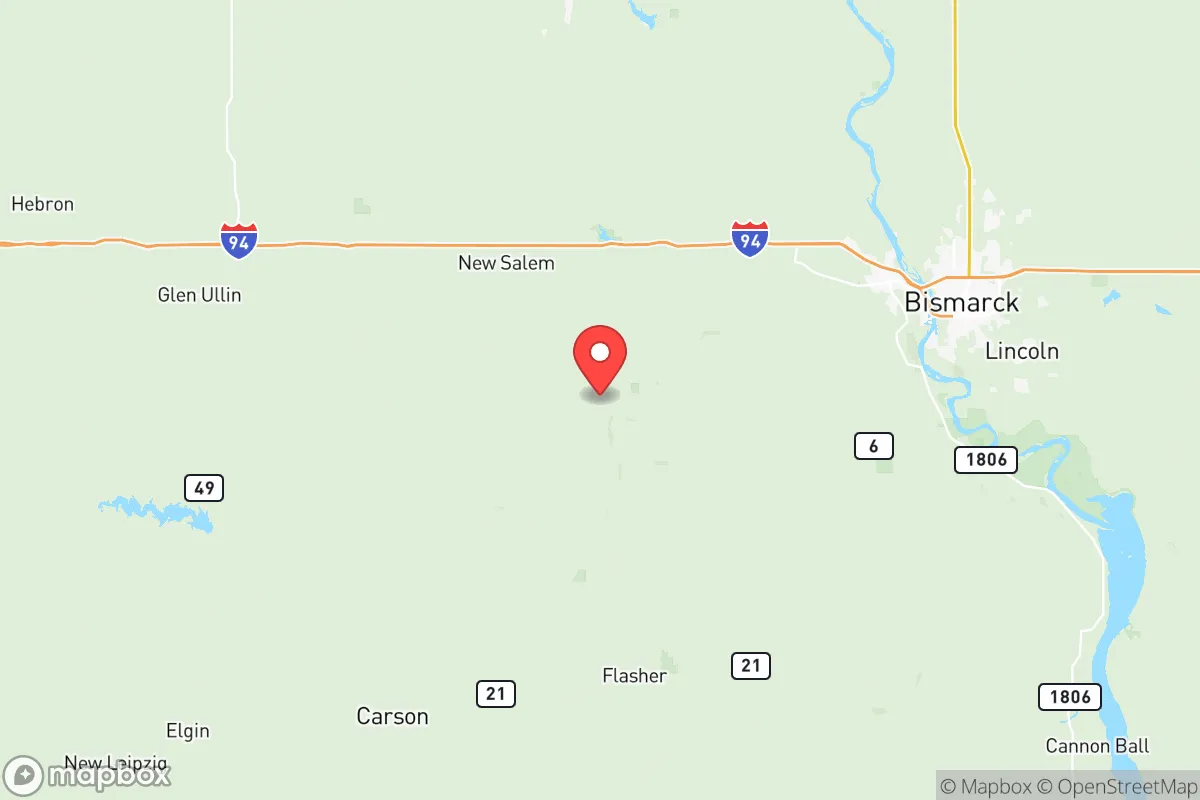
Morton County's geography is defined by the Missouri River valley and the rolling Great Plains, offering a mix of flat agricultural land, river breaks, and buttes that provide natural terrain diversity. The county spans roughly 1,900 square miles, with Mandan as its urban core (population roughly 24,000) surrounded by smaller towns like New Salem, Glen Ullin, and Hebron. A key advantage is the county's position roughly 150 miles from the Montana border and over 400 miles from Minneapolis, placing it far from the congested and vulnerable I-94 corridor east of the Twin Cities. The Missouri River provides a massive, reliable freshwater source — a critical asset that most plains counties lack — and the glacial aquifer underlying much of the region offers additional groundwater reserves. The county sits well outside the major earthquake and hurricane zones, and its continental climate, while harsh in winter, does not attract the mass migration pressures that milder regions face. For a relocator, the low population density outside Mandan (under 3,000 people in New Salem, for example) means fewer competition for resources during a disruption, while the county's position as a transportation and energy gateway (with I-94 and BNSF rail lines running east-west) ensures supply chain connectivity.
Risks, exposures, and proximity to potential national-security targets
The primary vulnerability for Morton County is its proximity to energy and military infrastructure that could become secondary targets or create cascading disruptions. The BNSF rail line through Mandan is a major conduit for the Bakken oilfield's crude shipments to refineries in the Midwest and Gulf Coast, making the rail yard a potential choke point for energy supply. While no major nuclear power plants or active ICBM silos sit within the county (the closest Minuteman III missile fields are in western Montana and northeastern North Dakota), the Garrison Dam, located roughly 75 miles upstream on the Missouri River, controls significant flood risk and hydroelectric generation; a dam failure would have catastrophic downstream effects on Mandan and Bismarck. Additionally, the county's position 200 miles from Minot Air Force Base (home to B-52 bombers and nuclear weapons storage) places it outside the likely immediate blast zone of a first-strike scenario, but within the range of fallout patterns depending on prevailing winds. The city of Mandan itself hosts a petroleum refinery (the Mandan Refinery, owned by Tesoro/Andeavor) that processes roughly 70,000 barrels per day — a valuable local resource for fuel but also a potential hazard for air quality in a crisis. More practically, the county faces regular winter blizzards that can shut down transportation for days, and the Missouri River's flood cycles (notably 2011) have demonstrated that even inland river towns are not immune to costly natural disasters. For the conservative-minded relocator, these risks are manageable with preparation — a well-stocked pantry, alternate heat sources, and a vehicle capable of snow travel — rather than existential threats.
Practical resilience: food, water, energy, and defensibility for a relocator
Morton County scores well on the fundamentals of self-sufficiency. The Missouri River provides an almost limitless water source, and the county's rural areas (particularly around the Oliver County line to the north and the Grant County line to the south) have abundant agricultural land suitable for small-scale farming or livestock. The region is part of the larger Prairie Pothole Region, which supports waterfowl and game, giving experienced hunters a source of protein. For energy, the county sits within the Bakken shale play, and while most extraction is west of here, natural gas and oil infrastructure — including pipelines and local refineries — means fuel availability is above average. The Morton County Soil Conservation District supports local producers, and the annual Mandan Rodeo and agricultural fairs indicate a strong culture of local food production. Electricity comes from a mix of coal and natural gas plants in the region (with the Coal Creek Station 60 miles north), though a prolonged grid failure would require significant off-grid solar or wind backup. Defensibility is mixed: Mandan's river valley setting offers natural chokepoints (bridges across the Missouri, I-94 exits), but the open plains around New Salem and Hebron afford little cover for a rural defensible position. The county's low crime rate (by national standards) and strong law enforcement presence in Mandan suggest a stable baseline, but the homogenously rural social fabric means outsiders should expect to integrate through church, community events, and neighbors — a process that takes time but rewards those who adapt. For the family willing to invest in a modern, off-grid-capable home with propane backup, a well-equipped tractor, and livestock space, Morton County's practical resilience is high — provided the relocator understands that self-sufficiency here means working with the climate, not against it.
In the overall strategic picture, Morton County is a solid intermediate choice: not as remote as the Montana Hi-Line or the Black Hills, but far more resilient than a suburban enclave near a coastal metro or a primary national target. Its great vulnerability is the same as its great strength — the Missouri River corridor that concentrates population, transport, and industry in a narrow floodplain. A relocator who chooses a rural homestead north or south of Mandan (towns like Sanger or Saint Anthony, each with fewer than 100 residents) gains the water access while losing the target appeal of the county's only city. For those willing to trade a mild climate for strategic depth, Morton County offers a defensible, resource-rich, and economically stable base that will function well in most crisis scenarios short of a major nationwide breakdown. The harsh winters are a built-in population filter, and the conservative, self-reliant values of the region align with the mindset of anyone reading an assessment like this. If you can handle the cold and the isolation, this is a place where preparation goes a long way.

* Values derived from national, state, county, city and local statistics and may differ in a specific area. Last updated: 2026-07-01T01:54:54.000Z
Narrative content on this page is AI-generated and may contain mistakes. Verify any details that matter before acting on them.
ReloMaps may earn a commission from affiliate links at no extra cost to you.

