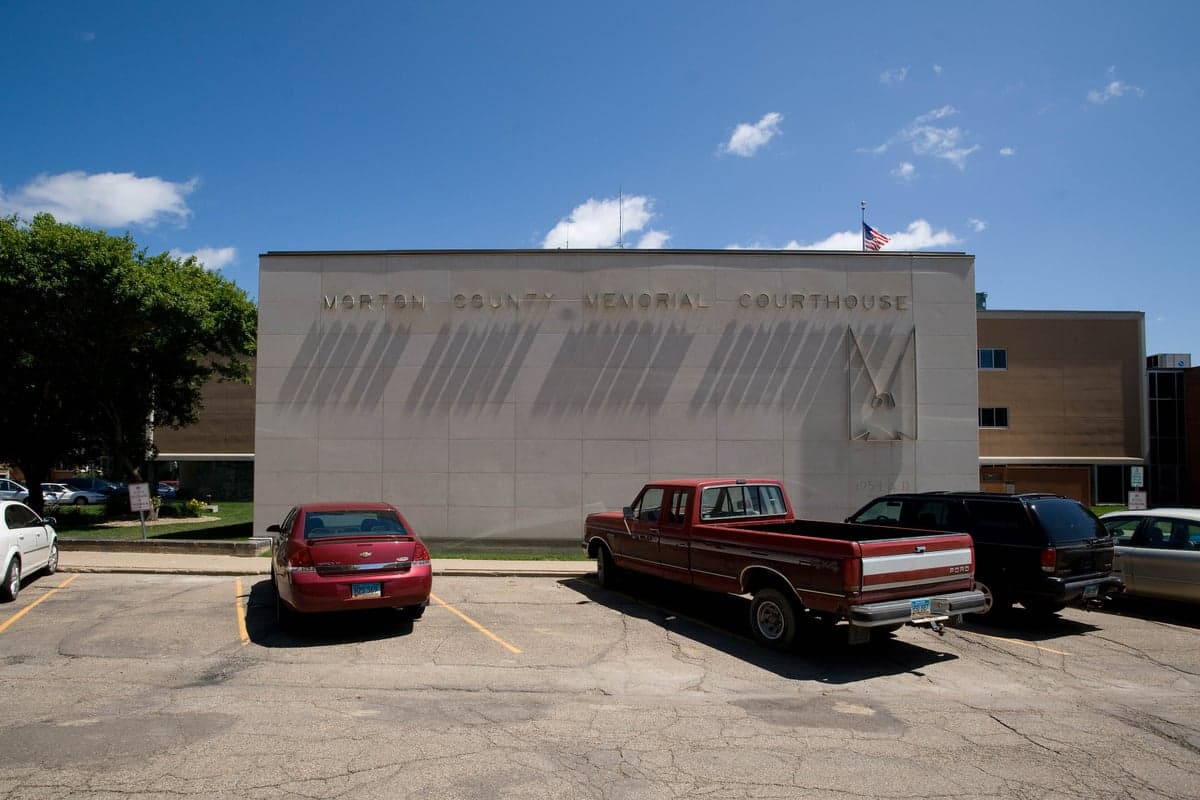
Photo: Wikipedia
Personal Sovereignty in Morton County
Viable for self-reliance. Generally workable, though some barriers may limit total independence.
What does Personal Sovereignty tell us?
Personal Sovereignty measures your capacity for self-reliance and independence with minimal government friction. Higher scores mean fewer barriers between you and the way you want to live... but it assumes you have the space you need and good neighbors.
What does this tell us?
Personal Sovereignty measures your capacity for self-reliance and independence with minimal government friction. Higher scores mean fewer barriers between you and the way you want to live... but it assumes you have the space you need and good neighbors.
State Policy
Energy independence: Net exporter (500% of energy produced in-state)
Personal Liberty
Homesteading

Personal Liberty Analysis
Morton County, North Dakota, offers an environment of strong personal sovereignty rooted in the state’s low-tax, low-regulation ethos and a deep-seated culture of self-reliance. The county’s approach to governance consistently prioritizes individual autonomy over bureaucratic oversight, making it a distinctly freedom-oriented choice within the Upper Midwest. For single individuals and families prioritizing liberty and independence, Morton County presents a legal and cultural landscape where government footprint is deliberately minimized, and personal choice is broadly respected.
Tax burden and regulatory posture: how North Dakota’s policies affect personal finances
Morton County benefits from North Dakota’s famously light regulatory posture, which translates directly into lower financial burdens on residents. The state levies no personal or corporate income tax and maintains a moderate state sales tax of 5%, with local optional taxes typically adding 1–2% across the county. Property taxes are local-based and relatively moderate; for a $250,000 home, expect around $3,500 annually in Mandan, the county seat, though rates in smaller towns like Flasher or Hebron may be slightly lower due to fewer municipal services. The regulatory environment is explicitly pro-business and pro-personal: licensing requirements for trades are minimal, home-based businesses face few restrictions outside of Mandan’s city limits, and land-use regulations in unincorporated areas are sparse. In places like New Salem or Almont, a resident can operate a small engine repair shop out of a garage or run a cottage food operation with little more than a state registration. This light touch contrasts sharply with more restrictive Western states, where county-level zoning and state-level environmental rules can create years-long permitting hurdles. For the personal-sovereignty-minded, the key takeaway is that most of Morton County’s unincorporated areas operate under a “permission not required” approach, with only basic building codes and health ordinances applying to non-urban land.
Self-defense and gun law specifics: what homeowners need to know about Morton County
Morton County is particularly friendly to self-defense and firearm ownership, reflecting North Dakota’s constitutional-carry status. North Dakota does not require a permit to carry a concealed firearm for eligible adults. Stand-your-ground law is in effect, with no duty to retreat in a place where the individual is lawfully present. Gun ownership culture is strong and practical; firearms are a routine part of rural life for both recreation and protection. In towns such as Glen Ullin and Hebron, it is common to see vehicles with gun racks year-round, and local shooting ranges near Mandan provide access for both handgun and rifle practice. The state prohibits only standard categories of persons—convicted felons, domestic violence offenders, those involuntarily committed—with no magazine capacity limits, no assault weapons bans, and no universal background checks beyond federal requirements. Morton County’s sheriff’s office is known for a pro-Second Amendment stance, and applications for purchase permits (still needed for handgun transfers from private parties) are routinely processed within days. For those interested in deeper preparedness, the county’s sparse population density—22 people per square mile outside the Mandan metro—means that rural residents may rely on self-defense as a practical necessity for property protection against wildlife or trespassers. The legal environment provides strong backing for this autonomy, with clear statutes on lethal force justified when facing immediate threat of death or great bodily harm.
Self-reliance and homesteading viability: lot sizes, zoning, and off-grid feasibility across Morton County
The ability to live independently and off-grid varies significantly within Morton County, with the most permissive conditions found in its rural townships and smaller towns. In unincorporated areas outside Mandan—places like St. Anthony or Fort Rice—no formal zoning applies to most residential land; you can keep livestock, build a home with your own hands (subject to basic state and county construction codes for safety), and set up solar panels or wind turbines without needing a permit from county planners. Minimum lot sizes for rural homesteads are typically 5–10 acres when subdivided, but many existing parcels offer 20 to 40 acres or more. Off-grid living is legally straightforward for electricity: the state net metering law allows solar installation with utility interconnection, but if you want no utility connection at all, no law prohibits it for single-family dwellings as long as septic and well water meet state health standards. In Mandan city limits, however, zoning is more restrictive: minimum lots are smaller (6,000–8,000 square feet per typical subdivision), manufactured homes must meet city aesthetics standards, and off-grid utility independence is not allowed because city water and sewer connection is mandatory. The contrast is sharp between Mandan and places like Hazen or Flasher, where you can drive a 10-minute commute to town but live on 5 acres with your own water well, septic system, and a fully off-grid solar array. For the self-reliance seeker, the strategy is clear: buy outside the Mandan city limits but still within the county to maximize personal housing sovereignty.
Personal liberties in practice: parental rights, medical autonomy, speech, and property protections
Morton County’s legal and cultural environment grants wide latitude in personal autonomy across several key areas. Parental rights are strongly protected by state statute: North Dakota law explicitly affirms that a parent "has a fundamental right to make decisions concerning the care, custody, and control of their child," and this is enforced by local judges and the state legislature. In education, while public schools in Mandan and rural districts follow state curriculum standards, parental opt-out for specific topics (such as sex education) is easy, and homeschooling is essentially unregulated—no registration or testing requirements apply. Medical autonomy is significant: North Dakota has no mandatory vaccination requirements for children entering public school beyond the standard MMR/DTP/Polio schedule, but parents can claim philosophical exemption for all vaccines including COVID-19. The state also allows direct primary care contracts (the “concierge medicine” model) which bypass insurance and regulatory mandates. On speech and expression, Morton County residents enjoy robust First Amendment protections in a conservative culture where public debate on contentious issues is common without fear of government retaliation. Property rights are reinforced by the state’s strong private property protections and limited eminent domain use; the county’s agricultural zoning in rural townships has not been used to restrict typical agricultural or homestead activities. One note: property taxes, while moderate relative to income, do represent a perpetual claim on land—so the autonomy here is high but not absolute. Overall, the county scores well for anyone who values their right to raise children as they see fit and make basic medical decisions without extensive government intrusion.
Compared to many of its peers regionally, Morton County offers a notably high degree of personal sovereignty, particularly in the areas of gun rights, home-based business regulation, and off-grid feasibility outside its urban core. The state’s lack of income tax, constitutional carry, and minimal homeschooling oversight place it firmly in the top tier of freedom-oriented jurisdictions in the Upper Plains. However, the county is not uniform: Mandan imposes moderate restrictions on housing and business that do not apply in Glen Ullin, Hebron, or St. Anthony. For single individuals or families who prioritize self-reliance and want a government that stays out of their daily lives, Morton County delivers—provided you choose your specific town wisely. The balance of legal protections for personal choice, combined with practical homesteading viability just minutes from the Missouri River, makes it a compelling option for those seeking independence in the northern Great Plains.

* Values derived from national, state, county, city and local statistics and may differ in a specific area. Last updated: 2026-07-01T01:54:54.000Z
Narrative content on this page is AI-generated and may contain mistakes. Verify any details that matter before acting on them.
ReloMaps may earn a commission from affiliate links at no extra cost to you.

