Personal Sovereignty in Mckenzie County
Viable for self-reliance. Generally workable, though some barriers may limit total independence.
What does Personal Sovereignty tell us?
Personal Sovereignty measures your capacity for self-reliance and independence with minimal government friction. Higher scores mean fewer barriers between you and the way you want to live... but it assumes you have the space you need and good neighbors.
What does this tell us?
Personal Sovereignty measures your capacity for self-reliance and independence with minimal government friction. Higher scores mean fewer barriers between you and the way you want to live... but it assumes you have the space you need and good neighbors.
State Policy
Energy independence: Net exporter (500% of energy produced in-state)
Personal Liberty
Homesteading

Personal Liberty Analysis
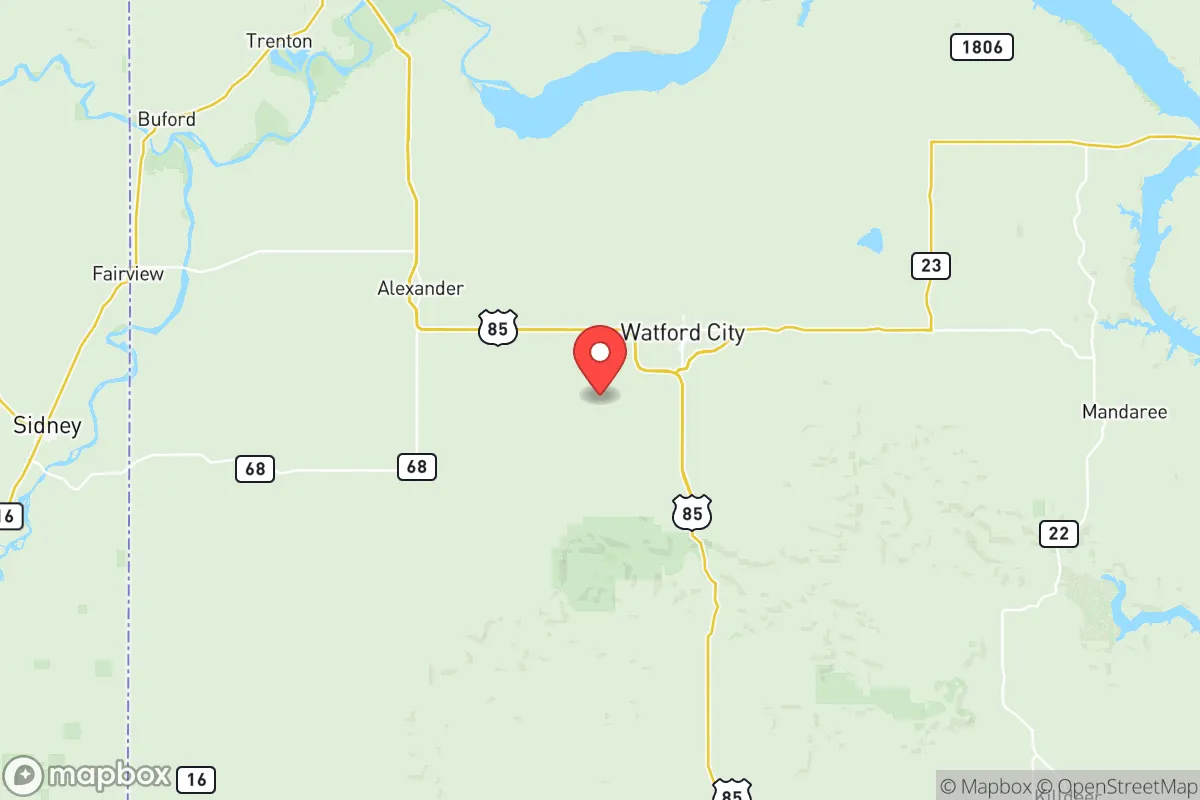
Mckenzie County, North Dakota offers one of the strongest personal sovereignty environments in the Upper Great Plains, driven by the state’s minimal regulatory footprint, constitutional carry laws, and a culture of self-reliance rooted in the energy and agriculture sectors. The county seat of Watford City, along with the smaller communities of Alexander, Arnegard, and Keene, operate under a light-touch governance model that prioritizes individual autonomy over collective mandates. For relocation researchers evaluating personal freedom, Mckenzie County presents a landscape where state-level protections for gun rights, property use, and parental authority combine with local zoning that generally favors private decision-making over government oversight.
Tax burden and regulatory posture in Mckenzie County
North Dakota’s tax structure is among the most favorable in the nation for individuals seeking to minimize government extraction. The state imposes no personal property tax on vehicles or household goods, and its income tax is a flat rate of 1.95% on taxable income up to $44,725, with a top marginal rate of 2.9% — well below national averages. Mckenzie County itself levies a property tax rate that is moderate by state standards, but the county’s oil and gas revenue has historically kept local mill levies lower than in non-energy-producing counties. Sales tax in Watford City is 7.5% (5% state, 2% county, 0.5% city), while Alexander and Arnegard see slightly lower combined rates due to smaller municipal add-ons. The regulatory posture in Mckenzie County is decidedly permissive: there is no countywide building code for single-family homes outside of city limits, no mandatory energy code enforcement, and no county-level business licensing beyond basic state requirements. This creates a governance environment where individuals can build, operate, and live with minimal bureaucratic friction, particularly in unincorporated areas where county oversight is intentionally thin.
Self-defense and gun law specifics in Mckenzie County
North Dakota is a constitutional carry state, meaning that any legal resident 18 or older who can legally possess a firearm may carry it openly or concealed without a permit. Mckenzie County fully aligns with this framework, and local law enforcement in Watford City and Alexander does not impose additional restrictions beyond state statute. The county has no local ordinances restricting magazine capacity, firearm types, or storage requirements. Stand-your-ground laws apply statewide, with no duty to retreat in any place where a person has a legal right to be. For residents of Keene or Arnegard, where sheriff response times can exceed 20 minutes in remote areas, the practical importance of unrestricted carry and self-defense rights is significant. The county’s gun culture is deeply integrated into daily life — hunting, target shooting, and personal protection are common topics, and firearms are openly carried in rural settings without social friction. There are no county-specific waiting periods, background check expansions, or firearm registration requirements beyond federal baseline checks at licensed dealers.
Self-reliance and homesteading viability in Mckenzie County
Mckenzie County offers substantial opportunities for self-reliant living, particularly in its unincorporated areas and smaller towns. Lot sizes in rural zoning districts start at a minimum of 5 acres, with many parcels available in the 10- to 40-acre range near Alexander and Keene. The county does not enforce minimum square footage requirements for dwellings, and there are no restrictions on manufactured homes, tiny houses, or RVs used as primary residences on private land outside city limits. Off-grid feasibility is high: well water is accessible across most of the county at depths of 100-300 feet, and septic system permitting is handled at the county level with straightforward requirements. Solar energy systems face no county-level permitting hurdles, and net metering is available through local cooperatives like McKenzie Electric Cooperative, though battery storage is more common due to winter cloud cover. The county’s zoning ordinance explicitly allows agricultural uses, livestock keeping, and home-based businesses on rural parcels without special permits. Watford City’s city limits impose more conventional subdivision standards, but the surrounding townships and unincorporated areas remain among the most homestead-friendly jurisdictions in the state.
Personal liberties in Mckenzie County
Parental rights in North Dakota are strongly protected by state law, including a 2021 statute affirming parents’ fundamental right to direct the upbringing, education, and healthcare of their children. Mckenzie County’s school districts — including Watford City Public Schools and Alexander Public Schools — do not enforce mask mandates or vaccine requirements beyond state minimums, and curriculum transparency laws allow parents to review instructional materials. Medical autonomy is supported by the state’s broad scope of practice for naturopathic doctors and a 2023 law protecting physicians who decline to perform procedures they find morally objectionable. Speech and assembly rights are fully protected, with no county-level ordinances restricting political expression or public gathering. Property rights are reinforced by North Dakota’s strong eminent domain protections, which require public necessity and just compensation, and by the county’s minimal land-use regulation. For residents of Arnegard or Keene, the practical experience of personal liberty is one of near-total autonomy in daily decisions — from building methods to medical choices to educational approaches — constrained only by state-level safety codes and federal law.
Relative to other regions of the country, Mckenzie County ranks among the top tier for personal sovereignty, comparable to rural counties in Montana, Idaho, and Wyoming but with the added advantage of North Dakota’s oil-funded infrastructure and lower property taxes. The county’s combination of constitutional carry, minimal zoning, off-grid viability, and strong parental rights creates an environment where individuals and families can exercise substantial control over their lives without significant government interference. For relocation researchers prioritizing personal freedom, Mckenzie County — particularly its unincorporated areas and smaller towns like Alexander, Arnegard, and Keene — offers a sovereignty profile that is both legally protected and culturally reinforced.

* Values derived from national, state, county, city and local statistics and may differ in a specific area. Last updated: 2026-07-19T14:37:20.000Z
Narrative content on this page is AI-generated and may contain mistakes. Verify any details that matter before acting on them.
ReloMaps may earn a commission from affiliate links at no extra cost to you.

