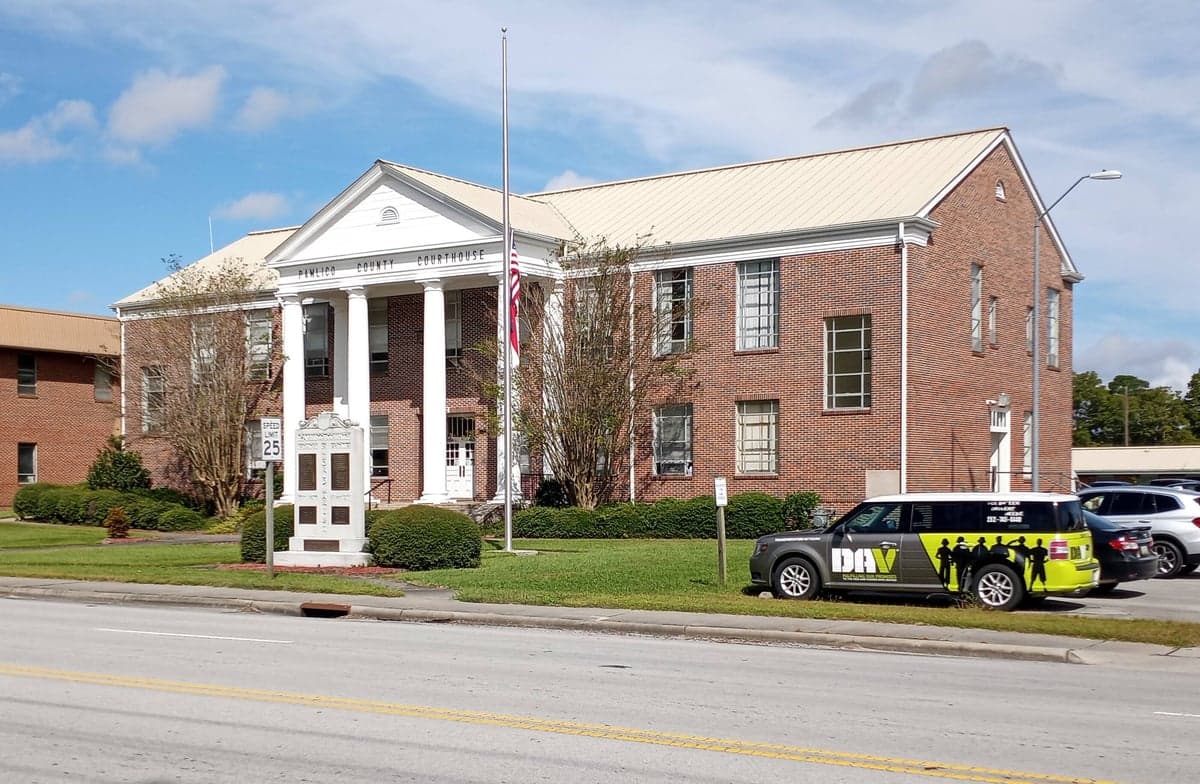
Photo: Wikipedia
Quality of Life in Pamlico County
A livable area that tracks near national norms for affordability, walkability, and neighborhood health.
What does Quality of Life tell us?
Quality of Life measures an area by evaluating factors like cost of living, nearby amenities, country club access, airport proximity, socioeconomic signals and neighborhood character. For large states, this is a general average — quality of life can vary dramatically between metro areas, suburbs, and rural communities within the same state.
What does this tell us?
Quality of Life measures an area by evaluating factors like cost of living, nearby amenities, country club access, airport proximity, socioeconomic signals and neighborhood character. For large states, this is a general average — quality of life can vary dramatically between metro areas, suburbs, and rural communities within the same state.
Cost of Living
23% below national average
103%
The Real Cost of Living in Pamlico County for 2026
| Tier | Individual | Family (4) |
|---|---|---|
| Survival | $15k | $27k |
| Comfortable | $41k | $60k |
| Luxury | $107k+ | $167k+ |
| Elite (Top 5%) | $126k+ | $196k+ |
Quality-of-Life Analysis
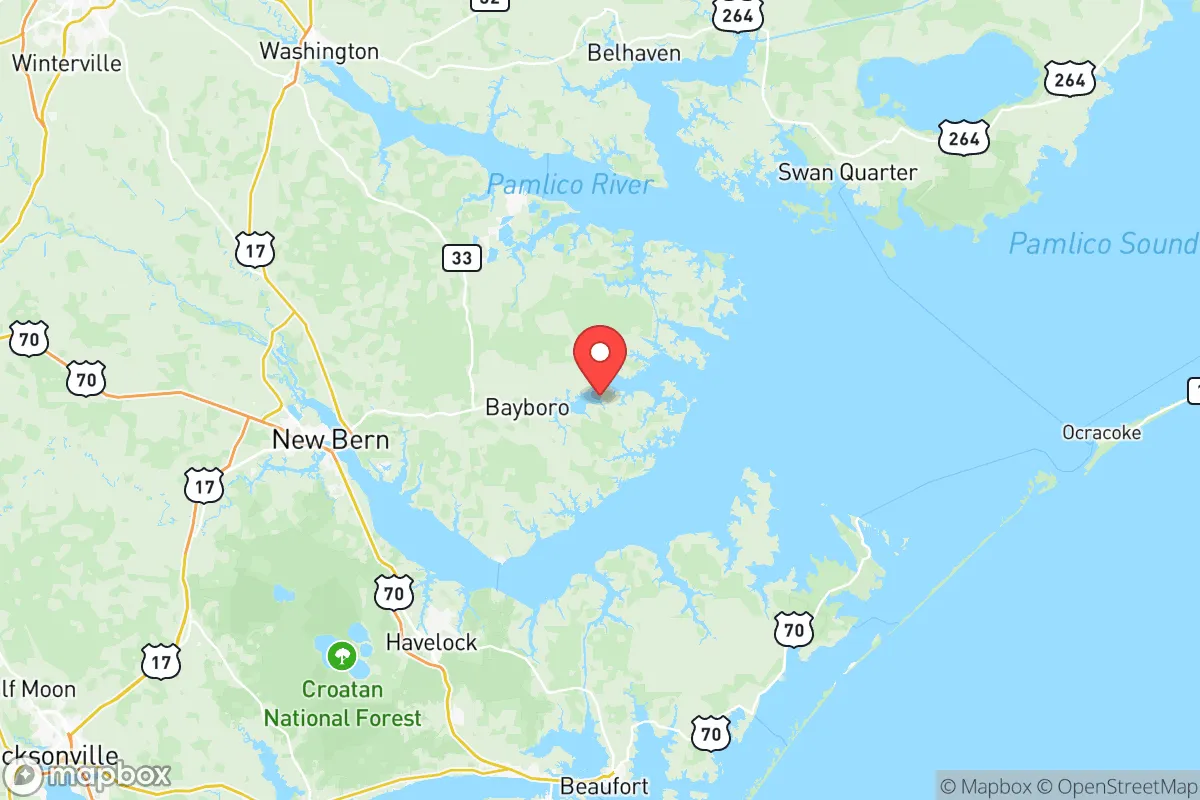
Pamico County, North Carolina, offers a quality-of-life spectrum that ranges from the waterfront county seat of Bayboro to the unincorporated river communities of Oriental’s outskirts and the agricultural interior around Stonewall. With a cost of living index of 77 (23% below the national average), the county attracts a mix of retirees seeking Neuse River waterfront, commuters working in New Bern or Havelock, and families drawn to low housing costs and rural schools. The trade-off is a sparse amenity base — there is no major hospital or big-box retail inside county lines — so daily life is defined by how far residents are willing to drive for groceries, healthcare, and entertainment.
Largest town(s) & population centers
Bayboro is the county seat and the closest thing Pamlico County has to a commercial hub, with roughly 1,100 residents. It anchors the county’s government services — the courthouse, county administration, and the Pamlico County Schools central office are all here — and hosts the weekly farmers market and the county’s only full-service grocery options within walking distance of downtown. Daily life in Bayboro is compact: residents can walk to the post office, the library, and the Pamlico County Community Center, but most shopping trips require a 25-minute drive west on NC-55 to New Bern’s Walmart and Target corridor. The town’s housing stock is a mix of older single-family homes on tree-lined streets and newer subdivisions on the eastern edge, with median home values around $209,800 countywide.
Oriental, despite being smaller in population (roughly 900 year-round residents), functions as the county’s recreational and second-home center. Known as the "sailing capital of North Carolina," it sits on the Neuse River and draws a seasonal population that swells in summer. Its waterfront has a working marina, a handful of restaurants, and a small art gallery scene — amenities that Bayboro lacks. Housing here skews higher than the county median, with waterfront lots and renovated bungalows often listing between $300,000 and $500,000, though inland streets still offer homes in the $150,000–$200,000 range.
Smaller towns & rural pockets
Stonewall, located about 10 miles south of Bayboro on NC-304, is a quiet agricultural community of roughly 280 people. It has a post office, a volunteer fire department, and little else — residents drive to Bayboro or New Bern for most errands. The surrounding area is dominated by soybean, corn, and wheat farms, and the housing stock is largely older farmhouses on 1-to-5-acre lots. Further south, the unincorporated community of Lowland sits near the county’s southern tip, adjacent to the Croatan National Forest; it’s a fishing and hunting enclave with no commercial services at all. On the western edge, the community of Grantsboro (population ~200) straddles NC-55 and serves as a bedroom community for New Bern commuters, with newer subdivisions and a few roadside businesses including a hardware store and a diner.
Cost & lifestyle range
The cost spread across Pamlico County is wide. At the low end, rural parcels in Stonewall and Lowland can be had for $50,000–$80,000 for a half-acre to two-acre lot, and older homes in need of renovation sometimes list below $100,000. Median rent countywide is $909, but rental inventory is scarce — most units are single-family homes or duplexes in Bayboro and Grantsboro, with few apartments available. At the high end, Oriental’s waterfront properties and the Neuse River frontage between Oriental and Minnesott Beach command premiums; a riverfront home with a private dock typically runs $400,000–$700,000. The average commute of 24.2 minutes reflects the split: Bayboro and Stonewall residents often work locally or in county government, while Grantsboro and Oriental residents are more likely to drive to New Bern (25–30 minutes) or the Cherry Point Marine Corps Air Station in Havelock (35–40 minutes).
Amenities follow the same gradient. Oriental has the only sit-down restaurants and a small grocery (Pamlico Grocery), while Bayboro has a Food Lion and a pharmacy. Stonewall and Lowland have no retail beyond a gas station. Healthcare is the biggest gap: the nearest hospital is CarolinaEast Medical Center in New Bern, a 30–40 minute drive from most of the county, and there are no urgent care centers inside Pamlico County lines.
Pamlico County works best for people who want a genuinely rural or small-town life with water access and are willing to trade convenience for space and low cost. Retirees and remote workers with flexible schedules thrive in Oriental’s waterfront community; families and budget-conscious buyers find the most value in Bayboro and Grantsboro’s subdivisions; and hunters, fishermen, and homesteaders are drawn to the isolation of Stonewall and Lowland. Those needing frequent medical care, robust schools, or walkable urban amenities will likely find the county too sparse — but for the right buyer, the 23% cost-of-living discount and the Neuse River frontage are a compelling combination.

Crime in Pamlico County
Crime rates similar to the national median for U.S. locations.
Violent CrimeViolent Crime Analysis
Property CrimeProperty Crime Analysis
Crime Analysis
Pamlico County, North Carolina, reports a violent crime rate of 325.1 incidents per 100,000 residents and a property crime rate of 1,765.6 per 100,000, placing it in a moderate range for rural Eastern North Carolina. The county’s overall safety picture is mixed: it is not among the state’s most dangerous jurisdictions, but it is not the quietest rural enclave either, with property crime—particularly theft and burglary—being the more pressing concern for residents in towns like Bayboro, Oriental, and Grantsboro.
Crime in context
Pamlico County’s violent crime rate of 325.1 per 100,000 sits slightly below the North Carolina state average of roughly 380 per 100,000, but it is meaningfully higher than the national rate of approximately 300 per 100,000. The property crime rate of 1,765.6 per 100,000 is closer to the state average of about 1,900 per 100,000, yet it remains a full 25% above the national figure of roughly 1,400 per 100,000. When compared to neighboring counties, the picture sharpens: Craven County, home to New Bern, reports violent crime near 450 per 100,000, while Carteret County to the south runs closer to 250 per 100,000. Pamlico falls between these two, meaning it is neither a high-risk corridor nor a low-crime refuge. The county’s small population—roughly 12,000 residents—means that even a handful of incidents can swing the annual rate noticeably, so year-to-year fluctuations should be interpreted with caution.
What residents experience
For those living in Pamlico County, the day-to-day reality is that property crime is the dominant concern. The 1,765.6 per 100,000 property crime rate translates to roughly 200 reported incidents per year across the county, with larceny and motor vehicle theft leading the list. The county’s geography—spread-out rural communities connected by NC-55 and NC-306—means that response times from the Pamlico County Sheriff’s Office can be longer than in urban areas, and many residents rely on neighborhood watch networks in places like Oriental and Stonewall. Violent crime, while lower in raw numbers, is not absent: the 325.1 per 100,000 rate reflects roughly 35 to 40 violent incidents annually, and these are concentrated in the more populated areas around Bayboro, the county seat, and the commercial corridor near Grantsboro. Domestic violence and simple assault account for most of these, rather than stranger-on-stranger violence. The judicial district for Pamlico County is the 3rd Prosecutorial District, which also covers Carteret and Craven counties; this district has not adopted the progressive, offender-first prosecutorial policies seen in larger urban centers like Durham or Wake County, meaning that case processing and sentencing in Pamlico remain comparatively traditional and victim-focused.
Residents in the unincorporated areas and smaller communities like Lowland and Hobucken generally report feeling safer than those in the county’s few commercial hubs. The lack of a major urban center within Pamlico County itself is a double-edged sword: it keeps violent crime lower than in nearby New Bern, but it also means that property crime often goes unsolved due to limited investigative resources. The sheriff’s office, which has fewer than 30 sworn deputies, covers over 340 square miles, and this staffing level is a practical constraint that residents should factor into their safety planning.
Neighborhood-level variation in Pamlico County is driven more by proximity to commercial activity than by socioeconomic divides. The waterfront areas of Oriental, a popular sailing destination, see occasional thefts from docks and vehicles, while the inland agricultural communities around Arapahoe and Reelsboro experience lower incident rates. For prospective residents, the safest approach is to choose a home in the sparsely populated northern and eastern parts of the county, away from the Bayboro-Grantsboro corridor where most reported crime occurs.
* Values derived from national, state, county, city and local statistics and may differ in a specific area. Last updated: 2026-11-05T10:19:56.000Z
Narrative content on this page is AI-generated and may contain mistakes. Verify any details that matter before acting on them.
ReloMaps may earn a commission from affiliate links at no extra cost to you.

