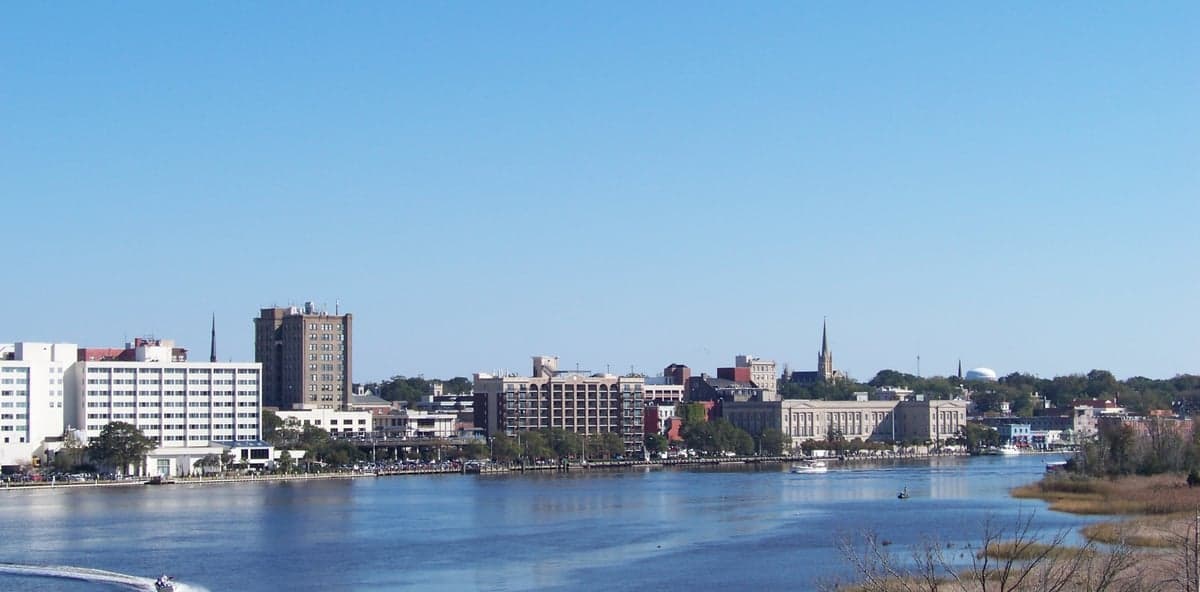
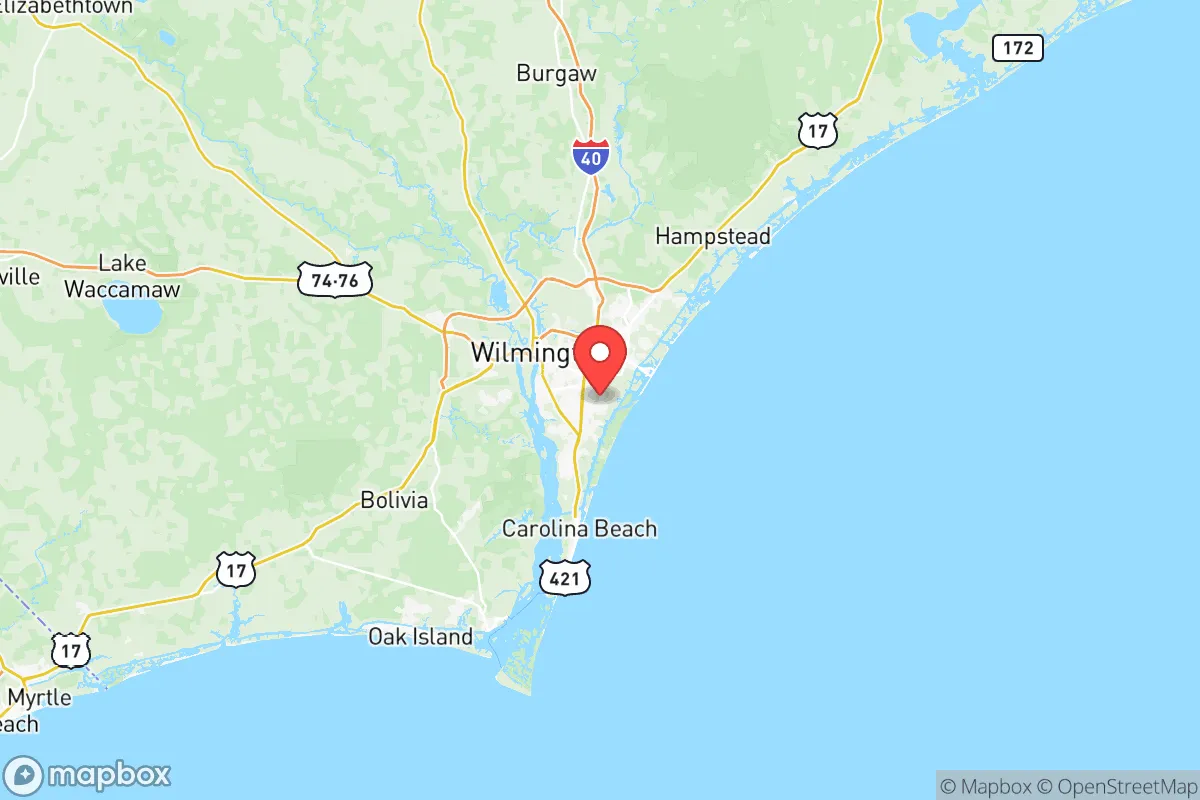
Photo: Wikipedia
Quality of Life in New Hanover County
A livable area that tracks near national norms for affordability, walkability, and neighborhood health.
What does Quality of Life tell us?
Quality of Life measures an area by evaluating factors like cost of living, nearby amenities, country club access, airport proximity, socioeconomic signals and neighborhood character. For large states, this is a general average — quality of life can vary dramatically between metro areas, suburbs, and rural communities within the same state.
What does this tell us?
Quality of Life measures an area by evaluating factors like cost of living, nearby amenities, country club access, airport proximity, socioeconomic signals and neighborhood character. For large states, this is a general average — quality of life can vary dramatically between metro areas, suburbs, and rural communities within the same state.
Cost of Living
19% above national average
72%
The Real Cost of Living in New Hanover County for 2026
| Tier | Individual | Family (4) |
|---|---|---|
| Survival | $21k | $40k |
| Comfortable | $69k | $101k |
| Luxury | $132k+ | $204k+ |
| Elite (Top 5%) | $171k+ | $266k+ |
Quality-of-Life Analysis
New Hanover County, anchored by the coastal city of Wilmington, offers a quality-of-life spectrum that ranges from dense, amenity-rich urban centers to quiet, unincorporated rural pockets, attracting a mix of professionals, retirees, students, and families. The county's character shifts noticeably as you move from the historic riverfront and bustling beach towns inland toward the agricultural and wooded areas near the Pender County line. With a cost-of-living index of 119 (100 being the U.S. average), the county is more expensive than the national norm, but the trade-off is access to the Cape Fear coast, a mild climate, and a job market centered on healthcare, film production, and tourism.
Largest town(s) & population centers
Wilmington is the county's undisputed hub, home to roughly 120,000 residents and the region's primary employment, retail, and cultural center. Daily life here revolves around the historic downtown along the Cape Fear River, the University of North Carolina Wilmington (UNCW) campus, and the medical corridor anchored by Novant Health New Hanover Regional Medical Center. The city offers a walkable riverfront with restaurants, breweries, and the Riverwalk, plus a growing arts scene and the North Carolina Aquarium at Fort Fisher. Carolina Beach and Wrightsville Beach are the county's two major beach towns, each with a distinct personality: Carolina Beach leans toward a laid-back, family-oriented boardwalk vibe with seasonal amusements, while Wrightsville Beach is more upscale, known for its surfing, high-end dining, and proximity to the Landfall gated community. Leland, technically in Brunswick County just across the Cape Fear River, is often grouped with New Hanover County's orbit due to commuting patterns, but within the county itself, the unincorporated community of Ogden functions as a major suburban bedroom area with big-box retail and new subdivisions.
Smaller towns & rural pockets
Beyond the main population centers, New Hanover County contains several smaller communities and unincorporated areas that offer a quieter, more affordable lifestyle. Castle Hayne, located along the Northeast Cape Fear River, is a rural crossroads with a mix of mobile homes, older farmhouses, and newer subdivisions, and it remains one of the county's least expensive areas to buy property. Kings Grant is a large, unincorporated suburban neighborhood near the intersection of Market Street and Military Cutoff Road, offering mid-range homes and proximity to shopping without city taxes. Myrtle Grove, south of Wilmington near the Intracoastal Waterway, is a residential area with a mix of older ranch homes and newer construction, popular with families and retirees who want to be close to the beaches without paying beach-town premiums. Seagate and Bayshore are small, unincorporated communities near the Brunswick County line, characterized by waterfront lots, mobile homes, and a slower pace of life. The county's rural character is most pronounced in the northern and western sections, where you'll find horse farms, pine forests, and agricultural land, though development pressure from Wilmington is steadily pushing outward.
Cost & lifestyle range
The cost of living and lifestyle options vary dramatically across the county. At the high end, Landfall (a gated golf-course community in Wilmington) and Wrightsville Beach command median home values well above the county's overall median of $353,700, often exceeding $700,000 for single-family homes. Rent in these areas also runs higher, with many units exceeding the county median rent of $1,343. At the lower end, Castle Hayne and parts of northern New Hanover County offer median home values closer to $250,000, and rents can dip below $1,000 for older apartments or duplexes. The average commute across the county is a manageable 20.5 minutes, but residents in rural areas like Castle Hayne or northern unincorporated sections may face drives of 25–30 minutes to reach Wilmington's job centers. Amenities shift accordingly: urban and beach areas offer walkable dining, nightlife, and cultural venues, while rural pockets provide larger lots, privacy, and lower property taxes but require driving for groceries, schools, and healthcare. The county's public schools are part of the New Hanover County Schools system, which is generally well-regarded, though performance varies by school, with top-rated options like Eugene Ashley High School in the Landfall area and more mixed results in rural elementary schools.
New Hanover County is best suited for people who want coastal access and urban amenities but are willing to navigate a moderate cost of living and growing traffic congestion. Professionals and families who prioritize proximity to Wilmington's job market, healthcare, and higher education will find the most options in the city and its immediate suburbs. Retirees and second-home buyers often gravitate toward the beach towns or gated communities like Landfall. Those seeking affordability and space — including tradespeople, remote workers, and younger families — can find value in Castle Hayne, Myrtle Grove, or the rural northern corridor, provided they are comfortable with longer drives and fewer walkable services. The county's diversity of settings means that a single county can accommodate a surfer renting a studio near the pier, a doctor in a Landfall estate, and a farmer on acreage near the Pender line — all within a 20-minute drive of each other.

Crime in New Hanover County
Crime rates similar to the national median for U.S. locations.
Violent CrimeViolent Crime Analysis
Property CrimeProperty Crime Analysis
Crime Analysis
New Hanover County, anchored by the city of Wilmington, presents a mixed safety picture that demands careful scrutiny from potential residents. With a violent crime rate of 310.5 incidents per 100,000 residents and a property crime rate of 1,694.6 per 100,000, the county's overall statistics exceed both state and national averages, raising concerns about public safety and the effectiveness of local justice policies.
Crime in context
New Hanover County's violent crime rate of 310.5 per 100,000 is significantly higher than the North Carolina state average of approximately 240 per 100,000 and well above the national benchmark. Property crime in the county, at 1,694.6 per 100,000, also surpasses the national average of roughly 1,950 per 100,000 but remains a persistent concern for homeowners and businesses. These figures place New Hanover among the more dangerous counties in the Cape Fear region, with Wilmington acting as the primary driver of elevated crime statistics. The city of Wilmington itself reports violent crime rates that can exceed 500 per 100,000 in certain precincts, while outlying towns like Carolina Beach and Kure Beach experience substantially lower rates due to their smaller populations and seasonal tourism economies.
What residents experience
Daily life in New Hanover County varies dramatically by location and time of day. Residents in downtown Wilmington and along the Market Street corridor frequently report property crimes such as vehicle break-ins, package thefts, and burglaries. The county's progressive district attorney's office, which has implemented bail reform and diversion programs for nonviolent offenders, has drawn criticism from community safety advocates who argue these policies contribute to repeat offenses and a revolving-door justice system. In contrast, residents in the more suburban areas of Landfall, Figure Eight Island, and Wrightsville Beach experience far fewer incidents, though property crime remains a concern even in these affluent enclaves. The New Hanover County Sheriff's Office maintains a visible presence in unincorporated areas, but response times can lag in rural stretches near the Pender County line.
Neighborhood-level variation
Safety in New Hanover County is highly localized, with sharp contrasts between neighborhoods just blocks apart. The Forest Hills and Carolina Place neighborhoods near UNCW report moderate crime levels, while areas around Cape Fear Boulevard and the Castle Street corridor see elevated property crime and occasional violent incidents. The county's beach communities — Wrightsville Beach, Carolina Beach, and Kure Beach — consistently rank as the safest areas, though seasonal crowds bring increased theft and disorder during summer months. Prospective residents should examine block-level crime maps and consider that liberal judicial policies in New Hanover County's court system have led to reduced incarceration rates for property offenders, a factor that correlates with higher recidivism in the region. For families seeking the lowest crime exposure, the northern reaches of the county near Ogden and Murraysville offer suburban safety with reasonable proximity to Wilmington's amenities, while those prioritizing beach access should budget for the premium costs of Wrightsville Beach or Figure Eight Island, where crime remains minimal but property values reflect that security.
* Values derived from national, state, county, city and local statistics and may differ in a specific area. Last updated: 2026-07-02T17:24:37.000Z
Narrative content on this page is AI-generated and may contain mistakes. Verify any details that matter before acting on them.
ReloMaps may earn a commission from affiliate links at no extra cost to you.

