Photo: Wikipedia
Quality of Life in Nash County
A livable area that tracks near national norms for affordability, walkability, and neighborhood health.
What does Quality of Life tell us?
Quality of Life measures an area by evaluating factors like cost of living, nearby amenities, country club access, airport proximity, socioeconomic signals and neighborhood character. For large states, this is a general average — quality of life can vary dramatically between metro areas, suburbs, and rural communities within the same state.
What does this tell us?
Quality of Life measures an area by evaluating factors like cost of living, nearby amenities, country club access, airport proximity, socioeconomic signals and neighborhood character. For large states, this is a general average — quality of life can vary dramatically between metro areas, suburbs, and rural communities within the same state.
Cost of Living
28% below national average
124%
The Real Cost of Living in Nash County for 2026
| Tier | Individual | Family (4) |
|---|---|---|
| Survival | $15k | $28k |
| Comfortable | $33k | $49k |
| Luxury | $107k+ | $167k+ |
| Elite (Top 5%) | $126k+ | $196k+ |
Quality-of-Life Analysis
Nash County, North Carolina, offers a broad spectrum of quality-of-life options, from the urban-suburban amenities of its largest town, Rocky Mount, to the quiet, agricultural rhythms of communities like Spring Hope and Bailey. This diversity attracts a mix of residents: young professionals and families seeking affordable housing near the I-95 corridor, retirees looking for low-cost living in small towns, and those who want a rural lifestyle with access to city jobs. With a cost of living index of 72 (28% below the national average), a median home value of $171,100, and a median rent of $924, the county provides a wide range of housing and lifestyle choices within a single, accessible region.
Largest town(s) & population centers
Rocky Mount is the county’s primary population center, straddling the Nash-Edgecombe county line and serving as the economic and cultural hub. Daily life here centers around the revitalized downtown district, which features the Imperial Centre for the Arts & Sciences, the historic Douglass Block, and a growing number of local restaurants and breweries. The city is also home to major employers like Pfizer and CSX Transportation, and its location at the intersection of I-95 and US 64 makes it a logistics and distribution hub. The average commute in the county is 23.7 minutes, which is manageable for those working in Rocky Mount or commuting to nearby Wilson or Raleigh. While Rocky Mount offers the most amenities—shopping at Golden East Crossing, medical care at Nash UNC Health Care, and the Rocky Mount Event Center—it also has a higher crime rate than the county’s smaller towns, a factor many families weigh when choosing a neighborhood.
Smaller towns & rural pockets
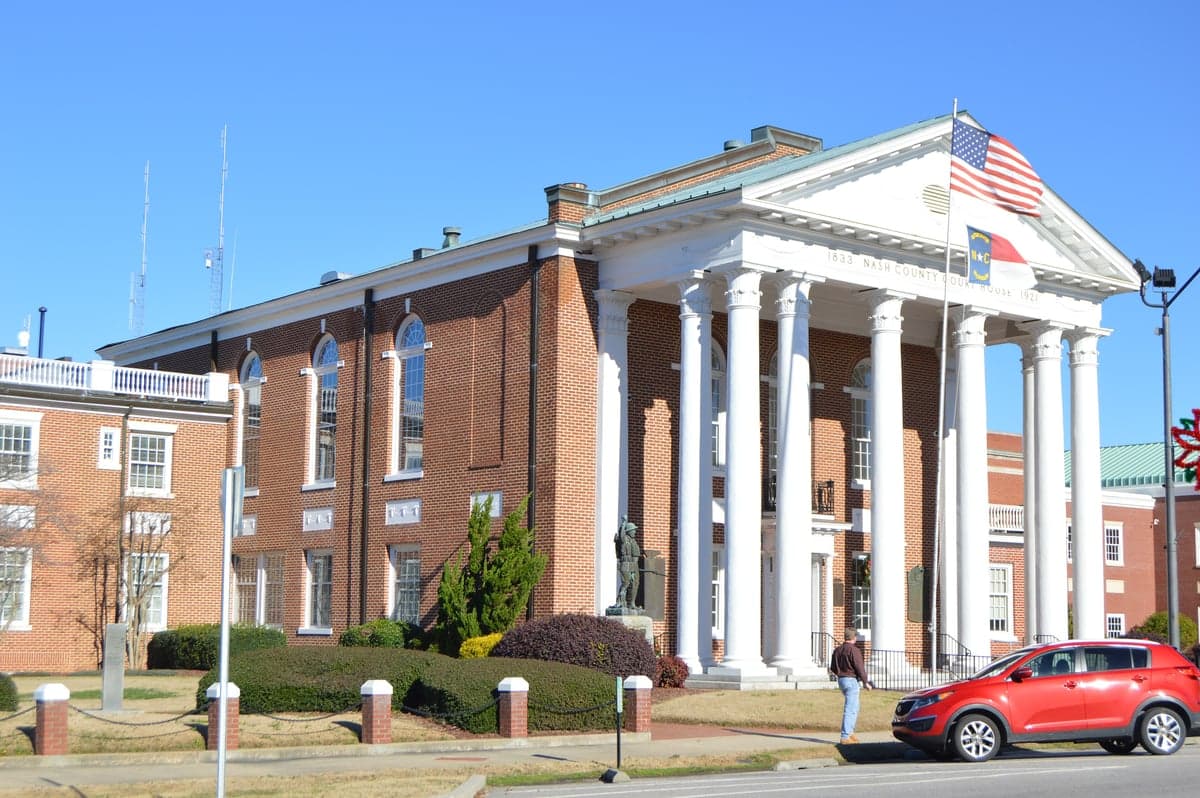
Outside of Rocky Mount, Nash County is defined by a network of smaller towns and unincorporated communities that offer a distinctly different pace. Nashville, the county seat, is a charming historic town with a walkable downtown square, the Nash County Courthouse, and a strong sense of community. It attracts families and retirees who want small-town living with easy access to Rocky Mount (about 15 minutes away). Spring Hope is even more rural, known for its annual National Whistlers’ Convention and its quiet, agricultural setting. Bailey and Middlesex are tiny towns where life revolves around local churches, volunteer fire departments, and family farms. These areas offer the lowest housing costs in the county, with many homes under $150,000, but they have limited retail and dining options, requiring residents to drive to Rocky Mount or Wilson for most errands.
Cost & lifestyle range
The cost of living and lifestyle options in Nash County vary dramatically by location. At the higher end, newer subdivisions in the Rocky Mount suburbs—such as those near the Nash-Rocky Mount city limits or along the US 64 bypass—feature homes in the $250,000–$350,000 range, with access to better schools and shorter commutes to the city’s jobs. At the lower end, Spring Hope and Bailey offer median home values well below the county average of $171,100, with many fixer-uppers available for under $100,000. Renters also see a wide spread: a two-bedroom apartment in Rocky Mount averages around $950–$1,100, while similar rentals in Nashville or Spring Hope can be found for $700–$850. The trade-off is clear: Rocky Mount provides the most jobs, entertainment, and services, while the smaller towns offer quiet, space, and the lowest costs but require more driving for work and shopping.
Nash County is best suited for those who value affordability and choice over urban density. Families and first-time homebuyers find the housing market exceptionally accessible, especially compared to the Triangle region 45 minutes west. Retirees and remote workers are drawn to the slower pace of towns like Nashville and Spring Hope, while those who need immediate access to retail, healthcare, and employment will prefer Rocky Mount. The county’s mix of rural tranquility and small-city convenience makes it a practical option for anyone seeking a lower cost of living without sacrificing all urban amenities.

Crime in Nash County
Crime rates similar to the national median for U.S. locations.
Violent CrimeViolent Crime Analysis
Property CrimeProperty Crime Analysis
Crime Analysis
Nash County, North Carolina, presents a mixed safety picture where property crime rates significantly exceed both state and national averages, while violent crime remains slightly below the national benchmark. Located in the coastal plain region, the county's largest municipality, Rocky Mount (which straddles Nash and Edgecombe counties), drives much of the crime data, while smaller towns like Nashville, Spring Hope, and Bailey generally report lower incident rates. The county's overall violent crime rate of 311.3 per 100,000 residents sits just below the U.S. average of roughly 380 per 100,000, but property crime at 1,699.6 per 100,000 runs notably higher than the national figure of approximately 1,954 per 100,000 — though still below the North Carolina state average of roughly 2,100 per 100,000.
Crime in context
When compared to peer counties in eastern North Carolina, Nash County's violent crime rate is moderate, falling well below the rates seen in nearby Wilson County (around 450 per 100,000) and Edgecombe County (over 500 per 100,000). However, property crime in Nash County is a persistent concern, driven largely by larceny and motor vehicle theft in the Rocky Mount urban corridor. The Rocky Mount Police Department reports that a significant portion of property crimes are concentrated in the city's central and southern districts, particularly along the US 301 and I-95 corridors. By contrast, the county seat of Nashville (population roughly 5,500) consistently logs violent crime rates below 200 per 100,000, and Spring Hope and Bailey report even lower figures, often with single-digit violent crime totals annually. The Nash County Sheriff's Office patrols unincorporated areas and smaller towns, where response times are longer but incident density is far lower.
What residents experience
Residents in Nash County's more rural precincts describe a quiet, low-crime daily life punctuated by occasional thefts from vehicles and outbuildings. In Rocky Mount, however, the experience differs markedly: the city's violent crime rate of roughly 450 per 100,000 places it among the higher-crime municipalities in the region. Aggravated assault accounts for nearly 70% of violent incidents, with robbery and burglary concentrated in areas near the I-95/US 64 interchange. Property crime in Rocky Mount includes frequent vehicle break-ins and package thefts, particularly in apartment complexes near the Golden East Crossing shopping district. The Nash County District Attorney's Office, serving the 7th Prosecutorial District, has faced criticism from some residents for what they perceive as lenient plea deals and reduced sentencing for repeat property offenders — a pattern some attribute to progressive prosecutorial policies that prioritize diversion programs over incarceration. This approach, while intended to reduce recidivism, has led to frustration among victims who report seeing the same individuals cycle through the system for multiple thefts or break-ins.
Neighborhood-level variation is pronounced across Nash County. The Middlesex and Castalia areas, with populations under 1,000 each, report near-zero violent crime and property crime rates under 800 per 100,000. In Rocky Mount, the Battleground and West Mount neighborhoods see elevated crime, while the North Rocky Mount area near Nash Community College and the Country Club Road corridor remain relatively safer. For those considering relocation, the safest strategy is to target the smaller towns or the county's western precincts, where sheriff's deputies maintain a visible presence and community watch programs are active. Prospective residents should also monitor judicial trends: if the district attorney's office continues to emphasize progressive reforms — such as reduced cash bail and deferred prosecution for property crimes — the county's property crime rate may remain elevated, particularly in Rocky Mount's higher-density zones.
* Values derived from national, state, county, city and local statistics and may differ in a specific area. Last updated: 2026-07-17T00:19:35.000Z
Narrative content on this page is AI-generated and may contain mistakes. Verify any details that matter before acting on them.
ReloMaps may earn a commission from affiliate links at no extra cost to you.

