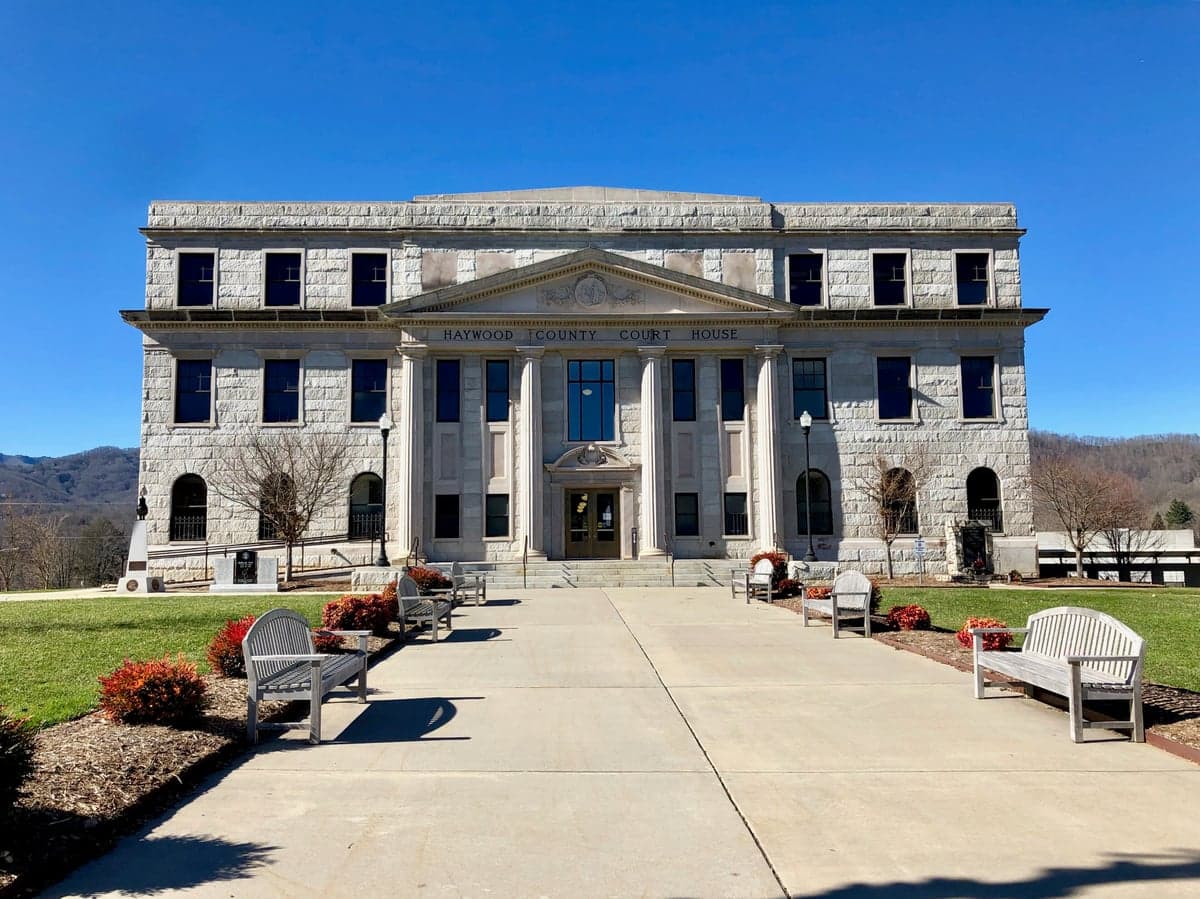
Photo: Wikipedia
Demographics of Haywood County
Affluence Level in Haywood County
A middle-class area roughly in line with national averages across income, home values, education, and employment.
People of Haywood County
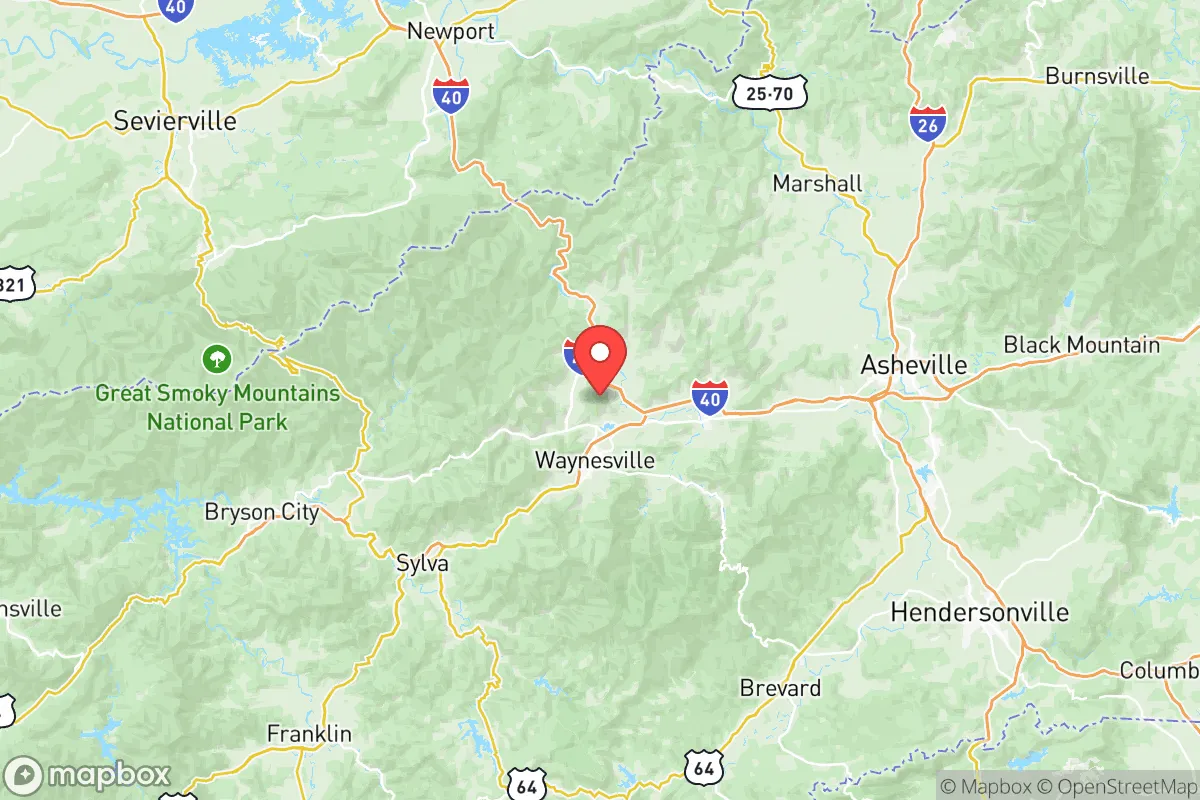
Haywood County, North Carolina, is home to 62,432 residents, a population that remains overwhelmingly white (90.9%) and native-born (only 1.2% foreign-born), with a distinctive Appalachian cultural identity rooted in centuries of isolation and self-reliance. The county's people are concentrated in the towns of Waynesville, the county seat and largest municipality; Canton, a historic mill town; Maggie Valley, a tourism hub; and the smaller communities of Clyde, Hazelwood, and Lake Junaluska. With a college-educated rate of 29.4% and a Hispanic population of 4.7% that represents the largest minority group, Haywood County is a predominantly rural, politically conservative area where family ties run deep and newcomers are often viewed with a mix of welcome and wariness.
Settlement & growth (pre-1960)
Long before European settlers arrived, the land that is now Haywood County was part of the vast homeland of the Cherokee people, who had established towns and hunting grounds throughout the mountain valleys. The Cherokee called the Pigeon River valley home, with significant settlements near what is now Maggie Valley and along the Oconaluftee River. The Cherokee were forcibly removed in the 1830s via the Trail of Tears, though some families evaded removal and remained in the remote areas of the Smokies, forming the core of what is today the Eastern Band of Cherokee Indians just south of the county line.
The first permanent European settlers arrived in the late 1790s and early 1800s, primarily Scots-Irish and English pioneers pushing westward from the Piedmont of North Carolina and Virginia. These settlers were drawn by the promise of cheap, fertile land in the river valleys and the relative isolation that allowed them to live free from the constraints of coastal society. They established small farms and communities along the Pigeon River and its tributaries, with the earliest settlements clustering around what would become Waynesville, founded in 1810 and named after General "Mad" Anthony Wayne. The county itself was formed in 1808 from Buncombe County, and Waynesville was established as the county seat.
The arrival of the railroad in the 1880s transformed Haywood County's economy and population. The Western North Carolina Railroad reached Waynesville in 1884, opening the region to timber and paper industries. This brought a new wave of settlers, including a small number of German and Irish immigrants who worked in the logging camps and sawmills. The single most transformative event was the founding of the Champion Paper and Fibre Company mill in Canton in 1908. This massive industrial operation drew workers from across the Appalachian region, creating a working-class community that would dominate Canton's identity for a century. The mill attracted not only native-born Appalachians but also a small number of Eastern European immigrants, though the county remained overwhelmingly native-born and white throughout this period.
The Great Depression and the creation of the Great Smoky Mountains National Park in the 1930s reshaped the county's population in contradictory ways. The park displaced hundreds of families from their mountain homesteads, particularly in the Cataloochee Valley and other remote areas, forcing them into the towns. At the same time, the park created a tourism economy that would eventually become a major employer, drawing seasonal workers and retirees. The post-World War II era saw modest growth as returning veterans settled in the county, but Haywood County remained a relatively isolated, homogeneous Appalachian community through the 1950s, with little in-migration from outside the region.
Modern era (post-1965)
The 1965 Hart-Cellar Act had minimal direct impact on Haywood County, as the county's foreign-born population remains tiny at just 1.2%. However, the broader demographic shifts of the late 20th century did reach the county in other ways. The most significant change has been the growth of the Hispanic population, which now stands at 4.7% of the total. This population began arriving in the 1990s and 2000s, primarily Mexican and Central American immigrants drawn by jobs in construction, landscaping, agriculture, and the service industry tied to tourism. These families have concentrated in Waynesville and Canton, where they have formed small but established communities, with Spanish-language services appearing in churches and some local businesses.
The decline of the paper industry has been the dominant demographic force of the modern era. Champion Paper, later Blue Ridge Paper Products and then Evergreen Packaging, shed thousands of jobs from the 1990s onward, leading to population stagnation and out-migration of younger workers. Canton, once a thriving mill town of over 4,000 residents, has seen its population decline as families left in search of work. The mill finally closed permanently in 2023, a devastating blow to the local economy. In response, the county has increasingly turned to tourism and retirement migration as economic drivers.
Domestic migration has brought a new type of resident to Haywood County since the 1990s: retirees and remote workers from Florida, the Northeast, and other parts of North Carolina. These newcomers are often more affluent and more educated than the native population, and they have concentrated in Waynesville, Maggie Valley, and the gated communities around Lake Junaluska. This has created a cultural divide between long-time residents and newcomers, with tensions over development, property taxes, and the pace of change. The county's Black population remains very small at 1.0%, and East/Southeast Asian communities at 0.3% and Indian subcontinent residents at 0.1% are negligible, reflecting the county's continued lack of diversity compared to urban North Carolina.
The future
Haywood County's population is projected to grow slowly, driven primarily by continued retirement and remote-worker migration rather than natural increase. The county's birth rate has declined, and younger native-born residents continue to leave for better job opportunities in Asheville, Charlotte, and beyond. The Hispanic population is likely to grow modestly as families already in the county have children and as new workers arrive for service jobs, but the county will remain overwhelmingly white for the foreseeable future. The closure of the Canton paper mill will accelerate the shift away from an industrial economy toward tourism and services, which may attract more newcomers but also risks deepening the divide between the native working class and the incoming professional class.
The county's cultural identity is evolving from a closed, homogeneous Appalachian society into a more complex place where long-time residents, Hispanic families, and affluent newcomers coexist uneasily. The political character remains conservative, but the influx of out-of-state retirees has introduced a more moderate Republicanism that sometimes clashes with the older, more populist strain. For someone moving in now, Haywood County offers a beautiful natural setting and a slower pace of life, but also a community in transition where the old certainties of mill work and mountain self-sufficiency are giving way to an uncertain future shaped by tourism, remote work, and the slow arrival of a more diverse population.

* Values derived from national, state, county, city and local statistics and may differ in a specific area. Last updated: 2026-10-27T22:13:33.000Z
Narrative content on this page is AI-generated and may contain mistakes. Verify any details that matter before acting on them.
ReloMaps may earn a commission from affiliate links at no extra cost to you.

