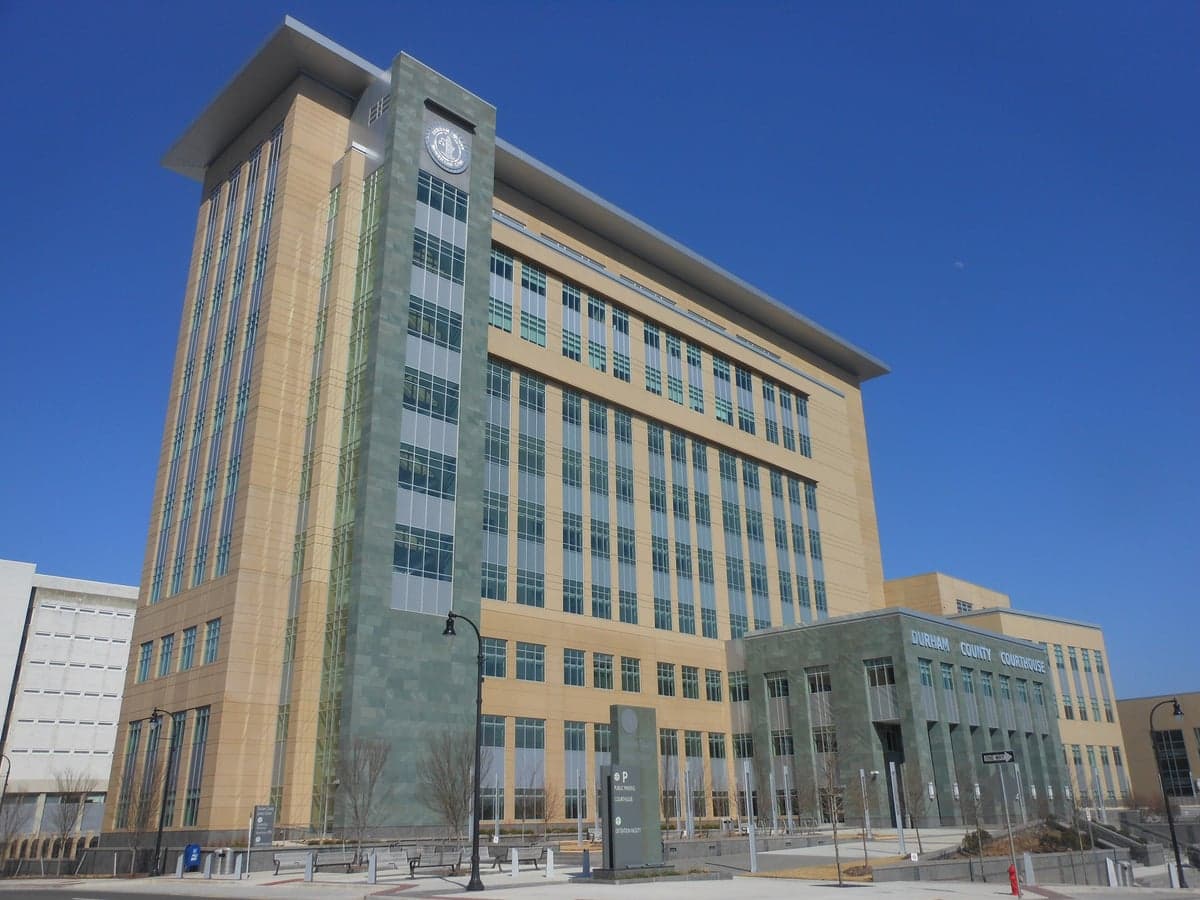
Photo: Wikipedia
Quality of Life in Durham County
A livable area that tracks near national norms for affordability, walkability, and neighborhood health.
What does Quality of Life tell us?
Quality of Life measures an area by evaluating factors like cost of living, nearby amenities, country club access, airport proximity, socioeconomic signals and neighborhood character. For large states, this is a general average — quality of life can vary dramatically between metro areas, suburbs, and rural communities within the same state.
What does this tell us?
Quality of Life measures an area by evaluating factors like cost of living, nearby amenities, country club access, airport proximity, socioeconomic signals and neighborhood character. For large states, this is a general average — quality of life can vary dramatically between metro areas, suburbs, and rural communities within the same state.
Cost of Living
23% above national average
79%
The Real Cost of Living in Durham County for 2026
| Tier | Individual | Family (4) |
|---|---|---|
| Survival | $23k | $42k |
| Comfortable | $68k | $100k |
| Luxury | $144k+ | $223k+ |
| Elite (Top 5%) | $177k+ | $274k+ |
Quality-of-Life Analysis
Durham County, North Carolina, offers a quality-of-life spectrum that ranges from the dense, amenity-rich core of Durham city to quiet rural crossroads and bedroom communities, drawing everyone from tech professionals and university faculty to long-standing farming families and commuters seeking lower land costs. The county’s character shifts noticeably within a 15-minute drive: the urban pulse of downtown Durham gives way to leafy suburban subdivisions, which then open into the agricultural landscapes and small unincorporated settlements near the county’s northern and eastern borders. This diversity means a household’s daily experience—commute length, housing type, school options, and access to nightlife or nature—can vary dramatically depending on which part of the county they choose.
Largest town(s) & population centers
Durham city is the county’s undisputed population and economic center, home to roughly 285,000 residents and anchored by Duke University, Duke University Health System, and the Research Triangle Park (RTP) corridor. Daily life in the city core revolves around walkable neighborhoods like Ninth Street, Brightleaf Square, and the American Tobacco Historic District, where residents have immediate access to nationally recognized restaurants, live music venues, the Durham Bulls Athletic Park, and the Durham Performing Arts Center (DPAC). Housing here leans heavily toward condos, townhomes, and older bungalows, with median home values near the countywide figure of $351,700 but climbing well above $500,000 in sought-after intown districts like Trinity Park and Forest Hills. The city’s suburban ring—areas such as Southpoint, Hope Valley Farms, and Woodcroft—offers a more family-oriented lifestyle with big-box retail, chain restaurants, and newer single-family subdivisions, while still keeping the average commute under 23 minutes. For renters, the countywide median rent of $1,415 is most attainable in the city’s older neighborhoods and apartment complexes along the U.S. 15-501 corridor, though newer luxury buildings downtown push rents above $2,000 for one-bedroom units.
Smaller towns & rural pockets
Outside the city limits, Durham County contains several distinct smaller communities that offer a slower pace and lower housing costs. Bahama, in the county’s northern reaches near the Person County line, is an unincorporated crossroads with a handful of churches, a volunteer fire department, and large-lot homes on wooded acreage—a world away from downtown’s density. Gorman, further east along the Neuse River, consists of scattered farmhouses and newer exurban subdivisions, appealing to buyers who want land within 30 minutes of RTP. Rougemont, straddling the Durham-Granville border, is another unincorporated community where tobacco and soybean fields still define the landscape, and where a $250,000 home can sit on two or more acres. These rural pockets lack municipal services like public water and sewer, but they offer privacy, lower property taxes, and direct access to hiking and equestrian trails in the Falls Lake State Recreation Area. The county’s southeastern corner, near the Wake County line, includes parts of Research Triangle Park itself—a largely commercial zone—and the planned community of Parkwood, which blends suburban homes with preserved greenways.
Cost & lifestyle range
The cost-of-living index of 123 (23% above the U.S. average) reflects the county’s overall premium over national norms, but that number masks a wide internal spread. At the high end, intown Durham neighborhoods and the Hope Valley historic district command median home prices above $600,000, with residents paying a premium for walkability, historic architecture, and proximity to Duke’s campus. At the low end, rural areas like Bahama and Rougemont offer median home values closer to $250,000–$280,000, though buyers often face higher commuting costs and limited retail options. Renters see a similar gap: a one-bedroom in a downtown luxury building averages $1,800–$2,200, while a comparable unit in a suburban complex near Southpoint or along the U.S. 70 corridor rents for $1,200–$1,400. Amenities also scale with density—downtown residents have dozens of restaurants, breweries, and cultural venues within walking distance, while rural residents rely on the city’s grocery stores and medical facilities for most errands, making a car essential. The average commute of 22.9 minutes is manageable across the county, though residents in the far northern and eastern reaches can expect 30–35 minutes to reach RTP or downtown Durham during peak hours.
Durham County works best for people who value choice and trade-offs: urbanites who want a vibrant, walkable city with top-tier universities and healthcare; families who seek good schools and suburban amenities within a short commute; and rural residents who prioritize space, privacy, and lower housing costs over proximity to nightlife. The county’s compact geography—roughly 290 square miles—means no one is ever more than about 30 minutes from the region’s economic core, making it feasible to shift lifestyles without changing jobs or social networks. For newcomers, the key decision is whether to pay for intown convenience, buy space in the exurbs, or split the difference in one of the county’s many suburban subdivisions.

Crime in Durham County
Crime rates similar to the national median for U.S. locations.
Violent CrimeViolent Crime Analysis
Property CrimeProperty Crime Analysis
Crime Analysis
Durham County, North Carolina, presents a mixed safety picture shaped by a stark contrast between its urban core and surrounding suburban towns. The county's overall violent crime rate of 310.5 per 100,000 residents and property crime rate of 1,694.6 per 100,000 place it above both the state and national averages, driven largely by conditions within the city of Durham itself. Residents in outlying communities like Chapel Hill, Morrisville, and Bahama experience significantly lower crime rates, while neighborhoods near downtown Durham and along the Highway 15-501 corridor report higher incident concentrations.
Crime in context
Durham County's violent crime rate of 310.5 per 100,000 is roughly 15% higher than the North Carolina state average of approximately 270 per 100,000 and well above the national rate of about 230 per 100,000. Property crime at 1,694.6 per 100,000 similarly exceeds the state average of roughly 1,500 per 100,000. These figures are heavily weighted by the city of Durham, which accounts for the vast majority of the county's population and crime incidents. By contrast, the town of Chapel Hill — which sits partially in Durham County and partially in Orange County — reports violent crime rates closer to 150 per 100,000, less than half the countywide figure. Morrisville, straddling Durham and Wake counties, posts property crime rates near 1,200 per 100,000, significantly lower than the county average. The unincorporated community of Bahama in northern Durham County sees very few reported crimes annually, functioning as a de facto safe zone for residents seeking lower risk.
What residents experience
Daily life in Durham County varies dramatically by location and time of day. Residents in downtown Durham and neighborhoods like Old North Durham, Lakewood, and East Durham report frequent property crimes including vehicle break-ins, package theft, and porch piracy. Car thefts and break-ins have risen sharply since 2020, particularly around the Ninth Street commercial district and near Duke University's East Campus. Violent crimes such as armed robbery and aggravated assault cluster along the Holloway Street corridor and in the Alston Avenue area near the county's eastern edge. The progressive policies of Durham County's District Attorney, who has emphasized diversion programs and reduced pretrial detention, have drawn criticism from residents who feel the approach emboldens repeat offenders. Many property crimes go unprosecuted when suspects are released without charges, a pattern that frustrates victims and contributes to a perception that the justice system prioritizes offender rehabilitation over public safety. Residents in Chapel Hill's Durham County portion and in the Hope Valley Farms area report far fewer incidents and greater satisfaction with police response times.
Neighborhood-level variation
The safest areas within Durham County are concentrated in the southern and western portions near the Wake County line. Towns like Morrisville and the Briar Chapel community near Chapel Hill offer suburban layouts with lower population density and proactive neighborhood watch programs. The northern rural areas around Bahama and Rougemont see minimal crime, though residents face longer emergency response times due to distance from the county's main law enforcement hubs. The highest-risk zones remain the downtown Durham core, the East Durham corridor along Alston Avenue, and the North Roxboro Street area near the city's northern edge. Property crime rates in these high-risk neighborhoods can exceed 3,000 per 100,000, nearly double the county average. Anyone considering a move to Durham County should research specific census tracts and consult local crime mapping tools, as a difference of two miles can mean the difference between a safe suburban street and a block with frequent break-ins and thefts.
* Values derived from national, state, county, city and local statistics and may differ in a specific area. Last updated: 2026-06-15T22:53:58.000Z
Narrative content on this page is AI-generated and may contain mistakes. Verify any details that matter before acting on them.
ReloMaps may earn a commission from affiliate links at no extra cost to you.

